
Keeping your car in top shape is more than just an occasional oil change or a quick trip to the mechanic. Regular maintenance not only keeps your vehicle safe but also saves you money in the long run. Yet, with busy lives and so many little details to remember, it’s easy to lose track of what your car needs and when. This is where a car maintenance log template comes in. It’s a simple tool that can help you remember essential tasks, track repairs, and protect your car’s value. Whether you drive a family sedan or a high-mileage work truck, maintaining a clear record can make car ownership easier and less stressful.
Why You Need A Car Maintenance Log
Many car owners underestimate the value of keeping a maintenance log. The main benefit is peace of mind: you always know what has been done, when, and what’s next. This log can also help:
- Increase resale value: Buyers trust vehicles with detailed maintenance records.
- Prevent breakdowns: Spot patterns before small issues become big problems.
- Save money: Avoid repeat repairs and unnecessary services.
- Help with warranties: Prove that you followed service requirements.
A well-kept log is like a health record for your car. For example, missing a single oil change might not cause problems today, but skipping several can damage your engine and void your warranty.
Essential Sections Of A Car Maintenance Log Template
A good car maintenance log template should be easy to use but include all important details. Here’s what you should look for:
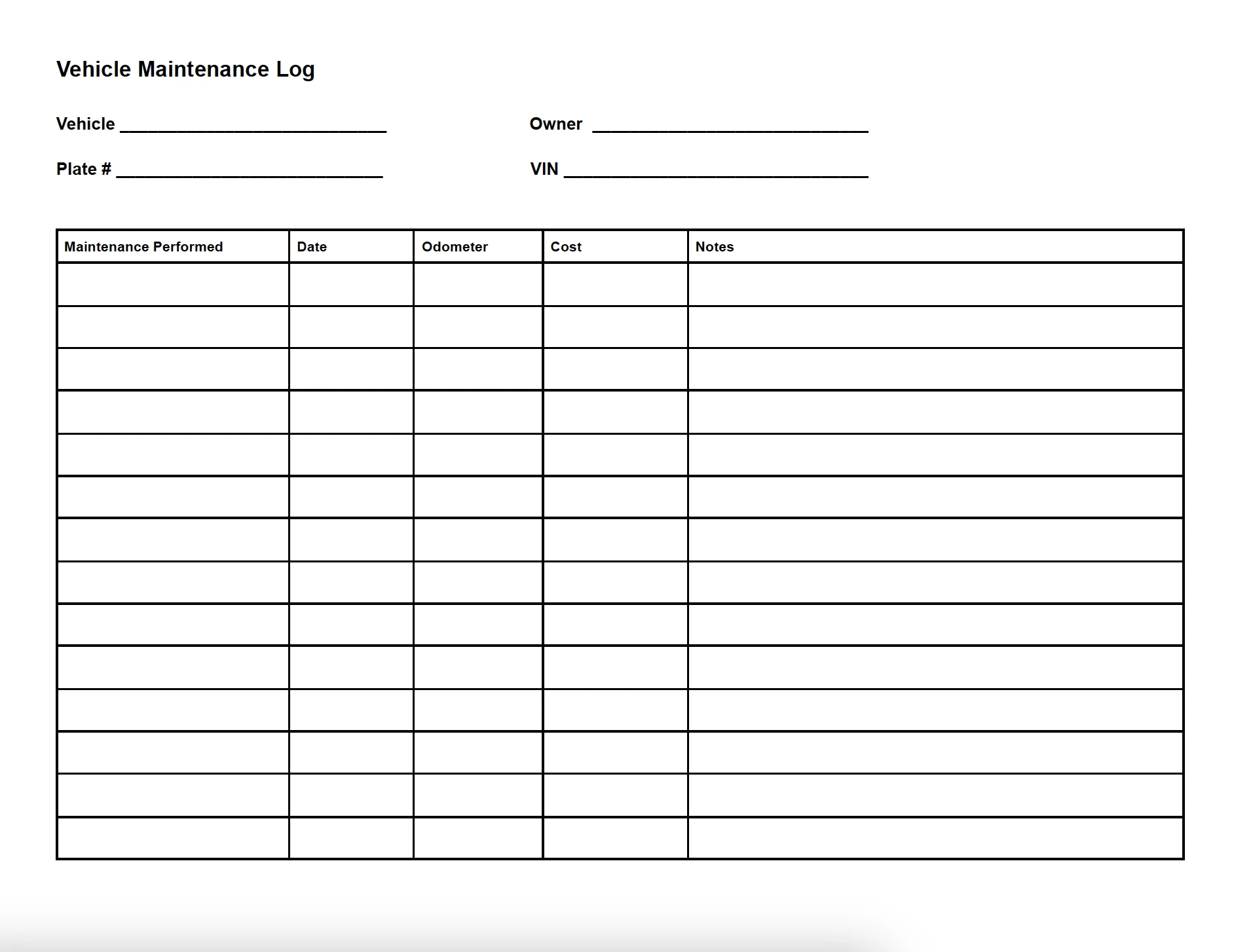
1. Vehicle Information
At the top, write down the key details about your car:
- Make, model, and year (e.g., Toyota Corolla 2018)
- Vehicle Identification Number (VIN)
- License plate number
- Purchase date and mileage at purchase
This section is especially useful if you have multiple cars or plan to sell the vehicle.
2. Service And Maintenance Records
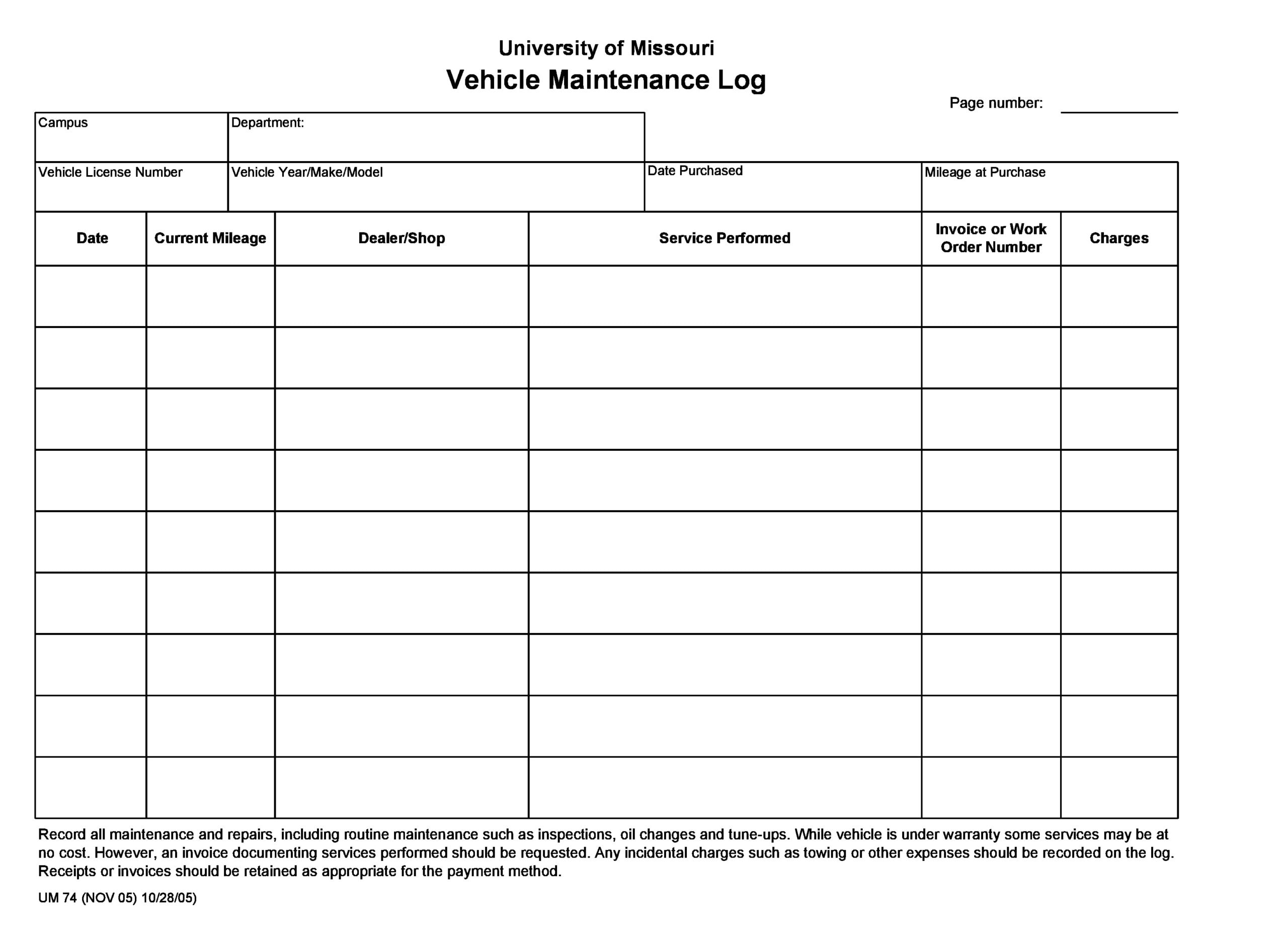
This is the heart of the log. Each time you do any maintenance or repair, record:
- Date of service
- Current odometer reading
- Type of service (oil change, brake pads, etc.)
- Service provider (mechanic, dealership, self)
- Cost
- Notes (anything unusual, recommendations, parts used)
Here’s an example of what a record might look like:
| Date | Mileage | Service | Provider | Cost | Notes |
|---|---|---|---|---|---|
| 2024-03-10 | 22,000 | Oil Change | QuickLube | $45 | Used synthetic 5W-30 oil |
| 2024-04-02 | 23,200 | Tire Rotation | Self | $0 | All tires checked, OK |
3. Scheduled Maintenance Checklist
Manufacturers often recommend certain services at regular intervals (like every 5,000 miles). Having a checklist helps you plan ahead and avoid missing important tasks.
| Mileage/Time | Task | Done? | Date Completed | Notes |
|---|---|---|---|---|
| 5,000 miles / 6mo | Oil & filter change | Yes | 2024-03-10 | |
| 10,000 miles / 1y | Tire rotation | Yes | 2024-04-02 | |
| 30,000 miles / 3y | Air filter change | Next due soon |
4. Repair History
This section is for unexpected or major repairs (accidents, part replacements, etc. ). Keeping these separate makes it easier to spot patterns or recurring problems.
| Date | Mileage | Repair | Shop/Provider | Cost | Warranty Info |
|---|---|---|---|---|---|
| 2024-05-15 | 24,500 | Alternator replaced | AutoWorks | $320 | 1-year warranty |
| 2024-06-01 | 25,000 | Windshield replaced | GlassWorld | $210 | Lifetime chip |
5. Parts And Fluids Log
It helps to track the parts and fluids you use, especially if you do your own maintenance. Write down:
- Type and brand (oil, filters, spark plugs)
- Quantity
- Purchase date
- Cost
This makes repeat purchases easier and helps troubleshoot issues later.
6. Notes And Reminders
Leave space for general notes. You might want to jot down:
- Upcoming inspections or recalls
- Unusual sounds or issues noticed
- Recommendations from your mechanic
A few lines here can save headaches later.
How To Use A Car Maintenance Log Template
A log is only helpful if you use it regularly. Here’s how to make it a habit:
- Keep it accessible: Store a printout in your glove box or use a digital version on your phone.
- Update after every service: Even quick jobs like topping up fluids should be recorded.
- Review before service visits: Check what’s due soon. Avoid unnecessary or duplicate work.
- Track costs over time: See where your money goes and plan your maintenance budget.
Some car owners prefer digital templates (Excel, Google Sheets, or apps), while others like paper logs. Both work; choose what fits your style.
Digital Vs. Paper Car Maintenance Logs
Choosing between paper and digital logs depends on your needs. Here’s a quick comparison to help you decide:
| Feature | Paper Log | Digital Log (Spreadsheet/App) |
|---|---|---|
| Easy to start | Yes | Yes |
| Automatic reminders | No | Yes |
| Accessible anywhere | No | Yes |
| Risk of losing data | High (can lose paper) | Low (with backups) |
| Best for tech users | No | Yes |
| Best for quick notes | Yes | Sometimes |
Non-obvious insight: Digital logs allow you to search quickly and spot trends, such as frequent part replacements. Paper logs, however, never need charging and are always accessible—even if your phone is dead.
Credit: templatearchive.com
Sample Car Maintenance Log Template
To get you started, here’s a basic template you can copy or print:
| Date | Mileage | Service/Repair | Provider | Cost | Notes |
|---|---|---|---|---|---|
| YYYY-MM-DD | XXXXX | Oil Change | Mechanic/DIY | $XX | Brand/Type of oil used |
| YYYY-MM-DD | XXXXX | Brake Pads Replaced | Shop Name | $XX | Front brakes only |
You can expand this template to include scheduled tasks and repairs. If you prefer technology, try using Google Sheets or a car maintenance app. Some apps even let you upload receipts and set reminders.
Benefits For Different Types Of Drivers
Family drivers: Helps manage multiple cars, especially when kids start driving. You can check if each car is up to date before long trips.
Business or fleet owners: Essential for tracking costs and ensuring all vehicles are roadworthy. You can spot high-cost vehicles or patterns of repeat repairs.
Car enthusiasts: Great for keeping detailed records of custom parts, upgrades, or modifications.
First-time car owners: Builds good habits and helps avoid expensive mistakes. New drivers often forget basic maintenance, but a log keeps them on track.
Common Mistakes When Using A Car Maintenance Log
Many people start with good intentions but stop using their log after a few months. Here are some common mistakes and how to avoid them:
- Not updating regularly: The log is only useful if it’s current. Set a reminder or link it to your calendar.
- Leaving out small services: Even topping off fluids or replacing wipers should be recorded. Small details add up.
- Poor organization: Mixing up repairs and maintenance makes records confusing. Use clear sections.
- Not tracking costs: This makes it hard to plan or spot overcharging.
- Ignoring manufacturer’s schedule: Skipping recommended services can damage your car and void warranties.
Non-obvious insight: If you share your car with others (family, co-workers), make sure everyone knows how and when to update the log. This prevents gaps in your records.
How A Car Maintenance Log Helps When Selling Your Car
A detailed maintenance log is a powerful tool when you want to sell your car. Buyers often worry about hidden problems, but showing your records builds trust. A log can:
- Prove you took care of the vehicle
- Justify a higher asking price
- Speed up the sale (buyers feel confident)
- Help answer questions about past repairs
Some studies show that cars with full service records can sell for 10–20% more compared to cars with no records. Dealers may also offer a better trade-in price if you show complete maintenance history.
Credit: www.wordlayouts.com
Tips For Creating Your Own Car Maintenance Log Template
If you want to design your own template, consider these tips:
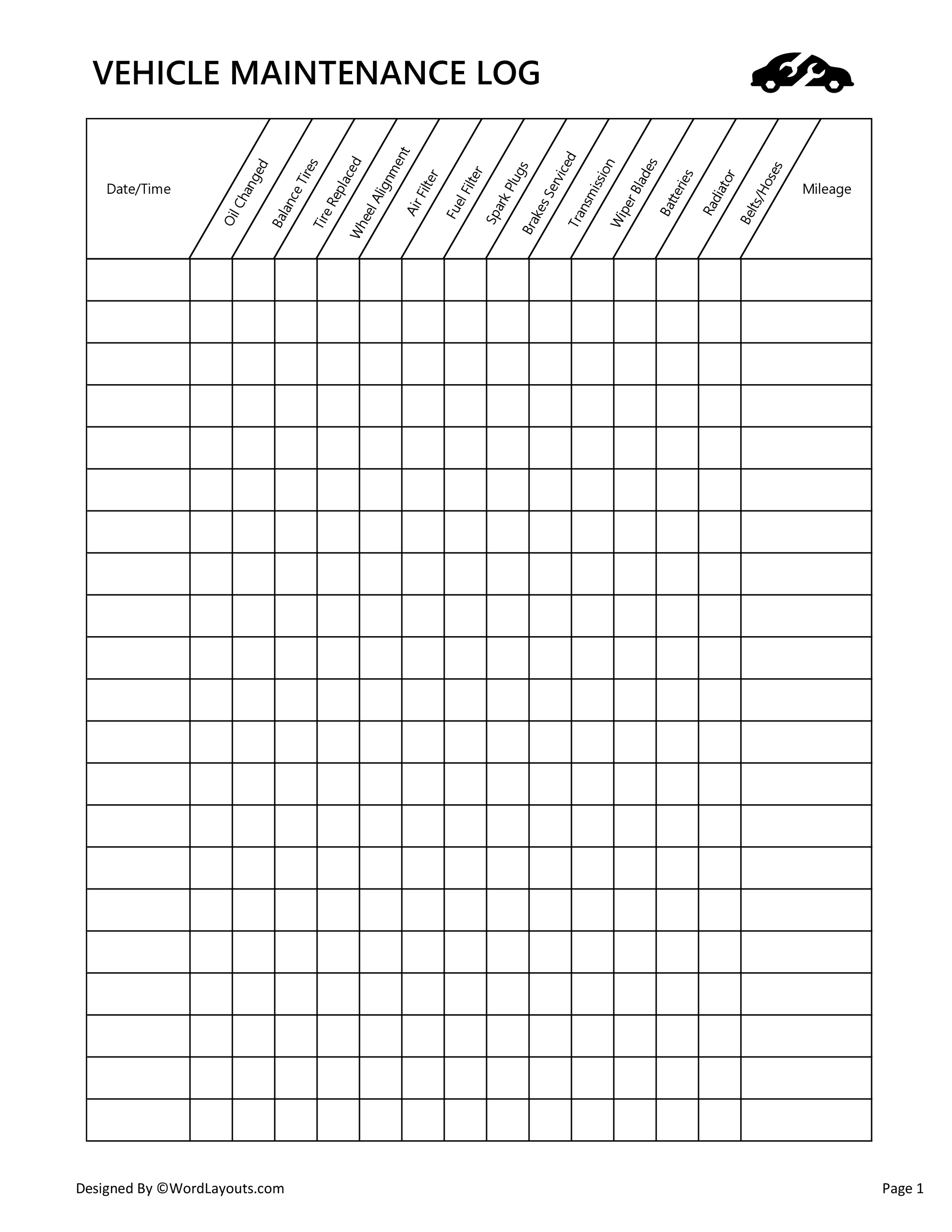
- Use clear columns for each detail (date, mileage, service, provider, cost)
- Leave extra space for notes
- Include checkboxes for scheduled maintenance
- Color-code rows for major repairs or recurring issues
- Add a summary section for yearly spending
Digital templates can include drop-down lists or automated reminders. Paper templates can use sticky tabs or highlighters to mark important entries.
If you want ready-made templates, sites like Vertex42 offer free, customizable options.
Frequently Asked Questions
What Is A Car Maintenance Log Template?
A car maintenance log template is a document or spreadsheet where you record all services, repairs, and maintenance tasks for your car. It helps you keep track of what’s been done, what’s due, and how much you’ve spent.
Can I Use My Phone To Keep A Car Maintenance Log?
Yes, there are many apps and spreadsheet tools that let you keep a digital log. These can send you reminders and make it easy to search or share records.
How Often Should I Update My Maintenance Log?
Update your log every time you perform a service, repair, or checkup—even for small things like checking tire pressure or topping up fluids.
Is It Necessary To Include Cost Details In The Log?
Including cost details is helpful for budgeting and can help you spot trends or overcharging by service providers. It also helps when selling your car, as it shows total investment.
Does A Maintenance Log Increase My Car’s Resale Value?
Yes, detailed logs can boost resale value by 10–20%. Buyers trust cars with complete service records, as it shows the car was well cared for and helps them avoid future surprises.
Maintaining a car can feel overwhelming, but a good log makes it simple. By recording every service and repair, you protect your investment and make car care less of a guessing game. Whether you use pen and paper or a smartphone, start your car maintenance log today and enjoy peace of mind every mile.
Credit: www.veekeep.com