
When your car’s check engine light comes on, it can feel stressful—especially if you’re not sure what’s wrong. One common reason for this warning is a vacuum leak. Many drivers don’t realize how important vacuum lines are to the engine’s health. Ignoring a vacuum leak can lead to more serious problems and expensive repairs. If you want to keep your car running smoothly, understanding the relationship between the check engine light and vacuum leaks is essential.
What Is A Vacuum Leak?
A vacuum leak happens when unmetered air enters the engine. Modern cars use an air-fuel mixture controlled by the engine control unit (ECU). The ECU measures all the air entering the engine using sensors. If there’s a leak, extra air gets in without being measured. This makes the air-fuel ratio incorrect, causing the engine to run poorly.
Vacuum leaks can come from cracked hoses, broken gaskets, or even loose connections. They are most common in older cars, but newer vehicles are not immune. Even a small leak can impact engine performance.
Why Does The Check Engine Light Come On?
Your car’s check engine light is like a messenger. It tells you when something is not working as it should. The ECU constantly checks sensors and engine conditions. When it finds abnormal readings—like the wrong air-fuel ratio—it turns on the warning light.
A vacuum leak often triggers the check engine light because the extra air confuses the engine’s sensors. The ECU tries to adjust the fuel, but it can’t fix the problem completely. This causes error codes to appear, such as P0171 (system too lean) or P0174 (system too lean, bank 2).
These codes help mechanics find the source of the leak.
How Does A Vacuum Leak Affect Engine Performance?
The engine is designed to run with a very specific balance of air and fuel. When a vacuum leak happens, this balance is lost. Here’s what you might notice:
- Rough idle: The engine shakes or vibrates when stopped.
- Stalling: The car may turn off suddenly, especially at low speeds.
- Poor acceleration: Pressing the gas pedal feels weak or slow.
- High or fluctuating RPM: The tachometer needle jumps or stays high at idle.
- Poor fuel economy: The engine burns more fuel to compensate for the extra air.
These symptoms are not always obvious. Sometimes, the only sign is the check engine light.
Common Causes Of Vacuum Leaks
Vacuum leaks can come from many places under the hood. Here are the most frequent sources:
- Cracked vacuum hoses: Rubber hoses wear out over time, especially in hot engine bays.
- Loose or disconnected hoses: Mechanics or DIY repairs may leave hoses loose.
- Faulty intake manifold gaskets: These gaskets seal the engine; if they fail, air escapes.
- Leaking throttle body gasket: The gasket between the throttle body and intake can fail.
- Broken PCV valve or hose: The positive crankcase ventilation (PCV) system relies on vacuum lines.
- Damaged brake booster hose: This large hose helps with power brakes.
- Leaking EGR valve: The exhaust gas recirculation (EGR) valve uses vacuum to operate.
- Injector O-ring failure: Small rubber seals on fuel injectors can leak.
- Faulty intake boot or air duct: Cracks in the air intake system let air in.
Many of these problems start small but get worse if ignored.
Diagnosing A Vacuum Leak
Finding a vacuum leak can be tricky. Small leaks are often hard to see or hear. Here are some proven methods:
1. Visual Inspection
Look for cracked, loose, or disconnected hoses. Pay attention to any hoses that feel brittle or sticky. Move wires and hoses gently to see if the engine idle changes—this can point to a leak.
2. Listen For Hissing Sounds
With the engine running, listen closely for a hissing noise. This sound often comes from the leaking area. Use a short piece of hose as a stethoscope: one end in your ear, the other around the engine.
3. Spray Test
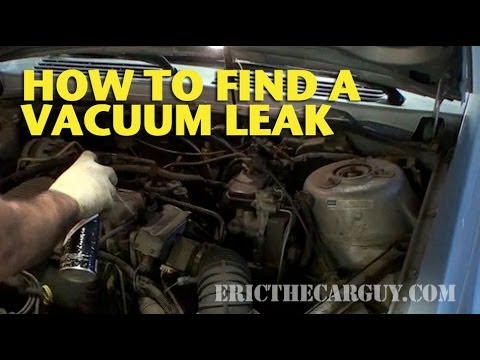
Spray carburetor cleaner or brake cleaner around suspected leak areas with the engine running. If the idle speed changes, you’ve found the leak. Be careful—these chemicals are flammable, so avoid sparks.
4. Smoke Machine
Professional shops use a smoke machine. This tool pushes harmless smoke into the intake system. Where you see smoke coming out, you’ve found the leak. Some DIYers rent these machines from auto parts stores.
5. Check For Error Codes
Use an OBD-II scanner to read the engine’s error codes. Codes like P0171 or P0174 often mean a vacuum leak. Combine this info with your inspection for best results.
How To Fix A Vacuum Leak
The repair depends on where the leak is. Here are common solutions:
- Replace cracked or brittle hoses with new vacuum hose of the same size.
- Tighten hose clamps or push loose hoses back into place.
- Replace gaskets (intake manifold, throttle body, etc.) If they’re leaking.
- Swap out faulty PCV valves, EGR valves, or brake booster hoses.
- Replace injector O-rings if fuel injectors are leaking air.
After repairs, clear the check engine light with an OBD-II tool or by disconnecting the battery for a few minutes.
Cost Of Repairing A Vacuum Leak
Repair costs depend on the problem’s location and your car’s make. Here’s a general comparison:
| Repair Type | DIY Cost (Parts Only) | Shop Repair Cost | Time Required |
|---|---|---|---|
| Vacuum hose replacement | $5–$30 | $50–$150 | 30–60 minutes |
| PCV valve replacement | $10–$25 | $50–$120 | 15–45 minutes |
| Intake manifold gasket | $20–$60 | $250–$500 | 2–4 hours |
| Injector O-rings | $10–$30 | $70–$200 | 1–2 hours |
Fixing a vacuum leak early is much cheaper than waiting until engine damage occurs.
How To Prevent Vacuum Leaks
Preventing vacuum leaks is easier than fixing them. Here are practical tips:
- Inspect hoses regularly. Check hoses every oil change for cracks or wear.
- Replace old hoses. Even if they aren’t leaking, swap hoses every 5–7 years.
- Use quality parts. Cheap hoses crack faster, especially in hot climates.
- Avoid rough handling. Be gentle with vacuum lines during engine repairs.
- Watch for engine changes. If idle changes or the check engine light appears, check hoses first.
Credit: www.youtube.com
Key Differences: Vacuum Leak Vs. Other Check Engine Light Causes
Not every check engine light is a vacuum leak. Here’s how vacuum leak symptoms compare to other common issues:
| Problem | Common Symptoms | Typical Error Codes | Repair Approach |
|---|---|---|---|
| Vacuum leak | Rough idle, high RPM, stalling | P0171, P0174 | Replace hoses/gaskets |
| Faulty spark plug | Misfire, poor acceleration | P0300–P0312 | Replace spark plugs |
| O2 sensor failure | Poor fuel economy, emissions issues | P0130–P0167 | Replace O2 sensor |
| Mass Air Flow sensor issue | Hard start, hesitation | P0100–P0104 | Clean/replace MAF sensor |
This comparison helps you narrow down the problem before making repairs.
Non-obvious Insights For Diagnosing Vacuum Leaks
Most car owners know about checking hoses, but two important points are often missed:
- Heat cycling matters: Vacuum hoses closest to the engine block break down faster. Replace these first, even if they look fine, especially in older cars.
- Small leaks, big problems: Even tiny leaks (like a pinhole) can trigger the check engine light and cause rough running. Don’t ignore small changes in performance.
Another overlooked detail: Some cars use plastic intake manifolds. These can develop small cracks that are hard to see. Shine a bright light and use a mirror to check hidden areas.

Credit: pacokc.com
When To Visit A Mechanic
Some vacuum leaks are easy to fix at home. Others need special tools or skills. Visit a mechanic if:
- The leak is hard to find or reach.
- You have multiple check engine codes.
- Repairs involve removing the intake manifold or fuel injectors.
- The car stalls often or runs dangerously.
A professional can diagnose and repair leaks faster, preventing more serious engine problems.
Real-world Example: How A Small Leak Caused Big Trouble
Consider this story: A driver noticed a rough idle and poor gas mileage but ignored the check engine light. After several weeks, the engine began to stall. At the repair shop, the mechanic found a cracked PCV hose. The leak caused the engine to run lean, overheating the exhaust valves. The repair cost increased because the valves were damaged.
The lesson: Fixing a simple vacuum leak early can prevent expensive engine repairs later.

Credit: www.youtube.com
The Role Of Technology In Diagnosing Vacuum Leaks
Modern cars use advanced sensors and computers. Mechanics use OBD-II scanners and smoke machines for quick diagnosis. Some newer vehicles have self-diagnostic features that alert you to the exact problem area. If your check engine light comes on, a quick scan often points directly to a vacuum leak or related issue.
For more details about OBD systems, see the Wikipedia OBD article.
Frequently Asked Questions
What Are The Signs Of A Vacuum Leak Besides The Check Engine Light?
Besides the warning light, you may notice rough idling, high or fluctuating RPMs, poor acceleration, stalling, or a hissing sound from the engine. Sometimes, fuel economy drops, or the car smells like unburned fuel.
Can I Drive My Car With A Vacuum Leak?
You can drive for a short time, but it’s not recommended. A vacuum leak makes the engine run poorly, lowers fuel efficiency, and can cause damage over time. Fix the leak as soon as possible.
How Do I Find A Vacuum Leak If I Can’t See It?
Try listening for hissing, doing a spray test with carburetor cleaner, or using an OBD-II scanner for error codes. If you still can’t find the leak, a smoke machine at a repair shop is the best method.
Will A Vacuum Leak Always Cause The Check Engine Light To Come On?
Most of the time, yes. Modern cars are sensitive to air-fuel ratio changes, and a vacuum leak usually triggers the check engine light. However, very small leaks might not cause the light immediately.
How Much Does It Cost To Fix A Vacuum Leak?
Costs vary. Simple hose replacements can be under $50 if you do it yourself. More complex leaks, like intake manifold gaskets, can cost $250–$500 or more in a shop. Early detection keeps costs low.
When you see the check engine light and suspect a vacuum leak, don’t ignore it. Quick action saves money and keeps your car running safely. Learning to spot the signs and knowing what to do makes you a more confident driver and car owner.