
To choose a multimeter effectively, consider your primary applications, the specific measurements you need to take, the required accuracy, and crucial safety ratings. Digital multimeters (DMMs) are widely recommended for their user-friendliness and precise readings, making them suitable for both beginners and experienced professionals.
- Identify Your Needs: Determine if your projects are electrical, automotive, HVAC, or general DIY.
- Understand Measurement Types: Prioritize AC/DC voltage, current, and resistance measurements.
- Consider Accuracy: Look for True RMS for non-sinusoidal waveforms and auto-ranging for ease of use.
- Prioritize Safety: Always check the CAT rating appropriate for your intended use.
- Evaluate Features: Decide if advanced functions like capacitance, frequency, or temperature are necessary.
What is a Multimeter and Why is it Essential?
A multimeter is a versatile electronic measuring instrument that combines several measurement functions into one unit. It is an indispensable tool for anyone working with electricity, from professional electricians and automotive technicians to hobbyists and DIY enthusiasts.
This device allows users to diagnose electrical problems, test circuits, and verify the proper functioning of various components. Without a multimeter, troubleshooting electrical issues would be significantly more challenging and often impossible, making it a cornerstone of any electrical toolkit.
Analog vs. Digital Multimeters: Which is Right for You?
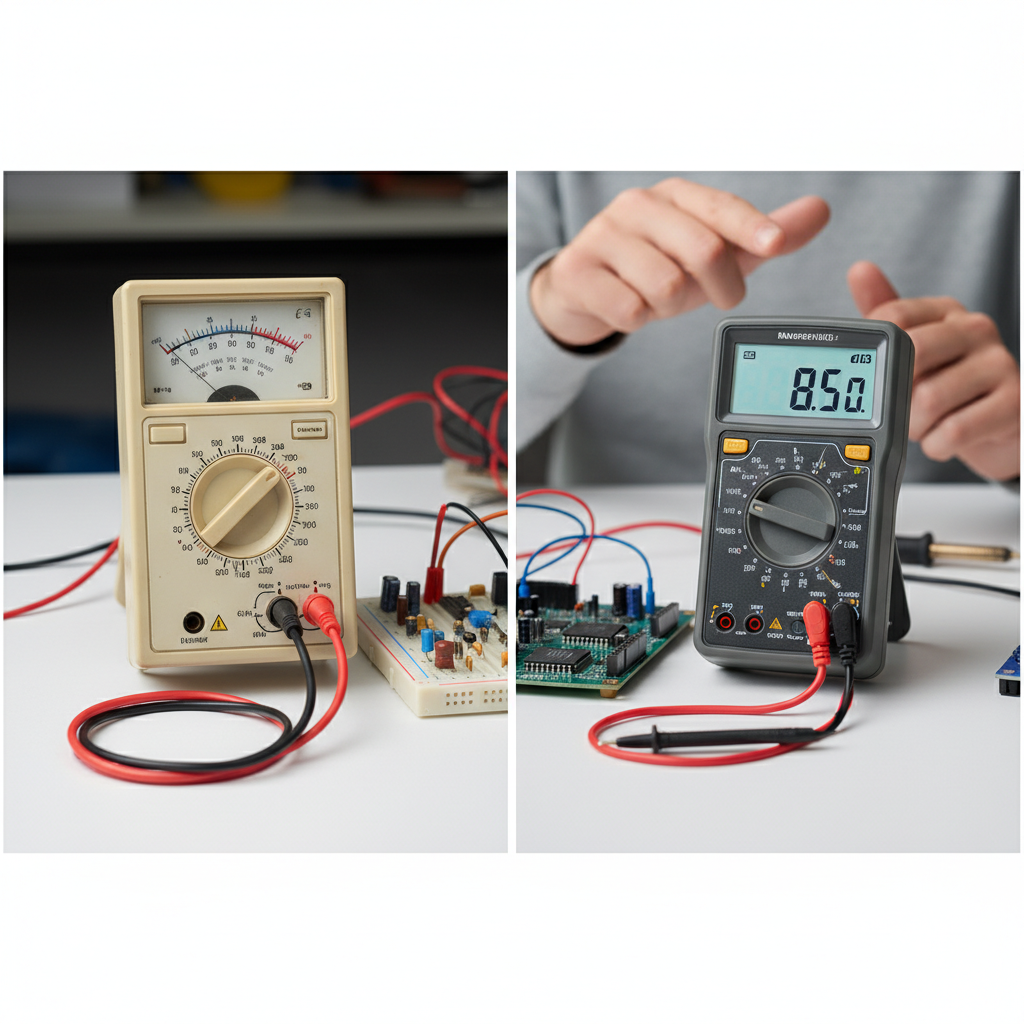
The first major decision when selecting a multimeter is choosing between an analog and a digital model. Each type offers distinct advantages and disadvantages, catering to different user preferences and application requirements.
Analog Multimeters
Analog multimeters display readings using a needle that moves across a calibrated scale. They are known for their ability to show trends and fluctuations in readings, which can be beneficial for observing rapidly changing signals. However, reading an analog display requires practice and can be prone to parallax errors, where the reading varies depending on the viewing angle.
These devices typically have a lower input impedance, which can sometimes affect sensitive circuits. While still available, analog multimeters are less common today, especially for general-purpose use, due to the advancements in digital technology.
Digital Multimeters (DMMs)
Digital multimeters, or DMMs, display readings as numerical values on an LCD screen. They are highly favored for their precision, ease of reading, and often include features like auto-ranging, data hold, and backlighting. DMMs are generally more accurate and less prone to user error compared to their analog counterparts.
Most modern DMMs also feature high input impedance, which minimizes their impact on the circuit being tested. For the vast majority of users, from beginners to seasoned professionals, a digital multimeter is the recommended choice due to its superior functionality and user-friendliness.
Essential Measurement Functions Every Multimeter Should Have
Regardless of your skill level or specific application, certain core measurement functions are fundamental to any useful multimeter. Understanding these functions is key to selecting a device that meets your basic needs.
- Voltage (Volts – V): Measures electrical potential difference. Essential for checking battery levels, power supply outputs, and circuit voltages. Multimeters typically measure both AC (alternating current) and DC (direct current) voltage.
- Current (Amperes – A): Measures the flow rate of electrical charge. Crucial for diagnosing shorts, open circuits, and verifying component current draw. Current measurements usually require placing the multimeter in series with the circuit.
- Resistance (Ohms – Ω): Measures the opposition to electrical current flow. Used to test continuity, check component integrity (like resistors or wires), and identify open circuits.
- Continuity: A specialized resistance test that typically emits an audible beep if a circuit has very low resistance, indicating a continuous path for current. This is invaluable for quickly checking fuses, wires, and switches.
Beyond these core functions, many multimeters offer additional capabilities that can be highly beneficial depending on your specific tasks. These might include capacitance, frequency, temperature, and diode testing.
Decoding Multimeter Specifications: True RMS, Auto-Ranging, and Input Impedance
To truly understand how to choose a multimeter that performs reliably and accurately, it’s important to delve into some key technical specifications. These features significantly impact the multimeter’s performance and suitability for various tasks.
True RMS (Root Mean Square)
True RMS is a critical feature for accurate voltage and current measurements, especially in modern electrical systems. Standard multimeters measure the average value of an AC waveform and then scale it to approximate the RMS value, assuming a perfect sinusoidal waveform.
However, many electrical devices today, such as variable frequency drives, computers, and LED lighting, produce non-sinusoidal (distorted) waveforms. A True RMS multimeter measures the actual heating effect of the waveform, providing a much more accurate reading regardless of its shape. For any serious electrical work, particularly in industrial or automotive settings, a True RMS multimeter is highly recommended.
Auto-Ranging vs. Manual-Ranging
Multimeters come with either auto-ranging or manual-ranging capabilities, affecting how you select the measurement range.
- Auto-Ranging: An auto-ranging multimeter automatically detects the appropriate measurement range for the input signal. This simplifies operation, reduces the chance of selecting the wrong range (which could damage the meter or provide inaccurate readings), and speeds up testing. It’s an excellent feature for beginners and professionals alike.
- Manual-Ranging: A manual-ranging multimeter requires the user to manually select the correct range for the measurement. While this can offer slightly faster readings once the range is known, it demands more user knowledge and can be frustrating if the range is unknown or changes frequently.
For most users, especially those new to multimeters, an auto-ranging model offers significant convenience and safety benefits.
Input Impedance
Input impedance refers to the resistance the multimeter presents to the circuit it’s measuring. High input impedance (typically 10 MΩ or more) is desirable because it means the multimeter draws very little current from the circuit, thus having minimal impact on the circuit’s operation. This is crucial when testing sensitive electronics or control circuits where even a small current draw from the meter could alter the circuit’s behavior and lead to inaccurate readings.
Low input impedance multimeters, while sometimes useful for specific applications like ghost voltage detection, can load down sensitive circuits. Always opt for a high input impedance DMM for general electrical and electronic troubleshooting.
Prioritizing Safety: Understanding CAT Ratings and Overload Protection
Electrical safety is paramount when using any testing equipment. Multimeters are designed with various safety features to protect both the user and the device. Understanding these features, particularly CAT ratings, is non-negotiable.
CAT Ratings (Category Ratings)
CAT ratings, or Category ratings, specify the maximum transient overvoltage a multimeter can safely withstand in different electrical environments. These ratings are defined by international safety standards (IEC 61010) and are crucial for preventing electrical shock and arc flash incidents.
- CAT I: For measurements on electronic circuits not directly connected to the mains supply (e.g., battery-powered devices, protected electronic circuits).
- CAT II: For measurements on circuits directly connected to the low-voltage installation (e.g., household appliances, portable tools, wall outlets).
- CAT III: For measurements on building installation (e.g., distribution boards, circuit breakers, wiring, industrial equipment).
- CAT IV: For measurements at the source of the low-voltage installation (e.g., utility service entrance, primary overcurrent protection, outside and service drop).
Always choose a multimeter with a CAT rating equal to or higher than the environment you will be working in. For automotive work, a CAT II or CAT III rating is generally appropriate, while industrial applications often require CAT III or CAT IV.
Overload Protection
Overload protection safeguards the multimeter from damage if an excessive voltage or current is applied. This typically involves internal fuses that blow to break the circuit, preventing damage to the meter’s internal components and protecting the user. Always ensure your multimeter has properly rated fuses and never bypass them.
How to Choose a Multimeter: A Practical Guide for Your Needs
Choosing the right multimeter involves a systematic approach, aligning the tool’s capabilities with your specific requirements. Follow these steps to make an informed decision.
1. Define Your Primary Applications
Start by identifying what you’ll primarily use the multimeter for. Are you a homeowner troubleshooting outlets, an automotive enthusiast diagnosing car electrical systems, an HVAC technician working on climate control, or an electronics hobbyist building circuits? Your application dictates the necessary features and safety ratings.
2. Determine Essential Measurement Types
List the fundamental measurements you’ll need. At a minimum, this usually includes AC/DC voltage, DC current, and resistance/continuity. For automotive work, DC current and voltage are paramount. For household AC, AC voltage is key. Consider if you need additional functions like capacitance, frequency, temperature, or duty cycle.
3. Prioritize Accuracy and Resolution
For critical applications, a True RMS multimeter is essential for accurate readings on non-sinusoidal waveforms. Consider the display’s digit count (e.g., 3½ digits, 4½ digits), which indicates the multimeter’s resolution and precision. More digits generally mean finer measurements.
4. Evaluate Safety Features (CAT Ratings)
This is non-negotiable. Select a multimeter with a CAT rating appropriate for the highest voltage and energy environment you anticipate working in. For general DIY and automotive, CAT II or CAT III is often sufficient. Always err on the side of higher safety.
5. Consider Convenience Features
Auto-ranging simplifies operation significantly. A backlit display is invaluable in dimly lit environments. Data hold allows you to freeze a reading on the screen. Min/Max recording can capture intermittent fluctuations. These features enhance usability and efficiency.
6. Assess Build Quality and Durability
A good multimeter should feel robust and well-constructed. Look for durable casings, good quality test leads, and clear, responsive buttons. A sturdy build ensures longevity, especially if the tool will be used in demanding environments.
7. Read Reviews and Compare Models
Before finalizing your choice, research different models and read user reviews. Pay attention to feedback regarding accuracy, reliability, ease of use, and customer support. Compare features across several reputable brands to find the best fit.
Specialized Multimeters for Specific Industries
While general-purpose DMMs are versatile, certain industries benefit from multimeters with specialized features tailored to their unique challenges.
Automotive Multimeters
Automotive multimeters often include specific functions for vehicle diagnostics. These may include RPM measurement (for engine speed), dwell angle (for ignition systems), temperature probes (for engine components), and specialized current clamps for measuring parasitic draws without breaking the circuit. They typically have robust casings to withstand garage environments and high input impedance to protect sensitive vehicle electronics.
HVAC Multimeters
HVAC technicians frequently encounter temperature, pressure, and current measurements. HVAC multimeters often feature built-in temperature probes (thermocouples), capacitance measurement for motor start/run capacitors, and microampere ranges for flame sensor testing. They are designed to handle the diverse electrical and environmental conditions found in heating, ventilation, and air conditioning systems.
Electrical Multimeters (Industrial/Commercial)
For professional electricians working in industrial or commercial settings, multimeters with higher CAT ratings (CAT III or CAT IV) are essential. They often include advanced features like low input impedance (LoZ) for ghost voltage detection, non-contact voltage detection, and advanced data logging capabilities for monitoring system performance over time. Robust construction and superior overload protection are also key.
Top Multimeter Brands and Feature Considerations
Several manufacturers have established strong reputations for producing reliable and accurate multimeters. While specific models vary, understanding the general offerings of leading brands can guide your selection.
- Fluke: Widely regarded as the industry standard for professional-grade multimeters. Fluke meters are known for their exceptional accuracy, rugged durability, and advanced safety features, often carrying higher CAT ratings. They are a top choice for demanding industrial and commercial applications.
- Klein Tools: A popular brand among electricians and tradespeople, Klein Tools offers a range of multimeters known for their practical features, solid construction, and suitability for everyday professional use.
- Extech: Extech provides a broad selection of multimeters, including many specialized models for HVAC, environmental, and electrical testing. They often offer a good balance of features and performance.
- Greenlee: Another strong contender in the professional electrical tool market, Greenlee multimeters are known for their robust design and features tailored for electricians.
- AstroAI / Kaiweets / Neoteck: These brands represent a segment of multimeters that offer a good entry point for hobbyists and DIY users. They provide essential functions and decent accuracy for general tasks, making them suitable for those starting out.
When considering brands, focus on the specific features offered by their models that align with your needs, rather than solely on brand name. Look for good warranty support and availability of replacement parts like test leads.
Maintaining and Calibrating Your Multimeter
Proper maintenance and occasional calibration are crucial for ensuring your multimeter remains accurate and reliable over its lifespan. Neglecting these aspects can lead to inaccurate readings and potentially unsafe operation.
Routine Maintenance
- Inspect Test Leads: Regularly check test leads for any signs of damage, such as cracked insulation, exposed wires, or bent connectors. Damaged leads can pose a shock hazard and lead to inaccurate readings. Replace them immediately if damaged.
- Clean the Device: Keep the multimeter clean and free of dust, dirt, and moisture. Use a soft, damp cloth for cleaning; avoid harsh chemicals.
- Battery Replacement: Replace batteries promptly when the low battery indicator appears. Always use the specified battery type.
- Fuse Checks: If the current measurement function stops working, it’s often due to a blown fuse. Always replace fuses with ones of the correct type and rating as specified by the manufacturer. Never use a fuse with a higher rating or bypass a fuse.
Calibration
Over time, the internal components of a multimeter can drift, leading to slight inaccuracies in readings. For professional applications where precise measurements are critical, periodic calibration by a certified laboratory is recommended. The frequency of calibration depends on the multimeter’s usage, the required accuracy, and industry standards. For most DIY and hobbyist use, calibration is generally not necessary unless you suspect significant inaccuracies.
Frequently Asked Questions About Choosing a Multimeter
What is the most important feature when choosing a multimeter?
The most important feature is arguably the safety rating (CAT rating), as it directly impacts user protection. Following that, True RMS capability for accurate readings on complex waveforms and the core measurement functions (voltage, current, resistance) are essential for effective troubleshooting and diagnostics.
How much should I spend on a good multimeter?
The appropriate investment for a multimeter varies significantly based on your intended use. Entry-level models for basic DIY tasks are available, while mid-range options offer more features and better accuracy for serious hobbyists and automotive work. Professional-grade multimeters, designed for industrial and critical applications, represent a higher tier of quality and capability.
Do I need a True RMS multimeter?
Yes, if you plan to work with modern electronics, variable speed motors, computers, or any circuit where non-sinusoidal AC waveforms are present, a True RMS multimeter is highly recommended. It provides significantly more accurate readings compared to standard multimeters, which can be crucial for proper diagnosis and safety.
What are CAT ratings and why are they important when I choose a multimeter?
CAT ratings (Category ratings) indicate the maximum transient overvoltage a multimeter can safely withstand in different electrical environments. They are crucial because they ensure the multimeter can protect you from dangerous voltage spikes and arc flashes, preventing serious injury or equipment damage when working in specific electrical installations.
Can a beginner effectively use a professional multimeter?
Yes, a beginner can use a professional multimeter, especially if it features auto-ranging and a clear digital display, which simplify operation. However, understanding the advanced functions and safety protocols of a professional-grade device requires learning and practice to fully utilize its capabilities and ensure safe usage.
What’s the difference between auto-ranging and manual-ranging multimeters?
Auto-ranging multimeters automatically select the correct measurement range for the input signal, making them easier and faster to use, especially for beginners. Manual-ranging multimeters require the user to manually set the appropriate range, which can be more time-consuming and prone to error if the range is unknown, though some experienced users prefer them for specific tasks.
Conclusion
Choosing the right multimeter is a foundational step for anyone engaging in electrical work, from simple home repairs to complex automotive diagnostics. By carefully considering your specific needs, understanding essential features like True RMS and auto-ranging, and prioritizing safety through CAT ratings, you can select a tool that offers both reliability and precision. Invest in a multimeter that matches your skill level and application to ensure accurate measurements and safe operation for all your projects.
{“@context”:”https://schema.org”,”@type”:”Article”,”headline”:”How to Choose a Multimeter: The Ultimate Buyer’s Guide for Every Skill Level”,”mainEntityOfPage”:”https://autofixnotes.com/?p=981″,”datePublished”:”2025-12-06T06:32:04+00:00″,”dateModified”:”2025-12-06T06:32:04+00:00″}