
Getting stuck with a dead car battery is a situation no one wants. But with a portable jump starter in your car, you can get moving again within minutes—without waiting for help. Portable jump starters have become smaller, safer, and more powerful in recent years. If you’ve just bought one or want to know the right way to use it, this guide explains everything you need to confidently jump-start your car, avoid common mistakes, and even extend your device’s lifespan.
Why Portable Jump Starters Are Essential
A portable jump starter is a compact device that delivers the power needed to start a car with a dead battery. Unlike traditional jumper cables, you don’t need another vehicle. Most devices today are light enough to fit in your glove compartment but can deliver up to 1000 amps or more—enough for most cars and small trucks.
Here are a few reasons why every driver should consider carrying one:
- Convenience: No need to wait for roadside assistance or help from strangers.
- Safety: Avoid standing on the roadside or asking for a jump in unsafe areas.
- Multi-functionality: Many models have USB ports for charging phones, built-in flashlights, and even air compressors.
You might be surprised that more than 30% of breakdowns are due to battery problems. As modern vehicles rely more on electronics, being prepared is smarter than ever.
Understanding Your Portable Jump Starter
Before using your jump starter, it’s important to know what you have. Not all devices are the same, and using them incorrectly can damage your battery or even cause injury. Let’s look at the main parts and what they do.
| Component | Purpose |
|---|---|
| Clamps (Red/Black) | Connect to battery terminals (+ and -) |
| Power Button | Turns the device on/off |
| Indicator Lights | Show device and battery status |
| USB Ports | Charge phones or other devices |
| Flashlight | For use in the dark or emergencies |
| Charging Port | Recharge the jump starter itself |
Tip: Always read your device’s manual. Some models have special safety features, like reverse-polarity alarms or automatic shut-off.
Step-by-step: How To Use A Portable Jump Starter
If your car battery is dead, here’s exactly what to do:
1. Prepare Safely
- Turn off the car ignition and remove the key.
- Make sure all electronics (headlights, radio, AC) are off.
- Take the jump starter out and check its charge level. Most need at least 50% charge to work properly.
2. Connect The Clamps
- Open your car’s hood and find the battery. Some batteries are under a plastic cover—remove it if needed.
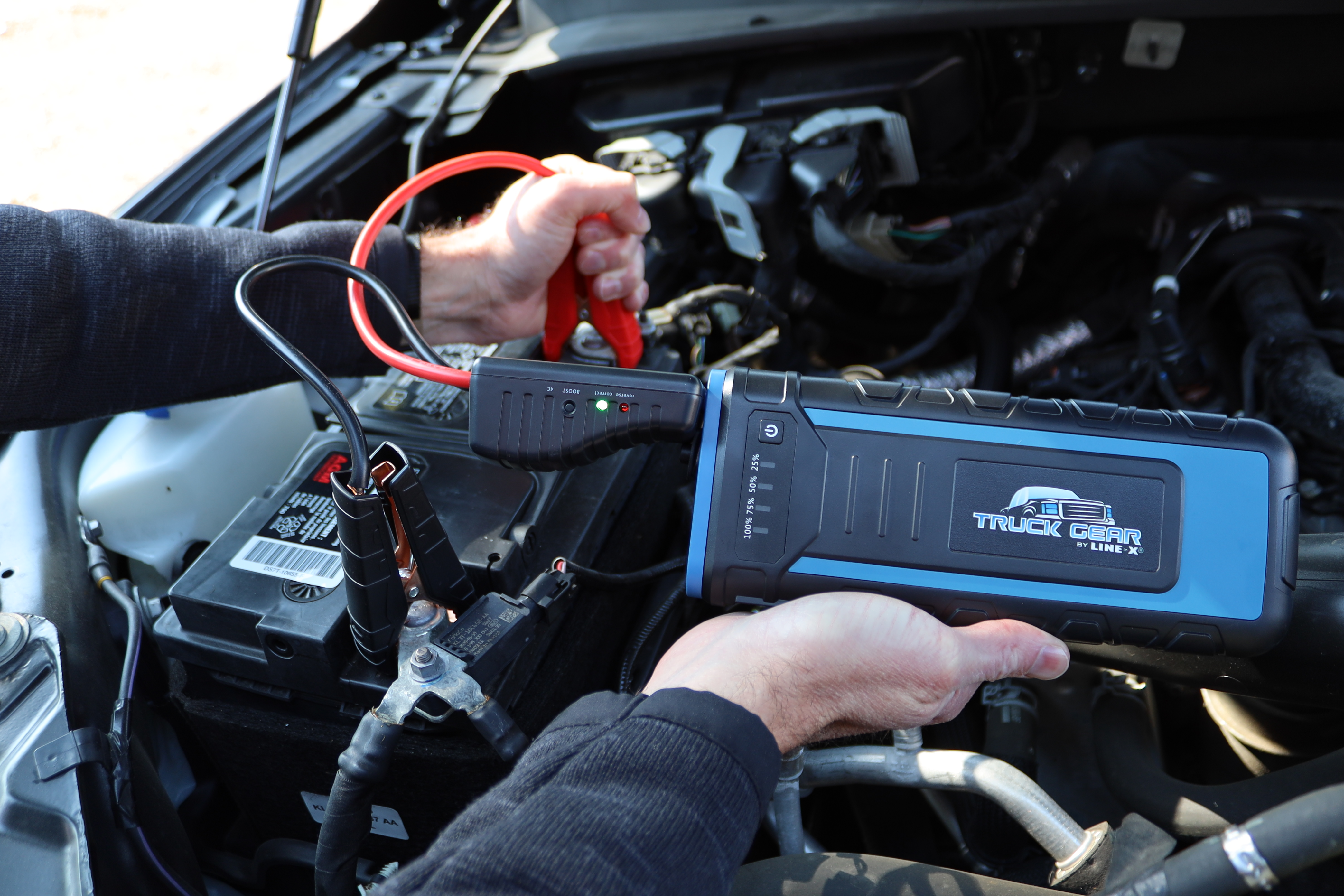
- Attach the red clamp to the battery’s positive (+) terminal.
- Attach the black clamp to the negative (–) terminal or, better, to a metal part of the engine block (away from the battery). This reduces the risk of sparks.
Non-obvious insight: Many beginners connect the negative clamp directly to the battery. For extra safety, use a clean, unpainted metal surface away from the battery itself.
3. Power On And Start
- Turn on the jump starter if it has a power switch.
- Wait a few seconds for the device to deliver power.
- Try to start your vehicle. If it doesn’t start after 4-5 seconds, wait 30 seconds before trying again. This prevents overheating.
4. Disconnect And Store
- Once the car starts, turn off the jump starter.
- Remove the clamps in reverse order: Black clamp first, then red clamp.
- Keep the engine running for at least 15 minutes, or drive for 20-30 minutes to recharge your battery.
Pro tip: Never leave the jump starter connected to the battery after starting. This can damage both the device and your car’s electronics.
Important Safety Tips
Jump starters are safer than old-style jumper cables, but there are still risks. Follow these rules every time:
- Check for leaks or damage: Never use a battery that is leaking, swollen, or cracked.
- Avoid flammable materials: Don’t jump a car near gasoline, oil, or open flames.
- Wear eye protection: A rare battery explosion can cause serious injury.
- Don’t touch clamps together: This can cause a short circuit and sparks.
- Don’t use in rain or wet conditions: Moisture increases the risk of electric shock.

Credit: www.youtube.com
Common Mistakes To Avoid
Many first-time users make simple errors. Avoid these to protect your car and yourself:
- Wrong clamp order: Always connect red (positive) first, then black (negative). Disconnect in reverse.
- Trying to jump a fully dead battery: If the battery is extremely old or damaged, even the best jump starter may not help.
- Using with the wrong voltage: Never use a 24V jump starter on a 12V car battery.
- Letting the jump starter run too long: Limit each jump attempt to a few seconds. Overheating can damage the device.
How To Choose The Right Portable Jump Starter
Choosing the right device is important. Here’s what really matters:
| Feature | What to Consider | Why It Matters |
|---|---|---|
| Peak Amps | At least 400A for small cars, 1000A+ for trucks/SUVs | Higher amps can start bigger engines |
| Battery Capacity | Measured in mAh; higher = more starts per charge | Lets you help yourself and others multiple times |
| Safety Features | Look for reverse-polarity, over-current, and short-circuit protection | Prevents damage and injury |
| Extra Functions | USB charging, flashlights, air pumps | Adds value and convenience |
| Size & Weight | Compact models are easier to store | Fit in glove box or under seat |
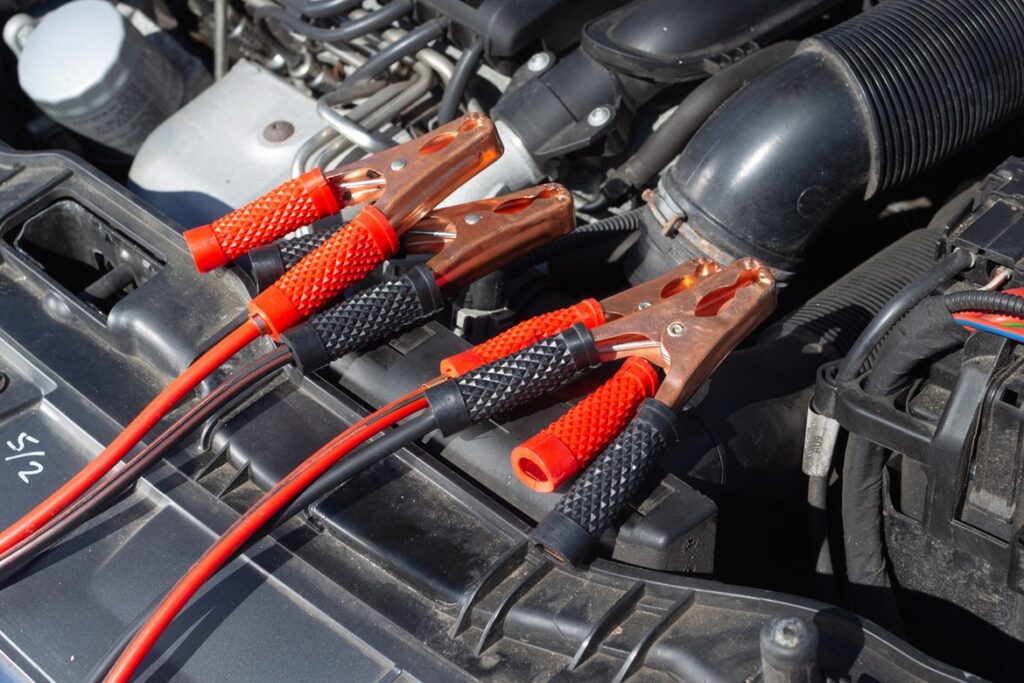
Common mistake: Many buyers pick the cheapest option without checking the peak amps. Always match the device to your vehicle’s engine size.
Credit: murraystirebargains.com
Maintaining Your Portable Jump Starter
If you want your jump starter to work when you need it, proper care is important:
- Recharge regularly: Even if unused, most devices lose charge over time. Top up every 3 months.
- Store in a cool, dry place: Extreme heat or cold can damage the battery.
- Keep it clean: Wipe the clamps and body, and check for rust or dirt.
- Test it: Try starting your car with the device every 6 months to make sure it works.
Non-obvious insight: If you leave your jump starter in the car during winter, its battery may lose power faster. Bring it inside during extreme weather for longer life.
When Not To Use A Portable Jump Starter
There are some situations where jump-starting is not safe:
- If the battery is leaking or swollen: This is dangerous. Replace the battery instead.
- If you smell burning or see smoke: Stop immediately and disconnect everything.
- If your car uses a 24V or special battery: Some trucks, RVs, or luxury cars need special equipment.
- If you are unsure about connections: Don’t guess—consult the manual or a professional.
What To Do After Jump-starting
Starting your car is only the first step. Here’s what to do next:
- Drive for 20-30 minutes: This lets your alternator recharge the battery.
- Check for warning lights: If the battery or engine light stays on, get your electrical system checked.
- Inspect your battery: If your car struggles to start again soon, your battery may be at the end of its life.
- Recharge your jump starter: Plug it in as soon as possible so it’s ready for next time.
Extra Uses For Your Portable Jump Starter
Many modern devices can do more than start your car. Here are a few extra uses:
- Charge your phone or laptop: USB and DC outputs make these jump starters great for camping or power outages.
- Use the flashlight: Helpful for emergencies or car repairs in the dark.
- Power small appliances: Some devices can run air pumps or even small fans.
Tip: Always check your device’s manual for safe usage limits.
Credit: www.linex.com
Real-world Example: Jump-starting In Extreme Cold
Imagine your car won’t start on a freezing winter morning. Car batteries lose power in the cold—sometimes up to 50%. A portable jump starter rated for low temperatures can save the day. Some models are tested to work down to –20°C (–4°F).
Always check the specs if you live in a cold region.
Portable Jump Starter Vs. Traditional Jumper Cables
Why not just use jumper cables? Here’s a quick comparison:
| Feature | Portable Jump Starter | Jumper Cables |
|---|---|---|
| Needs another vehicle | No | Yes |
| Size | Compact | Bulky |
| Safety | High (with protection features) | Low (risk of sparks, wrong connections) |
| Extra Features | USB, flashlight, air pump | None |
| Works in remote areas | Yes | No |
Frequently Asked Questions
How Long Does It Take To Jump-start A Car Using A Portable Jump Starter?
Usually, the process takes less than 5 minutes. Most cars start within a few seconds after connecting and powering on the jump starter. If it doesn’t work after a few tries, your battery might be too damaged.
Can I Use A Portable Jump Starter On Any Vehicle?
Most portable jump starters work for regular cars, SUVs, and small trucks. Always check the device’s peak amp rating and your vehicle’s engine size. Large trucks or diesel engines may need a more powerful model.
How Often Should I Recharge My Portable Jump Starter?
Manufacturers recommend recharging every 2–3 months, even if you haven’t used it. This keeps the internal battery healthy and ready for emergencies.
Is It Safe To Leave My Jump Starter In The Car?
Yes, but extreme temperatures can lower its performance or damage the battery. In very hot or cold weather, keep it inside your home or garage when possible.
Where Can I Find More Detailed Information On Battery Care?
For comprehensive battery safety and care, visit the Automotive Battery Safety Resource.
A portable jump starter is one of the most useful emergency tools you can keep in your car. With the right knowledge and a little practice, you’ll never be caught off guard by a dead battery again. Treat your device with care, follow safety steps, and you’ll stay on the road with confidence—no matter what surprises your car throws your way.