
When your car’s check engine light comes on, it can be worrying. But when you check the codes and see not just one, but multiple OBD codes at once, it can feel even more confusing. Many drivers wonder what it means when several trouble codes appear together. Does it signal a serious problem? Is there a trick to reading them? Or is your car’s computer just having a bad day? Understanding why multiple OBD (On-Board Diagnostics) codes show up together, what they might mean, and how to respond can save you time, money, and stress.
Let’s break down what causes multiple OBD codes, how to interpret them, common mistakes to avoid, and what steps to take when you face this situation. By the end, you’ll feel more confident the next time your scan tool shows a list of codes instead of just one.
What Are Obd Codes?
OBD codes are diagnostic trouble codes (DTCs) stored by your car’s computer. These codes help technicians and car owners identify what’s wrong with the vehicle. There are thousands of specific OBD-II codes, each relating to a different system or fault, such as the engine, transmission, or emissions controls.
When the car’s sensors detect a problem, the Engine Control Module (ECM) or Powertrain Control Module (PCM) records a code. This triggers the check engine light, inviting you to use a scan tool to read the stored codes.
OBD codes typically look like this:
- P0301: Cylinder 1 Misfire Detected
- P0171: System Too Lean (Bank 1)
- P0420: Catalyst System Efficiency Below Threshold
Each code offers a clue, but reading them correctly—especially when there are many—takes some understanding.
Why Do Multiple Obd Codes Appear At Once?
Seeing several codes at once doesn’t always mean you have several separate problems. In fact, it’s common for one issue to trigger multiple codes. Here’s why:
1. Chain Reaction
If one part fails, it can cause problems in other connected systems. For example, a bad oxygen sensor can cause fuel mixture issues, leading to misfires and catalytic converter codes.
2. Stored Vs. Active Codes
Some codes are “pending” or historical—they were set at some point but may not be happening now. Others are active and current. A scan tool can show both types, making the list look longer.
3. Wiring Or Ground Issues
A single broken wire or poor ground can interrupt several sensors, causing multiple codes to pop up in seconds.
4. Low Voltage Or Battery Problems
If your car’s battery is weak or has a bad connection, the computer might read false signals and set random codes.
5. Aftermarket Parts Or Modifications
Non-original sensors or parts might not work perfectly with your car’s computer, which can trigger multiple related codes.
6. Multiple Real Problems
Sometimes, especially in older or poorly maintained cars, several issues can happen at once. Each problem may set its own code.
How To Read And Interpret Multiple Obd Codes
When your scanner shows a list of codes, don’t panic. Here’s a step-by-step guide to help you make sense of them:
1. Note The Order Of Codes
OBD scan tools usually display codes in the order they were set. The first code is often the most important because it likely shows the root cause. Later codes may be side effects.
2. Group Codes By System
Look at which systems are affected. Are the codes all engine-related (P0xxx)? Or do they include transmission (P07xx), ABS (Cxxxx), or body (Bxxxx) codes? Grouping helps you see if there’s a single system in trouble.
3. Look For Patterns
If you see codes like P0171 (System Too Lean) and P0300 (Random Misfire) together, it points to a possible air or fuel delivery issue. If you see several sensor codes all at once, you might have a wiring or voltage problem.
4. Check For Common Threads
Sometimes, one component’s failure can explain multiple codes. For example, a bad mass airflow sensor (MAF) may cause fuel trim codes, misfire codes, and even catalytic converter codes. Don’t just replace everything at once—look for the connection.
5. Use Freeze Frame Data
Many scan tools can show “freeze frame” data—what was happening when the first code set. This snapshot helps you understand the context and decide which code to chase first.
Example: Real-world Multiple Code Scenario
Imagine you scan your car and get these codes:
- P0171 (System Too Lean, Bank 1)
- P0301 (Cylinder 1 Misfire)
- P0131 (O2 Sensor Circuit Low Voltage, Bank 1 Sensor 1)
These could all point to a vacuum leak near cylinder 1 or a faulty O2 sensor. Fixing the vacuum leak may clear all three codes at once.
Common Causes Of Multiple Obd Codes
Most drivers assume that each code means a separate problem. In reality, that’s rarely true. Here are some typical root causes that generate multiple codes at once:
Vacuum Leaks
A simple split hose or loose intake gasket can cause a lean condition, misfires, and O2 sensor codes. The engine’s computer responds by setting codes for all affected systems.
Electrical And Ground Issues
If a ground wire comes loose or a fuse blows, several sensors may lose their connection. This can cause a cluster of unrelated-looking codes. This is why checking wiring and grounds is a pro’s first step.
Bad Sensors
A failing sensor, like the MAF, can confuse the computer. It may set codes for the sensor itself, air/fuel mixture, and even catalytic converter efficiency.
Failing Catalytic Converter
A clogged or damaged converter often triggers O2 sensor codes, efficiency codes, and sometimes misfire or temperature sensor codes.
Low System Voltage
If the battery or alternator is weak, the computer may record a range of codes. Low voltage confuses sensors and modules.
Aftermarket Modifications
Parts like non-OEM oxygen sensors or cheap MAF sensors can cause the computer to set multiple codes, even if the parts are new.

Credit: www.ebay.com
Diagnosing Multiple Obd Codes: Step-by-step
When you see several codes, it’s easy to feel overwhelmed. Here’s a proven process to sort things out:
- Record all codes and note the order they appeared.
- Clear the codes and see which ones return first. Persistent codes are usually the most important.
- Inspect wiring and grounds visually, especially if many sensors are involved.
- Check for vacuum leaks by listening for hissing sounds or using a smoke machine.
- Test battery voltage and alternator output with a multimeter.
- Research the codes—see if other owners of your car model report similar combinations.
- Address the root cause first. Fixing the main issue often makes other codes disappear.
- Drive the car and rescan. Some codes need a drive cycle to clear or reappear.
Diagnosing Example: Using A Table
Here’s a quick comparison of code patterns and what they might mean:
| Code Pattern | Likely Cause | Suggested Action |
|---|---|---|
| Lean + Misfire + O2 Sensor | Vacuum leak or bad O2 sensor | Check hoses, inspect O2 sensor |
| Multiple Sensor Codes | Wiring, fuse, or ground issue | Check electrical connections |
| Random Codes After Battery Change | Low voltage or reset | Test battery and alternator |
| Transmission + Engine Codes | Shared sensor or wiring | Trace harness for damage |
Common Mistakes When Interpreting Multiple Codes
Many car owners and even some technicians make mistakes that waste time and money. Here’s what to avoid:
Replacing Parts Blindly
Don’t buy new parts for every code. Often, fixing the real problem will clear all related codes. For example, replacing an O2 sensor won’t help if the real problem is a vacuum leak.
Ignoring Wiring
Many multiple-code problems start with wiring, not the components themselves. Always check wires and grounds before replacing expensive sensors.
Overlooking Battery And Charging System
A weak battery can cause strange codes. Test your battery and alternator before chasing complicated problems.
Not Clearing And Retesting
After fixing a problem, clear the codes and drive the car. If codes don’t return, you solved it. If they come back, you may have missed something.
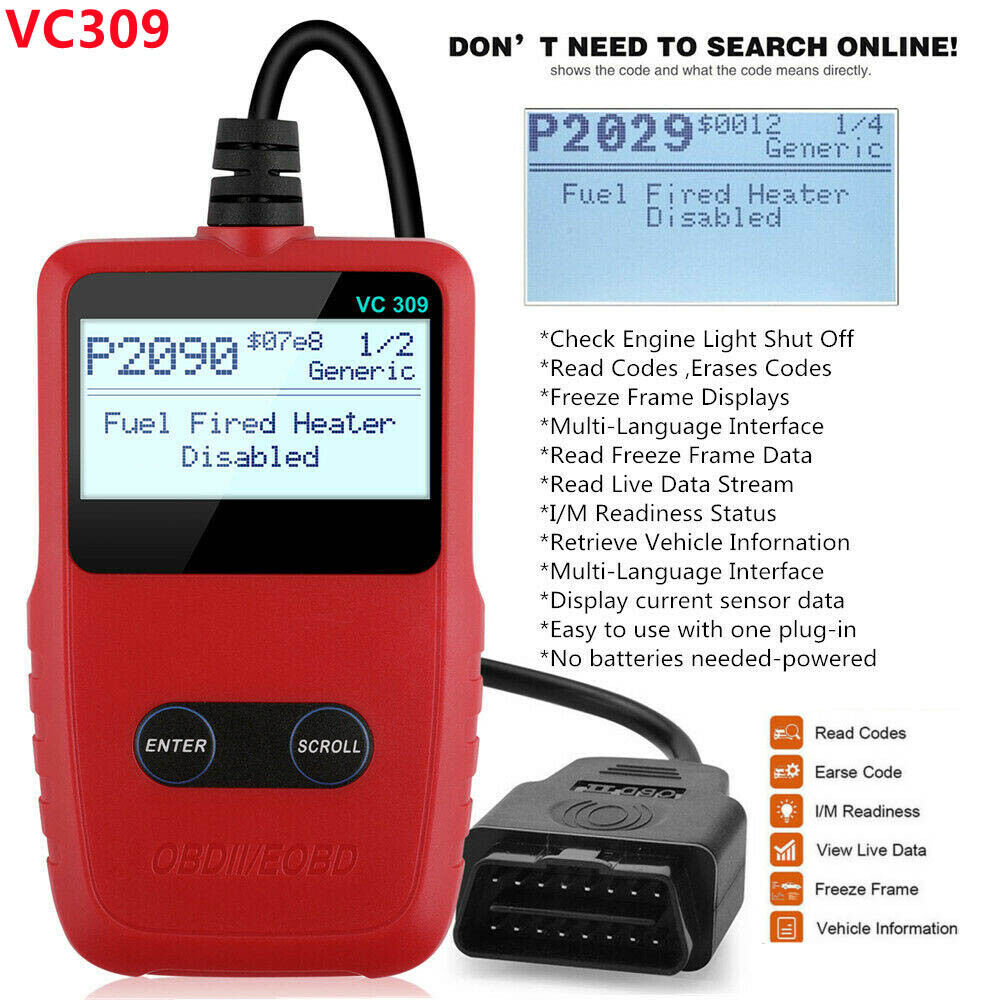
Credit: www.ebay.com
How Mechanics Approach Multiple Obd Codes
Professional technicians have a routine when they face a car with many codes:
- Start with a visual inspection: Look for obvious problems like loose wires, cracked hoses, or corrosion.
- Use service bulletins: Many car brands have known issues that cause clusters of codes. Checking these can save hours.
- Check freeze frame data: This data shows the exact moment when a code was set.
- Use advanced scan tools: Pro tools can show live data, letting mechanics watch sensors in real time.
- Follow a diagnostic flowchart: Many repair manuals offer step-by-step guides for common code combinations.
When Should You Seek Professional Help?
If you’ve checked the basics—wiring, battery, hoses—and still see multiple codes, it may be time to call a professional. Here are signs you need expert help:
- The car won’t start or runs very poorly.
- Codes return immediately after clearing.
- You see unrelated codes from different systems (engine, transmission, ABS).
- You don’t have the tools to check wiring or live sensor data.
A skilled mechanic can trace electrical problems, check technical bulletins, and use advanced diagnostics.
Credit: www.icarsoft-us.com
Preventing Multiple Obd Codes
Prevention is often easier than repair. Here are ways to keep OBD codes (and your check engine light) away:
- Regular Maintenance: Change air filters, spark plugs, and fluids on schedule.
- Inspect Wiring: Look for rodents, corrosion, or loose connectors, especially after winter or long storage.
- Use Quality Parts: Cheap or incompatible sensors often cause trouble.
- Check Battery Health: Replace old batteries before they fail.
- Fix Small Problems Early: Don’t ignore minor issues—small leaks or loose wires can turn into bigger problems.
Data Table: Common Multiple Code Combinations And Their Causes
Here is a summary table to help quickly identify the most common code combinations and what they usually mean:
| Codes Seen | Usual Suspect | Car Models Often Affected |
|---|---|---|
| P0171, P0174, P0300 | Vacuum leaks or MAF sensor | Ford, GM, Toyota |
| P0131, P0151, P0420 | O2 sensors or catalytic converter | Honda, Nissan |
| P0101, P0113, P0171 | MAF sensor or intake leaks | Volkswagen, Hyundai |
| P0301, P0302, P0303 | Ignition coils or spark plugs | BMW, Mercedes |
Two Insights Most Beginners Miss
- Not All Codes Are Real-Time: Many codes reflect problems that happened in the past but may not be happening now. Always check which codes are “pending” versus “active.” This can save you from chasing ghosts.
- One Small Issue Can Cause Many Codes: A simple loose vacuum hose or a bad ground can trigger a flood of codes. Never assume you have ten problems just because there are ten codes.
Extra Tip: Using Online Resources
Websites like OBD-Codes.com offer detailed explanations of each code. They also host forums where you can see if others have had the same set of codes in your car model. Sometimes, a known technical service bulletin (TSB) from the manufacturer explains why multiple codes appear together.
Frequently Asked Questions
What Does It Mean If I Get 5 Or More Obd Codes At Once?
Usually, it means a single issue is causing problems in several systems. Check for things like vacuum leaks, wiring issues, or a weak battery before replacing parts.
Will Clearing The Codes Fix My Car?
Clearing codes only erases them from the computer—it does not fix the problem. If the root cause isn’t fixed, the codes (and check engine light) will return.
Can A Bad Sensor Cause Multiple Codes?
Yes. A failing sensor, especially one involved in engine management like the MAF or O2 sensor, can cause several trouble codes to appear together.
Should I Replace Parts For Each Code?
No. Focus on the first code and find the underlying cause. Often, fixing the main issue will resolve all related codes.
Is It Safe To Keep Driving With Multiple Obd Codes?
It depends. If the car runs normally, you can usually drive short distances to a repair shop. But if the car runs poorly, loses power, or the check engine light flashes, stop driving and seek help right away.
Getting multiple OBD codes at once can be stressful, but with careful diagnosis and a systematic approach, you can usually find and fix the real problem. Understanding code patterns, focusing on root causes, and avoiding common mistakes will help you get back on the road with confidence.