
A flashing check engine light and a rough-running engine can worry any driver. When your car shows the P0301 Cylinder 1 Misfire code, it means something is wrong with the first cylinder. You might notice the engine shaking, power loss, or even trouble starting. This problem is common in many cars, but the cause is not always simple. Fixing it quickly can save money and prevent bigger engine damage.
Understanding the P0301 code is not just about reading error numbers. It means learning why it happens, what parts are affected, and how to fix it. Many drivers make mistakes when diagnosing a misfire, which can lead to wasted time and money. This guide explains everything you need to know about P0301 Cylinder 1 Misfire, from symptoms and causes to solutions and prevention. Let’s dive in and clear up this confusing issue.
What Is P0301 Cylinder 1 Misfire?
The P0301 code is a specific message from your car’s engine computer. It means that the first cylinder is not firing correctly. A misfire happens when the air-fuel mixture in a cylinder doesn’t ignite or burn as it should. This can lead to engine shake, loss of power, and increased emissions.
Modern cars use sensors to track engine performance. When the computer detects a misfire, it sets a code like P0301. Each number after the “P” tells which cylinder has the problem. For P0301, it’s Cylinder 1.
Why Do Misfires Matter?
Misfires are more than just a nuisance. If ignored, they can:
- Damage the catalytic converter
- Reduce fuel efficiency
- Increase emissions
- Cause engine overheating
- Lead to expensive repairs
A single misfire can affect the whole engine’s balance, so fixing it is important.
Symptoms Of P0301 Cylinder 1 Misfire
If your car has the P0301 code, you might notice these clear signs:
- Rough idle: The engine shakes or vibrates, especially when stopped.
- Loss of power: The car feels weak, especially when accelerating.
- Check engine light: Usually flashes or stays on.
- Hard starts: Engine takes longer to start or needs more tries.
- Poor fuel economy: You notice you need more gas than usual.
- Backfiring: Loud popping noises from the exhaust.
- Unusual exhaust smell: Smell of fuel or burning from the tailpipe.
Some symptoms can be mild at first. If you catch them early, repairs are easier and cheaper.
Common Causes Of P0301 Cylinder 1 Misfire
There are many reasons why Cylinder 1 might misfire. Knowing the exact cause makes fixing it faster and less costly. Here are the most common:
- Faulty spark plug: Old, damaged, or dirty spark plugs can’t ignite fuel.
- Bad ignition coil: The coil sends electricity to the spark plug. If it fails, the plug won’t fire.
- Wiring problems: Broken, corroded, or loose wires can stop power from reaching the coil or plug.
- Fuel injector issues: If the injector is clogged or broken, fuel doesn’t reach the cylinder.
- Vacuum leaks: Air leaks in hoses or gaskets cause wrong air-fuel mix.
- Compression loss: Worn piston rings, valves, or cylinder walls reduce engine compression.
- ECU problems: The engine computer might misread signals or fail to control timing.
- Dirty air filter: If the filter is clogged, the engine gets less air.
- Sensor failure: Bad oxygen or crankshaft sensors can confuse the engine computer.
- Mechanical damage: Broken timing belt, camshaft, or other engine parts.
Many beginners overlook wiring and sensor problems, focusing only on spark plugs. Always check the full system.
Diagnosing P0301 Cylinder 1 Misfire
Finding the real cause of a misfire takes skill and patience. Here’s a step-by-step way to diagnose the issue:
Step 1: Scan For Codes
Use an OBD-II scanner to check for codes. Make sure P0301 is present and look for other codes (like P0171 or P0300). Multiple codes can mean a bigger issue.
Step 2: Inspect Spark Plug
Remove the Cylinder 1 spark plug and check for:
- Wear
- Carbon build-up
- Oil or fuel fouling
Replace if needed.
Step 3: Test Ignition Coil
Swap the ignition coil from Cylinder 1 with another cylinder. If the misfire moves, the coil is bad.
Step 4: Check Wiring
Look for loose, frayed, or corroded wires around the coil and spark plug. Fix any problems.
Step 5: Examine Fuel Injector
Listen for clicking sounds with a mechanic’s stethoscope. If it’s silent, the injector may be dead.
Step 6: Compression Test
Use a compression gauge to test Cylinder 1. Low pressure means internal damage.
Step 7: Check For Vacuum Leaks
Spray carb cleaner around intake hoses while the engine runs. If idle changes, there’s a leak.
Step 8: Inspect Sensors
Check readings from oxygen, crankshaft, and camshaft sensors. Bad readings can cause misfires.
Step 9: Look For Mechanical Damage
If all else fails, inspect timing belts, camshafts, and other moving parts.
Non-obvious insight: Many misfires are caused by simple wiring faults or sensor errors, not expensive engine parts. Always check these first before replacing major components.
Fixing P0301 Cylinder 1 Misfire
The right fix depends on the cause. Here are the most common solutions:
- Replace spark plug: Use the exact type recommended by your car’s manual.
- Change ignition coil: Buy a quality coil, not the cheapest one.
- Repair wiring: Clean, tighten, or replace wires and connectors.
- Clean or replace fuel injector: Use injector cleaner or swap for a new one.
- Seal vacuum leaks: Replace hoses or gaskets as needed.
- Fix compression problems: This usually means rebuilding engine parts.
- Update ECU software: Sometimes, a software update fixes sensor confusion.
- Change air filter: A clean filter helps the engine breathe.
- Replace bad sensors: Use OEM (original) sensors for best results.
- Repair mechanical damage: This can be costly and needs a mechanic.
Practical tip: Don’t just clear the code and hope it goes away. Always fix the root cause. If you’re unsure, consult a trusted mechanic.
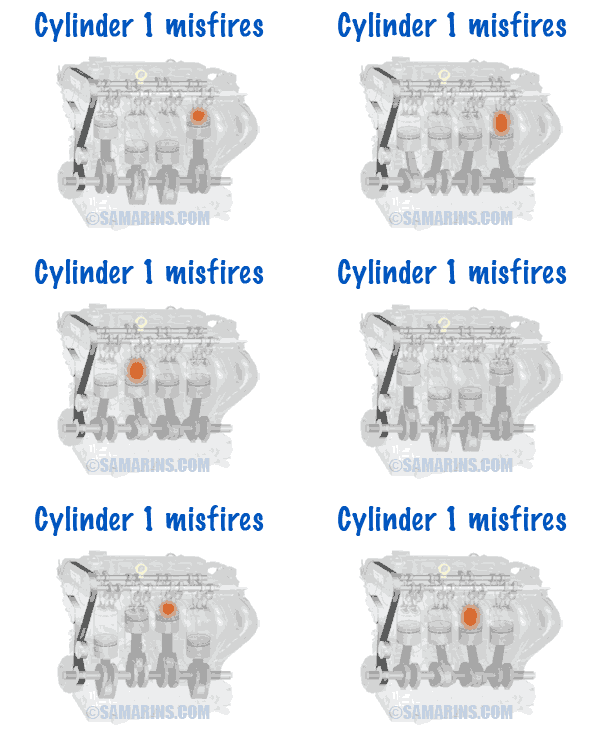
Cylinder 1 Location Guide
Knowing where Cylinder 1 is helps with repairs. It’s not always the first one you see. Most engines number cylinders from front to back (or left to right on V engines).
- On inline engines (4, 6, or 8 cylinders), Cylinder 1 is usually at the front, closest to the timing belt.
- On V engines (V6, V8), Cylinder 1 is often on the driver’s side.
Check your car’s manual for the exact location.
Effects Of Ignoring P0301 Cylinder 1 Misfire
If you don’t fix a misfire, here’s what can happen:
- Catalytic converter failure: Unburned fuel damages the converter, costing $500–$2,000 to replace.
- Engine damage: Over time, misfires cause wear on pistons, valves, and cylinder walls.
- Poor performance: You’ll lose power and fuel efficiency.
- Higher emissions: Failed emissions tests can lead to fines.
- Breakdowns: The car may stall or refuse to start.
Data: According to the EPA, misfiring engines can increase emissions by up to 30% and cause up to 10% loss in fuel economy.
Cost Comparison: Fixing P0301 Cylinder 1 Misfire
Here’s a comparison of typical repair costs for different causes:
| Problem | DIY Cost (USD) | Mechanic Cost (USD) | Time (Hours) |
|---|---|---|---|
| Spark Plug | $10–$30 | $50–$120 | 0.5 |
| Ignition Coil | $30–$80 | $100–$250 | 1 |
| Fuel Injector | $40–$120 | $150–$300 | 1–2 |
| Wiring | $5–$50 | $50–$150 | 0.5–1 |
| Vacuum Leak | $10–$50 | $80–$200 | 1 |
| Compression Repair | N/A | $500–$2,000 | 5–10 |
| Sensor Replacement | $20–$80 | $100–$250 | 1 |
Non-obvious tip: Many repairs are affordable if you do them yourself. However, compression repairs and mechanical fixes require a skilled mechanic.
Credit: www.samarins.com
How To Prevent P0301 Cylinder 1 Misfire
Prevention is easier and cheaper than fixing problems. Here’s how to keep your engine healthy:
- Regular spark plug changes: Follow your car’s maintenance schedule.
- Inspect ignition coils: Look for cracks or signs of wear.
- Keep wiring clean: Check for corrosion or loose connections.
- Use quality fuel: Cheap fuel can clog injectors.
- Replace air filters: Do it every 12,000–15,000 miles.
- Check sensors: Scan for codes during routine maintenance.
- Fix leaks quickly: Don’t ignore oil or coolant leaks.
- Listen for engine changes: Don’t wait for the check engine light.
- Follow maintenance schedule: Your manual tells you when to service parts.
- Drive gently: Hard driving stresses engine parts.
| Preventive Action | Recommended Interval |
|---|---|
| Spark Plug Change | Every 30,000–60,000 miles |
| Air Filter Replacement | Every 12,000–15,000 miles |
| Fuel Injector Cleaning | Every 20,000–40,000 miles |
| Sensor Check | Annually |
| Wiring Inspection | Every oil change |
Real-world Example: Solving P0301
Let’s say your car has the P0301 code. You scan for codes and confirm the misfire. You check the spark plug and see it’s worn. After replacing it, the code comes back. Next, you swap the ignition coil with another cylinder.
The misfire moves—so you know the coil is bad. Replacing the coil fixes the problem.
This example shows why step-by-step diagnosis is important. Don’t just replace random parts.
Credit: www.reddit.com
Advanced Tips For Difficult Cases
Sometimes, the cause is hidden. Here are advanced tips:
- Use live data: OBD-II scanners can show real-time sensor readings.
- Check fuel pressure: Low pressure can cause misfires.
- Look for hidden leaks: Smoke testers can find tiny vacuum leaks.
- Test compression cold and hot: Some problems only show up when the engine is warm.
- Inspect ECU ground wires: Bad grounds can confuse the computer.
Many mechanics miss these details. If your misfire won’t go away, ask for advanced testing.
Comparison: P0301 Vs Other Misfire Codes
Here’s how P0301 compares to other misfire codes:
| Code | Cylinder | Common Causes | Symptoms |
|---|---|---|---|
| P0301 | 1 | Spark plug, coil, wiring, injector | Rough idle, power loss, check engine light |
| P0302 | 2 | Spark plug, coil, wiring, injector | Similar to P0301 |
| P0300 | Random | Multiple cylinders, fuel delivery, sensors | Engine shakes, stalling |
| P0304 | 4 | Spark plug, coil, wiring, injector | Similar to P0301 |
P0301 is specific to Cylinder 1, but other codes can show similar symptoms. Always check which cylinder is affected.

Credit: www.youtube.com
Frequently Asked Questions
What Does P0301 Mean?
P0301 means your engine’s first cylinder is misfiring. The air-fuel mix is not burning correctly, causing rough performance and possible engine damage.
Is It Safe To Drive With A P0301 Code?
It’s risky. Driving with a misfire can damage the catalytic converter and other engine parts. It’s best to fix the problem before driving far.
How Can I Find Cylinder 1 In My Car?
Check your car’s manual. On most inline engines, Cylinder 1 is at the front. On V engines, it’s usually on the driver’s side.
Can A Bad Sensor Cause P0301?
Yes. Oxygen, crankshaft, or camshaft sensors can cause misfires if they send wrong signals to the engine computer.
What Is The Best Way To Fix P0301?
The best way is to diagnose the cause step by step. Start with the spark plug and coil, then check wiring, injector, and compression. Don’t guess—test each part.
Solving a P0301 Cylinder 1 Misfire takes careful work, but it’s possible for most drivers with the right approach. Don’t ignore the signs—quick action protects your engine and keeps your car running strong. If you want more technical details, you can check the OBD-II PIDs page for deeper info.