
P0496 Evap High Purge Flow: Causes, Diagnosis, And Solutions
If you have seen the code P0496 Evap High Purge Flow on your vehicle’s diagnostic system, you might feel worried or confused. This trouble code is common, but many drivers do not understand what it means or how to fix it. Knowing how the EVAP system works and what causes a high purge flow is important to keep your car running smoothly and avoid bigger problems.
In this article, you will learn what P0496 means, how the EVAP system works, the symptoms and risks, how to diagnose the problem, and the best solutions. Whether you are a car owner, a beginner in car repair, or just want to know more, this guide will help you make smart decisions about your vehicle’s health.
What Is P0496 Evap High Purge Flow?
The P0496 code points to a problem in the vehicle’s Evaporative Emission Control System (EVAP). Specifically, it means the engine control module (ECM) has detected a high purge flow in the EVAP system, even when it shouldn’t happen.
The EVAP system is designed to prevent fuel vapors from escaping into the air. Instead, it stores these vapors in a charcoal canister and then sends them to the engine to be burned. If the purge flow is too high at the wrong time, it can affect engine performance and emission levels.
How The Evap System Works
To understand P0496, it helps to know the basics of the EVAP system:
- Fuel vapors from the gas tank are stored in a charcoal canister.
- The purge valve controls when vapors are sent into the engine.
- The ECM decides when to open or close the purge valve.
- The system only allows vapors into the engine under certain conditions, like when driving and the engine is warm.
When there is a high purge flow detected by the ECM, it means too much vapor is entering the engine, often at the wrong time (such as during startup or idle).
Common Symptoms Of P0496
Drivers may not always notice big problems at first. However, here are the most frequent signs:
- Check Engine Light – The CEL will turn on. This is usually the first thing most drivers see.
- Hard Starting – The engine may take longer to start or require several tries, especially after refueling.
- Rough Idle – The engine might run unevenly or shake when stopped.
- Reduced Fuel Economy – More fuel is used because the engine is getting extra vapor.
- Failed Emissions Test – The vehicle may not pass a smog or emissions test.
- Fuel Odor – Sometimes, you might smell gasoline around the car.
These symptoms can be mild, but ignoring them can lead to bigger issues over time.
What Causes P0496?
Several things can trigger a P0496 code. Below are the most common causes:
1. Faulty Purge Valve
The purge valve may stick open, allowing too much vapor into the engine. This is the most frequent cause.
2. Defective Canister Vent Valve
If the vent valve is stuck or not working, the system cannot control vapor flow.
3. Damaged Evap Canister
A cracked or clogged canister can affect how vapors are stored and released.
4. Bad Fuel Tank Pressure Sensor
The pressure sensor tells the ECM about vapor levels. If it sends wrong data, the ECM may open the purge valve at the wrong time.
5. Wiring Or Connector Problems
Loose, damaged, or corroded wires can prevent the ECM from controlling the EVAP system.
6. Ecm/pcm Software Issues
Sometimes, a software update is needed if the ECM/PCM is not managing the system correctly.
7. Fuel Cap Problems
A loose or damaged fuel cap can affect the pressure in the system, confusing the sensors.
8. Faulty Hoses
Cracked or disconnected hoses can lead to leaks and incorrect vapor flow.

Credit: www.youtube.com
Diagnosing P0496
Finding the real cause is important. Here’s how you or a mechanic can diagnose the problem:
Step 1: Scan For Codes
Use an OBD-II scanner to confirm P0496 is present and check for other related codes.
Step 2: Inspect The Purge Valve
Check if the purge valve is stuck open by removing it and trying to blow air through it. If air passes when it shouldn’t, it’s faulty.
Step 3: Check The Vent Valve
Make sure the canister vent valve opens and closes correctly. Listen for clicking sounds or test with a multimeter.
Step 4: Inspect Hoses And Connections
Look for cracks, leaks, or loose connections in all EVAP hoses and lines.
Step 5: Test The Fuel Cap
Replace or tighten the fuel cap, then clear the code and see if it returns.
Step 6: Check The Canister
Examine the charcoal canister for damage or fuel saturation. Replace if needed.
Step 7: Evaluate Sensors
Test the fuel tank pressure sensor and check wiring for any signs of damage.
Step 8: Review Ecm/pcm Software
Check with a dealership or repair shop to see if a software update is needed.
How To Fix P0496
Once you know the cause, you can fix P0496 using these common solutions:
- Replace the Purge Valve – If stuck open, install a new OEM or quality aftermarket part.
- Repair/Replace Hoses – Fix any leaks or damaged hoses.
- Change the Vent Valve – If not working, replace it with a compatible part.
- Replace the Fuel Cap – Use a new cap if the old one is faulty.
- Swap the Canister – If saturated or broken, install a new charcoal canister.
- Fix Wiring Issues – Repair or replace any bad wiring or connectors.
- Update ECM/PCM Software – Let a dealer update the system if needed.
- Replace Sensors – If the fuel tank pressure sensor is bad, change it for a new one.
After repairs, always reset the code using an OBD-II scanner and test-drive the car to see if the light returns.
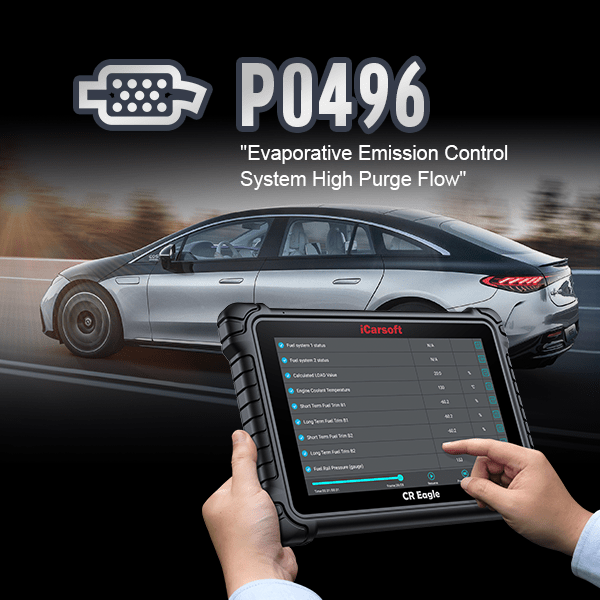
Credit: www.icarsoft-us.com
Real-world Example: Diagnosing A Chevrolet Cruze
Let’s look at a practical example. A 2014 Chevrolet Cruze showed a P0496 code and was hard to start after fueling. The mechanic checked the purge valve first and found it was stuck open. Replacing the valve fixed the problem, the code was cleared, and the car ran normally again.
This case shows that starting with the most common causes (purge valve) often solves the issue quickly.
Comparing Common Causes And Solutions
Here’s a simple comparison of the most frequent causes and the fixes for P0496:
| Cause | How to Identify | Solution |
|---|---|---|
| Stuck Purge Valve | Air passes through when closed | Replace purge valve |
| Bad Vent Valve | No clicking sound or faulty reading | Replace vent valve |
| Faulty Fuel Cap | Loose, cracked, or warning on dash | Replace fuel cap |
| Broken Hoses | Visible cracks or leaks | Repair/replace hoses |
| Canister Issue | Fuel smell, poor vapor storage | Replace canister |
Cost To Fix P0496
Repair costs depend on the cause and your car model. Here are some average price ranges:
| Repair Item | Average Cost (Parts & Labor) |
|---|---|
| Purge Valve | $60 – $180 |
| Vent Valve | $70 – $200 |
| Fuel Cap | $20 – $50 |
| Charcoal Canister | $120 – $400 |
| Labor (1 hour) | $70 – $130 |
Prices may be higher at dealerships or for some European or luxury vehicles.
What Happens If You Ignore P0496?
Ignoring the P0496 code may not cause immediate breakdown, but it can lead to:
- Poor fuel economy due to extra vapor in the engine
- Difficulty starting the car, especially after refueling
- Failed emissions tests, which can lead to fines or not being able to renew your registration
- Possible damage to the catalytic converter or other emission parts
Fixing the problem early saves money and keeps your car safe and eco-friendly.
Non-obvious Insights
Most beginners assume that a new fuel cap will always fix the code. While a bad cap is common for some EVAP codes, for P0496, the purge valve is more often the root cause. Also, some drivers clear the code without fixing the issue, but the light usually returns until the actual problem is solved.
Another detail: P0496 is more likely to appear after refueling. If your car is hard to start right after filling up, that’s a strong hint the purge valve is stuck open.
Preventing Future Evap Issues
To avoid P0496 and other EVAP system problems:
- Always tighten the fuel cap until it clicks after refueling.
- Use quality fuel to reduce deposits in the EVAP lines and valves.
- Inspect hoses and connectors during regular oil changes.
- Address the Check Engine Light as soon as it appears—do not ignore it.
- Keep your car’s software updated at the dealership if recalls or updates are announced.
These habits help keep your emission system healthy.
When To Seek Professional Help
While some fixes (like replacing a fuel cap) are simple, diagnosing and repairing EVAP problems can be tricky. If you are unsure or the code keeps returning, visit a trusted mechanic. EVAP systems are tightly linked to emission laws, so proper repair matters.
For a deeper technical overview, the Wikipedia page on Evaporative Emission Control explains the science and regulations behind these systems.
Frequently Asked Questions
What Does P0496 Evap High Purge Flow Mean?
P0496 means the vehicle’s computer has detected a higher-than-normal vapor flow into the engine from the EVAP system, often caused by a stuck purge valve or other control issue.
Can I Drive With A P0496 Code?
You can drive for a short time, but it’s best to fix the problem soon. Driving too long can cause poor fuel economy and may damage emission parts.
Will A Loose Fuel Cap Cause P0496?
A loose or damaged fuel cap can sometimes trigger the code, but for P0496, a faulty purge valve is more likely.
How Do I Reset The P0496 Code?
First, repair the cause. Then, use an OBD-II scanner to clear the code. If the problem is fixed, the light should stay off.
Is P0496 An Emissions Test Failure?
Yes, if your car shows the P0496 code, it will usually fail an emissions or smog test until you repair the issue.
Catching and fixing P0496 Evap High Purge Flow early helps your car run better, saves fuel, and keeps you compliant with emission rules. Don’t ignore the signs—quick action means less stress and more reliable driving.

Credit: www.reddit.com