
Payload capacity is the maximum weight your vehicle can carry in its cab and bed, while towing capacity is the maximum weight it can pull with a trailer. The essential difference is carrying versus pulling. Understanding both is critical for operating your truck safely and preventing damage.
What Is Payload Capacity? (Weight in Your Truck)
Payload capacity refers to the total weight a truck can safely carry on its own frame. This isn’t just about cargo in the bed; it’s a comprehensive measurement that includes everything adding weight to the vehicle itself. When you see a payload rating, it accounts for the combined weight of the driver, all passengers, any gear inside the cab, and all cargo loaded into the truck bed.
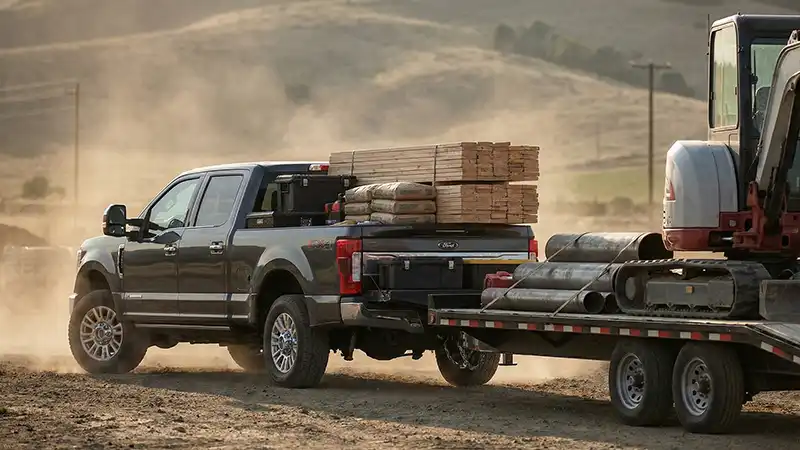
Think of it as the total burden placed on the truck’s suspension, chassis, and tires. Every item, from a toolbox to a cooler to your passengers, contributes to the payload. A common mistake is forgetting that the tongue weight of a trailer also counts against your payload capacity, a crucial detail we’ll explore later.
Exceeding the payload rating can strain your vehicle’s components, leading to premature wear on the suspension, brakes, and tires. It also negatively affects handling and stability, making the vehicle harder to control, especially during sudden maneuvers or braking.
What Is Towing Capacity? (Weight Behind Your Truck)
Towing capacity is the maximum weight a vehicle is rated to pull behind it. This figure represents the total weight of the trailer plus all the cargo loaded onto it. Whether you’re pulling a boat, a travel trailer, or a flatbed with equipment, the entire combined weight of that trailer assembly must be at or below your vehicle’s towing capacity.
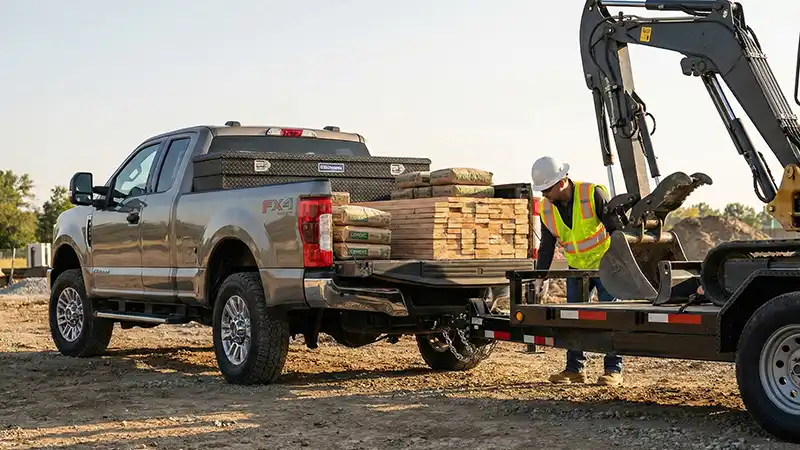
Manufacturers determine this rating through extensive testing that considers the vehicle’s engine power, transmission strength, axle gearing, brake effectiveness, and frame durability. It’s a measure of the vehicle’s ability to pull a load safely without overheating the engine or transmission, and while maintaining the ability to stop effectively.
There are often different towing ratings for the same truck model based on its configuration. Factors like the engine size, axle ratio, and whether it’s equipped with a factory tow package can significantly alter the maximum towing capacity. It’s also important to distinguish between conventional towing (using a hitch on the bumper or frame) and fifth-wheel/gooseneck towing, which often allows for much higher capacities.
Payload vs Towing Capacity: The Core Differences Explained
While both ratings define weight limits, payload and towing capacity measure two fundamentally different forces acting on your vehicle. Payload is about carrying weight, which pushes down on the truck’s suspension. Towing is about pulling weight, which puts a longitudinal strain on the truck’s frame and drivetrain.
The most common point of confusion is that these two limits are not independent. They work together, and often, a vehicle’s payload capacity becomes the limiting factor long before its maximum towing capacity is reached. This is because a portion of the trailer’s weight is transferred to the truck through the hitch, consuming a significant chunk of the available payload.
Here is a simple breakdown of the key distinctions:
| Aspect | Payload Capacity | Towing Capacity |
|---|---|---|
| What it Measures | Weight carried IN/ON the vehicle (cab and bed). | Weight pulled BEHIND the vehicle (trailer and its contents). |
| What’s Included | Passengers, cargo, tools, and trailer tongue weight. | The total weight of the trailer and everything on it. |
| Primary Stress On | Suspension, tires, axles, and frame (vertical load). | Engine, transmission, frame, and brakes (pulling and stopping forces). |
| Governing Acronym | GVWR (Gross Vehicle Weight Rating) | GCWR (Gross Combined Weight Rating) |
Key Terms You Must Know: GVWR, GCWR, and Curb Weight
To truly master your vehicle’s limits, you need to understand the terminology found on its compliance sticker. These acronyms are the building blocks for all weight calculations.
Curb Weight
Curb weight is the weight of your vehicle with all standard equipment and a full tank of fuel, but with no passengers or cargo. It’s the baseline weight of the truck as it sits empty. You can sometimes find this in your owner’s manual, but the most accurate way to know your specific truck’s curb weight is to weigh it at a certified scale.
GVWR (Gross Vehicle Weight Rating)
The GVWR is the absolute maximum weight your vehicle can be, including its curb weight plus all payload (passengers, cargo, and tongue weight). The suspension, axles, wheels, and tires are all designed to handle this specific maximum weight. You can calculate your maximum payload capacity with a simple formula: Payload Capacity = GVWR – Curb Weight.
GCWR (Gross Combined Weight Rating)
The GCWR is the maximum allowable weight of the fully loaded vehicle and the fully loaded trailer combined. It’s the total weight of the entire moving system. Your truck’s engine, transmission, and brakes are rated to safely handle pulling and stopping this amount of combined weight. Exceeding the GCWR is extremely dangerous as it severely compromises your ability to stop in an emergency.
How Tongue Weight Connects Payload and Towing
Tongue weight is the critical link between payload and towing capacity. It is the downward force that the trailer tongue exerts on the hitch of the tow vehicle. This weight is effectively carried by the truck, so it must be counted as part of your payload.
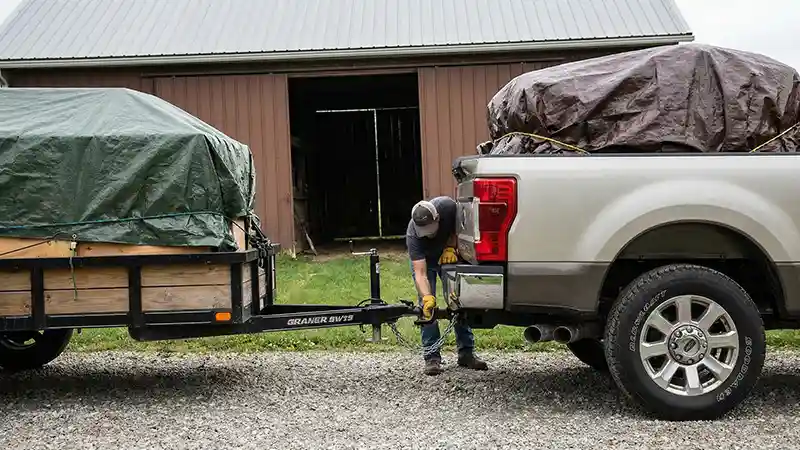
For a conventional trailer, the tongue weight should be approximately 10-15% of the total loaded trailer weight. For a fifth-wheel or gooseneck trailer, the pin weight (the equivalent of tongue weight) is much higher, typically 15-25% of the trailer’s weight. This is why payload capacity is so important for fifth-wheel towing; a 15,000-pound fifth-wheel trailer could place over 3,000 pounds of pin weight directly into the truck’s bed, using up most of the payload capacity of even a heavy-duty truck.
Forgetting to account for tongue weight is one of the most common mistakes drivers make. You might think you are under your towing limit, but a heavy tongue weight could easily push you over your truck’s GVWR, creating an unsafe driving condition.
How to Find Your Vehicle’s Official Ratings
Guessing your truck’s capacities is never a good idea. The official ratings are provided by the manufacturer and can be found in a few specific places. Here’s how to locate them:
- Check the Driver’s Door Jamb: The most important information is on the stickers inside the driver’s side door. Look for the “Tire and Loading Information” sticker for payload and the “Safety Compliance Certification Label” for the GVWR and axle weight ratings (GAWR).
- Consult the Owner’s Manual: Your vehicle’s owner’s manual contains a dedicated section on towing and loading. It often includes detailed charts that show towing capacities based on your specific engine, axle ratio, and cab configuration.
- Visit the Manufacturer’s Website: Most automakers offer online towing guides. You can often enter your vehicle’s Vehicle Identification Number (VIN) to get the exact specifications for your truck as it left the factory.
- Weigh Your Vehicle: To get the most accurate numbers, take your fully loaded truck and trailer to a certified CAT scale (found at most truck stops). This will give you the real-world weights for your axles, vehicle, and trailer, allowing you to compare them directly against your GVWR and GCWR.
The Real Dangers of Exceeding Load Limits
Ignoring your vehicle’s payload and towing capacities is not just a technical violation; it’s a serious safety risk. Overloading a vehicle creates a dangerous situation for you, your passengers, and everyone else on the road.
- Reduced Braking Performance: An overloaded vehicle requires a much longer distance to stop. Your brakes are designed for the GVWR, and exceeding it can cause them to overheat and fail.
- Poor Handling and Stability: Excess weight, especially when improperly distributed, can make steering feel light and unresponsive. It also increases the risk of trailer sway, which can lead to a complete loss of control.
- Component Failure: Overloading puts immense stress on your truck’s frame, suspension, axles, transmission, and tires. This can lead to catastrophic failures like a broken axle, a blown tire, or a damaged frame.
- Voided Warranty and Insurance: If you are in an accident and it’s determined that your vehicle was overloaded, your manufacturer’s warranty may be voided. Furthermore, your insurance company could deny your claim.
- Legal Consequences: You can be ticketed and fined for operating an overloaded vehicle on public roads.
Tips for Maximizing Your Hauling and Towing Safety
Staying within your limits is the most important rule. Follow these tips to ensure every trip is a safe one.
- Know Before You Go: Always verify your vehicle’s GVWR, GCWR, payload, and towing capacities before you load up or hitch up.
- Distribute Weight Evenly: When loading cargo into your truck bed, place the heaviest items toward the front of the bed, closer to the cab, and centered between the wheel wells.
- Properly Load Your Trailer: Aim for 60% of the trailer’s cargo weight to be in front of the trailer’s axle and 40% behind it to achieve the correct tongue weight.
- Use the Right Equipment: For heavy conventional trailers, a weight-distribution hitch is essential. It helps level the truck and trailer and distributes the tongue weight more evenly across all axles.
- Check Your Tires: Ensure your truck and trailer tires are inflated to the correct pressure for carrying a heavy load. The recommended pressures are listed on the door jamb sticker.
- Adjust Your Driving: When hauling or towing, increase your following distance, brake earlier, and take turns and corners at a reduced speed.
Frequently Asked Questions
Does trailer tongue weight affect payload or towing capacity?
Trailer tongue weight directly affects and reduces your available payload capacity. Because the tongue weight is a downward force carried by the truck’s suspension, it must be subtracted from the maximum payload rating. It does not reduce the towing capacity figure itself, but it is a critical part of the overall weight calculation.
Can you increase a truck’s payload or towing capacity?
No, you cannot legally or safely increase the manufacturer’s official payload or towing capacity ratings. Aftermarket additions like air suspension bags or stronger leaf springs can help level the vehicle and improve handling under load, but they do not change the fundamental limits of the frame, axles, and brakes. The ratings on the door sticker are final.
What’s more important when comparing payload vs towing capacity?
Both are equally important, as you must stay within all of your vehicle’s weight limits simultaneously. However, drivers often find that payload capacity is the first limit they hit, especially when towing heavy travel trailers or fifth-wheels, due to high tongue or pin weights. Always calculate both to ensure you are safe.
How do I calculate my remaining payload capacity?
Start with the payload capacity listed on your truck’s Tire and Loading Information sticker. From that number, subtract the weight of yourself, all your passengers, any cargo in the cab and bed, and the tongue weight of your connected trailer. The number you are left with is your available, or remaining, payload.
What happens if I ignore my truck’s payload and towing limits?
Ignoring these limits creates significant safety hazards, including brake failure, loss of steering control, and tire blowouts. It also causes accelerated wear and potential damage to your truck’s engine, transmission, suspension, and frame. In the event of an accident, it can also lead to legal liability and void your vehicle’s warranty.
Is a fifth-wheel trailer’s weight part of payload or towing?
A fifth-wheel trailer’s weight affects both. The total weight of the loaded trailer counts against your truck’s maximum towing capacity. The trailer’s pin weight, which is the portion of the weight that rests on the hitch in the truck bed, counts directly against your truck’s payload capacity.
Conclusion
Understanding the distinction between payload vs towing capacity is fundamental to using your truck as it was designed. Remember that payload is the weight your truck carries, while towing is the weight it pulls. These two limits are interconnected by tongue weight, and you must always respect both, along with the GVWR and GCWR, to ensure safety on the road.
Before your next big haul or trip, take a moment to check the stickers on your driver’s side door and review your owner’s manual. Knowing your numbers is the first and most important step toward safe and confident hauling and towing.
[{“@context”:”https://schema.org”,”@type”:”Article”,”headline”:”Payload vs Towing Capacity: A Complete Guide to Your Truck’s Limits”,”mainEntityOfPage”:”https://autofixnotes.com/?p=1227″,”datePublished”:”2025-12-07T22:14:25+00:00″,”dateModified”:”2025-12-07T22:14:25+00:00″},{“@context”:”https://schema.org”,”@type”:”ItemList”,”itemListElement”:[{“@type”:”ListItem”,”position”:1,”name”:”What Is Payload Capacity? (Weight in Your Truck)”},{“@type”:”ListItem”,”position”:2,”name”:”What Is Towing Capacity? (Weight Behind Your Truck)”},{“@type”:”ListItem”,”position”:3,”name”:”Payload vs Towing Capacity: The Core Differences Explained”},{“@type”:”ListItem”,”position”:4,”name”:”Key Terms You Must Know: GVWR, GCWR, and Curb Weight”},{“@type”:”ListItem”,”position”:5,”name”:”Curb Weight”},{“@type”:”ListItem”,”position”:6,”name”:”GVWR (Gross Vehicle Weight Rating)”},{“@type”:”ListItem”,”position”:7,”name”:”GCWR (Gross Combined Weight Rating)”},{“@type”:”ListItem”,”position”:8,”name”:”The Real Dangers of Exceeding Load Limits”},{“@type”:”ListItem”,”position”:9,”name”:”Tips for Maximizing Your Hauling and Towing Safety”},{“@type”:”ListItem”,”position”:10,”name”:”Does trailer tongue weight affect payload or towing capacity?”},{“@type”:”ListItem”,”position”:11,”name”:”Can you increase a truck’s payload or towing capacity?”},{“@type”:”ListItem”,”position”:12,”name”:”What’s more important when comparing payload vs towing capacity?”},{“@type”:”ListItem”,”position”:13,”name”:”How do I calculate my remaining payload capacity?”},{“@type”:”ListItem”,”position”:14,”name”:”What happens if I ignore my truck’s payload and towing limits?”},{“@type”:”ListItem”,”position”:15,”name”:”Is a fifth-wheel trailer’s weight part of payload or towing?”}]}]
