
Feeling your car steering wheel vibrating can be worrying, especially if it happens often or gets worse over time. This vibration is not just an annoying problem; it can also be a sign that something is wrong with your car’s wheels, tires, brakes, or suspension system. Ignoring this issue can lead to bigger problems, higher repair costs, and even unsafe driving conditions. Understanding the different causes of steering wheel vibration helps you fix the problem quickly and keep your car safe and smooth on the road.
Many drivers think steering wheel vibration only means their wheels are out of balance. But in reality, there are several possible causes—some simple, some serious. In this guide, you’ll learn all the main reasons behind a vibrating steering wheel, how to spot the signs, and what you should do next.
You’ll also see real examples and practical tips that most beginners don’t know.
Common Causes Of Car Steering Wheel Vibration
You might notice your steering wheel shakes while you’re driving at high speed, when you brake, or even at low speeds. Each situation points to different problems. Let’s explore the most common causes:
1. Unbalanced Wheels
One of the main reasons for a vibrating steering wheel is unbalanced wheels. When a tire or wheel is heavier on one side, it rotates unevenly. This causes vibration, especially at speeds over 50 km/h (about 30 mph).
Signs:
- Vibration increases as you drive faster.
- The shaking usually gets worse between 80-120 km/h (50-75 mph).
If you recently installed new tires or hit a pothole, your wheels may have lost their balance. Most auto shops use machines to add small weights and fix this problem quickly.
2. Misaligned Wheels
Wheel alignment is about keeping your tires pointed in the right direction. If they’re not, your car pulls to one side, and the steering wheel may shake. Alignment problems can happen after hitting a curb, driving over rough roads, or with normal wear.
Signs:
- Car drifts left or right when driving straight.
- Uneven tire wear.
- Steering feels “off-center” or loose.
Regular alignment checks are important. Poor alignment not only causes vibrations but also reduces tire life.
3. Worn Or Damaged Tires
A worn or damaged tire can cause uneven contact with the road, leading to steering wheel shake. Common issues include:
- Flat spots from emergency braking.
- Bulges or bubbles from hitting obstacles.
- Very uneven tread wear.
Visual inspection can help, but sometimes the problem is hidden. If you see any damage, replace the tire immediately.
4. Brake Problems
If your steering wheel shakes when you brake, the most likely cause is warped brake rotors. Rotors are the round metal discs your brake pads press against to slow the car. If they get uneven, the brakes grip harder in some spots, causing vibration.
Signs:
- Shaking only happens when braking, not when driving normally.
- You may feel a pulsing in the brake pedal.
Other brake issues, like worn pads or sticking calipers, can also cause similar symptoms.
5. Worn Suspension Parts
Your car’s suspension system absorbs bumps and keeps the wheels in contact with the road. If parts like tie rods, ball joints, or control arms wear out, they can create play in the steering system and cause shaking.
Signs:
- Vibration at different speeds (not just high or low).
- Clunking or knocking noises from the front end.
- Steering feels loose or less responsive.
Suspension problems can be dangerous, so have them checked by a mechanic.
6. Bent Wheels Or Rims
A bent wheel or rim usually happens after hitting a large pothole, curb, or accident. Even a small bend can cause noticeable vibration.
Signs:
- Vibration gets worse as speed increases.
- Visible damage to the wheel.
Bent wheels sometimes can be repaired, but often need to be replaced for safety.
7. Driveshaft Or Cv Joint Issues
For front-wheel and all-wheel drive vehicles, a damaged driveshaft or CV joint can cause the steering wheel to shake, especially during acceleration.
Signs:
- Vibration only during acceleration, not at steady speed.
- Clicking or popping noises when turning.
Ignoring these problems can lead to complete failure and loss of vehicle control.
8. Engine Or Transmission Mounts
Mounts hold the engine and transmission in place and absorb vibration. If these mounts wear out or break, engine movement can be felt in the steering wheel, especially at idle or when starting to move.
Signs:
- Vibration strongest when stopped or at low speed.
- May feel less vibration at higher speeds.
Replacing mounts usually solves the problem.
9. Loose Or Damaged Steering Components
Parts like the steering rack, tie rods, or bushings can become loose or worn over time. This leads to play in the steering system, which can cause vibrations.
Signs:
- Steering feels less precise.
- Clunking noises when turning the wheel.
Regular inspections can catch these problems early.
10. Brake Caliper Problems
A sticking brake caliper can keep pressure on one wheel, causing uneven braking and vibration, especially at higher speeds.
Signs:
- Steering wheel shakes even when not braking.
- Burning smell from the wheels.
- Car pulls to one side.
This problem can damage other brake parts if not fixed soon.
When And How Vibration Happens
Understanding *when* the vibration occurs helps you find the cause faster. Here’s a summary:
| Situation | Most Likely Cause |
|---|---|
| Only at high speeds | Unbalanced wheels, bent rims, worn suspension |
| Only when braking | Warped rotors, brake problems |
| During acceleration | Driveshaft or CV joint issues |
| At low speed or idle | Engine/transmission mounts |
| All the time | Severely worn tires, alignment, steering parts |
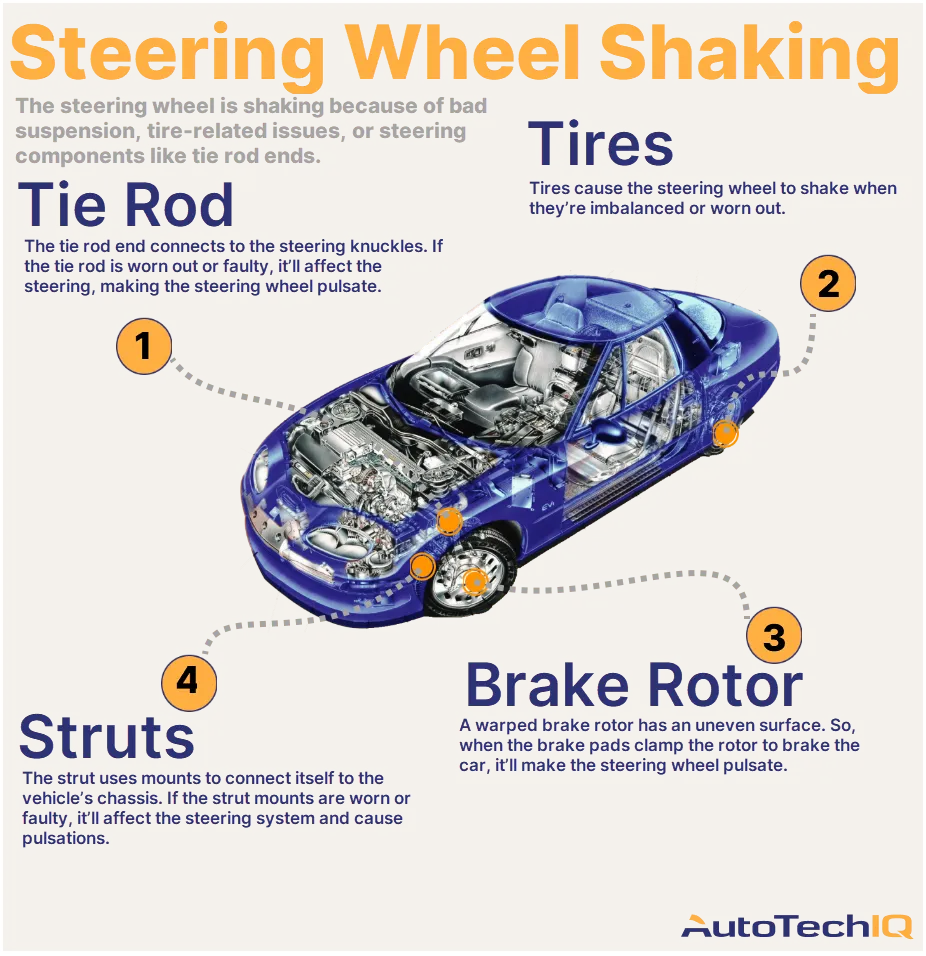
Credit: www.autotechiq.com
Diagnosing Steering Wheel Vibration
Finding the exact cause of vibration saves you time and money. Here’s how to check:
- Note when the vibration happens: Is it only at certain speeds, when braking, or all the time?
- Inspect your tires: Look for uneven wear, flat spots, bulges, or visible damage.
- Check wheel balance and alignment: Ask your mechanic to use a balancing machine and measure alignment angles.
- Test the brakes: If vibration only occurs when braking, suspect warped rotors or brake issues.
- Look for noise or play in steering: Listen for clunks or rattles; check if the wheel feels loose.
- Check for burning smells: This may point to a sticking caliper.
Below is a quick comparison of symptoms and possible causes:
| Symptom | Possible Cause |
|---|---|
| Vibration at 80-120 km/h | Wheel balance, bent rim |
| Shaking only when braking | Warped rotor, sticking caliper |
| Steering feels loose | Worn suspension or steering parts |
| Vibration during acceleration | Driveshaft or CV joint |
| Car pulls to one side | Alignment, sticking caliper |
How To Fix And Prevent Steering Wheel Vibration
Fixing vibration depends on the cause, but here’s what you should do:
- Balance your wheels and tires regularly. This is cheap and solves most vibration problems.
- Rotate and inspect your tires every 8,000–10,000 km (5,000–6,000 miles). This helps spot issues early.
- Check alignment once a year or after hitting potholes/curbs.
- Replace worn tires and damaged wheels immediately.
- Service your brakes regularly. Change pads and rotors as needed.
- Inspect suspension and steering parts at least once a year.
If you’re unsure, get a professional mechanic to check. Never ignore steering vibration—it can lead to dangerous situations.

Credit: carfromjapan.com
Non-obvious Insights For Drivers
Most beginners focus only on tires, but here are two often-missed points:
- Seasonal temperature changes can affect tire pressure and balance. Cold weather makes tires harder and can create temporary flat spots, especially if the car sits for long periods.
- Cheap aftermarket wheels or poorly installed wheel spacers often cause balance or fit issues, leading to vibration. Always use high-quality parts made for your car.
How Steering Wheel Vibration Affects Safety
A small vibration may not seem urgent, but it can reduce your control, especially during emergency maneuvers. Long-term vibration also puts extra stress on your suspension, steering, and even the vehicle’s frame. This means higher repair costs later.
According to a report from the National Highway Traffic Safety Administration (NHTSA), poor vehicle maintenance, including ignoring symptoms like steering vibration, contributes to a significant number of accidents each year. It’s not just about comfort—fixing vibration is a key part of safe driving.
When To See A Mechanic
While some causes (like unbalanced wheels) can be fixed at a tire shop, other issues need a trained mechanic. If you notice:
- Vibration gets worse quickly
- Strange noises (clunking, grinding, clicking)
- Burning smells
- Steering feels very loose
Stop driving and get help immediately. Delaying repairs can make the problem much more expensive and dangerous.
For more in-depth information about car maintenance and safety, you can visit the Wikipedia: Steering page.
Frequently Asked Questions
Why Does My Steering Wheel Vibrate Only At High Speeds?
This usually means your wheels are unbalanced or you have a bent rim. At higher speeds, any imbalance becomes much more noticeable. Have your wheels balanced and checked for damage.
Can Bad Alignment Cause My Steering Wheel To Shake?
Yes, bad alignment can make your steering wheel vibrate, especially if combined with uneven tire wear. It can also cause your car to pull to one side. Get your alignment checked regularly.
Is It Safe To Drive With A Vibrating Steering Wheel?
It depends on the cause. Some issues, like minor imbalance, are less urgent. But problems with brakes, suspension, or steering parts can be dangerous. If the vibration is strong, or if you notice other symptoms, see a mechanic right away.
Why Does My Steering Wheel Shake When I Brake?
This is often due to warped brake rotors or a sticking brake caliper. The shaking happens because the brake pads grip unevenly. Rotors may need to be resurfaced or replaced.
How Much Does It Cost To Fix Steering Wheel Vibration?
Costs vary. Wheel balancing is usually $20–$50. New tires or rotors can be $100–$300 each. Suspension or steering repairs may cost more. Early diagnosis helps avoid expensive repairs.
Feeling a vibrating steering wheel is more than just a small annoyance. It’s your car’s way of telling you something isn’t right. By understanding the causes and acting quickly, you can keep your drives smooth, safe, and worry-free. Regular checks, good maintenance habits, and quick repairs are the best ways to prevent bigger problems down the road.
Safe driving starts with a steady wheel!

Credit: brianstireandservice.com