
Keeping your AC condenser clean is one of the simplest ways to boost your air conditioner’s efficiency and extend its life. Many homeowners overlook this task, but dirt and debris on the condenser can cause your AC to work harder, waste energy, and even break down sooner. If you’ve never cleaned an AC condenser before, don’t worry. This guide will walk you through everything you need to know, even if you’re new to DIY maintenance.
What Is An Ac Condenser And Why Clean It?
The AC condenser is the outdoor unit of your air conditioning system. It releases heat from your home to the outside air. Over time, dust, grass clippings, pollen, and leaves can cover the condenser fins and coils. When this happens, heat cannot escape as easily. This forces your AC to use more electricity and cool less efficiently.
A clean condenser helps your system:
- Use less energy (saving you money)
- Cool your home faster
- Avoid costly repairs
- Last longer
Experts recommend cleaning your condenser at least once a year, or more often if you live in a dusty or leafy area.
Tools And Materials You Need
Before you begin, gather these tools and supplies:
- Screwdriver or nut driver (to remove panels)
- Garden hose with spray nozzle
- Fin comb (optional, for straightening fins)
- Soft brush or vacuum with a brush attachment
- Coil cleaner (AC-safe, from hardware stores)
- Work gloves and safety glasses
You don’t need special skills—just a careful approach and a bit of time.
Credit: homeguide.com
Step-by-step Ac Condenser Cleaning
1. Turn Off The Power
Safety comes first. Find the power switch near the condenser (often in a box on the wall) and turn it off. If you can’t find it, shut off the power at the breaker box.
2. Clear The Area Around The Unit
Remove any leaves, sticks, or plants within two feet of the condenser. This gives you space to work and helps airflow.
3. Remove The Top And Side Panels
Use your screwdriver to loosen the screws or bolts on the top and sides. Carefully lift off the fan and top cover—watch out for wires attached to the fan motor. Set the panels aside.
4. Clean Out Debris Inside
Put on your gloves. Reach inside and remove leaves, twigs, or dirt from the bottom of the unit by hand. Use a vacuum with a brush attachment for fine dust.
5. Straighten Bent Fins (optional)
The condenser’s metal fins can bend easily. If you see squashed fins, use a fin comb or a dull butter knife to gently straighten them. Better airflow means better cooling.
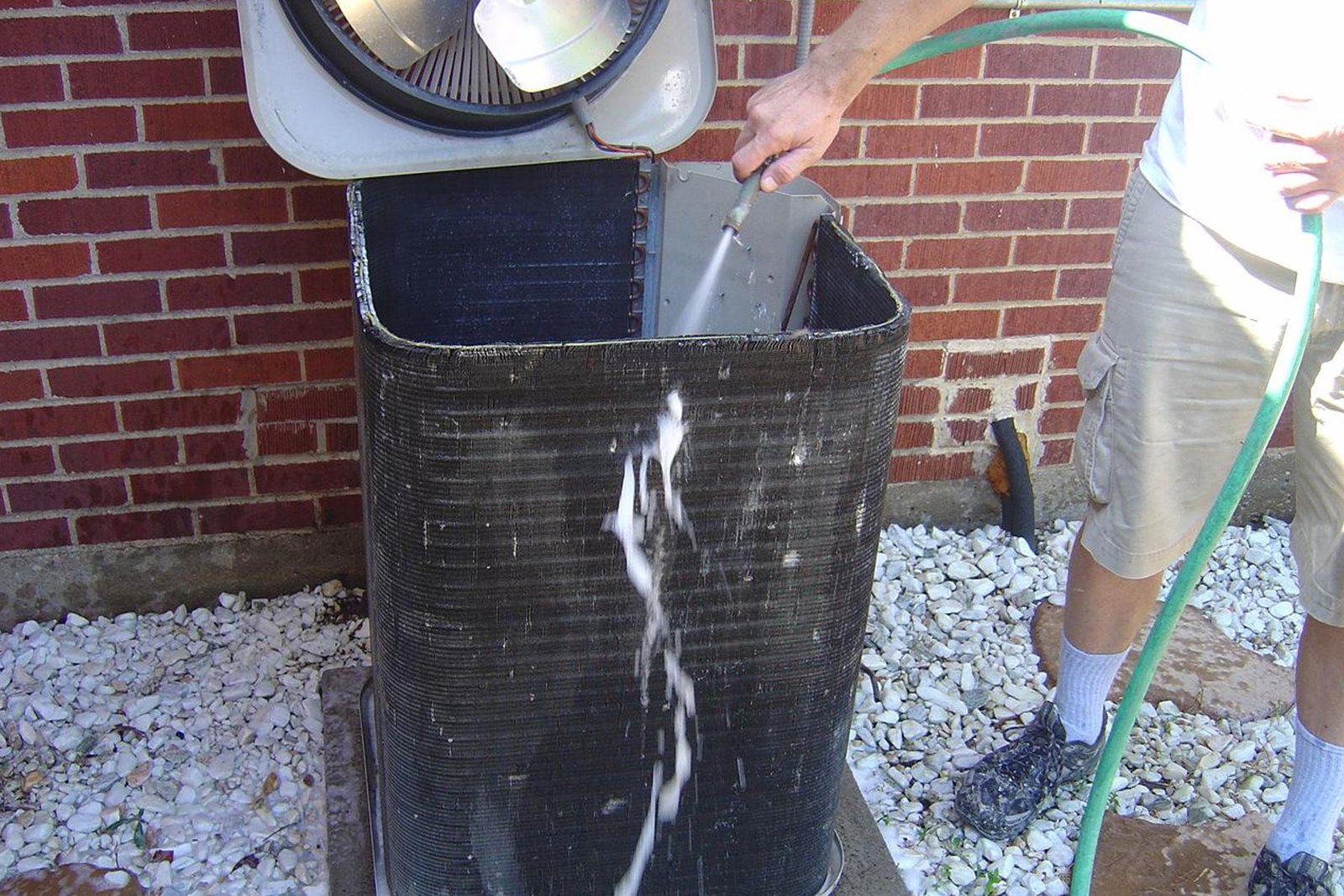
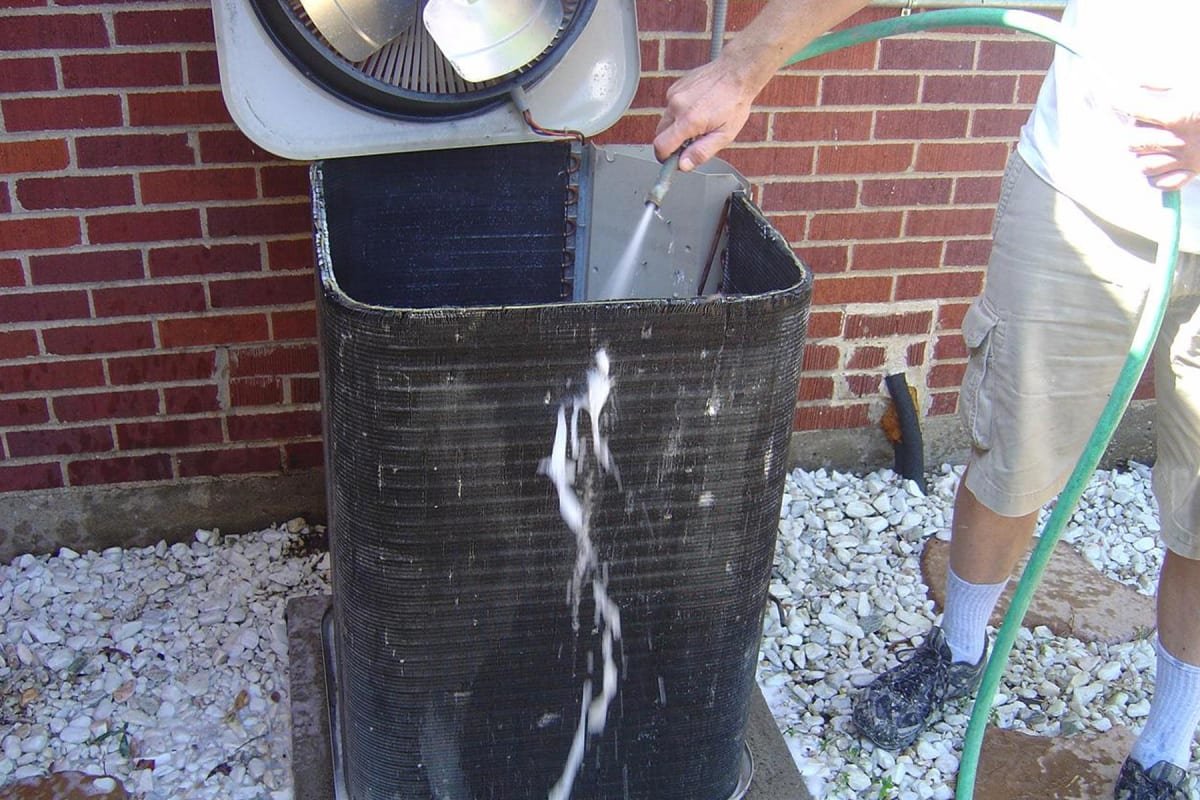
6. Spray The Fins With Water
Use your garden hose (no high-pressure nozzle!) To spray water from the inside out. This pushes dirt out of the fins. If you can’t access the inside, spray from the outside but be gentle.
7. Apply Coil Cleaner
Spray an AC-safe coil cleaner onto the fins and coils. Let it sit for 10-15 minutes (check the product instructions). The foam will loosen stubborn dirt.
8. Rinse Again
Rinse the coils with the hose until all cleaner and dirt are gone. Make sure water flows freely through the fins.
9. Reassemble The Unit
Put the top and side panels back on and tighten the screws. Restore the power and listen for any strange noises when the unit starts.
10. Tidy Up
Clear away any leftover debris and make sure plants or shrubs are not too close to the condenser.
Comparing Diy Vs Professional Cleaning
Sometimes, it makes sense to call a professional, especially if you notice damage, leaks, or electrical issues. Here’s how DIY cleaning compares to hiring a pro:
| Factor | DIY Cleaning | Professional Cleaning |
|---|---|---|
| Cost | Low (mostly time and basic supplies) | $100–$300 per visit |
| Time | 1–2 hours | 30–60 minutes |
| Thoroughness | Good for surface cleaning | Deep cleaning + system check |
| Safety | Safe if you follow instructions | Very safe (trained tech) |
Credit: homeguide.com
Key Tips For Effective Cleaning
- Never use high-pressure washers. They can bend fins and push water into electrical parts.
- Avoid harsh chemicals. Only use cleaners labeled safe for AC units.
- Keep the area clear. Trim plants and grass at least 2 feet away.
- Straighten bent fins. This small effort improves efficiency a lot.
- Check for damage. While cleaning, look for oil stains (could mean a refrigerant leak) or frayed wires.
Common Mistakes To Avoid
Many people make these errors when cleaning their condenser:
- Using a pressure washer and damaging the fins
- Forgetting to turn off the power
- Spraying water into the fan motor
- Ignoring bent fins or damaged parts
- Letting plants grow too close after cleaning
A little care prevents bigger problems later.
How Often Should You Clean?
Most experts suggest cleaning your AC condenser every 12 months. If you live near fields, dusty roads, or lots of trees, check it every 3–6 months. After heavy storms or pollen season, a quick rinse can keep things running smoothly.
The Impact Of A Clean Condenser On Performance
You might wonder, “Does cleaning really make a difference?” Studies show that a dirty condenser coil can increase energy use by up to 30%. That means higher bills and more strain on your system. In hot climates, a dirty coil can even cause the AC to overheat and shut down.
Here’s a comparison showing how energy use changes with a clean vs dirty condenser:
| Condition | Cooling Output | Energy Use | Risk of Breakdown |
|---|---|---|---|
| Clean condenser | Normal (100%) | Normal | Low |
| Dirty condenser | Down 15–30% | Up 20–30% | High |

Credit: aristotleair.com
Signs Your Ac Condenser Needs Cleaning
Look for these signs:
- AC runs longer than usual
- Weak or warm airflow inside
- Unusual noises from the outdoor unit
- Higher power bills without extra use
- Visible dirt, grass, or leaves on the condenser
If you see these, it’s time to clean.
When To Call A Professional
While most homeowners can handle basic cleaning, call a pro if:
- You see oil stains (possible refrigerant leak)
- Fins are badly damaged
- The fan isn’t spinning
- There’s a burning smell
- You hear loud or strange sounds
A qualified technician can fix deeper problems and check for hidden issues.
How To Keep Your Condenser Clean Longer
Here are easy habits to help:
- Trim plants and grass regularly around the unit
- Put a mesh cover over the condenser in fall (remove before use)
- Clean gutters and downspouts to avoid leaves falling on the unit
- Rinse the unit after mowing the lawn
- Schedule yearly professional maintenance
Environmental And Health Benefits
A clean condenser not only saves money but also reduces your carbon footprint. Using less electricity means fewer greenhouse gas emissions. Plus, a well-running AC keeps your home’s air fresher and less humid, which is important for allergy sufferers.
Hidden Insights Most People Miss
- Fins are fragile. Even a gentle touch can bend the metal fins. Always use light pressure and the right tools. Many people ruin their condenser’s airflow by brushing too hard.
- Cleaner means quieter. A dirty condenser often gets louder over time. After cleaning, you may notice your system is much quieter. This is a sign of healthy airflow and less stress on the fan motor.
- Outdoor pets can cause trouble. Dogs or cats urinating near the condenser can corrode the fins and lower efficiency. Consider a small fence if this is a risk.
Quick Troubleshooting After Cleaning
If your AC doesn’t turn on after cleaning:
- Double-check the power switch or breaker
- Ensure all panels are screwed on tight (some units have safety switches)
- Wait 5-10 minutes for the system to reset
If problems continue, call an HVAC technician.
Frequently Asked Questions
How Often Should I Clean My Ac Condenser?
Most homes need a thorough cleaning once per year. If you have lots of dust, pollen, or leaves, check every few months. After storms or heavy pollen, a quick rinse helps.
Can I Use A Pressure Washer To Clean The Condenser?
No. Pressure washers can bend or break the delicate fins. Always use a gentle garden hose spray and a soft brush.
Is It Safe To Clean The Condenser Myself?
Yes, if you turn off the power and follow instructions. Wear gloves and safety glasses. For deep cleaning or repairs, call a professional.
What Happens If I Never Clean My Condenser?
Your AC will use more electricity, cool less efficiently, and may break down sooner. Dirty condensers can increase energy bills by 20–30%.
Where Can I Learn More About Ac Maintenance?
You can find more details on AC care at the official U.S. Department of Energy website.
Regular AC condenser cleaning is one of the simplest, most effective ways to keep your system running smoothly. With just a few tools and a little time, you can save money, stay cool, and avoid headaches later. If you ever feel unsure, don’t hesitate to ask a professional for help—the small investment now pays off in comfort and savings all summer long.