
Many car buyers see terms like AWD and 4WD and feel confused. Both systems promise better control and grip, but they are not the same. Choosing the right one can make a big difference in safety, cost, and driving experience. If you want to drive in snow, off-road, or just need a reliable car for city life, understanding AWD vs 4WD is important. This guide will explain the differences, help you decide which is better for your needs, and clear up common myths.
What Does Awd Mean?
AWD stands for All-Wheel Drive. This system sends power to all four wheels of a vehicle automatically. Most AWD vehicles use advanced sensors to detect which wheels have the most grip. When one wheel slips, the system sends more power to the wheels with better traction. This process happens quickly, often without the driver noticing.
AWD is popular in cars, crossovers, and some SUVs. It is designed for on-road use, especially where roads may be wet, icy, or loose. Many people choose AWD for its “set and forget” convenience: there is no need to push a button or pull a lever. The system works by itself.
What Does 4wd Mean?
4WD stands for Four-Wheel Drive. Sometimes called 4×4, this system is different from AWD. 4WD is usually found in trucks and larger SUVs. It is built for tough conditions like mud, rocks, or deep snow.
The main feature of 4WD is that you, the driver, control when to turn it on. In most vehicles, you switch between two-wheel drive and four-wheel drive modes. Some systems are “part-time,” so you only use 4WD when needed. Others are “full-time,” but still let you pick different settings for different terrains.
4WD systems often have strong parts like a transfer case and locking differentials. These make sure power is sent evenly to all wheels, helping the vehicle move even if some wheels lose grip.
Key Differences Between Awd And 4wd
Understanding the differences helps you choose the right system. Here are the most important ways AWD and 4WD are not the same:
| Feature | AWD | 4WD |
|---|---|---|
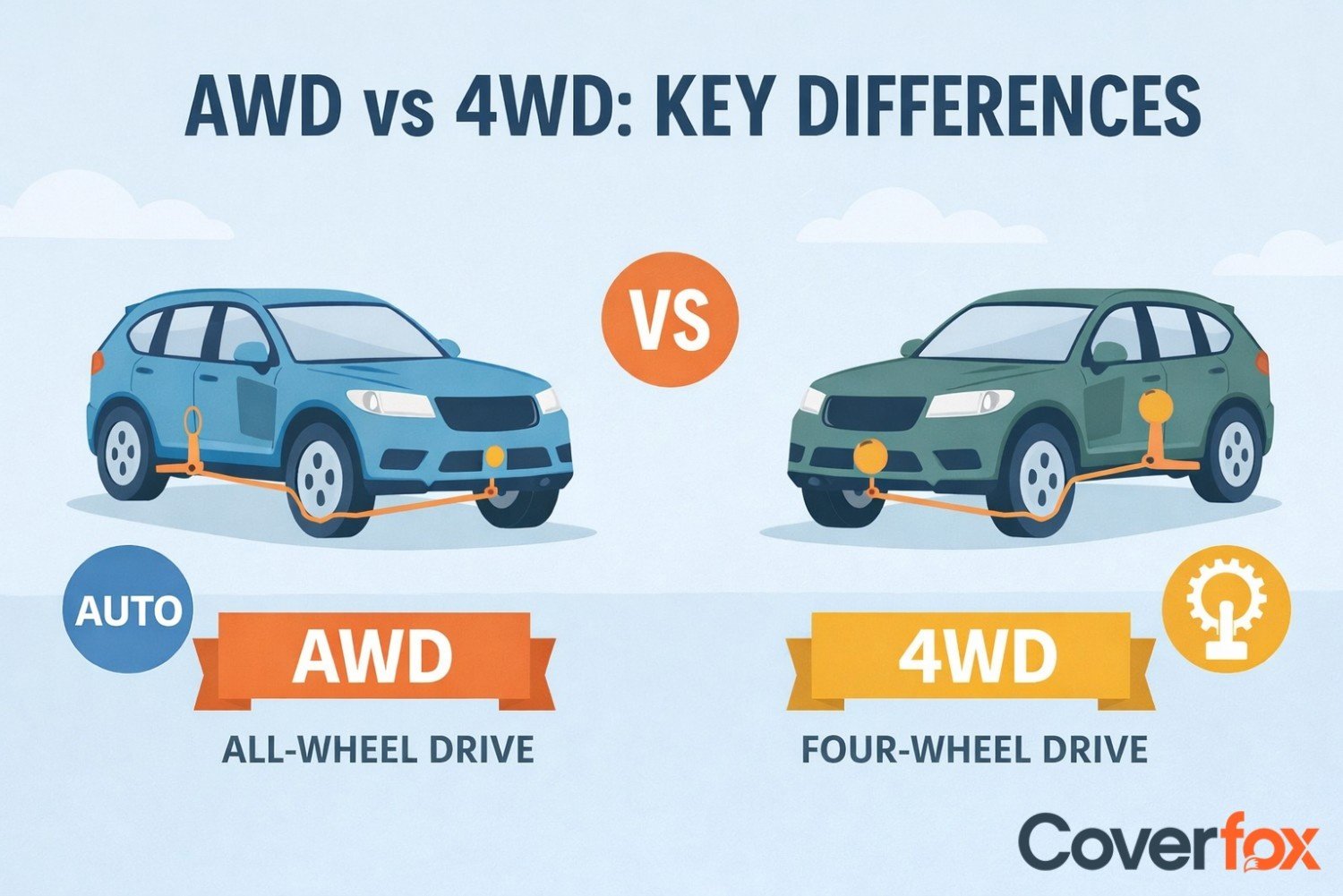
| Activation | Automatic | Manual or automatic (driver controlled) |
| Best for | On-road, mixed conditions | Off-road, tough terrain |
| Vehicle type | Cars, crossovers, some SUVs | Trucks, SUVs |
| Complexity | More electronic sensors | More mechanical parts |
| Cost | Usually less expensive | Often more expensive |
Non-obvious Insights
- AWD systems often work better for most daily drivers, especially in cities with rain or snow, because they react automatically and quickly to changing road conditions.
- 4WD can actually make steering harder on dry pavement, because all wheels are forced to turn at the same speed, which is not ideal unless the road is slippery.
How Awd Works: Simple Explanation
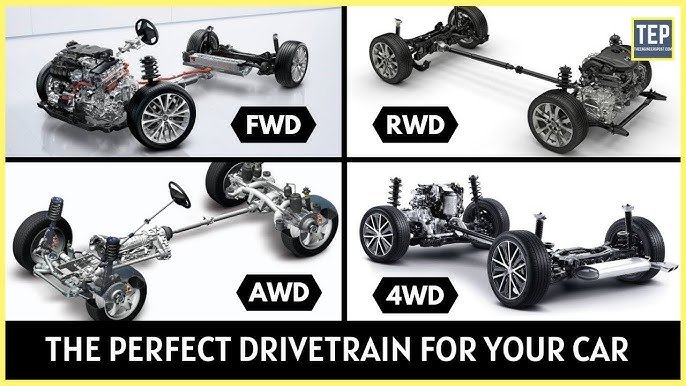
AWD uses a center differential or electronic clutch. This part splits engine power between the front and rear wheels. Sensors watch for wheel slip. If the system finds one wheel spinning, it sends more power to the wheels with better grip.
Many modern AWD cars use torque vectoring. This means they can send different amounts of power to each wheel—helpful for turning corners quickly and safely.
Example: The Subaru Outback’s AWD system is always on. If you drive onto a patch of ice, the system shifts power to the wheels still touching the ground. You keep moving without stopping.
AWD gives peace of mind for unexpected changes in the road. But, it does not turn your car into an off-road machine.
Credit: www.youtube.com
How 4wd Works: Simple Explanation
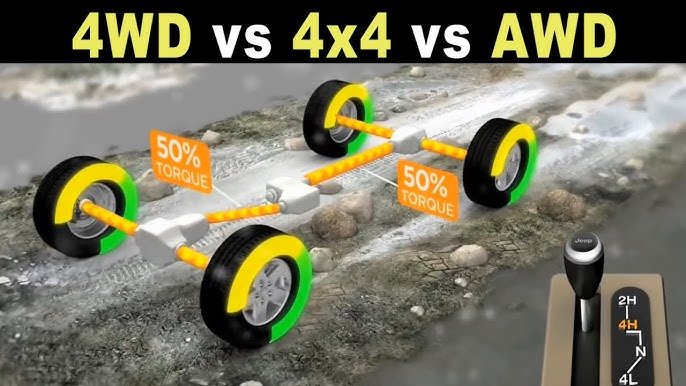
4WD systems use a transfer case to send power to the front and rear axles. When you turn on 4WD (usually with a lever or button), the system locks the front and rear driveshafts together. All wheels turn at the same speed, helping you move in mud, snow, or rocks.
Some 4WD vehicles offer low-range gears. This setting gives extra force at low speeds, perfect for climbing steep hills or crawling over obstacles.
Example: The Toyota Land Cruiser has a strong 4WD system. If you drive on a mountain trail, you can switch to 4WD low-range for more power at each wheel.
4WD is built for tough terrain. On dry pavement, using 4WD can stress the parts and even damage the car.
Types Of Awd And 4wd Systems
Not all AWD or 4WD systems are the same. Here are the common types:
Types Of Awd
- Full-Time AWD: Always active. Power goes to all wheels all the time. Example: Subaru Forester.
- Part-Time AWD: Runs in two-wheel drive most of the time, switches to AWD when needed. Example: Honda CR-V.
- On-Demand AWD: Uses sensors to sense slip, then sends power to other wheels. Most crossovers use this.
Types Of 4wd
- Part-Time 4WD: Driver chooses when to use 2WD or 4WD. Most common in trucks.
- Full-Time 4WD: Always active, but may let you lock differentials or use low-range gears.
- Automatic 4WD: System turns on 4WD by itself when needed, but you can override it.
When To Choose Awd
AWD is a smart choice for most drivers who:
- Drive mostly on paved roads
- Face changing weather (rain, snow, ice)
- Need extra safety but not heavy off-roading
- Want a system that works automatically
AWD helps you stay in control during sudden rain or when turning on slippery roads. It can save you from getting stuck in a snowy parking lot. But AWD does not make your car unstoppable.
Example Scenarios
- Living in the city but visiting ski resorts: AWD gives grip on icy roads.
- Commuting in rainy climates: AWD helps prevent hydroplaning.
- Families who want safety but do not plan to off-road.
When To Choose 4wd
4WD is best for drivers who:
- Often drive off-road (mud, rocks, deep snow)
- Live in rural or mountain areas with poor roads
- Need to tow heavy loads or trailers
- Value maximum control in extreme conditions
4WD is designed for adventure. If you go camping, hunting, or work in remote areas, 4WD can make the difference between getting home or getting stuck.
Example Scenarios
- Farmers driving through muddy fields.
- Overlanders exploring remote trails.
- Towing boats from a sandy beach.
Pros And Cons At A Glance
To make things clear, here is a summary:
| AWD | 4WD | |
|---|---|---|
| Traction on-road | Excellent | Good (if engaged) |
| Traction off-road | Limited | Excellent |
| Ease of use | Automatic | Needs driver input |
| Maintenance cost | Medium | High |
| Fuel economy | Better | Worse |
Common Myths And Mistakes
Many people believe AWD or 4WD means their car is “invincible.” This is not true. Here are some common misunderstandings:
- Myth: AWD/4WD means you cannot get stuck. In reality, both systems help with traction, but they do not make tires grip ice or deep mud like magic. Good tires are still important.
- Myth: AWD is always better for snow. In some cases, a 4WD truck with snow tires will beat an AWD car with worn tires.
- Mistake: Using 4WD on dry pavement. This can stress the drivetrain and cause expensive damage.
- Mistake: Not knowing how your system works. Every vehicle is different. Always read your owner’s manual.
Cost And Maintenance Considerations
AWD and 4WD systems add weight and complexity to vehicles. This can mean:
- Higher purchase price: AWD and 4WD vehicles usually cost $1,500–$3,000 more than two-wheel drive versions.
- Lower fuel economy: These systems add weight and friction, so you may use more gas.
- More maintenance: More moving parts mean more things can wear out or break. 4WD, in particular, may need transfer case service and differential oil changes.
Tip: If you do not need off-road ability, AWD is usually cheaper to own and maintain.
Real-world Examples
- Subaru Forester (AWD): Known for safe, confident driving in snow and rain. Great for families and city drivers who want extra grip.
- Jeep Wrangler (4WD): Famous for off-road ability. Can climb rocks, cross streams, and handle deep mud, but rides rougher on highways.
- Toyota Highlander (AWD): Popular family SUV with automatic AWD for safety in bad weather.
- Ford F-150 (4WD): America’s favorite truck. 4WD lets it tow, haul, and go off-road for work or fun.
Credit: www.youtube.com
Which System Is Safer?
AWD and 4WD both improve traction, but safety depends on how you drive. Most crashes in snow or rain happen because drivers go too fast or use poor tires. AWD and 4WD help you get moving, but they do not help you stop faster. Good driving habits and winter tires are more important than the drive system alone.
Future Trends: Awd And 4wd
Automakers are now adding AWD and 4WD to electric vehicles (EVs). Many EVs use two or more electric motors—one for the front wheels, one for the rear—making AWD or 4WD easier to offer. These systems can shift power instantly for better grip and efficiency.
Some cars use “smart” AWD that learns your driving style and road conditions. In the future, expect more vehicles with automatic, efficient AWD/4WD systems that need less maintenance and respond faster than ever.
For more technical details and history, you can read the full explanation on Wikipedia.
Credit: www.coverfox.com
Frequently Asked Questions
What Is The Main Difference Between Awd And 4wd?
AWD works automatically, sending power to all wheels when needed. 4WD is usually driver-controlled and is better for off-road or extreme conditions.
Is Awd Or 4wd Better For Snow?
AWD is usually better for city and highway driving in snow, as it reacts instantly. 4WD is better for deep snow or unplowed roads, especially in rural areas.
Can Awd Or 4wd Prevent All Accidents?
No. These systems help with traction but do not improve stopping or turning on ice. Safe driving and good tires are still most important.
Does Awd Or 4wd Use More Fuel?
Yes, both systems add weight and use more energy. AWD is usually more fuel-efficient than 4WD, but both use more fuel than two-wheel drive.
Should I Get Awd Or 4wd For My Family Car?
For most families who drive on paved roads, AWD is the best balance of safety and convenience. Choose 4WD if you plan to go off-road often or live in a remote area.
Choosing between AWD and 4WD is not just about power—it’s about how and where you drive. Think about your needs, climate, and driving habits. With the right knowledge, you can pick the system that keeps you safest and happiest on the road.