
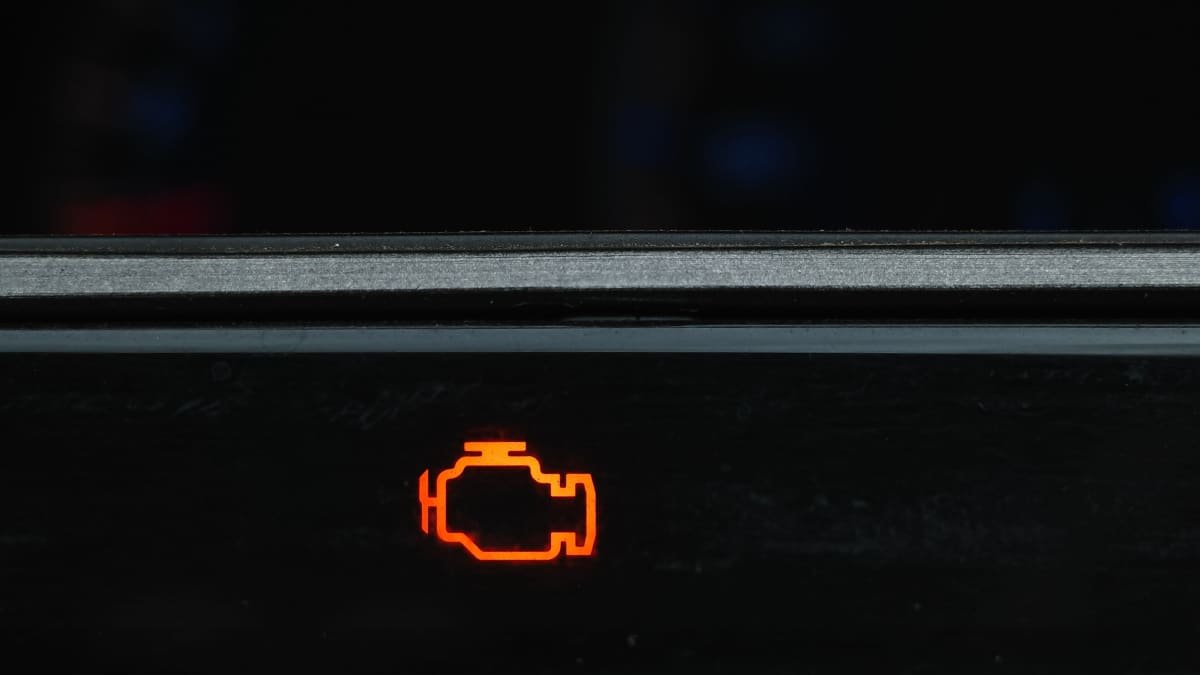
If your Check Engine Light Blinking When Accelerating, do not ignore it. A blinking light is not the same as a steady one. It usually means the engine is misfiring badly enough to risk damage right now.
This often happens when the car needs more power, such as during fast merging, uphill driving, or passing another vehicle. The problem may seem to come and go, but the danger can still be serious. In many cases, the cause is a spark, fuel, or air issue that gets worse under load.
The good news is that you can respond the right way before the problem becomes expensive. In this guide, you will learn what the blinking light means, the most common causes, the risks of driving with it, and the next steps you should take.
What a blinking check engine light really means
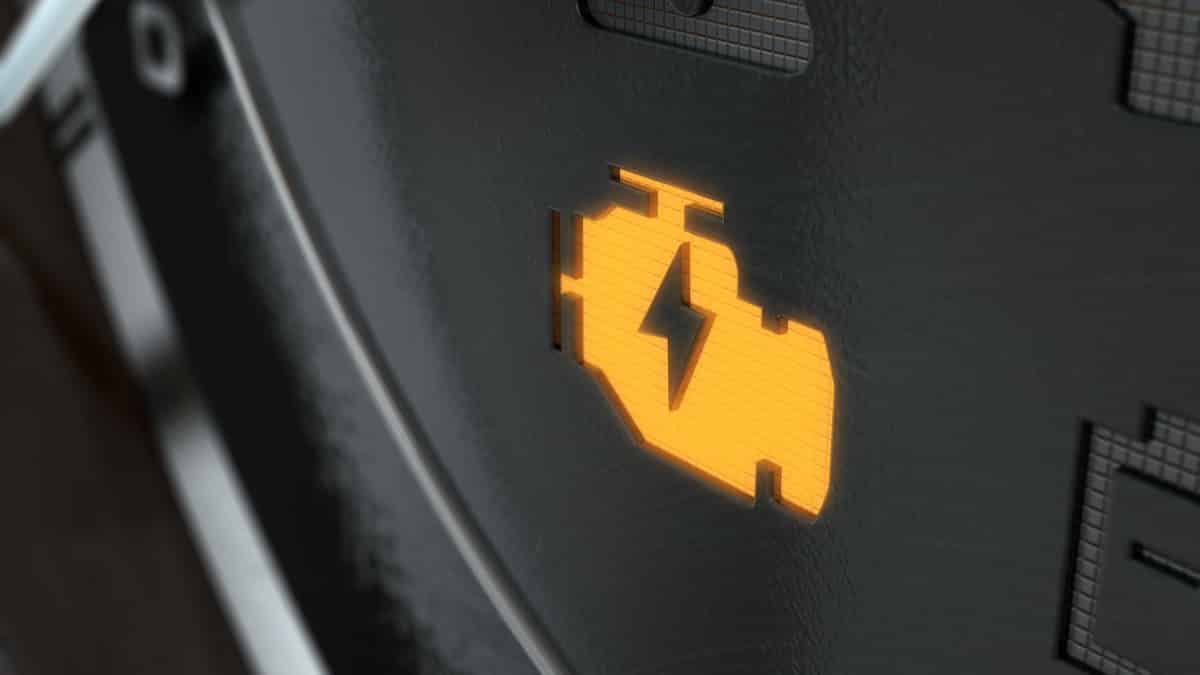
A steady check engine light usually means the car has stored a fault code and still runs okay for now. A blinking light is more urgent. It often points to an active misfire. That means one or more cylinders are not burning fuel the way they should.
When combustion fails, unburned fuel can move into the exhaust system. That can overheat and damage the catalytic converter. This is why many mechanics treat a blinking light as a warning to reduce driving or stop driving as soon as it is safe.
The light may blink only during hard acceleration, then stop when you ease off the gas. That pattern is important. It often tells you the engine is fine at low load, but struggles when it needs more spark, more fuel, or better air flow.
Why acceleration makes the problem show up
Acceleration puts more demand on the engine. Cylinder pressure rises. The ignition system has to work harder. Fuel delivery must be strong and steady. If any part is weak, the fault may only appear when the car is under stress.
That is why a car can idle smoothly and still blink the check engine light on the highway or when climbing a hill. The system is not always failing all the time. Sometimes it fails only when the engine is pushed.
Main causes of a blinking check engine light during acceleration
Several issues can trigger this warning. Some are simple. Some are more serious. The most common problem is a misfire, but the source of that misfire can be different.
1. Worn spark plugs
Spark plugs create the spark that starts combustion. Over time, the gap can wear out, deposits can build up, and the spark can weaken. Under light driving, the plug may still work. Under acceleration, it may fail to ignite the fuel-air mix properly.
This is one of the easiest problems to fix, but it is also easy to ignore because the car may still drive “mostly okay.” A weak plug often shows up as rough power delivery, poor fuel economy, or a hesitation when you press the pedal.
2. Bad ignition coils
Ignition coils boost voltage so the spark plug can fire. If a coil is failing, the spark may become weak or stop under load. This often causes a blinking light only when accelerating.
A failing coil may also cause shaking, loss of power, and a feeling that the car is “stumbling.” In some vehicles, one bad coil can trigger a single-cylinder misfire. In others, the problem may seem random.
3. Fuel delivery problems
If the engine does not get enough fuel during acceleration, it may misfire. This can happen because of a weak fuel pump, clogged fuel filter, dirty fuel injectors, or low fuel pressure.
Acceleration needs extra fuel. If pressure drops at that moment, the air-fuel mix becomes too lean, and the engine may misfire. This is a common reason the warning appears only when the vehicle is under load.
4. Vacuum leaks or intake air leaks
Engines need the right air-to-fuel ratio. Extra air entering through a leak can upset that balance. A cracked hose, loose intake clamp, or damaged gasket can cause lean running and misfires.
These leaks can be tricky because they may not cause major symptoms at idle. During acceleration, though, the engine may struggle more because the system is already under pressure.
5. Faulty mass airflow sensor
The mass airflow sensor helps the engine computer measure how much air enters the engine. If it gives bad readings, the computer may send the wrong amount of fuel.
This can cause hesitation, rough acceleration, and a blinking light. A dirty sensor does not always fail completely, so the car may act normal one moment and badly the next.
6. Catalytic converter trouble
A failing catalytic converter can be both a cause and a result of misfires. If it becomes clogged, exhaust flow can be restricted, and the engine may struggle when you ask for more power.
On the other hand, if the engine is already misfiring, raw fuel can damage the converter. This is one of the biggest reasons you should not keep driving with a blinking light for long.
7. Low-quality or contaminated fuel
Bad fuel can create rough combustion and hesitation. Water in the fuel, the wrong octane, or contaminated gasoline can cause engine problems that become obvious when accelerating.
This is less common than plug or coil problems, but it happens. If the light started soon after a fill-up, fuel quality should be considered.
8. Sensor or wiring issues
Sometimes the problem is not the engine part itself but the signal going to the computer. Damaged wiring, loose connectors, or failing sensors can confuse the engine control unit.
These faults may be intermittent. That means the warning light might blink only in certain conditions, such as engine vibration, heat, or load.
What risks come with driving like this?
A blinking check engine light is not just a dashboard annoyance. It can lead to real damage if you keep driving the same way.
| Risk | What can happen | Why it matters |
|---|---|---|
| Catalytic converter damage | Raw fuel overheats the exhaust system | Repair can be expensive |
| Worsening misfire | Engine runs rougher and loses power | Driving becomes less safe |
| Fuel waste | Fuel burns poorly or not at all | Fuel economy drops quickly |
| Engine stress | Heat and vibration increase | More parts may wear out early |
| Breakdown | Car may stall or refuse to accelerate | You may be left stranded |
One important detail many drivers miss: even if the car still feels “drivable,” the damage can keep building in the background. A catalytic converter can be harmed before the engine feels completely broken.
Another point people often overlook is that repeated short drives can be worse than one obvious failure. Each time the car misfires under load, it can dump more raw fuel into the exhaust system.
Credit: mechanicbase.com
What to do right away
Do not panic, but do take the warning seriously. Your goal is to reduce damage and get the problem checked quickly.
- Ease off the accelerator. If the light starts blinking during acceleration, stop pushing the engine hard.
- Look for other warning signs. Heavy shaking, loud knocking, smoke, burning smells, or big power loss mean the issue may be severe.
- Pull over safely if needed. If the car runs very rough, stalls, or sounds abnormal, stop driving.
- Check the gas cap. A loose gas cap usually causes a steady light, not a blinking one, but it is still worth checking.
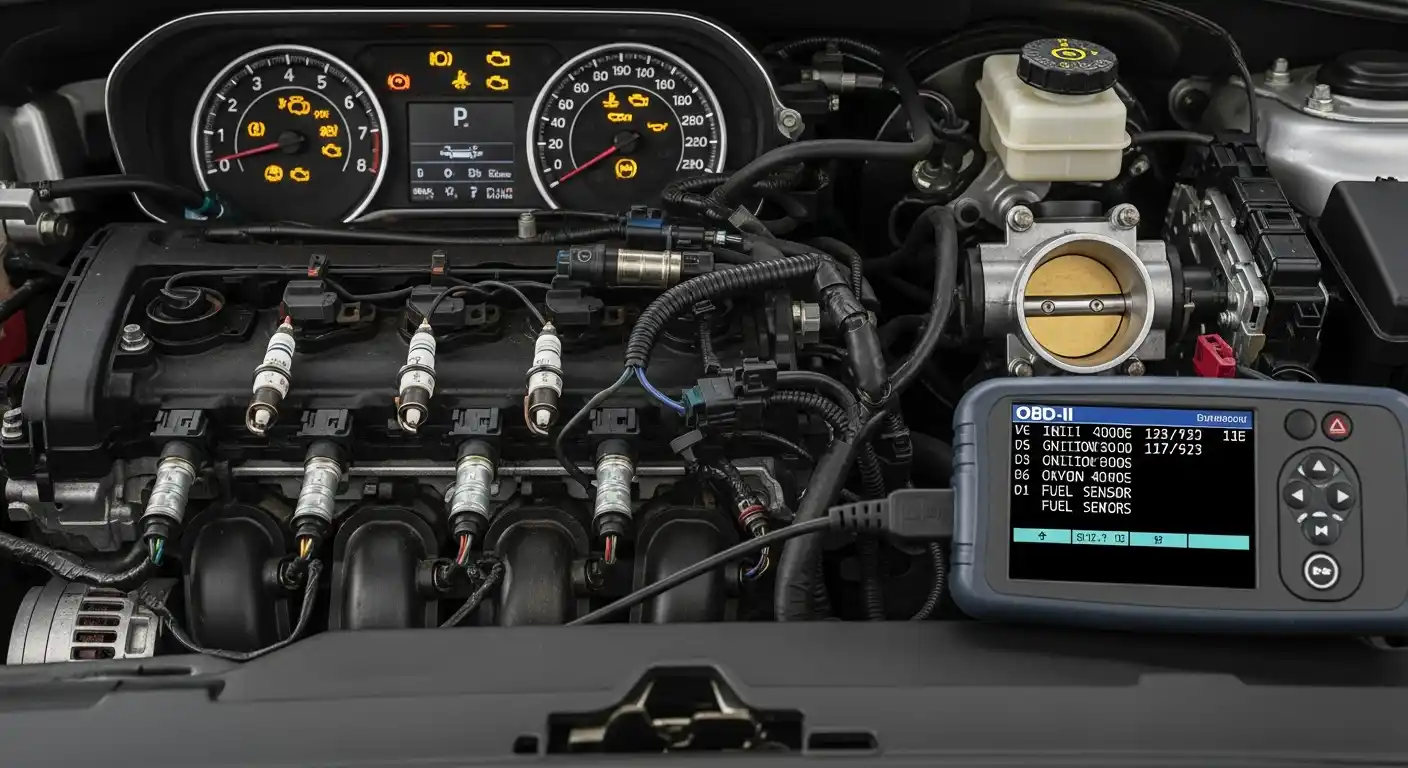
- Read the trouble codes. An OBD2 scanner can point you to the cylinder or system causing the fault.
- Have the car inspected soon. If the light blinks more than once or returns, get a mechanic to diagnose it.
If the blinking happens only once and the car immediately returns to normal, you still should not ignore it. A single event can be a sign of a part that is starting to fail.
When it is okay to drive a little longer
In some cases, you may only need to drive a short distance to reach a repair shop. But keep the speed low, avoid hard acceleration, and watch the engine closely.
If the blinking light stays on, the car shakes, or the engine loses power, do not continue driving unless it is absolutely necessary. A tow can be cheaper than a damaged catalytic converter.
How mechanics diagnose the problem
A proper diagnosis is better than guessing. A mechanic usually starts by scanning the computer for fault codes. Common codes may point to misfires, fuel mixture problems, airflow issues, or sensor faults.
Then the technician may inspect spark plugs, coils, fuel pressure, vacuum hoses, injectors, and wiring. In some cases, they will perform a smoke test to find air leaks or use live data to watch the engine under load.
Credit: mechanicbase.com
Why code reading alone is not enough
A code can tell you where the problem appears, but not always the root cause. For example, a cylinder misfire code may be caused by a bad spark plug, weak coil, clogged injector, or compression problem.
That is why replacing parts blindly can waste money. The same warning light can come from different issues, and the real fix depends on the full diagnosis.
Simple fixes and common repairs
The repair depends on the cause, but these are among the most common solutions:
- Replacing worn spark plugs
- Replacing one or more ignition coils
- Cleaning or replacing fuel injectors
- Repairing vacuum leaks
- Replacing a faulty mass airflow sensor
- Fixing wiring or connector damage
- Replacing a damaged catalytic converter
- Replacing a weak fuel pump or clogged fuel filter
Some repairs are fast. Others take more time and testing. A misfire caused by a spark plug may be a simple fix. A problem caused by low compression or a blocked exhaust system may take much more work.
Cost can vary a lot
A spark plug service may be affordable, while a catalytic converter replacement can be costly. That is another reason to act early. Small problems are usually much cheaper than the damage they cause later.
How to prevent the problem from coming back
Prevention is not hard, but it does require basic care. Many blinking-light problems can be reduced with regular maintenance.
Follow the maintenance schedule
Change spark plugs at the recommended interval. Replace air filters on time. Service fuel system parts when needed. Small maintenance jobs help the engine stay stable under load.
Use good fuel
Buy fuel from reliable stations. If your vehicle needs premium fuel, do not use regular fuel to save a few dollars. Wrong fuel can cause knocking, hesitation, and poor performance during acceleration.
Do not ignore small symptoms
Rough idle, weak acceleration, hard starting, and poor fuel economy often come before a blinking light. Fixing a small symptom early can prevent a larger failure later.
Pay attention after repairs
Sometimes the root cause returns because another part was missed. If a mechanic replaces coils but the problem comes back, ask for a deeper check of fuel pressure, sensors, and wiring.
Also, be careful with a common mistake: clearing the code without fixing the cause. The light may disappear for a while, but the problem is still there.
When to stop driving completely
Stop driving right away if you notice any of these:
- The engine shakes hard
- The car loses a large amount of power
- You smell burning or strong fuel
- Smoke comes from the exhaust or engine area
- The light keeps blinking for more than a short moment
- The car starts to overheat
In these cases, driving can make the damage worse fast. A tow is the safer choice.
For a broader official explanation of dashboard warnings and vehicle safety, the National Highway Traffic Safety Administration is a useful authority.
Credit: justanswer.com
Final thoughts
A blinking check engine light during acceleration is a serious warning, not a normal glitch. In most cases, it means the engine is misfiring under load and may be damaging the catalytic converter or other parts.
The best response is simple: reduce stress on the engine, check for other symptoms, and get the car diagnosed soon. If the car runs rough or the light keeps blinking, do not keep pushing it.
Acting early can save money, protect the engine, and keep you safe on the road.
Frequently asked questions
1. Is it safe to drive if the check engine light blinks only when accelerating?
It may be safe for a very short distance if the car still runs smoothly, but it is not something to ignore. A blinking light usually means an active misfire. The safest move is to reduce driving and get the car checked soon.
2. Can bad spark plugs cause a blinking check engine light?
Yes. Worn or dirty spark plugs are one of the most common causes. They may work at idle but fail when the engine needs more power during acceleration.
3. Why does the light blink on hills or highway speed?
Hills and highway driving put more load on the engine. If spark, fuel, or air delivery is weak, the problem may show up only under those conditions.
4. Will the blinking light go away by itself?
Sometimes it may stop blinking when the engine load drops, but that does not mean the problem is fixed. The fault is often still there and may return soon.
5. Should I use an OBD2 scanner before going to a mechanic?
Yes, if you have one. It can give helpful code numbers and speed up diagnosis. Still, the code alone does not always reveal the exact broken part, so a proper inspection is important.