
When your car’s check engine light comes on, it’s easy to feel worried—especially if you’re due for an emissions test. Many drivers find themselves in this situation, not knowing what the warning means, how it affects their car, or what steps to take next. Failing an emissions test because of the check engine light can be stressful, but it’s a common problem with clear solutions. Understanding why this happens, what it means for your vehicle, and how to fix it can save you time, money, and frustration.
Let’s explore why the check engine light causes emissions test failures, what you should do if it happens, and how you can prevent future issues. By the end, you’ll have the confidence to face your next emissions test without fear.
Why The Check Engine Light Matters For Emissions Tests
In most states and countries, the check engine light is directly tied to emissions standards. This light—officially called the Malfunction Indicator Lamp (MIL)—turns on when your car’s computer detects a problem that could affect emissions. Even if your vehicle runs fine, the light signals a possible issue with one of many systems that control pollution.
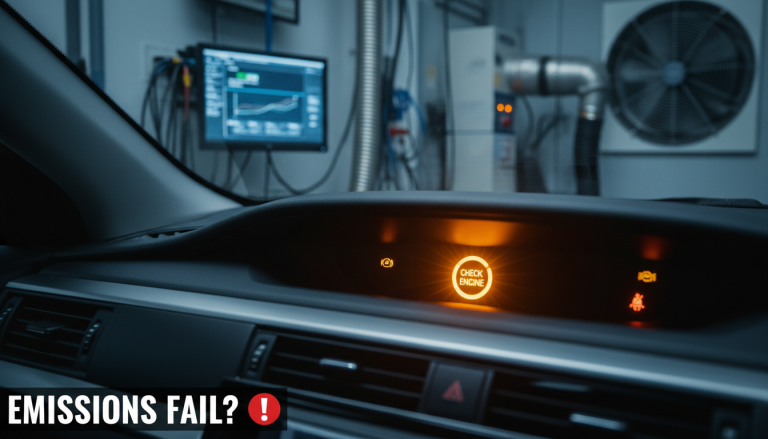
When you go for an emissions test, one of the first things inspectors check is the status of the check engine light. If it’s on, your car will automatically fail the test, regardless of whether the underlying problem is big or small. This strict rule exists because many issues that trigger the light increase harmful emissions, even if you can’t see or smell the difference.
The Role Of On-board Diagnostics (obd-ii)
Since 1996, all cars sold in the United States use OBD-II systems. This system monitors your engine, exhaust, and other systems for problems. During an emissions test, inspectors connect to the OBD-II port to read codes and see if the check engine light is on. If the system detects any active trouble codes or if some readiness monitors are incomplete, your car could fail.
Common Reasons The Check Engine Light Causes Emissions Test Failures
Not all check engine light triggers are equal. Some are simple, like a loose gas cap. Others are complex, like a faulty catalytic converter. Here are the most common reasons the check engine light leads to emissions test failure:
- Loose or Faulty Gas Cap: A loose, damaged, or missing gas cap can trigger the light. It’s a simple fix, but inspectors will fail your car until it’s resolved.
- Oxygen Sensor Failure: The oxygen sensor measures oxygen in your exhaust. If it fails, your car may pollute more and use more fuel.
- Catalytic Converter Issues: This part reduces harmful gases. When it’s not working, pollution increases, and the light comes on.
- Faulty Spark Plugs or Wires: Bad spark plugs or wires make your engine run poorly, increasing emissions.
- Evaporative Emissions (EVAP) System Leaks: The EVAP system prevents fuel vapors from escaping. Leaks or faults here are common triggers.
- Mass Air Flow Sensor Problems: This sensor measures air entering the engine. If it fails, emissions can rise.
- EGR Valve Malfunction: The EGR valve helps control nitrogen oxide emissions. A problem here often causes the light to turn on.
- Exhaust Gas Recirculation (EGR) System Faults: Related to the above, this system’s problems also lead to higher emissions.
- Faulty Thermostat: If your engine doesn’t reach the right temperature, emissions can increase.
- Worn Out or Failing Battery: Sometimes, a weak battery can cause error codes and trigger the check engine light.
Credit: www.topcarrating.com
What Happens During An Emissions Test With The Check Engine Light On
When you arrive for your emissions test and the check engine light is glowing, here’s what typically happens:
- The inspector will visually check your dashboard.
- If the check engine light is on, the test usually stops there—automatic fail.
- The inspector may connect a diagnostic tool to your OBD-II port to read the trouble codes.
- You’ll receive a report with the failure reason and the codes detected.
Most testing centers won’t continue with the full emissions test if the check engine light is present because it’s a clear sign of a potential emission control problem.
What Codes Do Inspectors Look For?
Emissions inspectors look for Diagnostic Trouble Codes (DTCs) that relate to emissions systems. Codes that start with “P0” are especially important for emissions. For example:
- P0420: Catalytic converter efficiency below threshold
- P0440: EVAP system malfunction
- P0171: System too lean (bank 1)
If any “emissions-related” code is stored and active, your car will not pass.
Steps To Take If You Fail An Emissions Test Due To The Check Engine Light
If you’ve failed your emissions test because of the check engine light, don’t panic. Here’s a step-by-step approach to fix the problem and pass your retest.
1. Get The Diagnostic Trouble Codes (dtcs)
Start by retrieving the codes stored in your car’s computer. Many auto parts stores offer free code reading. You can also buy an OBD-II scanner for home use. Write down all codes, including their numbers and descriptions.
2. Understand The Codes
Look up what each code means. Some codes are straightforward, like a gas cap issue. Others are more complex. Reliable websites like the OBD-Codes.com database can help explain code meanings.
3. Address The Root Cause
Don’t just clear the codes. Fix the actual problem. If it’s a gas cap, replace or tighten it. For sensors or other parts, consider your skill level—some repairs are easy, others may require a mechanic.
4. Clear The Codes (if Appropriate)
After repairs, you can clear the codes using an OBD-II scanner. However, if the problem isn’t fixed, the light will return quickly.
5. Complete A Drive Cycle
Your car needs time to check its systems and confirm the repair. This is called a drive cycle. It usually involves driving at various speeds, idling, and stopping. Most cars need 50-100 miles of mixed driving to reset all readiness monitors.
6. Recheck The Light And Readiness Monitors
Before returning for a retest, confirm that the check engine light is off and that all readiness monitors show “complete. ” Your scanner can show this information.
7. Return For Retesting
Bring your paperwork from the first test and proof of repair, if required. If everything is fixed and no codes are present, you should pass.
How To Prevent Check Engine Light Emissions Test Failures
While not every problem is avoidable, you can reduce the chance of failing your emissions test by following these tips:
- Check your dashboard regularly: If the check engine light comes on, address it immediately.
- Fix small issues early: A small problem can become a major repair if ignored.
- Use quality fuel and parts: Cheap gas or low-quality parts can cause sensor issues.
- Keep up with regular maintenance: Replace spark plugs, filters, and fluids as recommended.
- Inspect your gas cap: Make sure it’s tight and in good condition after every fill-up.
- Warm up your engine before testing: A cold engine can cause incomplete readiness monitors.
Two Insights Many Drivers Miss
- Readiness Monitors Matter: Even if you’ve fixed the original problem and the light is off, some emissions tests also check if all “readiness monitors” are set. If you recently disconnected your battery or cleared codes, some monitors may show “not ready.” This can result in a test failure even with no codes present. Always check readiness before a retest.
- Temporary Fixes Don’t Last: Some people try to “trick” the system by just clearing the codes without fixing the problem. Modern OBD-II systems will usually detect the issue again very quickly. If you clear codes just before your test, the inspector may see that the monitors are not ready and fail your vehicle anyway.
Typical Costs For Repairs That Cause Check Engine Light Emissions Test Failures
Here’s a comparison of average repair costs for the most common causes:
| Problem | Average Repair Cost (USD) | DIY Difficulty |
|---|---|---|
| Loose/Faulty Gas Cap | $15 – $35 | Easy |
| Oxygen Sensor | $150 – $400 | Moderate |
| Catalytic Converter | $900 – $2,500 | Difficult |
| Spark Plugs/Wires | $100 – $300 | Easy |
| EVAP System Leak | $100 – $600 | Moderate |

Credit: www.marksautoil.com
Emissions Test Pass/fail Rates With The Check Engine Light
To understand how serious the check engine light is for emissions testing, look at these real statistics:
| Check Engine Light Status | Pass Rate (%) | Fail Rate (%) |
|---|---|---|
| Light Off | 92 | 8 |
| Light On | 2 | 98 |
As you can see, almost all vehicles with the check engine light on will fail the test.
State-by-state Differences In Emissions Testing
While the basic rules are the same, there are differences between states (and countries) in how emissions tests are done:
| State/Region | OBD-II Test? | Visual Inspection? | Exceptions |
|---|---|---|---|
| California | Yes | Yes | Strictest standards |
| Texas | Yes | No | Some rural areas exempt |
| New York | Yes | Yes | Older cars exempt |
| Florida | No | No | No testing required |
Always check local rules before your test.
What Happens If You Ignore The Problem?
Ignoring a check engine light and a failed emissions test can have serious consequences:
- Legal penalties: You may not be able to renew your registration.
- Fines: Some areas issue fines for untested or failed vehicles.
- Increased pollution: Your car may produce more harmful emissions.
- Bigger repair bills: Small problems can become expensive if left unchecked.
When To Seek Professional Help
Some check engine light issues are easy to fix, but others require a professional. Seek help if:
- You don’t understand the codes.
- Repairs involve major engine or exhaust parts.
- The light keeps returning after repairs.
- Your car is making new noises, running rough, or losing power.
A trusted mechanic can diagnose the problem, fix it correctly, and reset the system.

Credit: www.youtube.com
Frequently Asked Questions
What Does It Mean If My Check Engine Light Is Flashing During An Emissions Test?
A flashing check engine light means there is a serious problem, usually a misfire that can damage the catalytic converter. Do not drive the car in this condition—get it repaired before attempting any emissions test.
How Long Do I Need To Drive After Clearing A Check Engine Light Before Retesting?
You should drive your car for at least 50-100 miles over several days in mixed conditions. This allows all readiness monitors to reset. Check with an OBD-II scanner before retesting to make sure all monitors are complete.
Can I Pass Emissions If The Check Engine Light Is Off But A Code Is Stored?
No. If a code is stored and the readiness monitors are not complete, you may still fail. The light must be off, and all emissions-related monitors should show “ready. ”
Will Disconnecting The Battery Turn Off My Check Engine Light For The Test?
Disconnecting the battery may clear the check engine light temporarily, but it also resets readiness monitors to “not ready. ” Most inspectors will fail your car if monitors are not complete.
What Is The Cheapest Way To Fix A Check Engine Light For Emissions?
The cheapest fix is often replacing or tightening a faulty gas cap. For other problems, repair costs depend on the code. Always fix the real issue, not just the symptom, to avoid failing again.
A check engine light emissions test fail can be stressful, but it’s also a chance to keep your car running clean and efficient. By understanding the reasons behind the failure, taking the right steps to fix the problem, and preventing future issues, you not only pass your test but also help protect the environment.
Stay proactive, use the right tools, and don’t hesitate to seek help when needed. With these tips, your next emissions test should go much more smoothly.
