
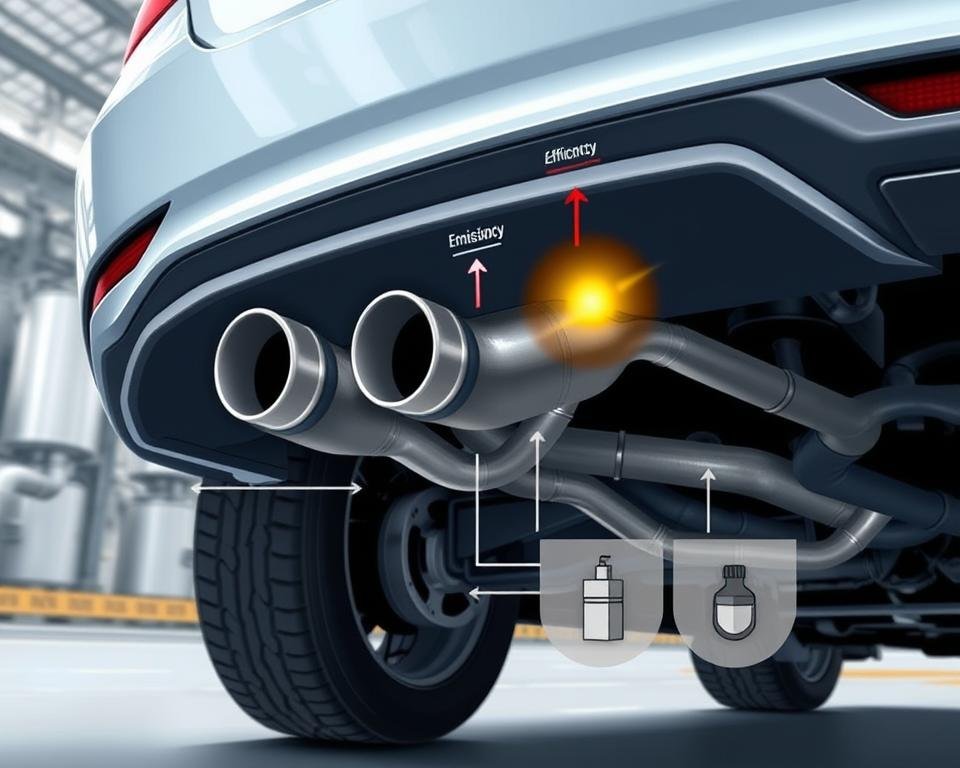
If your check engine light shows P0430 Catalyst Efficiency Bank 2, your car is telling you the rear catalytic converter is not cleaning exhaust as well as it should. The code does not always mean the converter is bad, but it does mean the engine or exhaust system needs attention.
The good news is that this code has a small group of common causes, and many of them are easier to check than people think. You will learn how to spot the real problem, what symptoms matter, and which fixes are worth trying before you replace expensive parts.
Most drivers start with the oxygen sensors or the catalytic converter itself, but the real issue can be something upstream, like misfires, oil burning, or a small exhaust leak. That is why a careful diagnosis matters more than guessing.
What the code really means
P0430 means the engine computer has decided the catalytic converter on Bank 2 is not working efficiently enough. “Bank 2” refers to the side of the engine that does not have cylinder number 1. On V6, V8, and some boxer engines, there are two banks, so the computer compares both sides.
The catalytic converter’s job is to reduce harmful emissions after exhaust leaves the engine. It works by storing and converting gases like hydrocarbons, carbon monoxide, and nitrogen oxides into less harmful output. When the computer sees sensor readings that look too similar before and after the converter, it assumes the converter is not doing its job.
That is the key detail many people miss: the code is a performance test, not a direct “part failed” message. A bad converter can trigger it, but so can fuel problems, ignition issues, or exhaust leaks that confuse the readings.
Why Bank 2 matters
Bank 2 is important because the issue may affect only one side of the engine. If Bank 1 looks fine but Bank 2 keeps setting the code, the problem may be local to that side, such as a leaking exhaust manifold, a faulty downstream sensor, or one bank running richer than the other.
This split is useful in diagnosis. It can save time because you do not need to replace both catalytic converters on a dual-bank vehicle when only one side is affected.
Common causes of P0430 Catalyst Efficiency Bank 2
The most common cause is still a weak or worn catalytic converter on Bank 2, especially on higher-mileage vehicles. But replacing the converter first is often the most expensive way to diagnose the problem. A smarter approach is to check the causes that make the converter look bad even when it is not the root issue.
1. Failing catalytic converter
A converter can lose efficiency when its internal coating wears out, melts, or becomes contaminated. Short trips, overheating, coolant contamination, and long-term misfires can all damage it. Once the honeycomb inside gets restricted or inactive, the code may return quickly after clearing.
On many cars, a failed converter also brings a noticeable smell of rotten eggs, lower fuel economy, or sluggish acceleration. Still, these signs are not always present.
2. Faulty downstream oxygen sensor
The downstream oxygen sensor watches how well the converter is smoothing out exhaust changes. If the sensor ages, gets contaminated, or responds too slowly, the computer may think the converter is failing. This is one of the most common false leads.
A sensor problem is more likely when the code returns without major drivability issues. That said, a bad sensor should still be tested, not guessed at. Sensor replacement without diagnosis can waste money and time.
3. Upstream engine problems
Misfires, rich fuel mixture, weak ignition coils, leaking injectors, bad spark plugs, and vacuum leaks can all send extra pollution into the converter. That extra load makes the converter work harder than designed. Over time, it may lose efficiency or fail the test even if the unit is not physically broken yet.
This is one of the most overlooked points: the converter is often the victim, not the original cause. If the engine is feeding it bad exhaust, the converter cannot clean it properly.
4. Exhaust leaks before or near the converter
Small leaks in the exhaust manifold, gasket, flex pipe, or pipe connections can pull in outside air and distort oxygen sensor readings. The computer then sees strange oxygen levels and may set P0430. Even a leak that is hard to hear can be enough to trigger the code.
Leaks are especially important when the code appears after a recent repair. A loose clamp or damaged gasket can create a new problem that looks like a converter failure.
5. Oil or coolant contamination
If the engine burns oil or leaks coolant into the combustion process, those fluids can coat the catalyst and reduce its ability to work. This type of contamination often causes repeated converter codes, not just one-time failures. In serious cases, the converter can overheat and become permanently damaged.
If you also notice blue smoke, white smoke, or unexplained fluid loss, do not focus only on the code. The engine condition needs attention first.
6. Incorrect fuel control or sensor data
Problems with the mass airflow sensor, engine coolant temperature sensor, fuel trims, or air leaks can push the engine too rich or too lean. That changes exhaust chemistry and can make Bank 2 fail its efficiency test. The converter may be fine, but the data feeding the computer is wrong.
This is why full scan data matters. A good diagnosis looks at fuel trims, misfire counts, sensor switching, and exhaust condition together.
Symptoms you may notice
P0430 does not always create obvious driveability problems. Some cars only show the check engine light. Others develop weak performance, bad fuel economy, or a smell from the exhaust. The symptoms depend on whether the converter itself is failing or another issue is causing the code.
One important clue is that the vehicle may still run “normally” while the code is active. That can make drivers delay repairs. But if the cause is a misfire or rich-running engine, the converter can get worse fast.
| Symptom | What it may suggest |
|---|---|
| Check engine light only | Downstream sensor issue, early converter wear, or mild exhaust leak |
| Rotten egg smell | Catalytic converter overload or fuel mixture problem |
| Poor acceleration | Restricted converter, exhaust blockage, or engine performance problem |
| Lower fuel economy | Rich fuel mixture, misfires, or inefficient exhaust treatment |
| Rough idle or shaking | Misfire, vacuum leak, or ignition issue that may damage the converter |
Do not rely on symptoms alone. A vehicle with a bad converter can feel almost normal, while a rough-running engine may be the real reason the code exists.

Credit: reddit.com
How to diagnose P0430 the right way
The best diagnosis starts with the simplest checks and moves toward deeper testing. That order matters because many P0430 cases are caused by something cheaper and easier than a catalytic converter. A careful process can save hundreds of dollars.
1. Check for other codes first
If you see misfire codes, oxygen sensor codes, fuel trim codes, or airflow codes, deal with those first. P0430 is often secondary. If the engine is misfiring or running too rich, the converter code may disappear after the real issue is fixed.
2. Inspect the exhaust for leaks
Look at the exhaust manifold, gasket areas, pipe joints, and flex sections on Bank 2. A cold start can help reveal ticking, puffing, or visible soot around a leak. A smoke test is even better if you have access to one.
3. Review live scan data
Compare upstream and downstream oxygen sensor behavior. On a healthy system, the upstream sensor should switch quickly, while the downstream sensor should be steadier. If both signals move in a similar pattern, the computer may decide the converter is not storing oxygen properly.
Also check fuel trims. Large positive or negative trims can point to air leaks, fuel delivery issues, or bad sensor input. A converter code without checking trims is only half a diagnosis.
4. Test the oxygen sensors
Downstream sensors can get lazy rather than completely dead. A slow response may not set a sensor-specific code, but it can still trigger P0430. If the sensor is old, contaminated, or far beyond normal service life, replacement may be justified after testing.
5. Evaluate the converter temperature and condition
In some cases, a professional will compare inlet and outlet temperatures with a proper infrared thermometer or use scan data and gas analysis. A working catalytic converter often runs hotter at the outlet than at the inlet because chemical reactions are happening inside. If there is little difference, efficiency may be poor.
Be careful here: temperature alone does not prove the converter is bad. It is only one piece of the diagnosis.
6. Check engine health
If the engine burns oil, has weak compression, or has repeated misfires, the converter may fail again even after replacement. This is where many repairs go wrong. Fixing the code without fixing engine health usually leads to a repeat visit.
If you want official emissions-system guidance for vehicle owner information, the official safety and owner information resources from NHTSA are a useful place to start for general vehicle research, though they do not replace model-specific repair steps.
Fixes that actually solve the problem
The right fix depends on what caused the code. A converter replacement is only correct when the converter is truly weak or damaged. If you replace it too early, the code may come back because the root cause is still present.
Credit: shstreetcar.com
Fix the engine problem first when needed
If the scan shows misfires, fuel trim problems, vacuum leaks, or injector issues, repair those first. Replace spark plugs, coil packs, or sensors only after testing them. On many vehicles, this step alone clears the code after a few drive cycles.
Repair exhaust leaks
Replace bad gaskets, cracked pipes, damaged flex joints, or loose hardware on Bank 2. Even a small leak can throw off oxygen sensor readings. After repair, clear the code and retest under normal driving conditions.
Replace a lazy downstream oxygen sensor
If the downstream sensor is old or slow but the converter itself tests okay, a sensor replacement may solve the problem. This is especially true when the vehicle has high mileage and no sign of internal converter damage. Still, test first if possible.
Replace the catalytic converter only when justified
If the converter is genuinely worn, melted, restricted, or contaminated, replacement is the correct fix. Make sure the underlying cause is gone first. Otherwise, the new part can fail early, sometimes within months.
Address oil burning or coolant loss
Head gasket issues, valve seal wear, piston ring wear, and PCV system problems can all shorten converter life. These are not “small” issues. If the engine keeps feeding the exhaust system oil or coolant, the converter repair will not last.
Reset and verify
After repairs, clear the code and complete a full drive cycle. The computer may need several trips to confirm the fix. Do not assume success after one short drive. A proper repair should hold through different speeds, temperatures, and load conditions.
Common mistakes that waste time and money
One of the biggest mistakes is replacing the catalytic converter based only on the code. That is tempting because the part name is in the code, but it ignores the rest of the system. Many owners spend a lot and still see the light return.
Another mistake is replacing both O2 sensors without testing them. Sensors do fail, but they are not always the main cause. Swapping parts blindly is faster in the moment and slower in the long run.
- Ignoring other codes: P0430 may be secondary to a misfire, fuel trim, or airflow issue.
- Skipping leak checks: Exhaust leaks can mimic converter failure.
- Replacing only one sensor: If the engine is misfiring, the sensor is not the main problem.
- Using cheap universal parts without testing fitment: Incorrect sensor or converter specs can create new issues.
- Forgetting engine oil and coolant leaks: Contamination can destroy a new converter.
One non-obvious point: a converter can be partially damaged long before it fails completely. That means the car may pass one quick test and fail later after highway driving or hot restarts. If the code keeps returning, do not assume it is “just a temporary glitch.”
How to keep the code from coming back
The best prevention is basic engine health. Keep spark plugs, coils, and filters in good condition. Fix oil leaks, coolant leaks, and vacuum leaks early. Use the correct fuel grade if your vehicle requires it, and do not ignore rough running or flashing warning lights.
Short trips can also contribute to converter wear because the exhaust system does not always reach full operating temperature. If you only drive a few minutes at a time, take the car on a longer drive now and then so the system can complete normal heating cycles.
It also helps to watch for small changes. A slight fuel smell, a new tick from the exhaust, or a tiny drop in mileage can be an early warning before P0430 appears. Catching the cause early is far cheaper than replacing a damaged converter.
When you should get professional help
If the vehicle has repeated misfires, heavy smoke, coolant loss, poor compression, or a persistent exhaust leak, a professional diagnosis is the safer move. These issues can cause further damage if they are left alone. A shop with scan tools, smoke testing, and exhaust testing equipment can find the real cause faster than guesswork.
You should also seek help if the code returns right after clearing, especially after you already replaced a sensor or converter. That usually means the root cause is still active.
Do not drive long-term with a flashing check engine light. That can mean a severe misfire, and severe misfires can overheat and destroy the catalytic converter quickly.
Credit: clublexus.com
Bottom line on P0430 Catalyst Efficiency Bank 2
P0430 Catalyst Efficiency Bank 2 is not just a converter problem. It is a warning that the Bank 2 exhaust system is not meeting emissions efficiency targets, and the reason may be the converter, an oxygen sensor, an exhaust leak, or an engine issue upstream.
The smartest path is to scan for related codes, check for leaks, review fuel trims and sensor data, and confirm engine health before replacing expensive parts. If you treat the cause instead of the symptom, you have a much better chance of fixing the issue the first time.
FAQs
What does P0430 mean on Bank 2?
P0430 means the catalytic converter on Bank 2 is not working efficiently enough according to the engine computer. It does not always mean the converter is broken, but it does mean the exhaust system needs diagnosis.
Can a bad oxygen sensor cause P0430?
Yes. A slow or faulty downstream oxygen sensor can make the computer think the catalytic converter is failing. That is why sensor testing is important before replacing the converter.
Is it safe to drive with P0430?
Sometimes, yes, for a short time. But if the car runs rough, smells like fuel, loses power, or has a flashing check engine light, you should stop driving and get it checked soon.
Will replacing the catalytic converter always fix the code?
No. If the real problem is a misfire, exhaust leak, fuel issue, or oil burning, the new converter may fail again. The root cause must be fixed first.
How much driving is needed after repairs before the code clears?
It depends on the vehicle, but many cars need several warm-up and drive cycles before the computer confirms the repair. Some systems may take 50 to 100 miles of normal driving before readiness monitors complete.