
A failing oil filter can cause serious engine problems, often starting with a noticeable drop in performance, sputtering sounds, or an illuminated oil pressure warning light on your dashboard. These symptoms indicate the filter is likely clogged, preventing clean oil from circulating and properly lubricating your engine’s critical components.
What Does an Oil Filter Do for Your Car’s Engine?
Think of the oil filter as your engine’s kidney. Its primary job is to remove harmful contaminants from the engine oil. As oil circulates, it picks up dirt, tiny metal shavings from component wear, and sludge. The oil filter traps these particles, ensuring that only clean oil reaches sensitive parts like bearings, camshafts, and pistons.
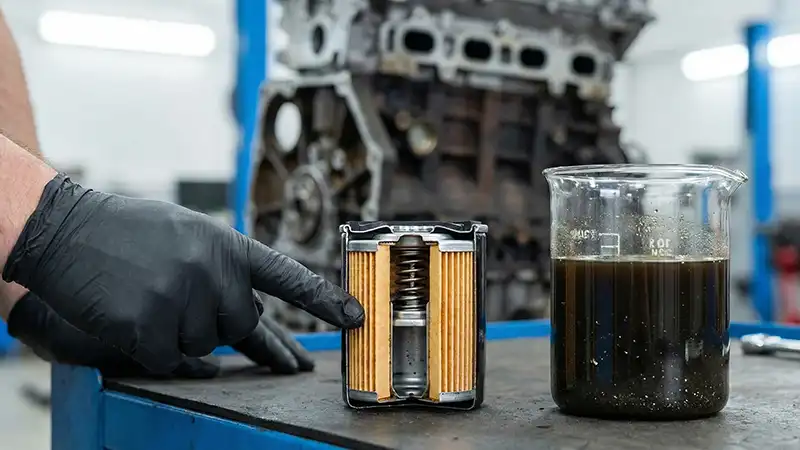
A quality filter is essential for maintaining proper lubrication, which reduces friction, prevents overheating, and extends the life of your engine. Inside most filters is a paper-like or synthetic media that captures debris. They also contain a bypass valve, a critical safety feature. If the filter becomes completely clogged, this valve opens to allow oil to continue flowing to the engine, albeit unfiltered. While this prevents immediate oil starvation, it allows dirty oil to circulate, accelerating engine wear over time.
The Top 7 Signs of a Bad Oil Filter
A bad oil filter doesn’t always fail suddenly. It usually provides several warning signs as it becomes less effective. Paying attention to these symptoms can help you prevent significant and costly engine damage.
1. Poor Engine Performance
One of the first things you might notice is a general sluggishness from your engine. If the oil filter is clogged, it restricts the flow of oil. This lack of proper lubrication means moving parts face more resistance, forcing the engine to work harder. You may experience poor acceleration, reduced power when going uphill, or a delayed throttle response.
2. Sputtering or Misfiring Engine
When oil flow is inconsistent due to a clogged filter, it can lead to engine sputtering, especially at various speeds. The engine might hesitate or jerk as components are momentarily starved of lubrication. This erratic behavior is a clear signal that something is impeding the smooth operation of your engine, and a blocked filter is a common culprit.
3. Metallic Noises from the Engine
Clean oil provides a crucial hydraulic cushion between moving metal parts. When a bad filter allows dirty oil to circulate or restricts flow altogether, this cushion disappears. The result is metal-on-metal contact, which can produce grinding, rattling, or knocking sounds. These noises often come from the connecting rods or bearings and are a serious warning of impending damage.
4. Dirty Exhaust Smoke
While blue or gray smoke from the exhaust is often linked to burning oil, a failing filter can contribute to the problem. If unfiltered oil containing abrasive particles gets past the piston rings and into the combustion chamber, it will burn along with the fuel. This produces a dirty, smelly exhaust and indicates internal engine wear that a clean filter is meant to prevent.
5. Low Oil Pressure Warning Light
Your vehicle’s oil pressure sensor monitors the flow of oil through the engine. A clogged filter creates a significant bottleneck, causing the pressure to drop. When the pressure falls below a safe threshold, it will trigger the oil pressure warning light on your dashboard (often looking like an old-fashioned oil can). If you see this light, it’s crucial to stop driving as soon as it is safe to do so and investigate the cause to prevent catastrophic engine failure.
6. Noticeable Oil Leaks
An oil filter can also fail externally. An improperly installed filter, a degraded or incorrect gasket, or excessive pressure buildup can cause oil to leak from where the filter meets the engine block. If you notice dark, greasy puddles under your car, check the oil filter area for signs of a leak. A loose or damaged filter is a common source.
7. Overheating Engine
Engine oil does more than just lubricate; it also plays a vital role in cooling. It carries heat away from the hottest parts of the engine, like the pistons and bearings. A clogged filter that restricts oil flow reduces this cooling effect. The engine has to work harder with increased friction, generating even more heat. This combination can lead to the engine temperature gauge climbing into the red zone.
What Causes an Oil Filter to Go Bad?
Oil filters are designed to be replaced, but certain factors can cause them to fail prematurely. Understanding these causes can help you maintain your vehicle’s health.
- Delayed Oil Changes: The most common cause is simply not changing the oil and filter on schedule. Over time, the filter becomes saturated with contaminants and can no longer effectively trap debris, leading to a clog.
- Using Incorrect Oil: Every engine is designed for a specific oil viscosity (e.g., 5W-30). Using oil that is too thick can strain the filter and impede flow, while oil that is too thin may not provide adequate protection.
- Poor Quality Filter: Not all filters are created equal. A low-quality filter may have less filter media, a poorly designed bypass valve, or a weak housing, making it more prone to clogging or leaking.
- Installation Errors: Simple mistakes during installation, such as failing to lubricate the gasket with fresh oil or over-tightening the filter, can lead to leaks and seal failure.
- Severe Engine Wear: In an older engine with significant internal wear, an excessive amount of metal particles and sludge can be generated, overwhelming the filter much faster than in a healthy engine.
The Dangers: What Happens if You Don’t Replace a Clogged Oil Filter?
Ignoring the signs of a bad oil filter is a gamble with your engine’s life. When the filter is clogged, the bypass valve opens, allowing unfiltered oil to circulate. This dirty, abrasive oil acts like liquid sandpaper on your engine’s internal components.
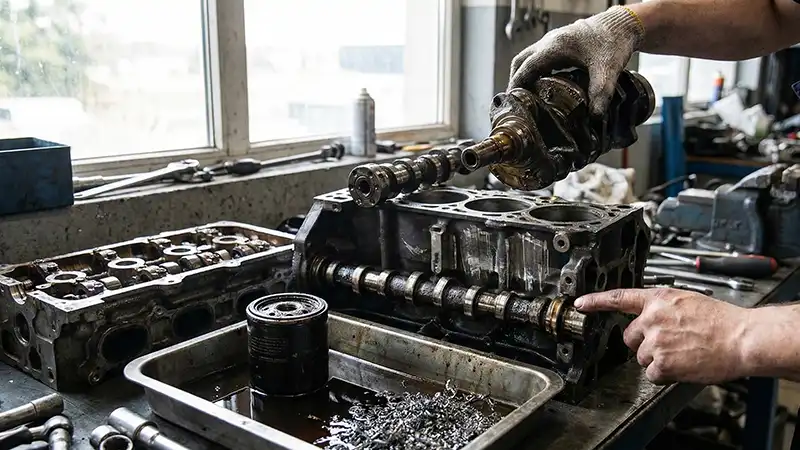
Continuous circulation of contaminated oil will dramatically accelerate wear on critical parts like crankshaft bearings, camshafts, and cylinder walls. This leads to reduced engine compression, increased oil consumption, and eventually, complete engine failure. The repair for such damage is often a full engine rebuild or replacement, a far more involved and expensive process than a routine oil and filter change.
How to Visually Inspect Your Oil Filter
While you can’t see inside the filter without cutting it open, a visual inspection can reveal external problems like leaks or physical damage. Always prioritize safety when working under your vehicle.
- Prepare the Vehicle: Park on a flat, level surface and engage the parking brake. Ensure the engine is completely cool to avoid burns.
- Lift and Secure: Use a car jack to lift the front of the vehicle and securely place it on a pair of jack stands. Never work under a car supported only by a jack.
- Locate the Filter: Slide under the front of the car and locate the oil filter. It’s a cylindrical canister, usually black, blue, or white, screwed into the side of the engine block.
- Check for Leaks: Using a flashlight, carefully inspect the area where the filter’s gasket meets the engine. Look for fresh, wet oil residue, which indicates a leak. Also, check the ground directly below for any drips.
- Inspect for Damage: Look at the filter’s body for any dents, punctures, or significant rust. Damage from road debris can compromise the filter’s integrity and cause a leak.
- Assess the Situation: If you find a leak or damage, the filter and engine oil should be changed immediately. If it looks clean and dry, the problem may be an internal clog, which can only be confirmed by replacing it.
Choosing the Right Replacement Oil Filter for Your Vehicle
Selecting the correct oil filter is just as important as choosing the right oil. An incorrect or low-quality filter can do more harm than good.
- Consult Your Owner’s Manual: The best place to start is your vehicle’s owner’s manual. It will specify the exact part number or type of filter required for your engine.
- Match the Oil Type: If you use synthetic oil, it’s best to pair it with a filter designed for synthetic oil. These filters typically have a higher capacity and more durable media to handle the longer service intervals of synthetic oils.
- OEM vs. Aftermarket: Original Equipment Manufacturer (OEM) filters are the same ones your car came with from the factory. High-quality aftermarket filters from reputable brands can meet or even exceed OEM specifications and are often a great choice.
- Check for Fitment: Always double-check that the filter part number matches your vehicle’s year, make, model, and engine size. An ill-fitting filter will leak and fail to protect your engine.
Frequently Asked Questions About Failing Oil Filters
What are the first signs of a bad oil filter to watch for?
The earliest signs are often subtle, such as a slight hesitation during acceleration or a general feeling that the engine is less responsive than usual. You might also hear a brief rattling noise upon startup as the engine waits for proper oil pressure to build.
Can a bad oil filter cause low oil pressure?
Yes, absolutely. A severely clogged oil filter is a primary cause of low oil pressure. The blockage restricts the flow of oil from the pump to the rest of the engine, causing the pressure to drop and triggering the dashboard warning light.
What does a bad oil filter sound like?
A bad oil filter itself doesn’t make noise, but it causes other parts to. You may hear metallic grinding or knocking sounds from the engine’s bearings and connecting rods, which are being starved of clean, lubricating oil.
How often should you change your oil filter?
It is standard practice to change the oil filter every time you change your engine oil. For most modern vehicles, this is typically between 5,000 and 10,000 miles. Always follow the specific service interval recommended in your vehicle’s owner’s manual.
Can you just clean and reuse an oil filter?
No, standard automotive oil filters are disposable and designed for single use. The filter media traps contaminants deep within its pores, and there is no effective way to clean it. Attempting to reuse a filter will lead to poor engine protection.
Will a new oil filter improve engine performance?
If the old filter was clogged and restricting oil flow, then yes, a new oil filter can restore lost engine performance. By allowing the oil pump to circulate oil freely, it ensures all components are properly lubricated, reducing friction and allowing the engine to run smoothly and efficiently as designed.
Conclusion
Your engine’s oil filter is a small but mighty component that plays a huge role in overall vehicle health. Recognizing the signs of a bad oil filter—like poor performance, strange noises, and dashboard warnings—is key to preventing premature engine wear. Regular maintenance is the best defense against filter failure.
By sticking to your vehicle’s recommended service schedule and using high-quality oil and filters, you ensure your engine remains protected for many miles to come. If you suspect your oil filter is failing, it’s wise to address it immediately by performing an oil change or consulting a trusted mechanic.