
The most common symptoms of bad wheel alignment are your vehicle pulling to one side, a crooked steering wheel while driving straight, uneven or rapid tire wear, and squealing tires. These signs indicate your car’s suspension angles need to be professionally adjusted for safety, optimal performance, and to prevent premature tire replacement.
What Is Wheel Alignment, Anyway?
Before diving into the symptoms, it’s helpful to understand what wheel alignment is. It doesn’t involve the tires or wheels themselves, but rather the vehicle’s suspension system. Wheel alignment, also known as tire alignment, is the process of adjusting the angles of the wheels to meet the car manufacturer’s specifications.
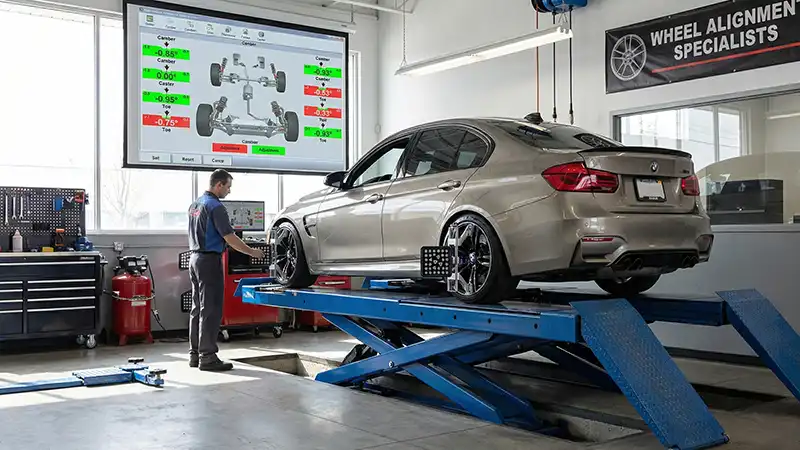
The goal is to ensure the wheels are perpendicular to the ground and parallel to each other. This optimizes vehicle handling, maximizes tire life, and ensures straight-line tracking. The three primary angles adjusted during an alignment are:
- Camber: This is the inward or outward tilt of the top of the tire when viewed from the front of the vehicle. Too much negative (inward) or positive (outward) camber causes uneven wear on the tire’s edges.
- Toe: This refers to the direction the tires point relative to each other, like looking down at your own feet. “Toe-in” means the fronts of the tires are closer together than the rears, while “toe-out” is the opposite. Incorrect toe is a primary cause of rapid tire wear.
- Caster: This is the angle of the steering axis when viewed from the side of the vehicle. Caster affects steering stability and the steering wheel’s ability to return to center after a turn.
When these angles are out of specification, it leads to a host of noticeable problems that affect both your driving experience and your wallet.
Top 10 Symptoms of Bad Wheel Alignment
If your car’s alignment is off, it will almost always give you warning signs. Paying attention to these clues can help you address the issue before it causes more significant damage or safety concerns. Here are the ten most common symptoms to watch for.
1. Vehicle Pulling to the Left or Right
This is the most classic symptom. When you are driving on a straight, level road and briefly let go of the steering wheel, the car should continue in a straight line. If it consistently drifts or pulls to one side, it’s a strong indicator that the alignment is off.
2. Crooked or Off-Center Steering Wheel
Your steering wheel should be centered and level when you are driving straight. If you have to hold the wheel at an angle to keep the car moving forward in a straight line, your alignment is almost certainly incorrect. This is often one of the first things drivers notice.
3. Uneven or Rapid Tire Wear
Proper alignment ensures that your tires wear down evenly across their entire tread surface. When the alignment is bad, it forces specific parts of the tire to carry more load and scrub against the pavement incorrectly. Inspect your tires for these common wear patterns:
- Edge Wear: Excessive wear on the inside or outside edge of a tire often points to a camber issue.
- Feathering: This happens when the tread ribs are worn smooth on one side and are sharp on the other. Running your hand across the tread will reveal this pattern, which is a tell-tale sign of an incorrect toe setting.
4. Squealing Tires
When your tires are not pointing in the right direction, they are essentially being dragged sideways as you drive. This scrubbing action creates friction, which can result in an audible squealing or scuffing sound, especially during low-speed turns.
5. Vibrating Steering Wheel
While vibrations are more commonly associated with unbalanced tires, severe alignment issues can also cause them. If the misalignment has led to uneven tire wear, the now out-of-round tire can create a vibration that you feel through the steering wheel as it rotates.
6. Loose or Wandering Steering
Poor alignment can make the steering feel less responsive or “loose.” You might find yourself constantly making small corrections to the steering wheel to keep the car in its lane. This feeling of wandering can be unsettling and requires more effort from the driver.
7. Steering Wheel Doesn’t Return to Center
After completing a turn, the steering wheel should naturally start to return to its centered position. This is largely controlled by the caster angle. If you find you have to manually turn the wheel back to straight after every turn, it’s a sign that your caster alignment may be off.
8. Tires Making Noise When Turning
Beyond simple squealing, you might hear other noises when turning. Misaligned wheels can put extra stress on other components, leading to groaning or humming sounds as the suspension and steering systems work under strain.
9. Reduced Fuel Efficiency
When your wheels are fighting each other due to misalignment, your engine has to work harder to move the car forward. This increased rolling resistance means your vehicle consumes more fuel to travel the same distance, leading to a noticeable drop in gas mileage over time.
10. Driver Fatigue on Long Trips
This symptom is a culmination of several others. Constantly correcting a car that pulls to one side or has loose steering is mentally and physically taxing. Over a long drive, this continuous effort can lead to significant driver fatigue, which is a serious safety concern.
What Causes a Car to Go Out of Alignment?
Wheel alignment doesn’t just go bad on its own. It’s almost always caused by an external event or by the natural wear of components. The most common culprits include:
- Potholes and Road Imperfections: A sudden, hard impact from hitting a pothole is the number one cause of knocking a car’s alignment out of spec.
- Hitting a Curb: Even a minor bump against a curb while parking can be enough to alter the sensitive alignment angles.
- Minor Accidents: Any collision, even a low-speed fender bender, can jolt the suspension and steering components.
- Worn Suspension Parts: As a car ages, parts like ball joints, tie rods, and control arm bushings wear out. This creates looseness or “play” in the suspension, making it impossible to hold a proper alignment.
- Suspension Modifications: Installing a lift kit or lowering springs changes the vehicle’s geometry and requires a new alignment to be performed.
The Dangers of Driving with Poor Alignment
Ignoring the symptoms of bad wheel alignment is not just a matter of comfort or tire longevity; it’s a critical safety issue. Driving with poor alignment can lead to:
- Reduced Vehicle Control: A car that pulls or wanders is harder to control, especially during an emergency maneuver or in adverse weather conditions like rain or snow.
- Increased Stopping Distance: When tires are not making full, even contact with the road, braking effectiveness can be compromised.
- Higher Risk of Tire Blowout: The severe, uneven wear caused by bad alignment can weaken the tire’s structure, making a dangerous blowout more likely.
- Premature Wear on Parts: Misalignment puts continuous stress on steering and suspension components, causing them to wear out faster.
How to Perform a Quick Alignment Check at Home
While you cannot fix an alignment issue at home, you can perform a simple check to confirm your suspicions before heading to a mechanic. This is a diagnostic check, not a repair.
Safety First: Perform these checks in a safe location away from traffic, like an empty parking lot.
- Check Tire Pressure: Ensure all four tires are inflated to the pressure recommended on the sticker inside your driver’s side door jamb. Incorrect pressure can mimic alignment problems.
- Inspect the Treads: Look closely at the tread on each tire. Do you see more wear on the inside or outside edges? Is the wear pattern choppy or feathered?
- Perform a Straight-Line Test: On a flat, level surface, accelerate gently to about 15-20 mph. Hold the steering wheel straight, then safely and briefly let go. Observe if the car immediately starts to pull to one side.
- Check Steering Wheel Position: While driving straight, look at the steering wheel’s logo or center point. Is it perfectly level, or is it tilted to one side?
If any of these checks reveal a problem, it’s a strong sign that you need a professional alignment service.
Wheel Alignment vs. Tire Balancing: Understanding the Difference
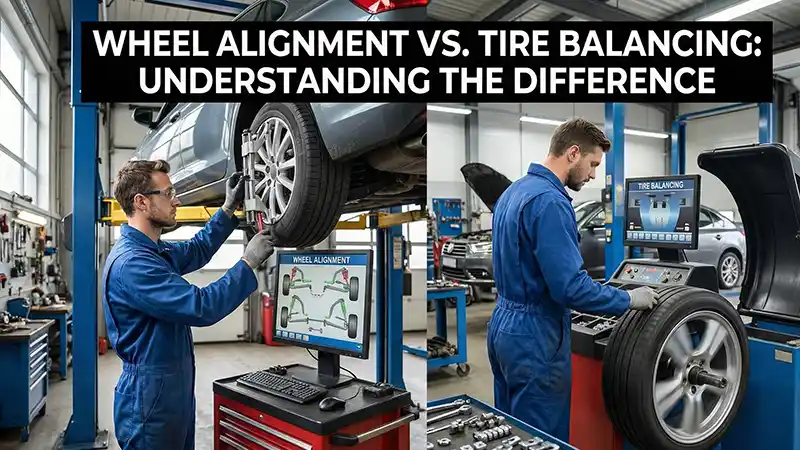
Many drivers confuse wheel alignment with tire balancing, but they are two distinct services that solve different problems.
What is Wheel Alignment?
As discussed, this is an adjustment of the suspension angles (camber, caster, toe) to ensure the wheels are correctly oriented relative to the vehicle and the road. It primarily affects steering, handling, and tire wear patterns.
What is Tire Balancing?
This service corrects weight imbalances within the tire and wheel assembly. A technician uses a special machine to spin the wheel and identify heavier spots. Small counterweights are then attached to the rim to ensure the weight is distributed evenly. Unbalanced tires are the primary cause of vibrations and shaking, especially at highway speeds.
What to Expect During a Professional Wheel Alignment Service
When you take your vehicle in for an alignment, a certified technician will follow a precise process:
- The vehicle is driven onto a specialized alignment rack equipped with high-precision sensors.
- The technician inspects the suspension and steering components for any wear or damage that would prevent a proper alignment.
- Sensors are mounted on each of the four wheels. These sensors use lasers or cameras to measure the current camber, caster, and toe angles down to fractions of a degree.
- The measurements are compared to the vehicle manufacturer’s specifications stored in a computer database.
- The technician then makes precise adjustments to various suspension components to bring all angles back into the correct range.
- Finally, they will provide a printout showing the “before” and “after” measurements.
How Often Should You Get Your Wheels Aligned?
There is no single rule that fits every vehicle, but a good general guideline is to have your alignment checked every 1 to 2 years or every 12,000 to 15,000 miles. However, you should always get an alignment performed under these circumstances:
- After installing a new set of tires.
- After any significant impact with a pothole or curb.
- After replacing any steering or suspension parts.
- Anytime you notice one of the symptoms discussed above.
Frequently Asked Questions About Wheel Alignment
What are the first signs of a bad wheel alignment?
The earliest signs are often subtle, such as the vehicle gently drifting to one side on a straight road or the steering wheel being slightly off-center. You might also notice the edges of your front tires starting to wear down faster than the middle.
Can bad alignment cause shaking or vibration?
While severe misalignment can contribute to vibrations, shaking is more commonly a symptom of unbalanced tires. However, if the alignment is bad enough to cause uneven tire wear, that wear pattern can then lead to vibrations that you feel through the steering wheel.
How much does it cost to fix a bad wheel alignment?
The expense for a wheel alignment service can vary based on the vehicle type, the shop’s location, and whether it needs a two-wheel or four-wheel alignment. It’s best to consult a local certified mechanic for an accurate estimate for your specific car.
Will a wheel alignment fix a crooked steering wheel?
Yes, in most cases. A crooked steering wheel is a classic symptom of misalignment. During a professional alignment, the technician will adjust the steering and suspension components, which includes centering the steering wheel so it’s straight when the car is driving forward.
What happens if you ignore the symptoms of bad wheel alignment?
Ignoring bad alignment leads to rapid and uneven tire wear, forcing you to replace expensive tires prematurely. It also compromises vehicle handling and safety, increases stress on steering components, and can reduce fuel economy.
Can hitting a pothole cause bad wheel alignment?
Absolutely. Hitting a pothole, curb, or road debris with significant force is one of the most common causes of bad wheel alignment. The sudden impact can easily knock suspension components out of their precise factory settings.
Conclusion
Recognizing the symptoms of bad wheel alignment is a key part of responsible car ownership. A vehicle that pulls, a crooked steering wheel, and uneven tire wear are clear signals that your car’s suspension needs attention. Addressing these issues promptly not only saves you money on tires and fuel but, more importantly, ensures your vehicle remains safe and predictable on the road. If you notice any of these signs, it’s wise to have your vehicle inspected by a qualified mechanic to get a professional alignment check.
{“@context”:”https://schema.org”,”@type”:”Article”,”headline”:”10 Key Symptoms of Bad Wheel Alignment (And Why You Shouldn’t Ignore Them)”,”mainEntityOfPage”:”https://autofixnotes.com/?p=1100″,”datePublished”:”2025-12-11T21:05:56+00:00″,”dateModified”:”2025-12-11T21:05:56+00:00″}
