
When winter arrives, many drivers wonder if their all season tires are enough to keep them safe. Others think about switching to winter tires. But what is the real difference? Is it worth changing tires every season, or are all season tires good for all conditions? This article explains everything you need to know about all season vs winter tires. You’ll learn how each type works, which is best for your situation, and what mistakes to avoid. By the end, you’ll feel confident about making the right choice for your vehicle.
What Are All Season Tires?
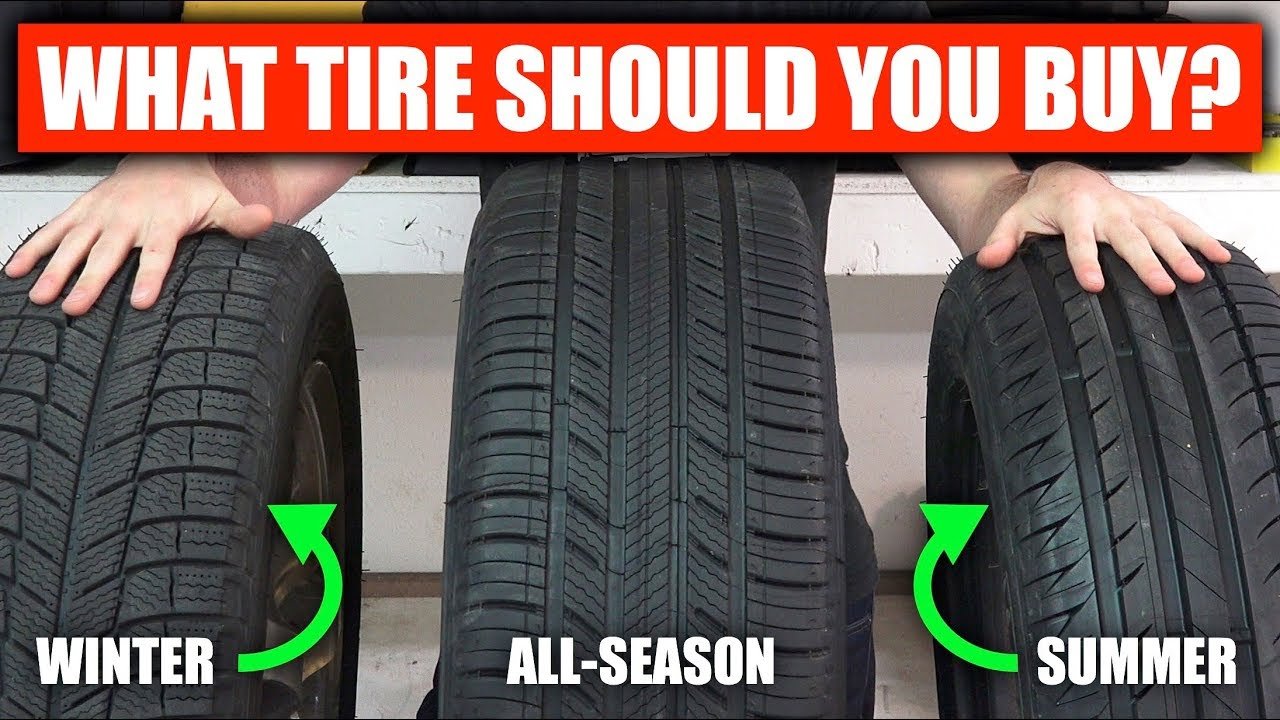
All season tires are made to perform in many weather conditions. They combine features from summer and winter tires, offering a balance between grip, comfort, and durability. Most new cars come with all season tires because they are convenient and work well in moderate climates.
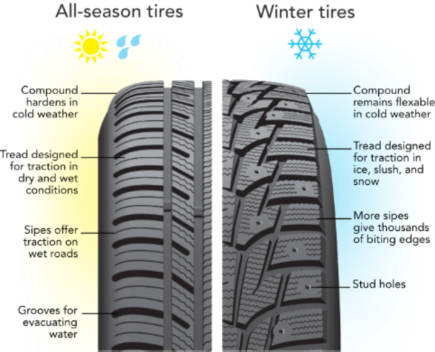
These tires use a rubber compound that stays flexible in mild temperatures. Their tread patterns are designed to handle both wet and dry roads. For example, the grooves help channel water away, reducing the risk of hydroplaning. All season tires also have some features for light snow, but they are not specialized for deep snow or ice.
Many people think all season tires mean “all weather,” but this is not fully true. They are not perfect for extreme cold or heavy snow.
What Are Winter Tires?
Winter tires (also called snow tires) are made for cold temperatures, snow, and ice. They use a softer rubber compound that stays flexible when it’s cold. This flexibility helps the tire grip the road better, even when temperatures drop below freezing.
Winter tires also have deeper tread patterns with many small cuts called sipes. These sipes provide extra grip in snow and ice. The tread blocks are often more aggressive, helping the tire dig into snow and push it away. Some winter tires can be fitted with metal studs for even more traction, but studded tires are not legal everywhere.
Winter tires are best for drivers who live in places with harsh winters, heavy snow, or icy roads. They are not ideal for warm weather, as the soft rubber can wear out faster.
Key Differences Between All Season And Winter Tires
To make the right choice, it’s important to see how all season and winter tires compare in different areas. Here’s a detailed comparison:
| Feature | All Season Tires | Winter Tires |
|---|---|---|
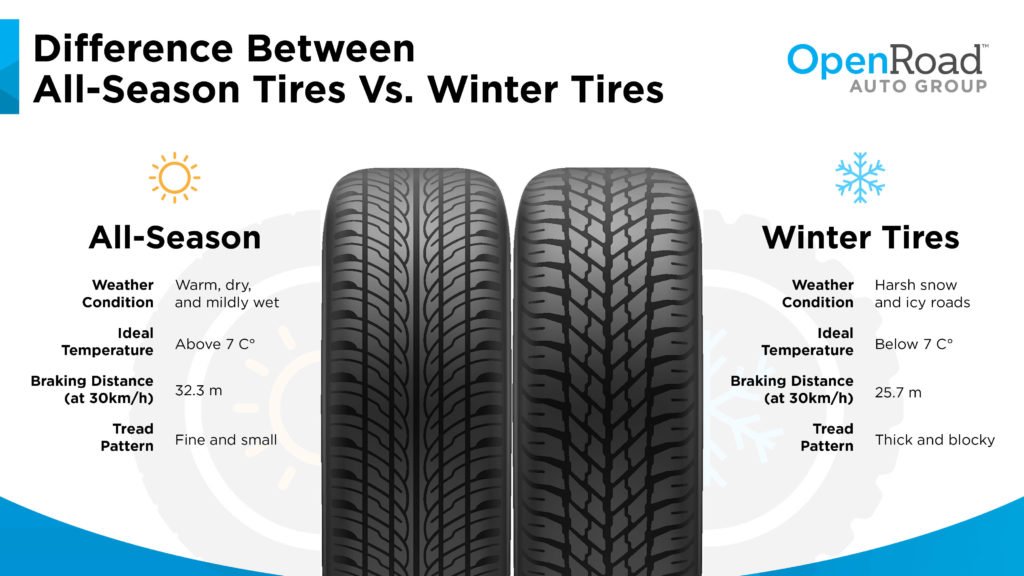
| Temperature Range | Above 7°C (45°F) | Below 7°C (45°F) |
| Tread Design | Moderate pattern | Deep, aggressive pattern |
| Rubber Compound | Medium hardness | Softer, stays flexible in cold |
| Snow & Ice Grip | Limited | Excellent |
| Wet Road Performance | Good | Good, sometimes better |
| Durability | High | Lower in warm weather |
| Comfort & Noise | Quiet | Can be noisier |
| Cost | Cheaper | More expensive |
As you can see, each tire type has strengths and weaknesses. All season tires are convenient, but winter tires are much safer in cold and snowy conditions.
Performance In Different Weather Conditions
Dry Roads
On dry roads, all season tires and winter tires both perform well. However, winter tires can wear faster in warm weather. All season tires are designed to last longer and handle dry pavement better.
Wet Roads
Both tire types use tread patterns to channel water and prevent hydroplaning. Still, winter tires sometimes have a slight advantage because their softer rubber grips wet surfaces better in cold weather. In mild temperatures, all season tires perform well.
Snow And Ice
This is where winter tires truly shine. The deeper tread and extra sipes help them grip snowy and icy roads. Tests show that stopping distances with winter tires are much shorter on snow compared to all season tires.
Here’s an example:
| Tire Type | Stopping Distance on Snow (from 30 km/h) |
|---|---|
| All Season | 40 meters |
| Winter | 25 meters |
This means you stop almost twice as fast with winter tires. That can prevent accidents.
Extreme Cold
Winter tires are made for temperatures below 7°C (45°F). Their rubber stays soft and flexible, while all season tires become harder and lose grip. This is why experts recommend winter tires if you live in cold areas.
Who Should Use All Season Tires?
All season tires are great for drivers in areas with mild climates. If you rarely see snow or ice and temperatures don’t fall below freezing often, all season tires are a good choice. They save money and time because you don’t need to change tires every season. According to the National Highway Traffic Safety Administration, properly maintained tires at the correct pressure improve safety, handling, and fuel economy.
People living in cities or places where winter is short and mild can rely on all season tires. They also work well for drivers who don’t travel much or mostly use their cars for short trips.
But it’s important to note: if there is a sudden snowstorm or icy roads, all season tires may not provide enough safety.
Who Should Use Winter Tires?
Winter tires are necessary for anyone driving in harsh winter conditions. If your area gets regular snow, ice, or temperatures below freezing, winter tires can make a big difference.
Drivers who need to travel long distances, drive in rural areas, or climb hills in winter should always use winter tires. They offer better control, shorter stopping distances, and more confidence on slippery roads.
Some countries and regions even make winter tires mandatory during certain months. If you live in places like Canada, Scandinavia, or Northern US states, winter tires are highly recommended.
Cost And Practical Considerations
One concern is the cost and effort of changing tires every season. Winter tires are usually more expensive than all season tires. You also need to pay for installation and storage.
But many drivers find the safety benefits outweigh the costs. Insurance companies sometimes offer discounts for using winter tires. If you buy both all season and winter tires, you can use each set longer because you only use them half the year.
Here is a quick cost comparison:
| Tire Type | Average Price per Tire | Expected Lifespan |
|---|---|---|
| All Season | $80-$120 | 50,000-70,000 km |
| Winter | $100-$150 | 30,000-40,000 km |
Remember, using winter tires only in winter can extend their lifespan.
Common Mistakes When Choosing Tires
- Using all season tires in harsh winter: Many drivers think all season tires are safe for all conditions. This is risky in heavy snow or ice.
- Keeping winter tires on all year: Winter tires wear out quickly in warm weather. They can also be noisy and affect fuel efficiency.
- Ignoring tire age: Even if your tires look fine, the rubber can get old and lose grip. Replace tires every 6-10 years, even if tread remains.
- Mixing tire types: Never use different types of tires on the same car. It can cause uneven handling and reduce safety.
- Skipping regular checks: Check tire pressure and tread depth often, especially before winter.
Credit: www.discounttire.com
Non-obvious Insights Beginners Miss
- Tire pressure changes with temperature: Cold weather can lower tire pressure, making winter tires even more important. Check pressure often in winter.
- Winter tires improve braking more than handling: Many think winter tires are only for better traction. In fact, the biggest benefit is shorter stopping distance on ice and snow, which prevents collisions.
Practical Tips For Tire Care
- Always store your tires in a cool, dry place when not in use.
- Mark your tires (front/rear, left/right) to keep rotation consistent.
- Use a tire pressure gauge regularly, especially during temperature changes.
- If you drive in mixed conditions, consider “all-weather” tires, which are a newer type with better winter performance than regular all season tires.
Credit: www.youtube.com
Real-world Examples
Many car owners in Canada switch to winter tires every year. Insurance companies report fewer claims from drivers who use winter tires. In fact, studies from Transport Canada show that winter tires reduce accidents in snow and ice by up to 38%.
In Germany, winter tires are mandatory from October to Easter. Drivers caught without them during winter conditions face fines. This has led to safer roads and fewer winter accidents.
Are All Season Tires Enough For Winter?
Some modern all season tires have improved snow performance. Look for the three-peak mountain snowflake symbol on the sidewall. This means the tire meets basic winter traction standards. But even these tires are not as good as true winter tires in deep snow or ice.
Environmental Impact
Winter tires use softer compounds, which can wear out faster and release more particles. All season tires last longer, reducing waste. However, safety should always come first. Proper tire disposal and recycling help lessen environmental harm.
Making Your Final Choice
Think about your driving habits, local climate, and safety needs. If you live in an area with harsh winters, switching to winter tires is the smart choice. For mild climates, all season tires are fine. Don’t forget to check tire pressure and tread depth often—both are key to safety.
For more scientific details about tire performance, you can visit Wikipedia.
Credit: blog.openroadautogroup.com
Frequently Asked Questions
What Is The Main Difference Between All Season And Winter Tires?
The main difference is the rubber compound and tread design. Winter tires use softer rubber and deeper tread patterns for better grip in cold, snow, and ice. All season tires are harder and have moderate tread, suited for mild conditions.
Can I Use All Season Tires In Winter?
You can use all season tires in light winter, but they are not safe in heavy snow or ice. Winter tires are much better for extreme cold and slippery roads.
How Do I Know If My Tires Are Winter-rated?
Look for the three-peak mountain snowflake symbol on the tire sidewall. This means the tire meets winter traction standards.
Is It Okay To Use Winter Tires In Summer?
No. Winter tires wear out faster and become noisy in warm weather. They also don’t perform as well as all season tires on dry roads.
How Often Should I Replace My Tires?
Replace tires every 6-10 years, even if tread is still visible. Check for cracks, uneven wear, and low tread depth. Regular maintenance keeps you safe.
Choosing between all season tires and winter tires depends on your needs, climate, and safety priorities. With the right information, you can make a smart, confident decision and drive safely in any season.