
When you turn on your car’s AC on a hot day, you expect cool air to flow. But sometimes, you only get warm or hot air instead. This can make driving uncomfortable and even dangerous during summer months. Understanding why your car AC is blowing hot air is important—not just for comfort but also for your safety. This guide explains the main causes, how these problems develop, and what you can do to fix them. You’ll also find tips to avoid common mistakes and answers to questions car owners often have.
How Car Ac Systems Work
Before exploring the causes, it helps to know how the car air conditioning system functions. Your AC does not make cold air; instead, it removes heat from inside the car. Here’s a simple breakdown:
- Compressor: Pressurizes refrigerant gas and circulates it.
- Condenser: Turns the gas into a liquid by releasing heat outside.
- Expansion valve/orifice tube: Reduces pressure, cooling the liquid.
- Evaporator: Absorbs heat from the cabin air, making it cold.
- Blower fan: Pushes cold air into your car.
If any part of this chain fails, you might only feel warm air. Now, let’s look at the most common reasons for this problem.
Common Causes Of Car Ac Blowing Hot Air
1. Low Refrigerant
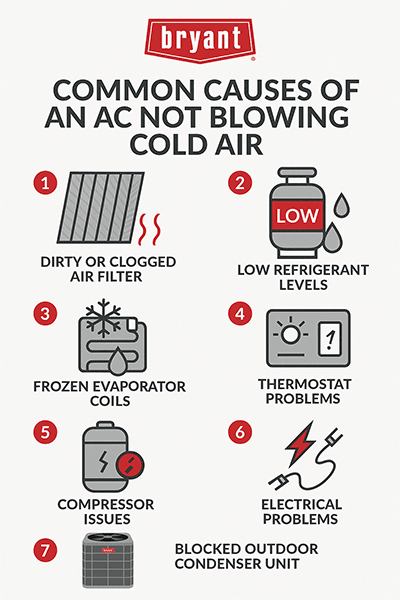
The most frequent cause is low refrigerant (also called Freon). Without enough refrigerant, your AC cannot cool the air.
- How it happens: Usually, refrigerant escapes through leaks in hoses, seals, or the compressor.
- Signs: You might hear a hissing noise or see oily spots under the car’s hood.
- Insight: Many car owners believe refrigerant “runs out” naturally, but it’s a sealed system. Loss always means a leak somewhere.
2. Compressor Issues
The compressor is the heart of the AC system. If it fails, the system cannot circulate refrigerant.
- How it happens: Wear and tear, electrical faults, or lack of use during winter can cause the compressor to seize.
- Signs: Loud noises when AC starts, or the compressor clutch not engaging.
- Tip: Run your AC for a few minutes every week, even in winter, to keep the compressor lubricated.
3. Electrical Problems
Modern cars use many wires, sensors, and relays to run the AC. An electrical problem can stop the system.
- How it happens: Blown fuses, bad relays, or damaged wiring.
- Signs: AC button doesn’t light up, or no sound from the compressor.
- Insight: Diagnosing electrical issues often requires a multimeter and a wiring diagram.
4. Faulty Ac Condenser
A damaged condenser cannot release heat from the refrigerant, so it stays warm.
- How it happens: Rocks or debris from the road can puncture or block the condenser.
- Signs: Hot air from AC, visible damage or clogging on the condenser (usually at the front of the car).
- Tip: Check for leaves, bugs, or dirt blocking the condenser fins.
5. Broken Cooling Fans
Cooling fans blow air over the condenser. If the fans are broken, the refrigerant stays too hot.
- How it happens: Fan motors fail, fuses blow, or wiring gets damaged.
- Signs: Engine temperature rises when AC is on, or fans don’t spin with AC running.
- Insight: Some cars have two fans; one for the radiator and one for the AC.
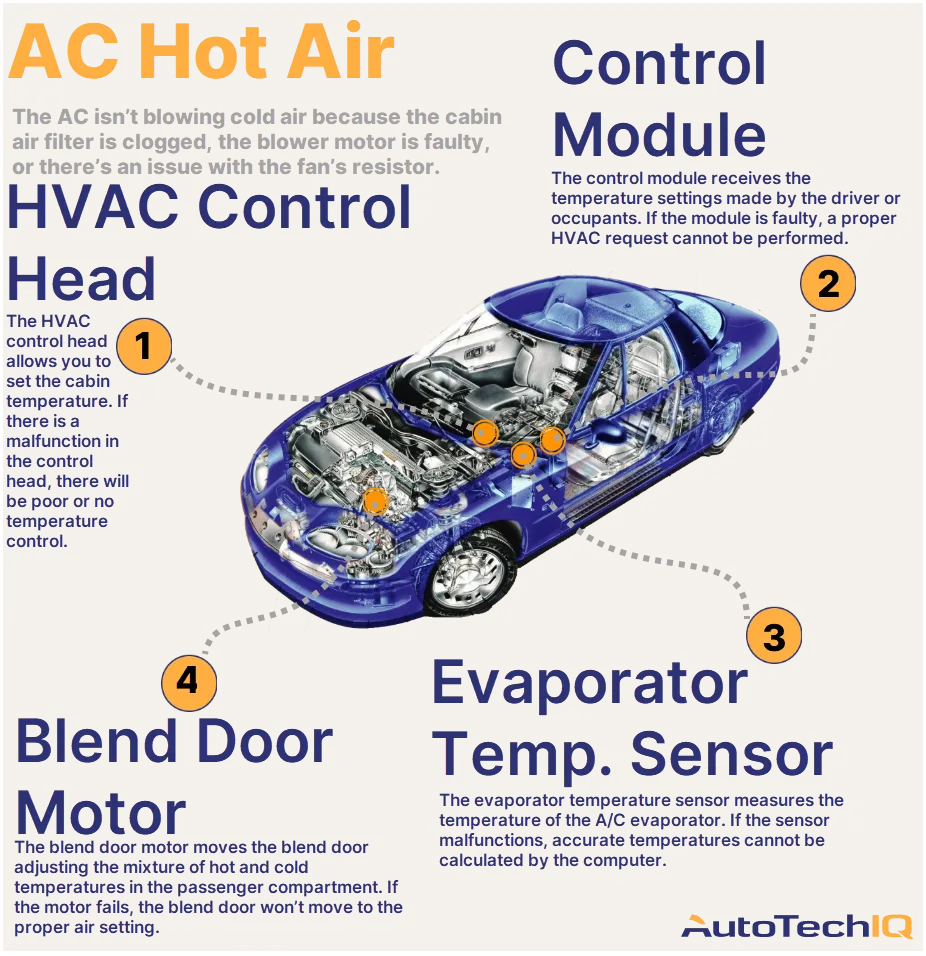
6. Problems With The Blend Door
Inside your dashboard, a small flap called the blend door controls how much air passes through the heater or AC core.
- How it happens: Actuator motors fail, or the blend door gets stuck.
- Signs: Temperature doesn’t change when you adjust the controls, or you hear clicking noises behind the dashboard.
- Tip: Blend door problems are more common in cars with automatic climate control.
7. Clogged Cabin Air Filter
A dirty cabin air filter blocks airflow and can make the AC less effective, sometimes blowing warmer air.
- How it happens: Dust, pollen, and leaves build up over time.
- Signs: Weak airflow, musty smell, or visible dirt on the filter.
- Insight: Many drivers forget to replace this filter, but it’s usually easy to change yourself.
8. Faulty Pressure Switches
Pressure switches protect the AC system. If they fail, they can turn off the compressor or give false readings.
- How it happens: Switches wear out or become contaminated.
- Signs: Compressor cycles on and off quickly, or won’t turn on at all.
- Tip: Pressure switch problems are hard to spot without special tools.
9. Leaks In The Ac System
Any leak in hoses, seals, or the compressor allows refrigerant to escape, leading to loss of cooling.
- How it happens: Rubber hoses crack, O-rings wear out, or connections loosen.
- Signs: Oily residue around AC parts, visible bubbles when tested with dye.
- Insight: Some leaks are so small they only show up under UV light.
10. Faulty Thermostat
A bad thermostat can affect how cold the air blows, especially if it causes the engine to overheat.
- How it happens: Thermostat sticks open or closed.
- Signs: Engine temperature gauge is too high or too low, AC performance changes with engine heat.
11. Problems With Expansion Valve Or Orifice Tube
The expansion valve or orifice tube controls how much refrigerant enters the evaporator. If it’s clogged or stuck, cooling drops.
- How it happens: Debris, moisture, or wear blocks the valve.
- Signs: AC blows warm air, frost on AC lines, or hissing noises.
- Tip: Replacing these parts is best done by a professional.
12. Ac Control Module Failure
The AC control module is the computer that manages all AC functions. If it fails, nothing works properly.
- How it happens: Internal faults, water damage, or software errors.
- Signs: AC settings don’t respond, or strange behavior like fans running at odd speeds.
13. Moisture Or Air In The System
If air or moisture gets into the sealed AC system, it can form ice, block valves, and reduce cooling.
- How it happens: Improper service, loose fittings, or old components.
- Signs: AC works sometimes, then stops; bubbling noises; poor cooling after repairs.
- Insight: Always have AC work done with proper vacuum and recharge equipment.
Visual Comparison: Common Causes And Symptoms
To help you match symptoms to causes, here’s a quick reference:
| Cause | Typical Symptoms | DIY Friendly? |
|---|---|---|
| Low Refrigerant | Warm air, hissing noise | Partial (with recharge kit) |
| Compressor Issues | No cold air, noises | No |
| Blend Door Problem | Stuck temp, clicking | No |
| Dirty Cabin Filter | Weak air, musty smell | Yes |
How To Diagnose The Problem
Diagnosing why your car AC blows hot air involves these steps:
- Check the AC controls. Make sure the system is set to coldest and highest fan speed.
- Listen for the compressor. You should hear a click when the AC is turned on.
- Inspect under the hood. Look for leaks, damaged wires, or broken belts.
- Check the condenser and fans. Make sure nothing is blocking airflow.
- Test the cabin air filter. Replace if dirty.
- Use a pressure gauge. These are sold at auto stores and can tell if refrigerant is low.
Example: Diagnosing Low Refrigerant
A car owner notices only warm air from the vents. They check the pressure with a low-cost gauge and find it’s below normal. They also see oil stains near the AC hose. This points to a refrigerant leak.
Credit: www.bryant.com
What To Do Next: Repairs And Solutions
Some AC problems are easy to fix, others need a professional. Here’s what you can try:
- Replace the cabin air filter. This is usually under the dashboard or behind the glovebox.
- Clear debris from the condenser. Use a hose or soft brush.
- Recharge refrigerant. If you’re comfortable, use a DIY AC recharge kit. Follow instructions carefully.
- Check fuses. Replace any blown fuses related to the AC system.
For more complex issues—like compressor failure, blend door problems, or electronic faults—visit a certified mechanic. Attempting these repairs without the right tools can cause more damage.
Preventing Future Ac Problems
Keep your car AC system working well by:
- Running the AC for a few minutes each week, even in winter.
- Checking and replacing the cabin air filter every 12,000–15,000 miles.
- Cleaning the condenser at least once per season.
- Having the system checked for leaks every two years.
- Avoiding overfilling refrigerant, as this can damage components.
Cost Comparison: Common Repairs
Here’s a comparison of average repair costs in the US:
| Repair Type | Average Cost (USD) | DIY Possible? |
|---|---|---|
| Cabin Air Filter | $20–$60 | Yes |
| Refrigerant Recharge | $100–$300 | Partial |
| Compressor Replacement | $600–$1200 | No |
| Blend Door Actuator | $200–$400 | No |
Common Mistakes To Avoid
- Ignoring weak airflow. Many think it’s “just an old car,” but it could be a clogged filter or bigger issue.
- Overcharging refrigerant. Too much refrigerant can damage your compressor.
- Using AC sealants. These “quick fix” products often clog the system and make repairs more expensive.
- Delaying repairs. Small leaks get worse over time, leading to higher costs.
Credit: www.autotechiq.com
Non-obvious Insights
- Regular AC use prevents seals from drying out. Even in winter, run the AC to keep parts lubricated and prevent leaks.
- Cabin air quality affects AC performance. A dirty filter not only blocks airflow but can also affect the smell and cooling ability.
When To See A Professional
If you notice these signs, seek expert help:
- Loud screeching or grinding noises from the compressor.
- AC works sometimes, then stops.
- Water dripping inside the car cabin.
- Electrical burning smell.
- Sudden loss of all cold air.
Certified mechanics have special tools and training to handle refrigerant safely and diagnose complex issues.
For more technical details about automotive air conditioning, you can visit Wikipedia.
Credit: www.bmwoftenafly.com
Frequently Asked Questions
Why Does My Car Ac Only Blow Hot Air Sometimes?
This usually means there is an intermittent problem—like a failing relay, sticky blend door, or low refrigerant that causes the compressor to cycle on and off. Diagnosing when the problem happens (like only in traffic or only at highway speeds) can help your mechanic pinpoint the fault.
Can I Fix My Car Ac Blowing Hot Air By Myself?
Some issues, like a dirty cabin air filter or blocked condenser, are easy to fix at home. For leaks, compressor issues, or electrical problems, it’s safer to visit a professional. Handling refrigerant without training can be dangerous.
How Often Should I Recharge My Car’s Ac Refrigerant?
Refrigerant should not need regular refilling. If it’s low, there’s a leak. Recharge only after repairing leaks, or you will waste money and risk damaging the system.
Is It Safe To Drive If My Car Ac Only Blows Hot Air?
Yes, but it can be uncomfortable and dangerous in extreme heat, especially for children or pets. If the AC is blowing hot air due to engine overheating, get it checked immediately.
What Is The Most Expensive Ac Repair?
Compressor replacement is usually the most costly, with prices from $600 to $1200 or more. Other expensive repairs include fixing leaks in hard-to-reach places or replacing the AC control module.
Solving your car AC problem starts with good information. Understanding the causes and taking smart steps can keep you comfortable all year round.