
A car battery is a small device, but it plays a huge role in your vehicle. It provides the power to start your car and keeps all electronics running smoothly. Understanding car battery voltage is important for every car owner, even if you are not a mechanic. Knowing what the voltage numbers mean can help you spot early warning signs of battery problems, avoid getting stranded, and even save money. The car battery voltage chart is a simple tool that can help you track your battery’s health quickly. In this article, you’ll learn what these numbers mean, how to use them, and why they matter for your car’s performance and safety.
What Is Car Battery Voltage?
Every car battery produces a certain amount of electrical pressure, called voltage. For most cars, this is a 12-volt battery. But the actual voltage you measure can change, depending on your battery’s condition and if the engine is running or off.
When your car is turned off and the battery is fully charged, the voltage should be higher than 12 volts. When the engine is running, the voltage should be even higher, as the alternator charges the battery. If these voltages fall outside normal ranges, it means your battery or charging system might have a problem.
The Car Battery Voltage Chart Explained
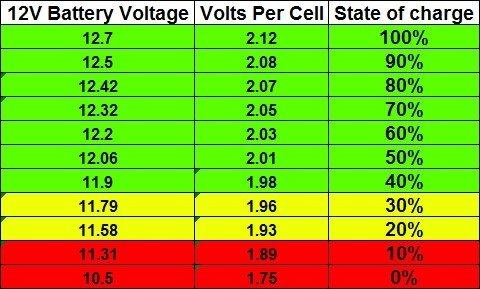
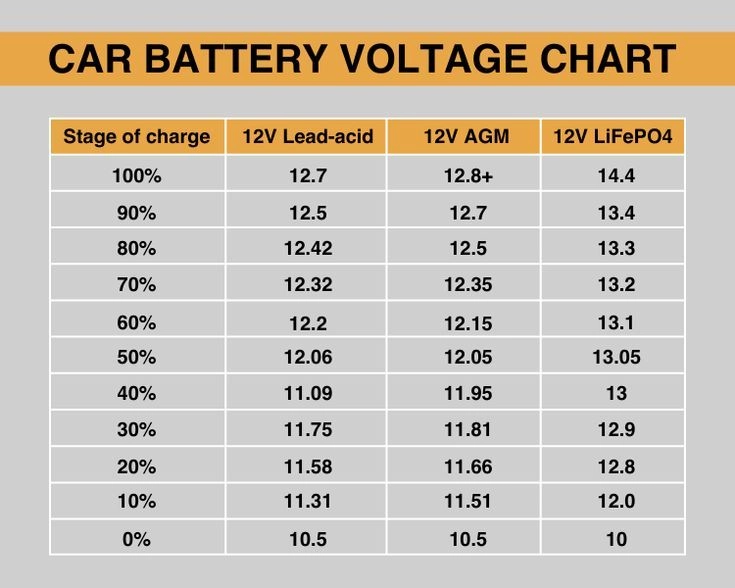
A car battery voltage chart helps you understand what the numbers on your voltmeter or multimeter mean. Here is a typical voltage chart for a standard 12V lead-acid car battery (which is the most common type):
| Battery State | Voltage (Engine Off) |
|---|---|
| 100% Charged | 12.6 – 12.8V |
| 75% Charged | 12.4V |
| 50% Charged | 12.2V |
| 25% Charged | 12.0V |
| Dead / Discharged | 11.9V or lower |
Key insights:
- A battery at 12.6V or above is healthy and fully charged.
- 12.4V means you still have enough charge, but it’s not full.
- 12.2V or lower means your battery is half charged or less. At this point, starting your car may become difficult.
- Below 12.0V is a warning sign. Your battery is almost dead.
Why Car Battery Voltage Matters
Understanding battery voltage is not just about numbers. It can help you:
- Prevent breakdowns: Low voltage means your car might not start.
- Catch charging problems early: If voltage is too high or too low when the engine runs, your alternator or battery may be failing.
- Extend battery life: Keeping your battery charged properly helps it last longer.
Many car owners miss the early signs of battery trouble. They only notice a problem when the car refuses to start, which can happen at the worst time. By checking your battery voltage regularly, you can avoid this problem.
How To Measure Car Battery Voltage
You do not need to be a mechanic to check your battery’s voltage. Here’s how you can do it at home:
- Get a digital multimeter. This device can measure voltage and is easy to use.
- Turn off your car. Wait a few minutes after shutting off the engine.
- Set the multimeter to DC Volts (20V range).
- Touch the red probe to the battery’s positive (+) terminal and the black probe to the negative (-) terminal.
- Read the number. Compare your result to the chart above.
If you measure the voltage with the engine running, it should read between 13.7V and 14.7V. This shows the alternator is charging the battery.
Car Battery Voltage With Engine Running
When your car is running, the alternator provides power and charges the battery. The voltage should rise above the battery’s resting voltage.
| Condition | Voltage (Engine Running) |
|---|---|
| Normal Charging | 13.7 – 14.7V |
| Undercharging | Below 13.7V |
| Overcharging | Above 14.7V |
If your voltage is below 13.7V with the engine running, your alternator might not be charging the battery enough. If it’s above 14.7V, the alternator could be overcharging, which can damage the battery.
Types Of Car Batteries And Their Voltage
Most cars use lead-acid batteries, but there are other types. Each type has its own voltage characteristics.
| Battery Type | Fully Charged Voltage | Common Use |
|---|---|---|
| Lead-acid (Flooded) | 12.6 – 12.8V | Most cars, trucks |
| AGM (Absorbed Glass Mat) | 12.8 – 13.0V | Luxury cars, start-stop vehicles |
| Lithium-ion | 13.0 – 13.2V | Electric & hybrid vehicles |
The voltage chart above is for lead-acid batteries. If you have an AGM or lithium battery, check your manual for exact numbers.
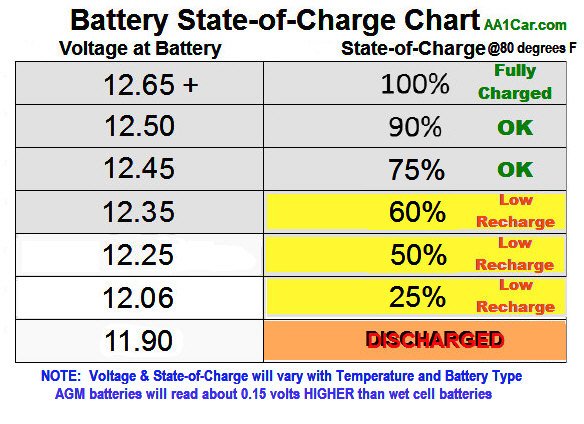
Credit: www.aa1car.com
What Causes Low Car Battery Voltage?
There are many reasons why a car battery may show low voltage:
- Age: Most car batteries last 3–5 years. After that, they cannot hold charge as well.
- Cold weather: Batteries lose power in cold temperatures.
- Short trips: Frequent short drives may not allow the alternator to fully recharge the battery.
- Parasitic drain: Electronics, alarms, or lights left on can slowly drain the battery.
- Bad alternator: If the alternator is weak, it cannot keep the battery charged.
- Loose connections: Corroded or loose terminals reduce voltage.
One non-obvious problem is parasitic drain. Sometimes, a small electronic device or light you forgot about keeps drawing power even when the car is off. Over time, this can drain your battery, causing low voltage even if the battery is new. According to AAA’s Approved Auto Repair program, shops that employ ASE-certified or factory-trained technicians must meet strict standards for training, equipment, and customer service.
Common Signs Of Low Battery Voltage
It’s not always easy to spot battery problems until it’s too late. Here are some warning signs:
- Slow engine cranking: The engine turns over slowly when you start the car.
- Dim headlights: Headlights are not as bright as usual.
- Electrical issues: Power windows, radio, or dashboard lights work poorly.
- Check battery light: Dashboard warning light may turn on.
A tip that many people miss: If you notice your dashboard lights flickering when you turn the ignition, it can be an early sign of low voltage, even before the car struggles to start.
How Often Should You Check Car Battery Voltage?
Most people only check their battery when there’s a problem. But regular checks can prevent trouble. It’s a good idea to:
- Check the voltage every 3–6 months (or before long trips).
- Test more often in winter or if your battery is older than 3 years.
- Check after leaving your car unused for a week or more.
Regular checks are extra important if you use your car for short trips, as these do not give the alternator enough time to recharge the battery fully.
What To Do If Your Car Battery Voltage Is Low
If your battery voltage is low, don’t panic. Here are simple steps to follow:
- Charge the battery: Use a battery charger. Don’t rely on jump-starting every time.
- Check for loose or corroded terminals: Clean and tighten them.
- Inspect for parasitic drain: Make sure all lights and electronics are off when the car is parked.
- Test your alternator: If voltage is still low after charging, have your alternator checked.
- Replace the battery if needed: If your battery is old or won’t hold a charge, replacement is the best option.
Many people replace their battery the first time it shows low voltage, but sometimes, cleaning the terminals or charging it fully can solve the problem.
How Temperature Affects Car Battery Voltage
Temperature has a strong effect on battery voltage and performance. In cold weather, chemical reactions inside the battery slow down, and voltage drops. In hot weather, water inside the battery can evaporate, leading to failure.
- At 0°C (32°F), a fully charged battery may only deliver 65% of its rated power.
- At -18°C (0°F), this drops to about 40%.
- In hot climates, battery lifespan can be cut in half.
If you live in an area with extreme temperatures, check your battery voltage more often and consider a battery designed for your climate.
Practical Tips For Maintaining Healthy Battery Voltage
Keeping your battery in top shape isn’t difficult. Here’s what works:
- Drive regularly: Avoid leaving your car unused for long periods.
- Take longer drives: Short trips do not fully recharge the battery.
- Turn off all lights and devices: Check before leaving your car.
- Check and clean terminals: Corrosion can cause voltage drops.
- Test your battery before winter and summer: Extreme temperatures are tough on batteries.
A lot of people forget that modern cars have many electronics that keep running even when the car is off. This is why it’s smart to unplug chargers or dash cams when not using your car.
Credit: www.reddit.com
Understanding Battery Voltage Vs. Battery Health
Voltage is important, but it’s not the only sign of battery health. A battery can show a normal voltage but still be weak if it cannot deliver enough current (amps) to start the car. This is why professional mechanics do a load test—they check how the battery performs under a heavy electrical load.
If your car starts slowly even with good voltage, have a mechanic do a full battery test. This checks both voltage and the battery’s ability to deliver power.
When To Replace Your Car Battery
Knowing when to replace your battery saves money and stress. Replace it if:
- It’s more than 3–5 years old.
- Voltage drops below 12.0V after charging.
- The car is hard to start, even after charging.
- There are signs of leaking, swelling, or corrosion.
Don’t wait until your battery dies completely, especially before a long trip.
Credit: www.neware.net
Where To Find More Information
For more technical details about car batteries and voltage, you can visit the Automotive Battery Wikipedia page, which provides in-depth explanations and history.
Frequently Asked Questions
What Voltage Is Too Low For A Car Battery?
A voltage below 12.0V (with the engine off) is considered too low for a healthy car battery. At this level, your car may not start, and the battery could be damaged if left discharged.
Can A Car Battery Be Overcharged?
Yes, if your alternator is faulty or you use the wrong charger, the battery can be overcharged. This can cause overheating, reduce battery life, and in some cases, cause the battery to leak or swell.
How Often Should I Check My Car Battery Voltage?
Check your battery voltage every 3–6 months, and before long trips or after your car sits unused for a week or more. Check more often in extreme temperatures or if your battery is more than 3 years old.
Does A New Battery Need To Be Charged Before Use?
Most new car batteries are pre-charged and ready to use. However, if a battery has been sitting on the shelf for a long time, it’s a good idea to check and top up the charge before installation.
Can I Test Car Battery Voltage Without A Multimeter?
Some cars have a built-in battery monitor or dashboard display. For most accurate results, use a digital multimeter. If you don’t have one, many auto parts stores will check your battery voltage for free.
Having a basic understanding of car battery voltage and how to use a car battery voltage chart can help you avoid surprises, keep your vehicle running smoothly, and extend your battery’s life. Checking voltage is quick, easy, and can save you from bigger problems down the road.
