
Keeping your car looking and feeling new goes beyond a quick wash every few weeks. Many car owners think car detailing is just for special occasions, but regular detailing is one of the smartest ways to protect your vehicle’s value, comfort, and style. A proper car detailing maintenance schedule is not just about keeping things shiny; it’s about maintaining your car’s health inside and out. Let’s explore what a well-structured car detailing plan looks like, how often you should perform each step, and the impact it has on your car’s long-term condition.
Why A Car Detailing Maintenance Schedule Matters
Many people underestimate the value of a regular detailing routine. Dirt, dust, road salt, and everyday wear can damage both the exterior paint and the interior surfaces of your car. Over time, this leads to faded paint, stained seats, and persistent odors. Even if you don’t plan to sell your car soon, regular detailing can prevent expensive repairs and keep your car comfortable and healthy for years.
A structured schedule helps you:
- Catch problems early before they become bigger issues
- Save money by avoiding deep cleaning or repairs later
- Enjoy a cleaner, more pleasant driving experience
- Protect your car’s resale value
Key Elements Of A Car Detailing Maintenance Schedule
A complete schedule includes more than just washing. It covers the exterior, interior, and often-overlooked areas like wheels and engine bay. Here’s what a typical maintenance plan should include:
- Washing – Removing surface dirt and contaminants
- Drying – Preventing water spots and streaks
- Waxing or Sealant Application – Adding protection and shine
- Interior Cleaning – Vacuuming and wiping surfaces
- Deep Cleaning Upholstery and Carpets
- Glass and Mirror Cleaning
- Wheel and Tire Detailing
- Engine Bay Cleaning
- Clay Bar Treatment
- Paint Correction (as needed)
- Odor Removal and Air Vent Cleaning
- Leather Conditioning (if applicable)
Each of these tasks has its own recommended frequency and best practices, which we’ll cover in detail.
Weekly And Bi-weekly Tasks
Some detailing jobs need frequent attention to prevent buildup and damage.
Washing The Exterior
A hand wash or touchless wash removes harmful contaminants before they can bond to the paint. Most experts recommend washing your car every 1–2 weeks. In areas with harsh weather or lots of dust, weekly washing is ideal. Use a pH-balanced car shampoo and soft microfiber mitt to avoid swirl marks.
Drying
Letting your car air dry can leave mineral spots. Always use a clean, soft microfiber towel to dry the car after washing. This quick step helps keep your paint smooth and spot-free.
Interior Quick Cleaning
Every week or two, remove trash and vacuum the floor mats and seats. Wipe down dashboards and touchpoints with a damp microfiber cloth. Regular cleaning prevents dirt from becoming embedded and keeps odors away.
Glass And Mirror Cleaning
Fingerprints and haze can make driving dangerous. Clean interior and exterior glass every 1–2 weeks using a dedicated automotive glass cleaner and a lint-free towel.
Monthly Detailing Tasks
Some jobs don’t need weekly attention but are important for deeper cleanliness and protection.
Wax Or Sealant Application
Apply a spray wax or sealant every month for ongoing paint protection. These products act as a barrier against UV rays, bird droppings, and road grime. Some waxes last longer, but monthly touch-ups keep the finish in top shape, especially if your car is parked outside.
Deep Vacuuming And Upholstery Cleaning
Move seats and mats to vacuum hard-to-reach areas. For fabric interiors, use a gentle upholstery cleaner to lift stains and odors. Leather seats benefit from a wipe down with a damp cloth and a conditioner afterward.
Wheel And Tire Detailing
Brake dust and road grime can damage wheels if left unchecked. Use a wheel cleaner and soft brush to scrub wheels, and finish with a tire dressing for a clean, black look.
Odor Removal And Air Vent Cleaning
Bad smells often come from hidden dirt in vents and fabrics. Use a small brush or compressed air to clean vents and apply an odor eliminator to the cabin air filter if needed.
Credit: malcoautomotive.com
Quarterly And Seasonal Detailing
Every 3–6 months, give your car extra attention to keep it in showroom condition.
Clay Bar Treatment
Even with regular washing, tiny contaminants can stick to paint. A clay bar treatment pulls out these particles, leaving the paint ultra-smooth. This is best done every 3–6 months before applying a fresh coat of wax.
Leather Conditioning
Leather dries and cracks over time. Every 3 months, apply a quality leather conditioner to all leather surfaces. Rub it in gently and let it soak for best results.
Engine Bay Cleaning
A clean engine bay is not just for looks—it helps spot leaks early and prevents grime buildup. Every few months, use a plastic-safe cleaner and a brush to wipe down the engine area. Cover sensitive parts like the battery or alternator before spraying.
Paint Correction (as Needed)
If you notice swirl marks, scratches, or dull paint, consider machine polishing or paint correction. Most cars only need this once a year or less, but inspecting your paint every few months helps you decide when it’s time.
Annual Detailing Tasks
Some jobs are only needed once a year but make a big difference.
Full Interior Shampoo Or Steam Cleaning
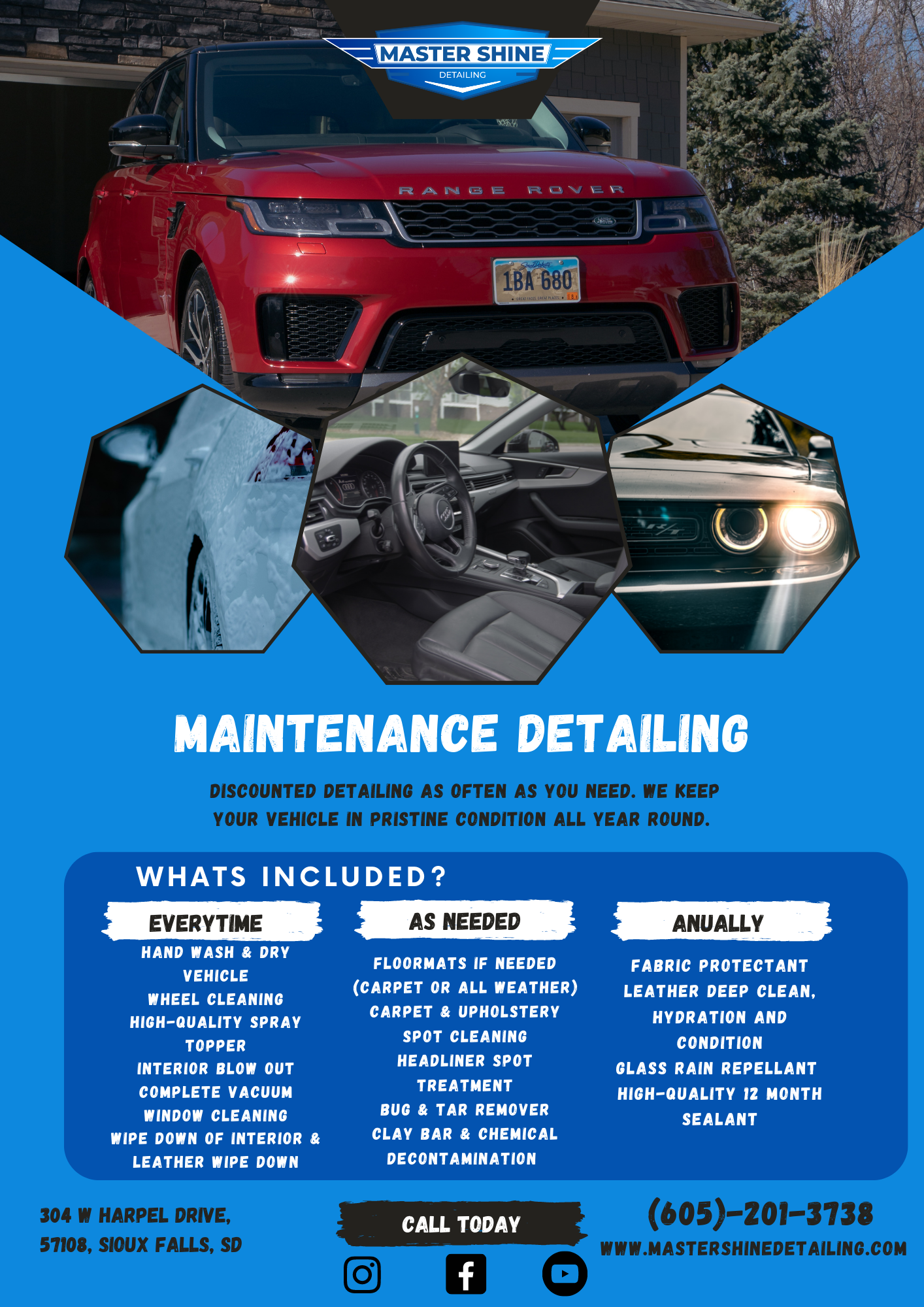
Once a year, deep clean all carpets and upholstery. Use a hot water extractor or steam cleaner to remove deep stains and bacteria.
Headlight Restoration
Plastic headlights can become foggy and reduce nighttime visibility. Polish your headlights once a year to restore clarity and performance.
Protective Coatings
Consider applying a ceramic coating or professional-grade sealant annually. These products last longer than traditional wax and provide advanced protection.
Credit: www.mastershinedetailing.com
Example Car Detailing Maintenance Schedule
For a clearer view, here’s how a complete schedule might look for a typical car owner:
| Task | Frequency |
|---|---|
| Wash Exterior | Weekly/Bi-weekly |
| Dry Exterior | Every wash |
| Quick Interior Clean | Weekly |
| Glass Cleaning | Bi-weekly |
| Wax/Sealant | Monthly |
| Deep Vacuum | Monthly |
| Wheel & Tire Detailing | Monthly |
| Clay Bar | Quarterly |
| Leather Conditioning | Quarterly |
| Engine Bay Cleaning | Quarterly |
| Paint Correction | Annually/as needed |
| Headlight Restoration | Annually |
| Full Interior Shampoo | Annually |
| Protective Coating | Annually |
Essential Tools And Products For Detailing
A good maintenance schedule is only as effective as the products and tools you use. Here’s a quick comparison of some essentials:
| Tool/Product | Main Use | Why It Matters |
|---|---|---|
| Microfiber Towels | Drying, wiping, buffing | Prevents scratches, absorbs water well |
| pH-balanced Car Shampoo | Washing exterior | Keeps paint safe, removes dirt gently |
| Clay Bar | Paint decontamination | Removes bonded contaminants |
| Wax/Sealant | Paint protection | Adds shine and shields from elements |
| Interior Cleaner | Plastic, vinyl, upholstery | Removes stains, keeps surfaces fresh |
| Leather Conditioner | Leather seats and trim | Prevents cracking and fading |
| Wheel Cleaner | Wheels & tires | Removes brake dust, restores shine |

Credit: www.youtube.com
Non-obvious Insights For Long-term Car Care
Even with a good schedule, beginners often miss a few key points:
- Avoid washing in direct sunlight. Heat speeds up drying and can cause water spots and streaks. Early morning or evening is best.
- Rotate your towels and sponges. Use different sets for paint, wheels, and interior to prevent cross-contamination.
- Check your cleaning products. Some household cleaners damage car surfaces. Only use products made for automotive use.
- Don’t skip the door jambs and trunk seals. These areas collect grime and can lead to rust if ignored.
- Inspect your paint and interior regularly. Small chips and tears are easier to repair early than after they grow.
Common Mistakes To Avoid
Many car owners make errors that reduce the benefits of detailing:
- Using dish soap or harsh chemicals on paintwork, which strips wax and damages the finish
- Rubbing dry dirt off with a dry cloth, causing scratches
- Letting water or cleaning products dry on the surface
- Forgetting to clean under seats and in tight corners
- Neglecting regular maintenance, leading to overwhelming dirt buildup
A consistent routine helps you avoid these pitfalls and makes each detail job faster and easier.
Benefits Of Sticking To A Maintenance Schedule
The results of regular detailing go beyond the surface. Here’s what you gain:
- Higher resale value: Cars with a complete detailing history sell for more.
- Healthier interior: Clean air vents and upholstery reduce allergens and odors.
- Longer-lasting materials: Paint, leather, and plastics last years longer with proper care.
- Safer driving: Clean glass, mirrors, and headlights improve visibility.
- Pride of ownership: There’s real satisfaction in driving a car that looks and feels like new.
In fact, research from the International Carwash Association shows that regularly maintained cars lose less value over time than those only washed occasionally (International Carwash Association).
Frequently Asked Questions
What Is The Difference Between Car Washing And Detailing?
Car washing removes surface dirt and dust, usually with water and soap. Car detailing is a deeper cleaning process, covering both the exterior and interior. Detailing includes waxing, cleaning wheels, treating upholstery, and more, aiming to restore and protect the car’s surfaces.
How Often Should I Detail My Car?
Basic detailing like washing and interior cleaning should be done every 1–2 weeks. Deeper detailing, such as waxing and clay bar treatment, is best every 1–3 months. Full professional detailing is often done 1–2 times per year, but frequency depends on use, climate, and personal standards.
Is Car Detailing Worth The Cost?
Yes, regular detailing helps prevent damage, keeps your car comfortable, and maintains its value. While professional detailing can cost more, DIY maintenance with the right products is affordable and can save money on repairs and resale.
Can I Detail My Car At Home, Or Do I Need A Professional?
Many detailing tasks can be done at home with basic tools and products. For paint correction or ceramic coatings, professional skills and equipment are better. Beginners can start with washing, waxing, and interior cleaning, then learn advanced steps over time.
What Should I Do If My Car Has Stubborn Stains Or Odors?
Use automotive stain removers and odor eliminators designed for your car’s interior materials. Steam cleaning or ozone treatment may be needed for tough odors. Always test products on a small area first to avoid damage.
Regular car detailing is an investment in your car’s future. By following a structured schedule, using the right products, and giving attention to every corner, you’ll enjoy a cleaner, safer, and more valuable vehicle for many years.
