
Every time you take your car for a drive, it releases gases into the air. These gases, known as car emissions, can harm the environment and your health. To control pollution, each U.S. state has its own rules for car emission inspections. These inspections check if your vehicle meets state or federal standards. But not all states have the same requirements, and the rules can change depending on where you live, the age of your car, and its type.
Understanding these rules is important for every car owner. If you ignore them, you might get a fine or even lose your car registration. This guide will help you learn about car emission inspection requirements by state, what to expect during inspections, and important tips to stay compliant—no matter where you drive.
Why States Have Emission Inspections
The main reason states have emission inspections is to reduce air pollution. Cars that do not burn fuel efficiently release more harmful substances, such as carbon monoxide, nitrogen oxides, and particulate matter. These pollutants can make breathing difficult, worsen asthma, and contribute to smog.
States with big cities or heavy traffic usually have stricter rules. That’s because more cars on the road mean more pollution. Some states also follow federal guidelines, especially if their air quality does not meet national standards set by the Environmental Protection Agency (EPA).
States With Strict Emission Inspection Rules
Some states have tough emission inspection programs. Usually, these states have large populations or high pollution levels. Here’s a look at some of the strictest states and what they require:
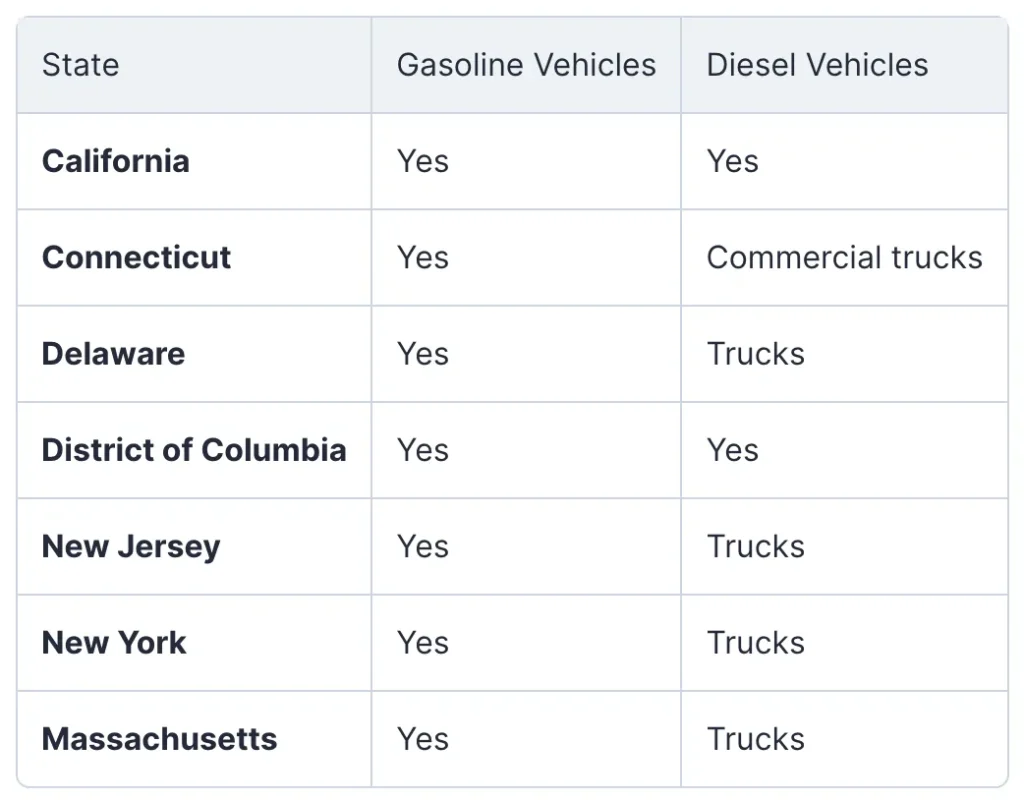
California
California is known for the toughest emission standards in the U.S. The California Smog Check Program covers most vehicles made after 1976. Most cars must be tested every two years. The state uses advanced equipment to measure emissions. Some areas have even stricter rules because of local air quality issues.
New York
New York requires both safety and emission inspections every year. Most gasoline-powered cars less than 25 years old must pass an On-Board Diagnostics (OBD-II) test. The inspection covers the entire state, but especially in New York City and surrounding counties, the rules are strict.
New Jersey
In New Jersey, cars less than five years old are exempt, but after that, vehicles must pass an inspection every two years. The inspection includes both safety checks and emission testing. The state checks for exhaust leaks and uses OBD-II tests for newer vehicles.
Massachusetts
Massachusetts requires annual safety and emissions inspections for most vehicles. Cars from model year 2008 or newer must pass an OBD-II test. Diesel vehicles and commercial trucks have separate rules.
Connecticut
Connecticut has a biennial (every two years) emission inspection for most cars and light trucks. The state uses OBD-II testing for newer cars and tailpipe tests for older models.
Credit: rislone.com
States With Moderate Or Partial Inspection Programs
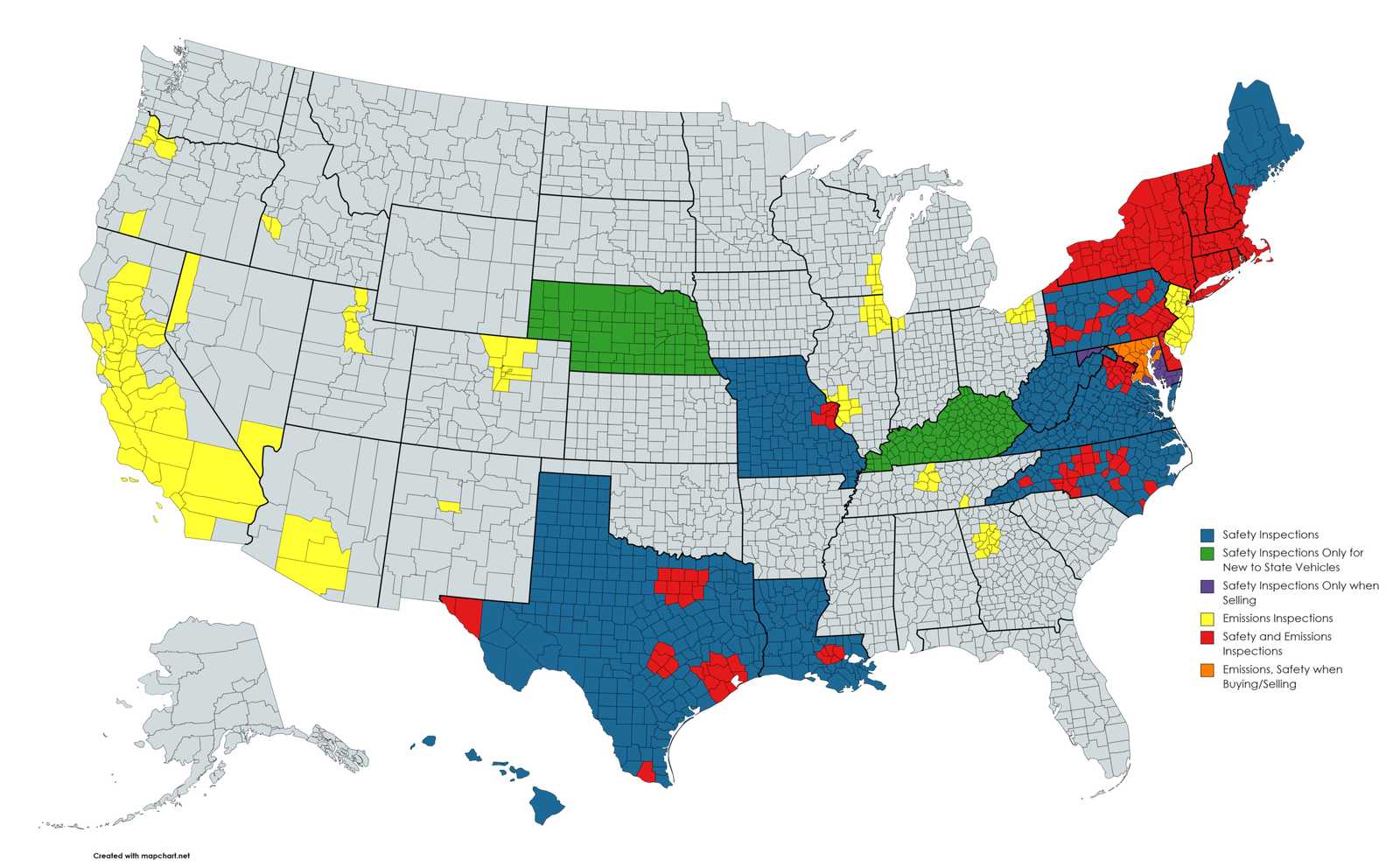
Some states only require inspections in certain cities or counties, often where air quality is a problem. Others test only certain types of vehicles.
Texas
Texas requires annual emissions inspections for vehicles in big urban counties like Houston, Dallas, and Austin. In rural areas, only safety inspections are needed. The state uses OBD-II and tailpipe testing depending on your vehicle’s age.
Illinois
Illinois requires emissions tests only in the Chicago and Metro-East St. Louis areas. Cars from 1996 or newer must pass an OBD-II test every two years.
Georgia
In Georgia, only the 13 metro Atlanta counties require emission tests. Gasoline-powered vehicles from 1999 or newer are checked every year.
North Carolina
North Carolina has a county-based system. In 22 counties, cars from 1996 or newer need to pass an OBD-II emissions test. The rest of the state only requires safety inspections.
Colorado
Colorado requires emissions tests in the Denver-Boulder and North Front Range areas. The rules depend on your car’s age and fuel type.
States With Little Or No Emission Inspection Requirements
Many states do not require regular emission inspections. This is usually because their air is cleaner, or they have fewer cars. However, these rules can change.
States With No Statewide Emission Inspections
Some states have no mandatory emission testing for most vehicles:
- Alaska
- Florida
- Iowa
- Kansas
- Kentucky
- Michigan
- Minnesota
- Montana
- Nebraska
- North Dakota
- South Carolina
- South Dakota
- Washington
- West Virginia
- Wyoming
In these states, drivers do not need to worry about passing a regular emission test. However, local cities or regions may still have their own rules.
How Emission Inspections Work
The inspection process depends on your state, but some steps are common:
- Check-in: You bring your car to an authorized inspection station.
- Visual Inspection: Inspectors check for missing or broken emission control parts (like the catalytic converter).
- OBD-II Scan: For most cars made since 1996, a computer checks your car’s emission system for problems.
- Tailpipe Test: For older cars, inspectors may measure the gases coming out of your exhaust.
- Result: You get a pass or fail. If you fail, you must repair your car and try again.
Here is a quick comparison of common emission inspection methods:
| Test Type | Vehicles Covered | How It Works |
|---|---|---|
| OBD-II Scan | 1996+ vehicles | Checks car’s computer for emission problems |
| Tailpipe Test | Older vehicles | Measures actual gases from the exhaust |
| Visual Inspection | All vehicles | Looks for missing/damaged emission parts |
Key Differences By State: A Quick Overview
To help you see how states differ, here’s a summary of the main requirements for ten major states:
| State | Frequency | Who Must Test | Method |
|---|---|---|---|
| California | Every 2 years | 1976+ vehicles | OBD-II & Tailpipe |
| New York | Annually | 25 years old or newer | OBD-II |
| Texas | Annually | Urban counties, 2-24 years old | OBD-II/Tailpipe |
| Illinois | Every 2 years | Chicago/St. Louis areas, 1996+ | OBD-II |
| Georgia | Annually | Metro Atlanta, 1999+ | OBD-II |
| Massachusetts | Annually | 2008+ vehicles | OBD-II |
| North Carolina | Annually | 22 counties, 1996+ | OBD-II |
| Connecticut | Every 2 years | 1996+ vehicles | OBD-II |
| Colorado | Every 1-2 years | Denver/Boulder/North Front Range | OBD-II/Tailpipe |
| Florida | None | Statewide | None |
What Happens If You Fail An Emission Inspection?
If your car fails an emission inspection, you usually cannot renew your registration until you fix the problem. Most states allow a retest after repairs. Some also offer waivers if repairs would cost more than a certain amount, or if your car is very old.
Common reasons for failure include:
- Faulty oxygen sensors
- Broken or missing catalytic converter
- Old or damaged spark plugs
- Leaky exhaust system
- Check Engine Light is on
If your car fails, repair shops can often help you find and fix the exact issue.
Exemptions And Special Cases
Not all vehicles have to pass emission inspections. Here are some common exemptions:
- New cars: Many states exempt cars less than 2-5 years old.
- Classic cars: Vehicles over a certain age (usually 25+ years) may be exempt.
- Diesel vehicles: Some states only test gasoline engines.
- Electric vehicles: Fully electric cars are usually exempt.
- Low mileage: Some states allow exemptions for cars driven under a set mileage each year.
Always check your state’s DMV or environmental agency for current exemption rules.
Credit: www.reddit.com
How To Prepare For Your Car Emission Inspection
To improve your chance of passing the emission test, try these tips:
- Make sure your check engine light is off before the test.
- Perform regular maintenance (oil changes, air filter replacements).
- Drive your car for at least 15 minutes before the inspection to warm up the engine.
- Use the correct fuel and do not overfill your gas tank.
- Fix any leaks in the exhaust system.
One non-obvious tip: If you recently disconnected your battery, your car’s computer may not be ready for testing. Drive at least 100 miles after any battery or major repair before visiting the inspection station.
Why Some States Have No Emission Testing
States without emission testing often have cleaner air or fewer cars. In some rural states, the cost and effort of testing every vehicle is not worth the small benefit. However, even in these places, cars must still meet federal emission standards when they are built.
That means new cars are cleaner than ever—no matter where you live.
How Emission Testing Affects Used Car Buyers
If you’re buying a used car from out of state, check if it meets your state’s emission rules. Some cars that pass in one state may fail in another. This is especially important if you move from a state with no inspection to one with strict rules. Ask for the car’s emission history and check if the catalytic converter is original.
One thing many people forget: Some states require emissions testing before you can register an out-of-state vehicle—even if your car is new.
The Future Of Emission Inspections
With the rise of electric vehicles (EVs) and hybrids, emission testing rules are changing. Many states now exempt EVs, but still test hybrids. Also, as cars become more advanced, most tests rely on the car’s computer instead of tailpipe checks.
States may update their rules as technology and pollution patterns change. Always check your state’s official site for the latest info, such as the EPA’s list of state inspection programs.
Credit: oilchangers.com
Frequently Asked Questions
What If My State Doesn’t Require Emission Testing?
If your state does not require emission testing, you do not need a test to register or renew your vehicle. However, your car still must meet federal emission standards when manufactured. Also, local cities may have separate rules, so always double-check.
How Do I Know If My Car Is Due For Inspection?
Most states send a reminder when your inspection is due. You can also check your registration or visit your state’s DMV website. If you live in a city or county with special rules, you may need to check local requirements.
Can I Get A Waiver If My Car Fails?
Many states offer waivers if you spend a certain amount on repairs but still cannot pass. The rules vary: some only allow waivers for older cars, or if repair costs exceed a set limit. Always keep your repair receipts as proof.
Do Hybrids Need Emission Inspections?
In most states, hybrids must pass the same OBD-II tests as regular cars. However, fully electric cars are almost always exempt. Check your local rules to be sure.
What Are The Penalties For Skipping An Emission Inspection?
If you skip a required emission inspection, you may face fines, late fees, or a suspended registration. In some places, police can ticket you for driving with an expired inspection sticker.
Staying informed about your state’s car emission inspection requirements helps you avoid fines, protect the air, and keep your vehicle running smoothly. Whether you live in a strict state like California or a state with no tests, understanding the rules makes life as a driver easier and safer for everyone.