
A small puddle under your car. A spot on the driveway. A strange color near your engine. For many drivers, these moments bring worry—and questions. Is it just water from the air conditioner, or something more serious? The answer often lies in the color of the fluid. Car fluid color identification is a useful skill that can save you money, prevent breakdowns, and help you understand your vehicle better. Most car problems give early warning signs, and leaking fluids are one of the most common. But not all leaks mean disaster. Sometimes, the color, smell, and location tell you exactly what’s wrong. Let’s explore how you can use fluid color to keep your car healthy and your mind at ease.
Why Car Fluid Color Matters
Every fluid in your car has a job, and each one has a color for a reason. Engine oil, coolant, brake fluid, and others are designed to show signs of age or trouble. For example, clean coolant is usually bright green, but if it turns rusty or brown, it often means trouble. Ignoring these signs can lead to expensive repairs.
Many beginners miss this: the same fluid can look different when new, old, or mixed with another. Also, not all brands use the exact same shade, so smell and texture are helpful clues too. Learning to spot these differences helps you act before a small issue becomes a big one.
Common Car Fluids And Their Colors
Understanding the most important fluids in your car is the foundation of fluid color identification. Here’s a closer look at each type, how it should look, and what it means if you see a change.
1. Engine Oil
Normal Color: Amber to brown
Old/Contaminated: Dark brown or black
Leaking Location: Under engine, near the front
Fresh engine oil is usually a clear, amber color. Over time, as it picks up dirt, metal particles, and combustion byproducts, it turns darker. If you see black oil, it’s probably old and needs changing. However, if the oil looks milky or foamy, this can mean coolant is mixing in—a sign of a serious problem like a blown head gasket.
2. Transmission Fluid
Normal Color: Bright red or pink
Old/Contaminated: Brown or burnt smell
Leaking Location: Under middle of the car
Transmission fluid is often bright red or pink when new. If you notice it turning brown, or it smells burnt, your transmission may be overheating or the fluid is old. Leaks often appear near the center of the car. Some newer cars use other colors, but red is the classic sign.
3. Coolant/antifreeze
Normal Color: Green, orange, pink, or yellow (varies by type)
Old/Contaminated: Rusty, brown, or cloudy
Leaking Location: Under the front, near radiator or engine
Coolant is one of the most colorful fluids, often bright green but sometimes orange, pink, or yellow. The color depends on the chemical formula. If it looks rusty or brown, this means it’s contaminated, often with rust or oil. A sweet smell is another clue it’s coolant.
4. Brake Fluid
Normal Color: Clear to light yellow
Old/Contaminated: Dark brown
Leaking Location: Near wheels or under brake pedal
Brake fluid is usually clear or pale yellow. As it ages, it absorbs moisture and turns dark. If you see leaks near the wheels or under the brake pedal, check your brake fluid right away—brake failure can be dangerous.
5. Power Steering Fluid
Normal Color: Red, pink, or clear
Old/Contaminated: Brown or foamy
Leaking Location: Front of car, under engine
Power steering fluid is often red or pink, similar to transmission fluid, but some brands use clear fluid. If it appears brown or you see bubbles, there may be air in the system or contamination.
6. Windshield Washer Fluid
Normal Color: Blue, sometimes orange, pink, or green
Old/Contaminated: Usually no major color change
Leaking Location: Front or back, depending on nozzle position
Most washer fluids are blue, but some are orange, pink, or green. Leaks are usually not serious, but an empty tank can make driving unsafe in bad weather.
7. Differential Fluid
Normal Color: Light to dark brown
Old/Contaminated: Dark with strong smell
Leaking Location: Rear or under axles
Found in rear-wheel and all-wheel-drive vehicles, differential fluid is usually brown and has a strong, rotten-egg smell when old. Leaks here mean you may need a seal or gasket replaced.
8. Air Conditioning Condensate
Normal Color: Clear, looks like water
Old/Contaminated: May look oily if mixed with other fluids
Leaking Location: Under passenger area
Condensate is just water from your air conditioning system. A puddle under the car is normal, but if it’s oily or colored, check for other leaks.
How To Identify Car Fluids By Color
Now that you know what each fluid does and how it looks, here’s how to use that knowledge. These steps make car fluid color identification easier—even if you’re new to car care.
1. Check The Location
Where is the leak? Under the engine, near a wheel, or in the middle? Each area points to different fluids.
2. Examine The Color
Use a white tissue or paper towel to see the true color. Some fluids look different on the ground.
3. Smell The Fluid
For example, coolant is sweet, differential fluid smells strong, and oil is earthy.
4. Check The Texture
Is it watery, oily, slippery, or sticky? Washer fluid is thin like water, while oil is slick.
5. Compare To Known Samples
If possible, compare the leak to what’s in your car. Look at the dipstick or reservoir.
Here’s a quick comparison to help you:
| Fluid | Normal Color | Old/Bad Color | Main Leak Area |
|---|---|---|---|
| Engine Oil | Amber | Black/Milky | Front/Engine |
| Transmission Fluid | Red/Pink | Brown | Middle/Under Car |
| Coolant | Green/Orange/Pink | Rusty/Brown | Front/Radiator |
| Brake Fluid | Clear/Yellow | Dark Brown | Wheels/Brake Pedal |
| Power Steering | Red/Pink/Clear | Brown/Foamy | Front/Engine |
| Washer Fluid | Blue/Other | No Major Change | Front/Back |
| Differential | Brown | Dark/Smelly | Axles/Rear |
| AC Condensate | Clear | Oily/Colored (if mixed) | Passenger Area |
When Fluid Color Means Trouble
Not every leak is a problem, but some colors mean you need to act fast. Here are warning signs you should never ignore:
- Milky oil: May mean coolant is mixing with oil, a sign of a blown head gasket.
- Pink or red puddle under the car: Could be transmission or power steering fluid. Loss of these can cause damage or loss of control.
- Green or orange leaks: Usually coolant. Losing coolant can overheat your engine quickly.
- Dark brown by the wheels: Brake fluid leak—dangerous for stopping.
- Strong rotten egg smell: Often differential fluid, which means a seal could be leaking.
Many people forget that fluid color can change if two fluids mix. For example, a pinkish-brown puddle may be both coolant and transmission fluid. Always check more than just the color for a full diagnosis.
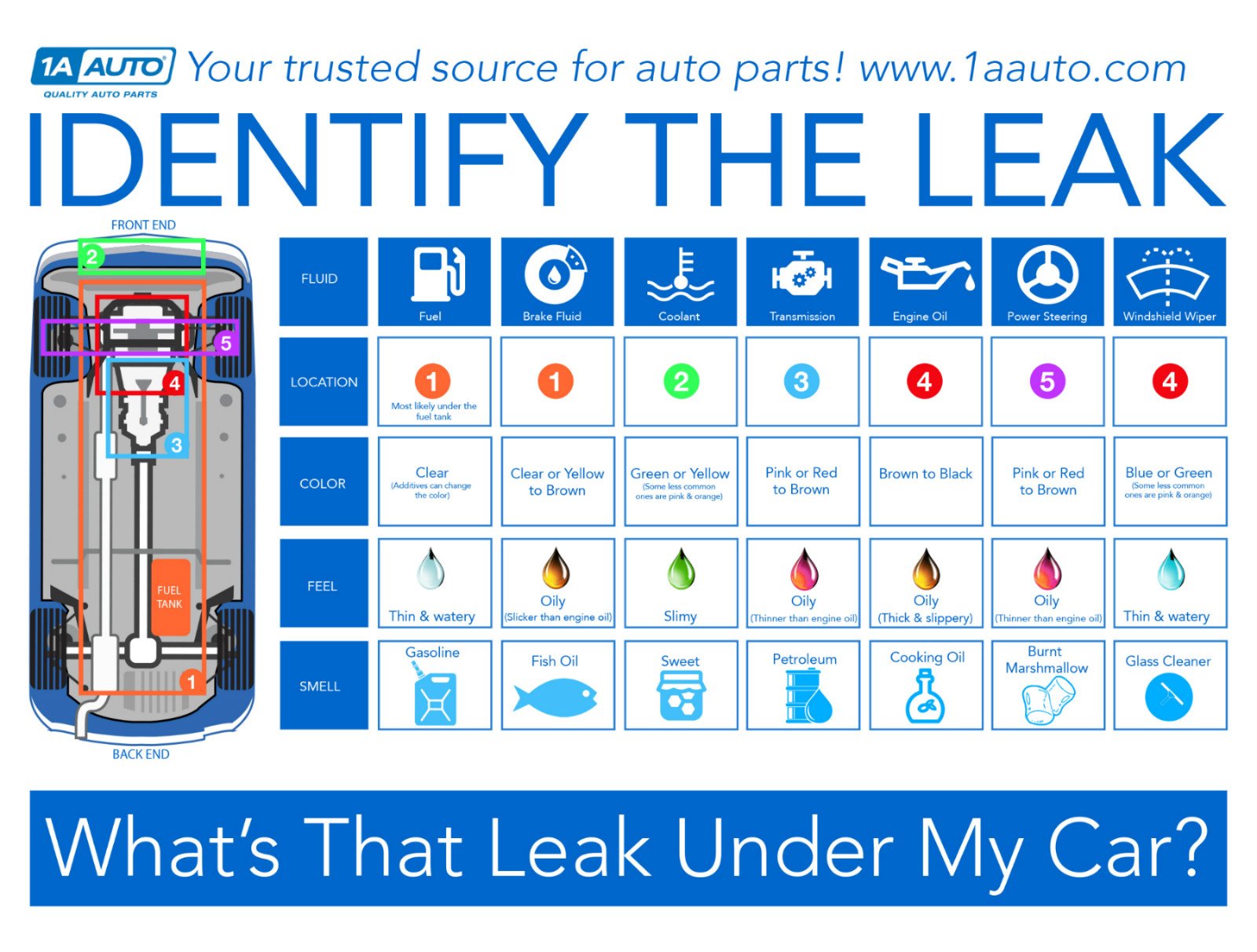
Credit: www.1aauto.com
Simple Steps To Check Your Car’s Fluids
You don’t need to be a mechanic to check your fluids. Here’s how to do it safely:
- Let the Engine Cool: Never check fluids right after driving; hot fluids can burn.
- Open the Hood: Find the reservoirs for oil, coolant, brake, washer, and power steering.
- Use the Dipstick or Cap: Pull it out, wipe it, reinsert, and check the level and color.
- Look for Signs of Contamination: Milky, foamy, or very dark fluids need attention.
- Top Up or Change as Needed: Always use the fluid type listed in your owner’s manual.
If you’re unsure, take a clear photo of the leak or sample. Many mechanics can help by looking at the image.
Color Changes Over Time
Car fluids don’t stay the same color forever. Here’s what you might notice as fluids age:
| Fluid | New | After 1 Year | After 2+ Years/Problem |
|---|---|---|---|
| Engine Oil | Amber | Dark Brown | Black/Milky |
| Coolant | Bright Green/Orange | Slightly Cloudy | Rusty/Brown |
| Transmission | Red/Pink | Light Brown | Brown/Burnt |
| Brake Fluid | Clear/Yellow | Yellow-Brown | Dark Brown |
If you notice a dramatic color change before it’s time for a regular service, have a mechanic check your car.
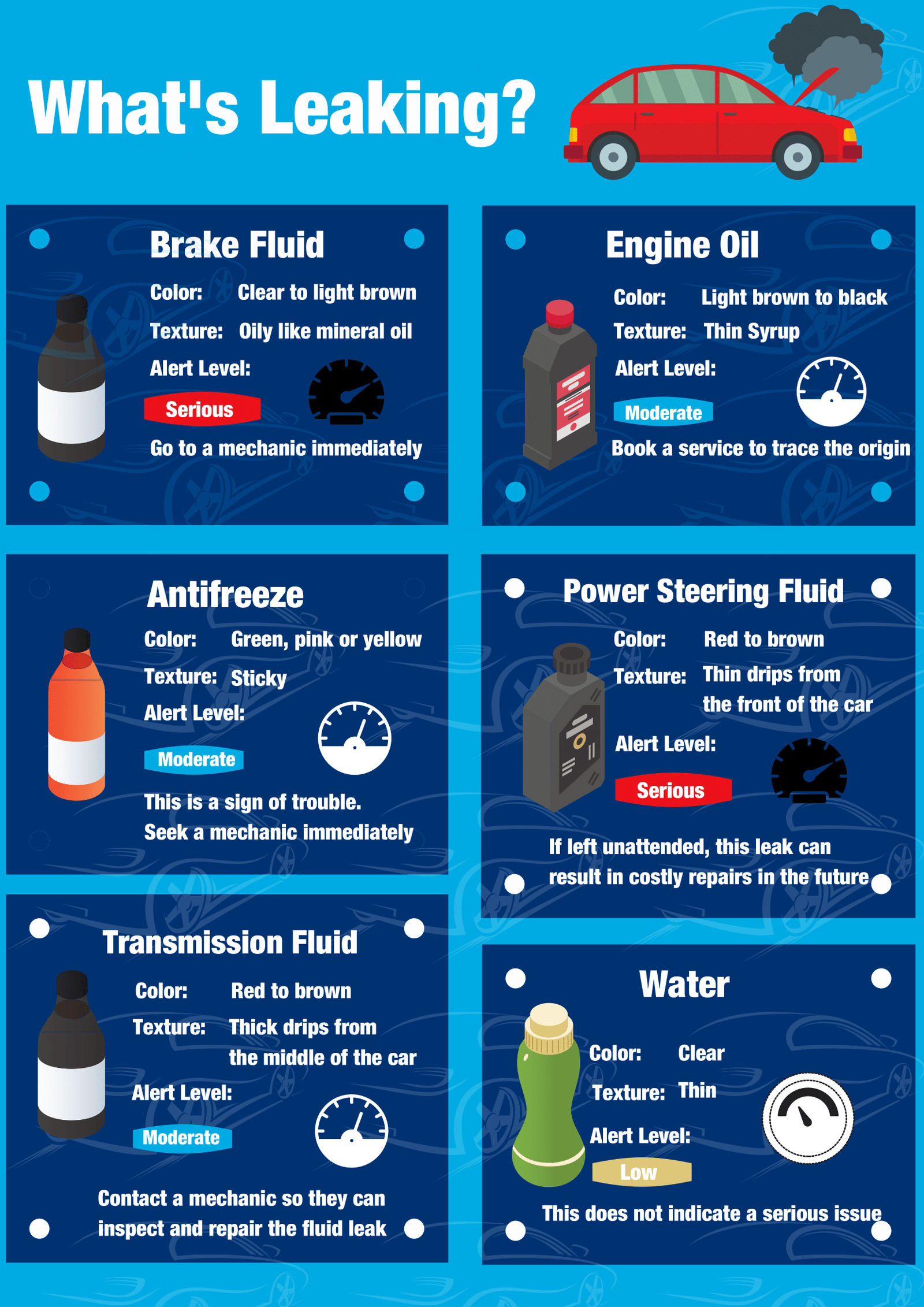
Credit: www.myqualitytuneup.com
Common Mistakes In Fluid Identification
- Confusing Transmission and Power Steering Fluid: Both are often red but have different smells and leak locations.
- Assuming All Green Leaks Are Coolant: Some washer fluids are also green. Smell for sweetness (coolant) vs. alcohol (washer).
- Ignoring Small Puddles: Even tiny leaks can become big problems, especially for brake or transmission fluid.
- Checking Fluids When Hot: This can give false readings and be dangerous.
- Not Cleaning Up Spills: Old stains can confuse you later. Clean spills right away for accurate future checks.
When To See A Mechanic
If you see any of these signs, get help soon:
- Milky, foamy, or gritty fluids
- Rapid fluid loss (having to refill often)
- Leaks combined with warning lights or overheating
- Unusual smells, like burnt or sweet odors
- Leaks near wheels or brake pedal
Some issues can wait a day or two, but leaks from brakes, transmission, or coolant need urgent attention.
Helpful Tips For Beginners
- Use a white napkin or tissue for checking color—it shows the true shade.
- Take pictures of any leaks to show a professional.
- Keep a small logbook of fluid checks to spot changes over time.
- Always check your owner’s manual for the right fluid type and color.
- If in doubt, ask for a quick check at your next oil change—most shops will help for free.
For more on automotive fluids, you can visit the Wikipedia Automotive Fluid page for extended reading.
Frequently Asked Questions
What If The Fluid Color Doesn’t Match Any Listed Here?
Some newer cars use different fluid colors. Always check your manual, and if you can’t identify a leak, get a professional opinion. It’s better to be safe than sorry.
Is It Normal For Engine Oil To Turn Black Quickly?
Yes, especially in modern engines. Additives and detergents work to clean the engine, so color alone isn’t always a problem. Still, follow your service schedule for oil changes.
Can I Use Food Coloring To Check For Leaks?
Adding a few drops of food coloring to washer fluid is safe and can help spot leaks. Never add dye to engine oil or coolant unless the dye is made for that purpose.
Should I Worry About Clear Water Under My Car?
Usually, this is just air conditioning condensate and is normal. If the liquid is oily or colored, check for other leaks.
Why Does My Coolant Look Rusty?
Rusty coolant means there is contamination, often from rust inside the cooling system. This reduces efficiency and can cause engine overheating. A flush and refill are needed.
Keeping an eye on your car’s fluids by color, smell, and texture is one of the simplest ways to maintain your vehicle and avoid surprise breakdowns. With a little practice, you’ll be able to spot issues early, save money, and drive with peace of mind.

Credit: www.allstate.com