
Car headlights are essential for safe driving, especially at night or during bad weather. When headlights dim, it’s more than just an inconvenience—it can be dangerous. Dim headlights make it hard to see the road, obstacles, and other drivers. Many people notice their headlights getting weaker over time but aren’t sure why. Understanding the real causes of dimming headlights can help you fix the problem before it leads to an accident or a ticket.
Some drivers think that replacing bulbs is the answer, but it’s not always that simple. Dim headlights can come from many sources, including electrical issues, worn-out parts, and even simple things like dirty covers. If you want to keep your headlights bright and your driving safe, it’s important to know what can cause them to fade.
This guide explains the most common reasons why headlights dim, how to spot each problem, and what you can do about it. You’ll also learn a few insights that even experienced drivers sometimes miss.
Common Causes Of Car Headlights Dimming
1. Aging Headlight Bulbs
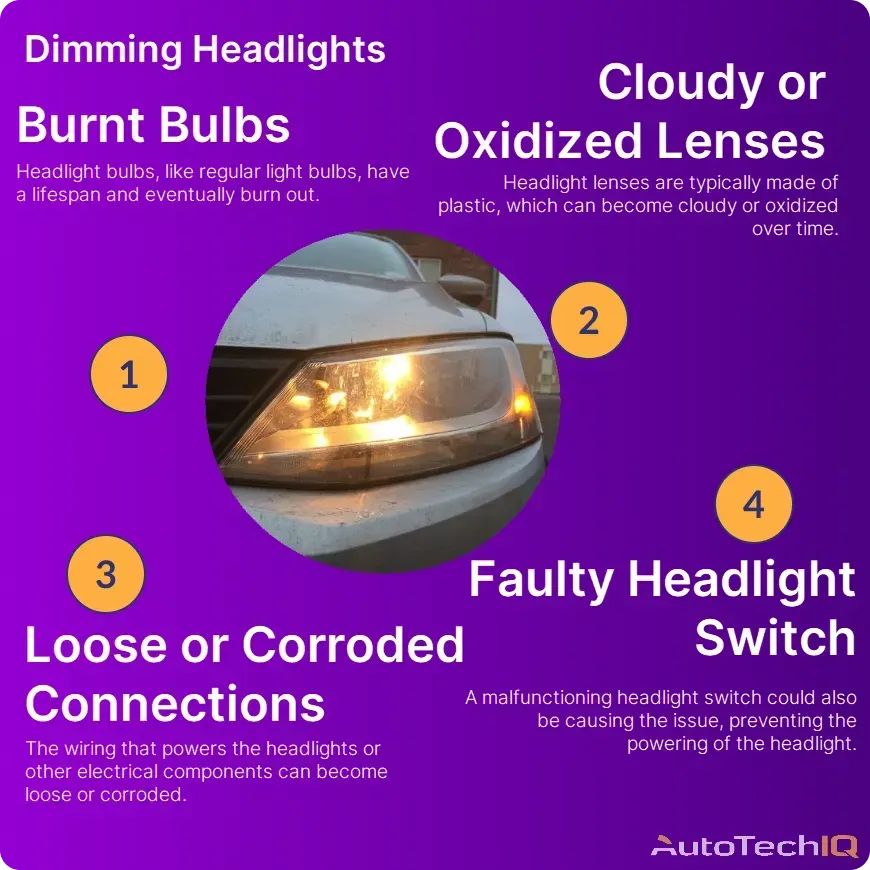
The most obvious reason for dimming headlights is old bulbs. Just like light bulbs in your house, car headlight bulbs lose brightness as they age. Halogen bulbs, which are still common, can lose up to 20% of their light after only a few years. HID and LED bulbs last longer but can also fade over time.
Signs of aging bulbs:
- Light appears yellowish instead of white
- Both headlights look dim, not just one
Replacing old bulbs with new, high-quality ones often brings back full brightness. For best results, replace both bulbs at the same time, so light output is even.
2. Failing Alternator
Your car’s alternator is responsible for charging the battery and powering the electrical system. If it starts to fail, you may notice that the headlights dim, especially when you use other electrical items like the AC or wipers.
A weak alternator can cause:
- Headlights that get dimmer as you drive
- Flickering lights when you rev the engine or stop at a light
Ignoring alternator problems can lead to a dead battery, so it’s important to check this early.
3. Weak Or Failing Battery
A car battery that’s near the end of its life can’t supply enough power to the headlights. This is especially true during cold weather or after the car has been sitting for a long time.
Watch for these signs:
- Headlights are dim right after starting the car
- Battery warning light comes on the dashboard
Testing the battery with a voltmeter can show if it’s time for a replacement.
4. Bad Ground Connection
Electricity flows from the battery to the headlights and returns through a ground connection. If this ground is corroded or loose, it increases resistance. This makes headlights dim or even causes them to flicker.
Common symptoms:
- Headlights get brighter or dimmer when you hit bumps
- Only one headlight is affected
Cleaning and tightening ground points usually solves this issue.
5. Corroded Or Loose Wiring
Wiring in cars is exposed to heat, moisture, and vibration. Over time, wires and connectors can become corroded or loose. This interrupts the flow of electricity to the headlights.
Key things to look for:
- Headlights cut out or flicker when you move the wires
- Visible green or white powder on connectors
Checking and repairing wiring is a job for someone with basic electrical knowledge.
6. Dirty Or Foggy Headlight Lenses
Even if the bulbs and wiring are fine, cloudy headlight lenses can block up to 80% of the light. This problem is very common, especially with older cars.
Lenses become cloudy due to:
- Sunlight (UV damage)
- Road dirt and chemicals
- Minor scratches
Cleaning or polishing the lenses often restores much of the lost brightness.
7. Faulty Headlight Switch Or Relay
The switch you use to turn on the headlights and the relay that controls power can both wear out over time. When this happens, not enough electricity reaches the bulbs.
Signs include:
- Headlights don’t turn on every time
- Light output is weak even after changing bulbs
Replacing a bad switch or relay is usually inexpensive.
8. Poor Quality Replacement Bulbs
Sometimes, people replace their headlight bulbs with cheap or incorrect types. Low-quality bulbs may not be as bright as original ones or may not fit well in the headlight housing.
Problems caused by poor bulbs:
- Light is scattered instead of focused
- One side is dimmer than the other
Always use bulbs that match your car’s specifications.
9. Voltage Drop In The Electrical System
A voltage drop means that less power reaches the headlights than intended. This can be caused by long wiring runs, resistance in connectors, or too many accessories using electricity at the same time.
A voltage drop of just 1 volt can cut light output by 20-30%.
One non-obvious tip: If you add aftermarket accessories like amplifiers or extra lights, use a relay and direct wiring from the battery to avoid voltage drops.
10. Failing Headlight Housing Reflectors
Inside every headlight is a reflector that directs the light forward. If the reflector’s coating becomes dull or peels off, less light reaches the road—even if the bulb is bright.
Symptoms:
- Headlights look fine up close but weak from a distance
- The beam pattern is uneven
Replacing the reflector or the entire headlight assembly may be needed.
11. Excessive Moisture Inside Headlights
If water or condensation gets inside the headlight housing, it can block light and damage bulbs or wiring.
Watch for:
- Fog or droplets inside the lens
- Sudden dimming after rain or car washes
Sealing leaks and drying out the housing can solve this problem.
12. Issues With The Headlight Adjuster
Some cars have manual or automatic adjusters to set the headlight’s angle. If these are broken or stuck, the light may not reach the road properly, making it seem dim.
Check if:
- Headlight beams point too low or high
- You recently replaced bulbs and didn’t reset the aim
Realigning the adjusters restores proper brightness.
13. Problems With The Car’s Electrical System
Headlights are only one part of the electrical system. Issues like a failing fuse box, bad relays, or worn-out alternator belts can all lead to dimming.
Other electrical problems can cause:
- Dashboard lights and other accessories to dim at the same time
- Fuses to blow frequently
A mechanic can check the system for hidden faults.
14. Use Of Daytime Running Lights
Some cars use daytime running lights (DRLs), which are less bright than regular headlights to save energy. If you drive with DRLs on, the light may seem dim.
To fix this:
- Make sure you switch to full headlights at night
- Check your car’s manual for how to use DRLs properly
15. Overloaded Electrical System
Adding too many gadgets—like chargers, dash cams, or powerful audio systems—can overload your car’s electrical system. This leaves less power for the headlights.
Non-obvious insight: Even small devices can add up if you use them all at once.
Try unplugging accessories to see if headlight brightness improves.
16. Faulty Headlight Control Module
Modern cars may use a control module to manage headlight functions. If it fails, it can reduce power to the bulbs, causing dimming or flickering.
Signs:
- Headlights work sometimes but not always
- Error messages on the dashboard
A diagnostic scan can find module problems.
17. Wrong Bulb Type Installed
Installing the wrong type of bulb—such as a lower wattage or a bulb not meant for your car—can make headlights look dim, even if everything else is fine.
Check your owner’s manual or consult a trusted parts dealer for the correct bulb type.
18. Alternator Belt Problems
If the alternator belt is loose, worn, or slipping, the alternator can’t charge the battery or run the lights properly.
Symptoms:
- Squealing noise from the engine
- Headlights get brighter when you rev the engine
Replacing or tightening the belt can fix this issue.
19. Headlight Circuit Fuse Issues
A blown or weak fuse in the headlight circuit can reduce power, making the lights dim. Fuses protect the wiring but can wear out or become corroded.
If only one headlight is dim, check the fuses first.
20. Old Or Damaged Headlight Harness
The headlight harness connects the wiring to the bulbs. If it’s old, cracked, or burned, it can restrict power flow.
You may notice:
- Smell of burning plastic
- Intermittent dimming
Replacing the harness is a permanent solution.
Data Comparison: Headlight Types And Lifespan
Here’s a quick look at how different headlight bulb types compare in terms of brightness and lifespan.
| Type | Average Brightness (Lumens) | Average Lifespan (Hours) |
|---|---|---|
| Halogen | 700 – 1,200 | 500 – 1,000 |
| HID (Xenon) | 2,800 – 3,500 | 2,000 – 3,000 |
| LED | 2,000 – 4,000 | 10,000 – 30,000 |
Comparison: Headlight Issues And Fixes
The table below shows common causes of dim headlights and the usual solution.
| Problem | Signs | Typical Solution |
|---|---|---|
| Aging Bulbs | Yellow, weak light | Replace both bulbs |
| Bad Ground | Flicker, uneven brightness | Clean/tighten ground wire |
| Foggy Lenses | Cloudy, dim beam | Polish or replace lens |
| Poor Wiring | Flicker, intermittent dimming | Repair/replace wiring |
How To Diagnose Dim Headlights
Finding the real cause of dim headlights is not always simple. Here are steps you can follow:
- Check the bulbs first. If they’re old or yellow, replace them.
- Inspect the lenses. Clean or polish if cloudy.
- Test the battery and alternator. Use a voltmeter if you have one.
- Look at the wiring and connectors. Fix any loose or corroded points.
- Review recent changes. Did you add new accessories or change bulbs?
- Check fuses and relays. Replace any that look burned or corroded.
A mechanic can use a multimeter to check for voltage drops and pinpoint hidden issues.
Credit: www.autotechiq.com
Preventing Headlight Dimming
You can reduce the chance of dim headlights by:
- Replacing bulbs every few years, before they fail
- Cleaning lenses regularly with a headlight restoration kit
- Checking battery and alternator health during routine maintenance
- Using only recommended bulbs and electrical accessories
- Keeping wiring and connectors clean and tight
If you notice dimming, act quickly. Many fixes are simple and inexpensive if caught early.
Non-obvious Insights You Should Know
- Voltage drops are silent killers. Even if your battery and bulbs are new, a small voltage loss in the wiring can make lights look 30% dimmer. Few drivers check for this unless they use a voltmeter.
- Lens haze can block more light than you think. Many drivers change bulbs without cleaning old, foggy lenses. Sometimes, cleaning the lens makes more difference than a new bulb.
Credit: www.autonationmobileservice.com
When To See A Professional
If you’ve checked the basics and still have dim headlights, it’s time to see a mechanic. Problems like failing control modules, hidden wiring issues, or damaged reflectors are hard to fix without the right tools.
Remember, bright headlights are not just for looks—they’re a key safety feature. Don’t wait until you can barely see the road to fix the problem.
For more technical details about automotive lighting and safety, you can check the Wikipedia Headlamp page.
Frequently Asked Questions
Why Do My Headlights Dim When I Use The Air Conditioner?
Running the air conditioner uses extra power from your car’s electrical system. If the alternator or battery is weak, there may not be enough power for both the AC and the headlights, causing them to dim.
Can I Use Brighter Bulbs To Fix Dim Headlights?
Using brighter bulbs can help, but only if the rest of the system is healthy. If wiring, voltage, or lenses are the problem, brighter bulbs may not make a big difference and could even cause overheating.
How Do I Know If My Alternator Is The Problem?
Signs of a bad alternator include dimming headlights that get worse at idle, flickering lights, and a warning light on the dashboard. A mechanic can test the alternator’s output.
Is It Safe To Drive With Dim Headlights?
Driving with dim headlights is risky. You may not see hazards in time, and other drivers may not see you. Fix dim lights as soon as possible to stay safe.
How Often Should I Clean My Headlight Lenses?
For best results, clean your headlight lenses every 6-12 months or whenever you notice them getting cloudy. Regular cleaning can prevent severe haze and keep your lights bright.
Bright headlights make night driving safer and more comfortable. By understanding the main causes of dimming, you can keep your lights strong and your journeys safe, no matter where you drive.
Credit: undergroundlighting.com