
A car heater can be a lifesaver on cold mornings. When you turn the knob expecting warm air but only get a chilly breeze, it’s frustrating and uncomfortable. Beyond comfort, a non-working car heater can signal more serious problems with your vehicle.
Understanding what causes your car heater to stop working is the first step to fixing it and keeping your car safe and reliable. In this article, you’ll learn the main causes of car heater failure, how each problem affects your vehicle, and practical advice for diagnosis and repair.
How Car Heaters Work
Before looking at the causes, it helps to know the basics of how a car heater functions. The heater uses heat from the engine’s coolant. As your engine runs, it gets hot. Coolant absorbs this heat and travels through hoses into the heater core, a small radiator inside your dashboard. A fan blows air across the hot heater core, sending warm air into the cabin. If any part of this process fails, you won’t get heat.
Low Coolant Level
One of the most common and overlooked causes is low coolant. Without enough coolant, your engine can’t send enough heat to the heater core.
- Why it happens: Leaks in hoses, the radiator, or water pump can cause coolant loss. Sometimes coolant evaporates slowly due to a loose cap.
- What to check: Look for wet spots under your car, low coolant in the reservoir, or a sweet smell (coolant has a sweet odor).
- Hidden risk: Driving with low coolant can overheat your engine, leading to expensive repairs.
A car can still drive with low coolant, but you may notice the temperature gauge moving higher than normal. Always fix coolant leaks promptly.
Faulty Thermostat
The thermostat controls when coolant flows from the engine to the radiator. If it sticks open or closed, your heater may not work.
- Stuck open: The engine never gets warm enough, so the heater only blows lukewarm or cold air.
- Stuck closed: The engine overheats, but you still get no heat because hot coolant isn’t moving to the heater core.
Thermostat failure is common in cars over five years old. Replacing a thermostat is a simple and inexpensive repair compared to other engine work.
Blocked Or Clogged Heater Core
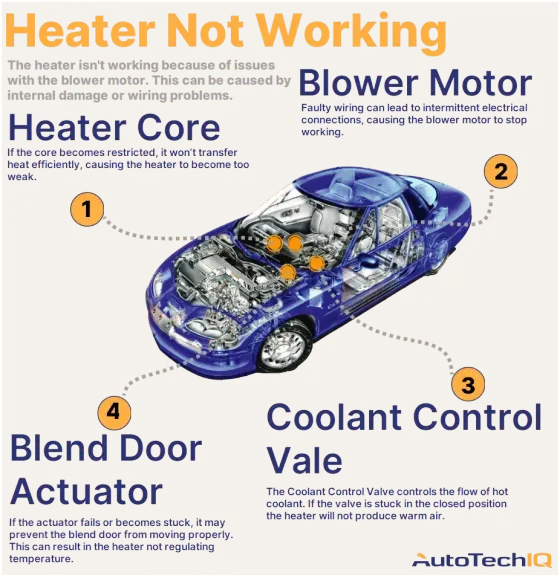
The heater core is a narrow tube radiator. Over time, rust, old coolant, or debris can block it.
- Symptoms: Little or no warm air, a sweet smell inside the car, or a wet passenger-side floor (heater core leak).
- Diagnosis: Both heater hoses should be hot when the engine is warm. If only one is hot, the core is likely blocked.
Flushing the heater core can sometimes fix this. In severe cases, it must be replaced.
Common Heater Core Blockage Causes
| Cause | Description | Typical Sign |
|---|---|---|
| Rust | From old coolant or water in the system | Brown fluid, poor heat |
| Oil Contamination | Head gasket leaks oil into coolant | Thick, milky coolant |
| Debris | Particles from failing hoses or water pump | Visible gunk in the reservoir |
Air Pockets In The Cooling System
Air pockets can get trapped in the coolant lines, especially after a recent repair or coolant change.
- Effect: Air prevents coolant from circulating through the heater core.
- Sign: Gurgling sounds behind the dashboard or random loss of heat.
Bleeding the cooling system removes air and restores proper heater function.
Malfunctioning Heater Control Valve
Some cars use a heater control valve to direct coolant into the heater core. If it fails, hot coolant won’t reach the core.
- Symptoms: No heat even when the engine is hot, or heat that comes and goes.
- Why it fails: The valve can get stuck, break, or its vacuum/electric controls can fail.
Manual valves are easier and cheaper to replace than electric ones.
Broken Or Stuck Blend Door
Inside your dashboard, blend doors control how much warm or cold air enters the cabin. If the blend door is stuck or its motor fails, you may get only cold air.
- Typical sign: Heater works on some settings but not others, or makes clicking sounds when you change the temperature.
- Hidden insight: Many mechanics misdiagnose this as a heater core or coolant problem, but the issue is behind the dashboard.
Repairing a blend door can be time-consuming because it often requires removing the dashboard.
Faulty Blower Motor Or Resistor
If your heater fan does not blow at all or only works on one speed, the blower motor or its resistor may be bad.
- Blower motor failure: No air comes from the vents, hot or cold.
- Resistor failure: Fan works only on high speed (most common symptom).
Often, leaves or debris block the fan, causing it to overheat and fail.
Electrical Problems
Modern cars use many wires and switches to control the heater. If a fuse, relay, or switch fails, the heater may stop working.
- Signs: The heater fan, controls, or display do not work. Sometimes the problem is intermittent.
- How to check: Inspect the fuse box for blown fuses. Test switches if you have a multimeter.
Replacing a fuse is cheap and quick, but electrical troubleshooting can be complex.
Failing Water Pump
The water pump pushes coolant through the engine and heater core. If it’s failing, you get poor heat and maybe engine overheating.
- Symptoms: Weak or no heat, rising temperature gauge, leaks under the car, or grinding noises from the pump area.
- Note: A failing water pump often causes other problems before the heater stops working.
Replacing a water pump is more expensive than most heater repairs, but it’s essential for engine health.
Collapsed Or Blocked Hoses
Old or damaged coolant hoses can collapse or become blocked, restricting flow to the heater core.
- Common mistake: People often replace the heater core or thermostat when a simple hose replacement fixes the problem.
- What to look for: Hoses that are soft, kinked, or have bulges.
Check hoses regularly, especially in older cars.
Incorrect Heater Settings Or Control Issues
Sometimes, the problem is as simple as the wrong heater setting.
- Manual controls: Make sure the temperature is set to hot and the fan is on.
- Digital controls: Software glitches can cause the system to ignore your settings.
Try resetting electronic systems by turning off the car and restarting. If digital controls fail, consult your owner’s manual or a dealer.
Leaking Head Gasket
A blown head gasket can allow exhaust gases into the coolant, causing air pockets and poor heater function.
- Serious sign: White smoke from the exhaust, coolant loss, engine misfire, or overheating.
- Why it matters: This is an expensive repair and can ruin the engine if ignored.
If you suspect a head gasket problem, get a professional diagnosis immediately.
Clogged Cabin Air Filter
The cabin air filter cleans air before it enters your car. If it’s clogged, airflow drops, making it seem like the heater isn’t working.
- Sign: Weak air from all vents, even on high fan settings.
- Easy fix: Replace the filter every 12,000–15,000 miles.
This filter is often under the glove box or behind the dashboard. Check your owner’s manual for location.
Credit: www.youtube.com
Comparison: Common Car Heater Problems And Warning Signs
Here’s a quick reference to help you match heater symptoms to likely causes.
| Symptom | Possible Cause | Repair Difficulty |
|---|---|---|
| No heat at all | Low coolant, faulty thermostat, blocked heater core | Easy–Moderate |
| Heater blows cold air | Stuck blend door, air pockets, control issues | Moderate–Difficult |
| Fan only works on high | Blower resistor | Easy |
| Engine overheats | Head gasket, water pump, blocked hoses | Difficult |
| Weak airflow | Clogged cabin filter | Easy |
Hidden Causes Beginners Often Miss
- Coolant type matters: Using the wrong coolant (color/type) can cause deposits or corrosion, blocking the heater core. Always use the coolant recommended in your owner’s manual.
- Heater use in summer: Running your heater for a few minutes every few weeks (even in summer) keeps the heater core and valves moving, preventing sticking and blockages.
Diagnosing The Problem: Step-by-step
Here’s a simple process for finding the cause:
- Check coolant level (engine cold, reservoir full).
- Test fan operation (does air blow at all speeds? ).
- Feel heater hoses (both should be hot after driving).
- Check for leaks (wet carpets, puddles under car).
- Try different heater settings (manual and auto).
- Look for warning lights (engine temperature, check engine).
If you can’t find the problem, a mechanic can use special tools to test the heater core, thermostat, and electrical system.
When To See A Mechanic
Some heater issues are easy to fix yourself, like adding coolant or changing a filter. Others, like blend door repair or head gasket replacement, need professional tools and skill. If you smell coolant in the cabin, see white smoke from the exhaust, or your engine overheats, get expert help immediately.

Credit: www.lancerservice.com
Preventing Heater Problems
Regular maintenance is the best way to avoid heater trouble.
- Change coolant every 2–5 years.
- Replace hoses and thermostat as your car ages.
- Check the cabin air filter yearly.
- Use your heater regularly, not just in winter.
These simple steps keep your heater, and engine, working smoothly.
Frequently Asked Questions
Why Does My Car Heater Only Blow Cold Air?
This usually means the thermostat is stuck open, the heater core is blocked, or the blend door is stuck. Low coolant can also cause cold air.
Can A Broken Car Heater Affect Engine Performance?
Yes. If the cooling system has problems (like low coolant or a failing water pump), it can cause the engine to overheat, which reduces performance and may cause damage.
Is It Safe To Drive Without A Working Heater?
You can drive, but if the heater doesn’t work because of coolant loss or engine overheating, you risk serious engine damage. Also, without heat, you can’t defrost windows, which is unsafe.
How Much Does It Cost To Fix A Car Heater?
Costs vary widely:
- Thermostat: $100–$300
- Heater core: $500–$1,000 (labor intensive)
- Blower motor: $150–$350
- Simple fixes (coolant, filter): $20–$80
Get a quote before repairs. Prices depend on your car’s make and model.
Where Can I Learn More About Car Heating Systems?
A reliable place for more details is the Wikipedia page on car heating and cooling systems.
A car heater that isn’t working can be annoying and even dangerous. Understanding the causes—from low coolant to blocked heater cores—helps you solve problems faster and keep your car comfortable and safe. Regular checks and quick repairs prevent bigger issues.
If in doubt, consult a professional to avoid costly mistakes.
Credit: www.autotechiq.com