
Keeping your Nissan running smoothly is not only about fixing things when they break. The real secret lies in regular maintenance—a plan that keeps small problems from becoming big, expensive ones. But many Nissan owners are unsure about when to change fluids, check parts, or visit the service center. If you want your vehicle to last longer, run better, and save money, you need a clear car maintenance schedule. This guide will walk you through all the key steps, explain what matters most, and help you avoid common mistakes people make with Nissan cars.
Why Nissan Maintenance Schedules Matter
Every Nissan is designed with a maintenance schedule for a reason. Following it can:
- Extend the life of your car
- Improve safety
- Save you money on repairs
- Keep your warranty valid
Skipping services or guessing when to change parts can lead to engine trouble, poor fuel economy, or even dangerous breakdowns. Nissan engineers have studied exactly when each part needs attention. Trusting this schedule is one of the smartest moves a car owner can make.
Basic Maintenance: What Needs Regular Attention
Some tasks apply to all Nissan models, from the Altima to the Rogue and Frontier. Here are the core items you should check and maintain:
- Engine oil and filter
- Tire rotation and inspection
- Brake system
- Air filters
- Battery check
- Fluid levels
- Lights and signals
- Belts and hoses
- Windshield wipers
- Suspension and steering
Ignoring any one of these areas can lead to performance drops, higher repair bills, or even accidents.
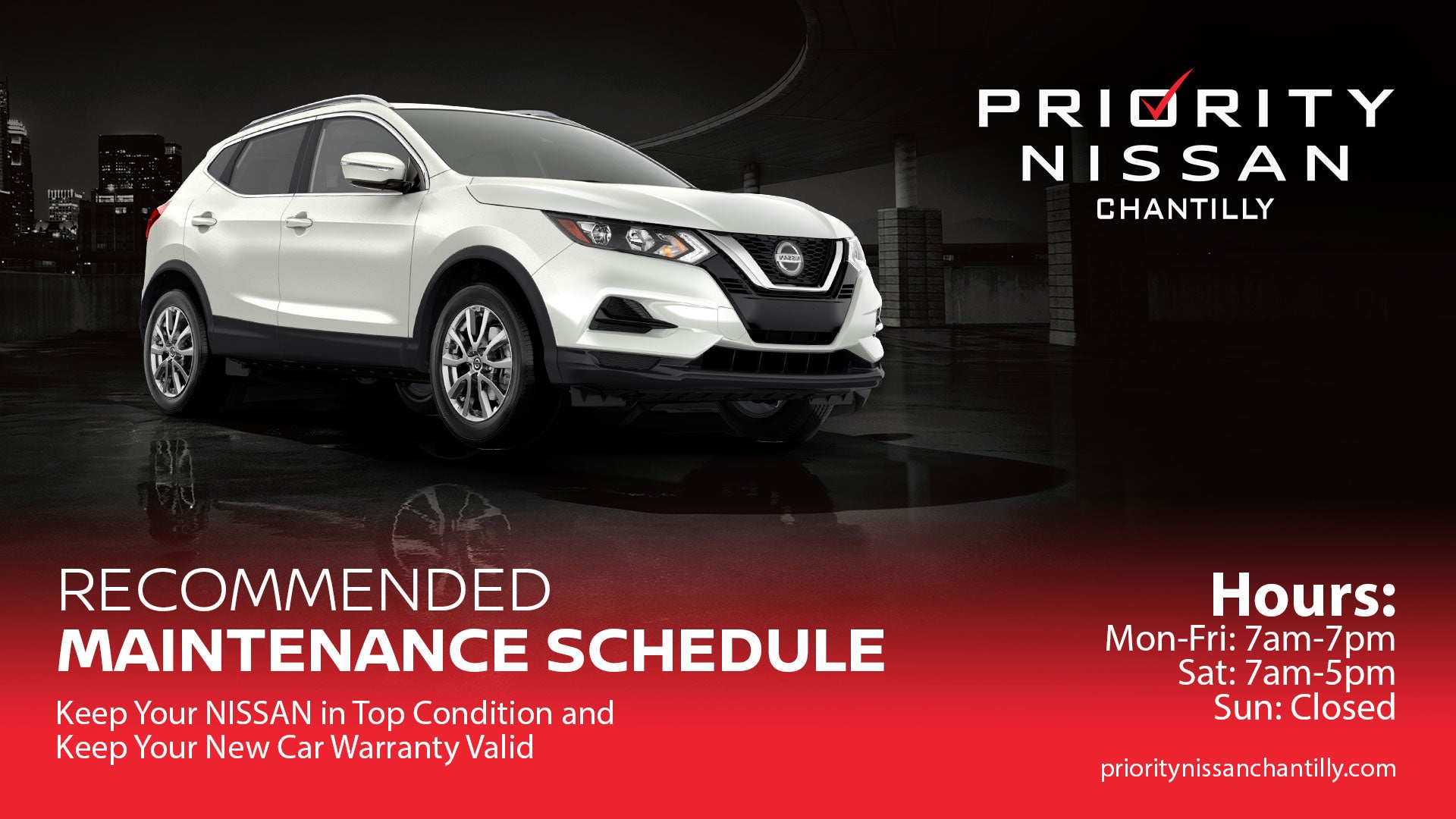
Credit: www.prioritynissanchantilly.com
Nissan Maintenance Schedule: Mileage-based Guide
Nissan recommends service at set intervals, usually every 5,000 or 10,000 miles. Let’s break it down by mileage.
Every 5,000 Miles (or 6 Months)
These early checks keep your Nissan running smoothly in between major services.
- Engine oil and filter change: Oil lubricates your engine; dirty oil causes damage.
- Tire rotation: Rotating tires helps them wear evenly, extending their life.
- Check fluid levels: Includes coolant, brake fluid, transmission, and windshield washer fluid.
- Inspect brakes: Listen for squeaks, check pad thickness, and look for leaks.
- Examine lights and signals: Safety depends on visibility.
- Visual inspection: Look at belts, hoses, and under the car for leaks.
Every 10,000 Miles (or 12 Months)
Here, you add a few more items to your checklist.
- Replace engine air filter: Dirty filters reduce power and fuel economy.
- Check battery and clean terminals: Weak batteries cause starting issues.
- Inspect suspension and steering: Ensures smooth, safe handling.
- Check exhaust system: Listen for noises, look for rust or damage.
Every 20,000 Miles
By this point, your Nissan needs more detailed checks.
- Cabin air filter replacement: Keeps the air inside your car fresh and clean.
- Brake fluid check and replace if needed: Old fluid can cause brake failure.
- Inspect drive belts: Cracks or wear can lead to breakdowns.
- Inspect fuel lines and connections: Prevents leaks and fire risks.
Every 30,000 Miles
Major systems require closer attention.
- Change transmission fluid: Essential for automatic transmissions.
- Replace spark plugs (some models): Worn plugs cause misfires and poor mileage.
- Inspect cooling system: Includes radiator, hoses, and coolant level.
- Check wheel alignment: Prevents uneven tire wear and improves handling.
Every 60,000 Miles
This milestone brings more replacements and checks.
- Replace timing belt/chain (if equipped): Failure can destroy your engine.
- Replace coolant: Old coolant leads to overheating.
- Inspect and possibly replace water pump: Failure leads to engine damage.
- Check and replace differential fluid (AWD/4WD models): Critical for these drivetrains.
Every 100,000 Miles
Your Nissan is getting older, but with care, it can go much further.
- Replace spark plugs (all models): Ensures proper combustion.
- Replace timing belt (if not done earlier): Avoids catastrophic engine failure.
- Inspect all major systems: Engine, transmission, brakes, suspension, steering, and exhaust.
Special Maintenance: Climate And Driving Style
Not all Nissans need the same care. Extreme climates or tough driving can require more frequent checks.
- Hot climates: Change fluids more often due to higher temperatures.
- Dusty areas: Air and cabin filters clog faster.
- Short trips: Engine oil breaks down quickly; change it sooner.
- Towing or heavy loads: Transmission and brake checks become more important.
If you drive in these conditions, adjust your schedule. Your owner’s manual has a “severe service” maintenance chart. Many owners miss this—don’t let that be you.

Credit: www.nissanoforangepark.com
Nissan Maintenance Schedule Example (altima)
Here’s a sample schedule for the Nissan Altima (recent models):
| Mileage | Service Required |
|---|---|
| 5,000 mi | Oil & filter, tire rotation, fluids, brake inspection |
| 10,000 mi | All of above, plus air filter, battery check |
| 20,000 mi | All of above, plus cabin filter, brake fluid, belts |
| 30,000 mi | All of above, plus transmission fluid, spark plugs |
| 60,000 mi | All of above, plus coolant, timing chain, water pump |
| 100,000 mi | Complete major inspection and replace spark plugs |
This is a general guideline. Always check your specific model’s manual for exact details.
What Happens If You Skip Maintenance?
Many drivers wait until something breaks before visiting a mechanic. This is risky—especially with complex Nissan systems. Here’s what can go wrong:
- Engine failure: Ignoring oil changes or timing belt replacements can destroy the engine.
- Brake loss: Old brake fluid or worn pads can lead to accidents.
- Transmission problems: Skipping fluid changes shortens transmission life.
- Electrical issues: Corroded battery terminals cause starting problems.
- Poor air quality: Dirty cabin filters mean dust and allergens in your car.
One hidden danger: small leaks or cracks in hoses often go unnoticed but can lead to overheating or breakdowns on the road. An experienced Nissan technician can spot these during routine checks. According to Consumer Reports, sticking to a regular maintenance schedule is one of the most effective ways to extend a vehicle’s life and preserve its resale value.
Nissan Maintenance Costs: What To Expect
Maintenance prices vary by model and location. On average:
- Oil and filter change: $40–$80
- Tire rotation: $20–$40
- Brake pad replacement: $150–$300 per axle
- Transmission fluid change: $150–$250
- Major service (60,000 miles): $400–$800
Doing regular maintenance is almost always cheaper than major repairs. For example, a new engine can cost over $4,000, while regular oil changes may only cost $500 over 100,000 miles.
Diy Vs. Nissan Dealership Service
Some maintenance is easy to do at home, saving you money. For example:
- Changing air filters
- Replacing wiper blades
- Checking tire pressure
However, some tasks should be left to a certified Nissan technician:
- Transmission service
- Timing belt/chain replacement
- Advanced diagnostics
Dealerships have the right tools and know the exact specifications for your Nissan. Skipping professional service for critical items can void your warranty or cause hidden problems.
Maintenance Schedule: Nissan Models Comparison
Different Nissan models have slightly different schedules. Here’s a quick look at how some popular models compare:
| Model | Oil Change Interval | Spark Plug Interval | Transmission Fluid |
|---|---|---|---|
| Altima | 5,000 mi | 100,000 mi | 30,000 mi |
| Rogue | 7,500 mi | 105,000 mi | 60,000 mi |
| Frontier | 5,000 mi | 105,000 mi | 60,000 mi |
| Sentra | 5,000 mi | 105,000 mi | 60,000 mi |
Always double-check your owner’s manual, as Nissan sometimes updates recommendations.
Two Common Mistakes Nissan Owners Make
Many Nissan owners, especially beginners, overlook two important things:
- Forgetting about “time-based” service. Even if you don’t drive much, oil and fluids break down with age. Follow the months, not just miles.
- Ignoring recalls and service bulletins. Nissan sometimes issues free repairs for known issues. Check your VIN for open recalls at least once a year.
Nissan Service Reminder System
Newer Nissan models often have a built-in service reminder. This system tracks your mileage and alerts you when maintenance is due. Do not ignore these reminders—they are programmed for your car’s exact needs.
If you reset the system without doing the service, you risk missing important care. Ask your Nissan service advisor to explain how to use and reset the system correctly.
Keeping Good Maintenance Records
Always keep receipts and records of service. This helps in several ways:
- Warranty claims: Proof of maintenance is required.
- Selling your Nissan: Buyers pay more for well-documented cars.
- Tracking costs: You can see patterns and budget for future services.
A simple notebook or a smartphone app can help you stay organized.

Credit: www.nissanofalbany.com
Where To Find Reliable Nissan Maintenance Info
For the most accurate and up-to-date information, always use your:
- Nissan owner’s manual
- Official Nissan website
- Certified Nissan service centers
For more details, see the Nissan USA Manuals & Guides.
Frequently Asked Questions
How Often Should I Change The Oil In My Nissan?
For most Nissan models, change the oil and filter every 5,000 to 7,500 miles or every 6 months, whichever comes first. If you drive in tough conditions (hot weather, stop-and-go traffic), change it more often.
What Happens If I Skip A Scheduled Service?
Skipping service can cause engine damage, lower fuel economy, or even accidents. It can also void your warranty. Always follow your Nissan’s recommended schedule.
Can I Use Non-nissan Parts For Maintenance?
You can use aftermarket parts for some items like air filters or wipers, but for critical parts (timing belt, transmission fluid), use genuine Nissan parts. They are designed to fit and work perfectly.
Does My Nissan Warranty Require Dealer Service?
No, but you must keep records and use the correct parts and fluids. Dealerships know Nissan best, but a trusted independent mechanic can also do the work if they follow Nissan’s schedule.
How Do I Know If My Nissan Has A Recall?
Check your VIN on the official Nissan website or call your dealer. Nissan will repair recall items for free. It’s smart to check at least once a year.
Taking care of your Nissan doesn’t have to be hard or confusing. Follow the maintenance schedule, adjust for your driving style and climate, and work with trusted service experts. With regular care, your Nissan will reward you with many years of safe and reliable driving.