
Keeping your Toyota in great shape is easier than many people think. A well-planned car maintenance schedule not only protects your car’s value, but also keeps you safe and helps avoid expensive repairs. Many drivers delay or skip regular maintenance because they are busy or unsure what to do. But for Toyota owners, following the right schedule can make your car last longer, perform better, and save you money over time. Whether you drive a Corolla, Camry, RAV4, or any Toyota model, the basics of car care are very similar, with just a few differences. Let’s look at everything you need to know to keep your Toyota running smoothly, mile after mile.
Why A Car Maintenance Schedule Matters For Toyota Owners
A car is a complex machine with many moving parts. Over time, parts wear out, fluids break down, and small problems can become big issues. Toyota cars are known for reliability, but even the best cars need regular care. A proper maintenance plan keeps your warranty valid, improves fuel economy, and helps avoid unexpected breakdowns.
Toyota provides a recommended schedule in every owner’s manual. This plan is based on years of research and real-world testing, so it’s smart to follow it as closely as possible. Still, many owners miss out on less obvious steps that keep their car in top shape.
For example, did you know that changing your cabin air filter can improve air quality and prevent musty smells inside your car? Or that skipping brake fluid changes can lead to costly repairs later? Paying attention to these details makes a real difference.
Understanding Toyota’s Maintenance Intervals
Every Toyota has a list of service intervals—the times or distances when you should perform certain checks or repairs. Most intervals are based on mileage (such as every 5,000 or 10,000 miles), but some are also time-based (for example, every 6 months), especially if you drive less often.
Here’s a quick comparison of common service intervals for Toyota cars:
| Service | Interval (Miles) | Interval (Months) |
|---|---|---|
| Oil & Filter Change | 5,000 | 6 |
| Tire Rotation | 5,000 | 6 |
| Brake Inspection | 5,000 | 6 |
| Cabin Air Filter | 15,000 | 18 |
| Spark Plugs | 60,000–120,000 | 72–144 |
| Coolant Replacement | 100,000 | 120 |
*Note: Always check your specific Toyota owner’s manual for the most accurate schedule for your model and year.*
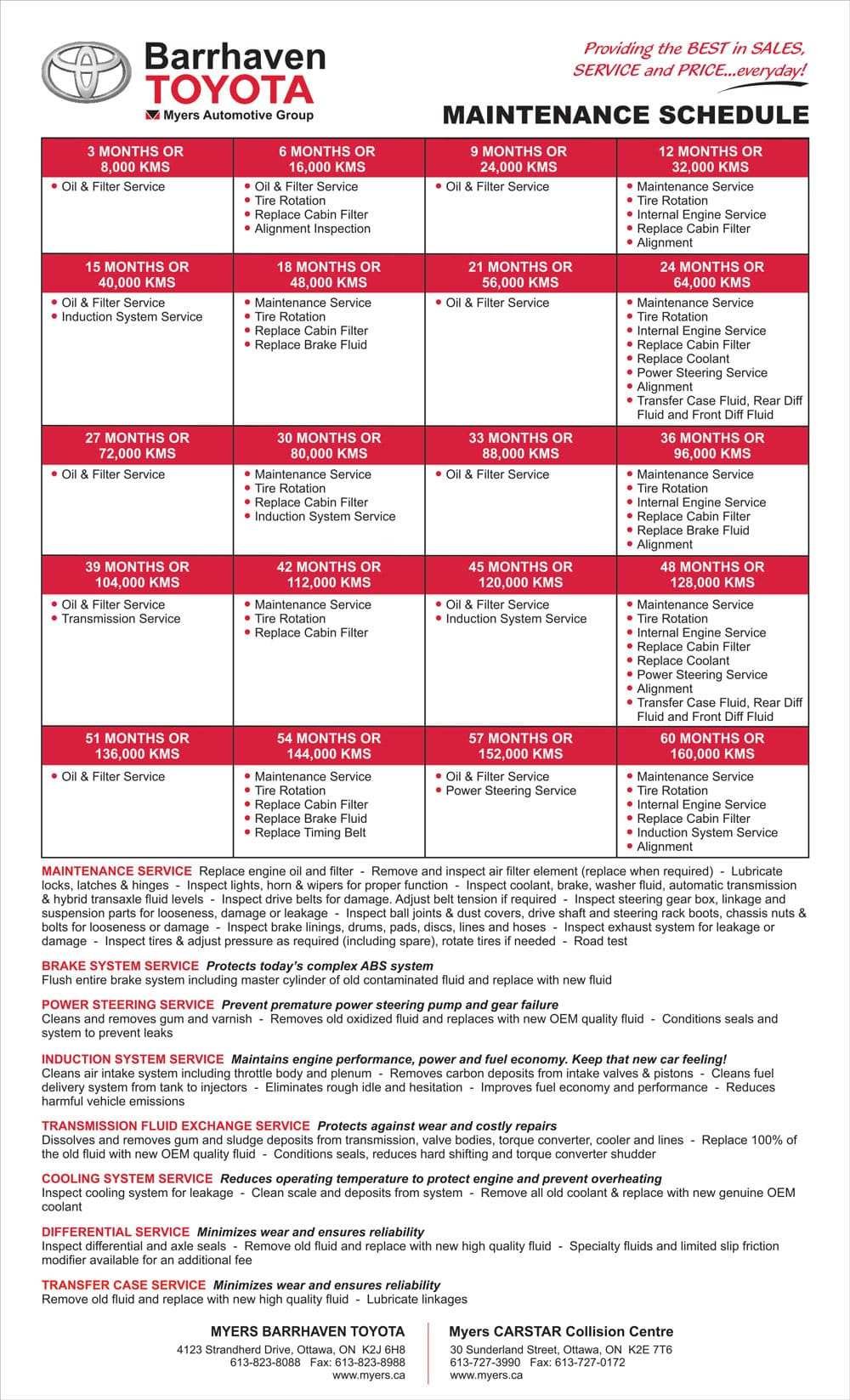
Credit: www.myersbarrhaventoyota.ca
Essential Maintenance Tasks In A Toyota Schedule
Let’s break down the key maintenance items you should never skip. Each task supports your Toyota’s performance and reliability in a different way.
Oil And Filter Changes
Engine oil keeps your Toyota’s engine running smoothly by reducing friction and carrying away heat. Over time, oil breaks down and collects dirt. Most modern Toyotas use synthetic oil, which lasts longer, but it still needs to be changed regularly.
- When to change: Every 5,000 to 10,000 miles, depending on your model and driving habits. Many Toyota cars recommend every 5,000 miles or 6 months.
- Why it matters: Skipping oil changes can cause engine wear, reduce fuel efficiency, and even lead to engine failure.
Tire Rotation And Alignment
Your tires wear at different rates depending on their position on the car. Rotating them keeps wear even, extends tire life, and improves safety. An alignment check makes sure your wheels are pointing in the right direction.
- When to rotate: Every 5,000 miles, often done with oil changes.
- Why it matters: Uneven tires can cause vibrations, poor handling, and higher fuel use.
Brake Inspection
Brakes are your car’s most important safety system. Regular inspections catch worn pads or damaged parts before they become dangerous.
- When to check: Every 5,000 to 10,000 miles, or if you notice squeaking, grinding, or a soft pedal.
- Why it matters: Catching problems early can prevent accidents and save money.
Fluid Checks And Changes
Toyota vehicles use different fluids to run smoothly: engine oil, coolant, brake fluid, transmission fluid, and sometimes power steering fluid. Each fluid has a different lifespan.
Here’s a quick look at common fluid lifespans:
| Fluid Type | Typical Change Interval |
|---|---|
| Engine Oil | 5,000–10,000 miles |
| Transmission Fluid | 30,000–60,000 miles |
| Brake Fluid | 24,000–36,000 miles |
| Coolant | 100,000 miles (first), then every 50,000 miles |
Air Filter Replacement
There are two main air filters in most Toyotas:
- Engine air filter: Keeps dust and debris from entering the engine.
- Cabin air filter: Filters the air you breathe inside the car.
- When to replace: Engine air filter every 15,000–30,000 miles; cabin air filter every 15,000 miles or once a year.
- Tip: If you drive in dusty areas or heavy traffic, change filters more often.
Battery Inspection
A weak battery can leave you stranded. Modern Toyota batteries usually last 3–5 years, but extreme weather or short trips can shorten their life.
- When to check: At least once a year, especially before winter or summer.
- Signs of trouble: Slow engine cranking, dim lights, or needing a jump-start.
Spark Plug Replacement
Spark plugs help ignite the fuel in your engine. Worn plugs can cause rough idling, poor acceleration, and higher fuel use.
- When to replace: Every 60,000–120,000 miles, depending on the model and plug type.
- Non-obvious insight: Iridium spark plugs last longer but cost more upfront. However, they often save money in the long run.
Coolant (antifreeze) Replacement
Coolant keeps your engine from overheating or freezing. Over time, it loses its ability to protect your engine.
- When to replace: First change at 100,000 miles, then every 50,000 miles after that.
- Common mistake: Mixing different coolant types can damage your engine. Always use the type recommended by Toyota.
Transmission Fluid Change
Transmission fluid lubricates and cools the transmission. Some Toyota models have “lifetime” fluid, but most experts recommend changing it anyway.
- When to change: Every 30,000–60,000 miles.
- Why it matters: Dirty or old fluid can cause slipping gears or even transmission failure.
Wiper Blade Replacement
Good visibility is key for safe driving. Wiper blades wear out from sun, heat, and use.
- When to replace: Every 6–12 months, or if you notice streaking or squeaking.
Regular Visual Inspections
A quick walk-around can catch problems before they become serious. Check for:
- Fluid leaks under the car
- Cracked or worn belts and hoses
- Uneven tire wear
- Burned-out lights
Special Considerations: Driving Style And Environment
Not all Toyota owners drive the same way. Your maintenance needs can change if you:
- Drive in very hot or cold weather
- Make many short trips (under 5 miles)
- Carry heavy loads or tow trailers
- Drive in dusty or hilly areas
- Sit in traffic often
These conditions are called “severe service” in your Toyota manual. If this sounds like you, follow the “severe” maintenance schedule, which means doing many tasks more often.
Following The Toyota Maintenance Minder System
Many newer Toyotas have a maintenance reminder system on the dashboard. This system tracks your mileage and driving conditions, then alerts you when it’s time for service. While it’s helpful, don’t ignore your owner’s manual. The system can’t check fluid conditions or see parts wearing out, so regular checks are still important. According to Consumer Reports, sticking to a regular maintenance schedule is one of the most effective ways to extend a vehicle’s life and preserve its resale value.
Diy Vs. Professional Service
Some Toyota maintenance tasks are simple enough for you to do at home, such as changing wiper blades, checking tire pressure, or replacing air filters. Oil changes and brake work require more skill and tools. For anything involving brakes, steering, or electronics, it’s safer to use a certified Toyota technician.
If you want to try DIY, always:
- Use the right parts and fluids
- Follow Toyota’s instructions closely
- Keep records of all your work
Professional service centers can spot problems you might miss. They use special tools to check your car’s computer systems and update your maintenance record, which helps keep your warranty valid.
Tracking Your Toyota’s Maintenance
Keeping good records is smart for every car owner. Save receipts and write down the date, mileage, and work done for each service. This helps you remember what’s next and proves you cared for your car if you ever sell it.
Here’s a simple example maintenance log:
| Date | Mileage | Service Performed |
|---|---|---|
| 2023-03-01 | 15,000 | Oil & Filter, Tire Rotation, Cabin Air Filter |
| 2023-09-15 | 20,000 | Brake Inspection, Fluid Top-Off |
Two Common Mistakes Toyota Owners Make
Many Toyota drivers make these two errors without realizing:
- Ignoring time-based service: Even if you don’t drive much, fluids and rubber parts age. For example, brake fluid and coolant break down over time, not just miles.
- Using non-Toyota fluids or parts: Cheaper parts can cause problems. Toyota engineers design fluids and parts for your car’s exact needs. Using the wrong type can lead to leaks, noise, or even damage.
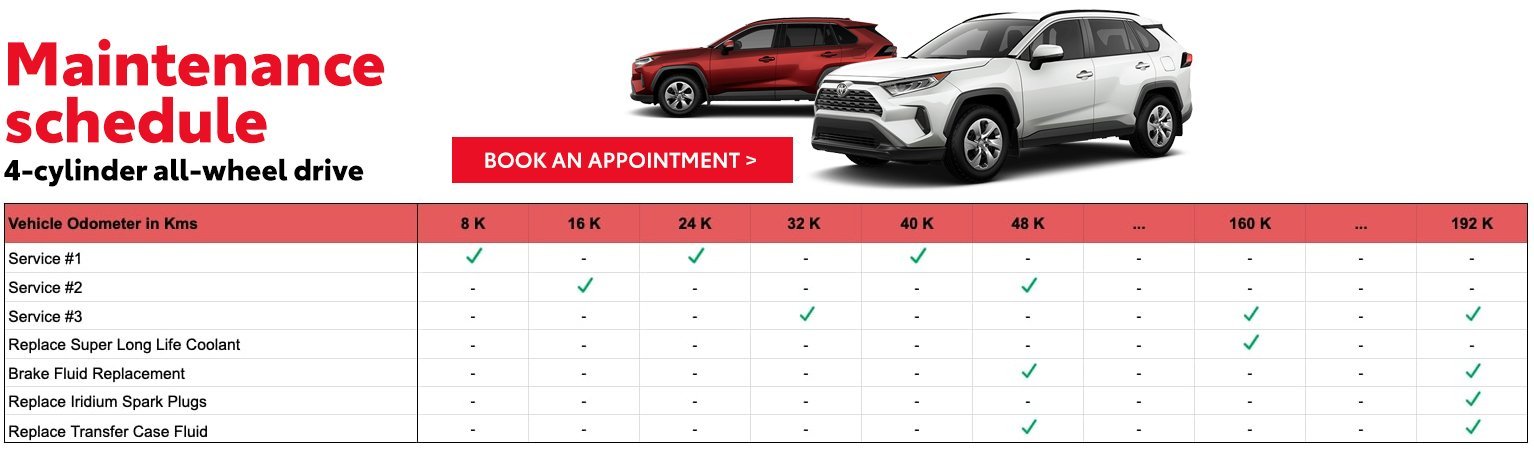
Credit: www.toyotastjerome.ca
How Maintenance Affects Resale Value
A well-maintained Toyota holds its value better. Buyers look for cars with service records and regular maintenance. A car that’s been cared for can sell for thousands more than a neglected one. It’s also easier to sell, since buyers trust cars with a clear history.
Where To Find Reliable Toyota Maintenance Information
Your first stop should be your Toyota owner’s manual. It gives the official schedule and shows how to check many items yourself. Toyota’s official website also has maintenance guides for each model. For more tips and expert advice, you can visit the Toyota Owners Resources page.

Credit: www.southdadetoyota.com
Frequently Asked Questions
How Often Should I Service My Toyota If I Drive Very Little?
Even if you don’t reach the mileage, you should follow the time-based schedule in your manual. For example, change the oil and rotate tires every 6 months. Fluids and rubber parts age, even if the car is not used much.
What Happens If I Skip A Scheduled Maintenance?
Skipping maintenance can lead to bigger problems later. You might lose warranty coverage, face expensive repairs, or have safety issues like brake failure or engine trouble.
Can I Use Non-toyota Parts For Maintenance?
While some non-Toyota parts work fine, using genuine Toyota parts and fluids is safest. They are made to match your car’s needs and tested by Toyota engineers. Cheaper parts may not last as long or could cause problems.
Does Following The Maintenance Schedule Really Save Money?
Yes, regular maintenance prevents major repairs and keeps your car running efficiently. For example, spending a little on oil changes can save you thousands in engine repairs later.
How Do I Know If My Toyota Needs “severe Service” Maintenance?
If you often drive in hot/cold weather, heavy traffic, dusty areas, or make many short trips, follow the severe service schedule. This usually means more frequent oil changes, brake checks, and fluid replacements.
Taking care of your Toyota doesn’t have to be complicated or expensive. By following the right maintenance schedule and paying attention to your car’s needs, you’ll enjoy a safer, more reliable ride for years to come. Your Toyota is built to last—give it the care it deserves, and it will reward you with many more miles on the road.