
A car that starts shaking at certain speeds can turn a normal drive into a stressful experience. Many drivers notice their vehicle vibrating only between specific speed ranges—maybe at 40 mph, or again around 60 mph, but not at lower or higher speeds.
This isn’t just annoying. It can mean there’s a problem needing attention before it grows worse, more expensive, or even dangerous. Understanding why your car shakes at certain speeds can help you solve the issue faster and keep your driving safe and smooth.
This article will break down the most common causes behind car shaking at certain speeds, describe how to recognize them, and explain what you should do next. You’ll also find practical tips, helpful tables, and answers to key questions most drivers have.
Whether you’re a new driver or have years behind the wheel, you’ll finish reading with clear guidance and fewer doubts.
Common Causes Of Car Shaking At Certain Speeds
Let’s look at the main reasons your car may shake or vibrate only when you reach specific speeds.
1. Unbalanced Tires
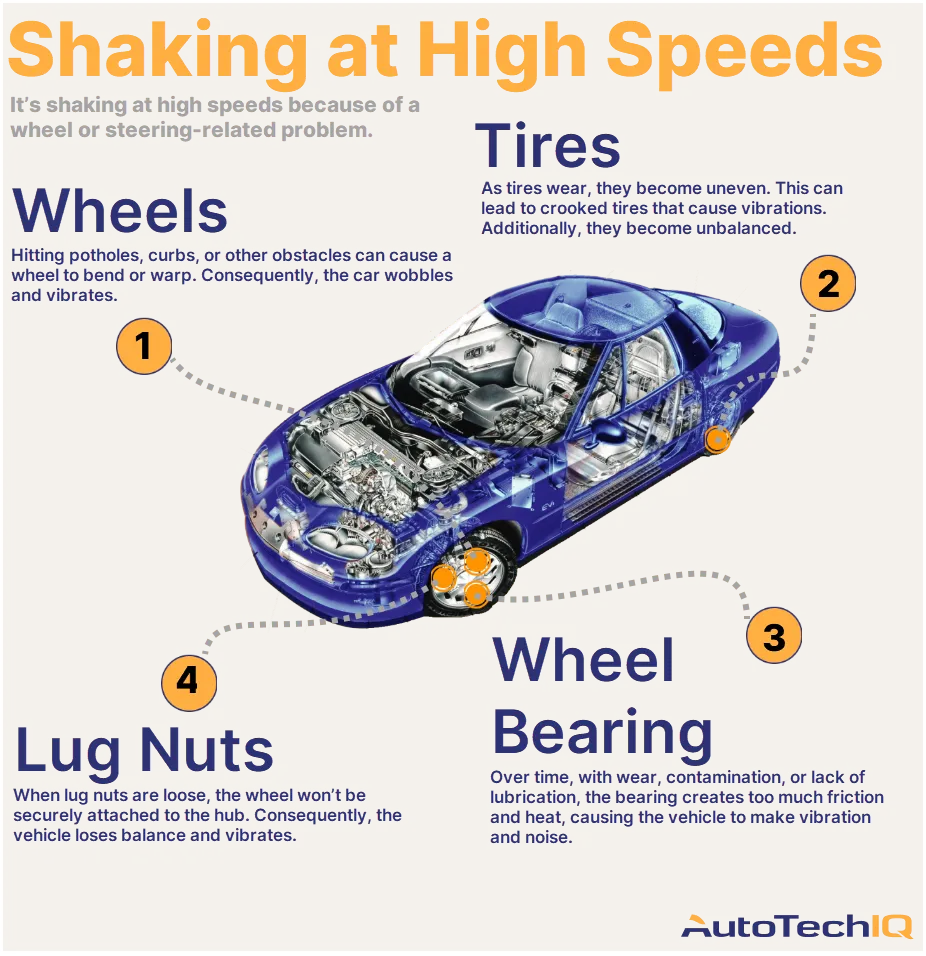
When tires are not balanced correctly, the weight is not evenly spread around the wheel. This causes the wheel to wobble as it spins, leading to steering wheel vibration or shaking felt throughout the car—often starting at 40-50 mph and getting worse as speed increases.
Signs of unbalanced tires:
- Shaking starts at a certain speed, then may go away at higher or lower speeds
- Uneven tire wear
- Steering wheel “wiggle”
Tip: Balancing your tires is a quick, affordable fix at any tire shop. Waiting too long can cause premature tire and suspension damage.
2. Wheel Alignment Problems
If your wheels are not aligned properly, your car may shake, especially as you speed up. Misalignment usually causes vibration along with the car pulling to one side.
Why it matters: Misaligned wheels wear out tires faster and can make your car harder to control, especially on highways.
Key insight: Many drivers only check alignment after hitting a curb, but normal driving can slowly knock wheels out of line. Get your alignment checked yearly or whenever you feel vibration.
3. Worn Or Damaged Tires
Tires with flat spots, bubbles, or uneven tread will not roll smoothly. At certain speeds, the flat or damaged part hits the road harder, causing a rhythmic shake.
What to check:
- Look for uneven tread wear or bulges on the tire sidewall
- Listen for thumping noises
Data: The U.S. National Highway Traffic Safety Administration (NHTSA) notes that tire problems are a leading cause of breakdowns and accidents.
4. Bent Wheels Or Rims
A bent wheel is sometimes hard to spot visually. Even a slight bend can cause vibration at speeds where the wheel’s rotation amplifies the problem.
Example: If you hit a pothole or curb, inspect your rims carefully. Bent wheels often cause vibration between 40-60 mph.
Pro tip: Some shops can repair minor bends, but serious damage means you should replace the rim for safety.
5. Worn Suspension Or Steering Parts
Suspension or steering components like tie rods, ball joints, and control arms keep your wheels stable and your ride smooth. When these parts wear out, you can feel shaking, especially at certain speeds or when turning.
Common symptoms:
- Shaking that gets worse on rough roads or around corners
- Clunking noises
Non-obvious insight: Suspension parts wear slowly, so you might adapt to new vibrations without realizing there’s a problem.
6. Brake Issues
If your car shakes when you hit the brakes at higher speeds, the problem might be warped brake rotors. As the brake pads grip the uneven surface, you’ll feel a pulsation or shake.
Key signs:
- Vibration only when braking
- Brake pedal pulses under your foot
Fact: Warped rotors are often caused by hard braking or overheating.
7. Driveshaft Or Axle Problems
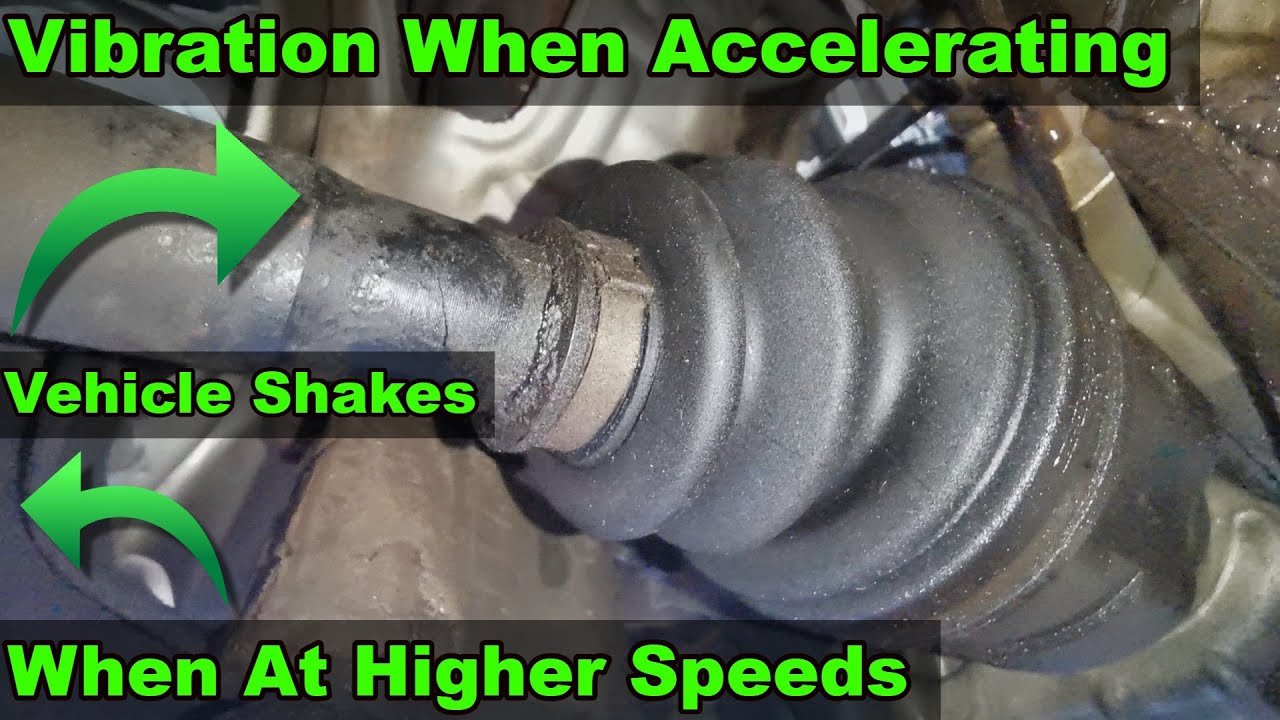
A bent driveshaft or damaged CV (constant velocity) joint can make the car shake as power transfers from the engine to the wheels. This is more common in rear-wheel and all-wheel-drive vehicles.
Symptoms:
- Shaking increases as you accelerate
- Clicking or clunking sounds, especially when turning
Expert tip: Driveshaft issues can sometimes be confused with tire problems. A mechanic can check for play in the joints.
8. Engine Or Transmission Mount Issues
Mounts keep your engine and transmission fixed in place. When they wear out or break, the engine can move too much, causing vibration that’s often felt when accelerating or at certain speeds.
Signs to watch:
- Vibration increases when accelerating but stops at steady speed
- Unusual noises from the engine bay
9. Engine Misfire Or Poor Combustion
If the engine isn’t running smoothly—because of bad spark plugs, fuel injectors, or ignition problems—it can cause rough running and shaking, especially at specific speeds or RPMs.
Typical clues:
- Engine warning light on the dashboard
- Loss of power, hesitation, or “stuttering”
Non-obvious insight: Engine misfires can sometimes only appear under load (when accelerating or going uphill), making them easy to miss during short test drives.
10. Transmission Problems
A failing transmission may cause shaking at certain speeds, especially during gear shifts or under acceleration.
What to notice:
- Shuddering when shifting gears
- Delayed or harsh gear changes
Transmission issues should be diagnosed early—repair costs rise quickly if ignored.
11. Wheel Bearing Failure
Wheel bearings let your wheels spin with little friction. When they wear out, you’ll feel vibration, often at highway speeds. You may also hear a humming or grinding sound.
Notable signs:
- Vibration gets worse as you turn the wheel
- Noise changes with speed
Data point: Most wheel bearings last 85,000–100,000 miles, but rough roads or impacts can shorten their life.
12. Loose Or Damaged Lug Nuts
Loose lug nuts can let a wheel wobble, causing vibration that gets worse as speed increases. This is dangerous—if the wheel comes off, it can cause a crash.
Check after:
- Tire changes or rotation
- Any recent wheel service
Quick tip: If you suspect loose nuts, stop and tighten them before driving further.
13. Brake Caliper Sticking
A brake caliper that doesn’t release properly can cause constant friction, leading to vibration at speed. This often happens on one wheel, making the car pull to one side and sometimes causing a burning smell.
Watch for:
- Shaking that starts after a few miles of driving
- Hot or burning smell from one wheel
14. Tire Out-of-round
Some tires aren’t perfectly round, either from a manufacturing defect or because of damage. This causes a “bouncing” vibration, often at highway speeds.
To check: A tire shop can measure roundness with a special tool and recommend replacement if needed.
15. Driveshaft Imbalance
An imbalanced driveshaft acts like an unbalanced tire, but the shaking is often felt through the floor or seat, not the steering wheel.
When it happens: Most common at speeds above 40 mph.
How To Diagnose The Cause
To help you narrow down the cause, compare common symptoms:
| Symptom | Likely Cause | Speed Range |
|---|---|---|
| Shakes at 45–60 mph | Unbalanced tires, bent rim | 40–65 mph |
| Shakes only when braking | Warped rotors | Any |
| Shakes during acceleration | Driveshaft, CV joint | Increasing with speed |
| Shakes after tire rotation | Loose lug nuts, unbalanced tires | Any |
Key tip: Notice when the vibration starts and stops. Does it happen at a certain speed? Only when braking or accelerating? These clues can save you time and money at the repair shop.
Credit: www.autotechiq.com
How To Fix Car Shaking At Certain Speeds
The right fix depends on the cause. Here’s what you can do for each common problem:
- Unbalanced tires – Get them professionally balanced.
- Wheel alignment – Schedule an alignment check and correction.
- Worn or damaged tires – Replace with new, quality tires.
- Bent wheels – Repair or replace the rim.
- Suspension or steering issues – Replace worn parts (mechanic needed).
- Brake problems – Resurface or replace rotors, check pads.
- Driveshaft/CV joints – Repair or replace damaged parts.
- Mount issues – Replace engine/transmission mounts.
- Engine misfire – Check spark plugs, ignition, fuel system.
- Transmission – Have a mechanic diagnose for internal faults.
- Wheel bearings – Replace faulty bearings.
- Loose lug nuts – Stop and tighten immediately.
- Sticking caliper – Free or replace the caliper.
- Out-of-round tire – Replace defective tire.
- Driveshaft imbalance – Balance or replace the driveshaft.
Important: Some fixes are DIY (like tightening lug nuts), but most require professional tools and experience.
Cost Comparison Of Common Repairs
Here’s a quick comparison of average repair costs for the main causes:
| Issue | Typical Cost (USD) | DIY Friendly? |
|---|---|---|
| Tire balance | $30–$70 | Not usually |
| Wheel alignment | $80–$150 | No |
| Brake rotor replacement | $200–$400 | For advanced DIYers |
| Wheel bearing replacement | $250–$600 | No |
| Engine mount replacement | $300–$700 | No |
Non-obvious tip: Fixing vibration early can prevent more expensive repairs. For example, ignoring unbalanced tires can destroy suspension parts over time.
Credit: www.youtube.com
When To See A Mechanic
While some vibration issues are simple (like loose lug nuts), others can be safety risks if ignored. You should see a mechanic if:
- The shaking is severe or gets worse quickly
- You hear grinding, clunking, or knocking sounds
- The car pulls to one side
- There’s a burning smell or smoke
If your car vibrates after new tires or service, return to the shop right away.
Preventing Car Shaking Problems
You can avoid many vibration problems with regular maintenance:
- Rotate and balance tires every 5,000–8,000 miles
- Check wheel alignment yearly
- Inspect tires for damage or wear monthly
- Address dashboard warning lights quickly
- Use quality parts for repairs
For in-depth technical details, you can check resources like Wikipedia: Vehicle vibration.
Credit: www.autotechiq.com
Frequently Asked Questions
Why Does My Car Only Shake At 60 Mph But Not At Other Speeds?
This usually means a wheel balance issue. At certain speeds, small imbalances become much more noticeable. Other possible causes include a bent rim or out-of-round tire.
Can I Still Drive If My Car Shakes At Certain Speeds?
Short trips are sometimes safe, but you should get the problem checked as soon as possible. Vibration can mean a serious safety risk—like loose wheels or bad suspension.
Does Car Shaking Always Mean A Big Repair Bill?
No. Many causes, like unbalanced tires or loose lug nuts, are low-cost. But ignoring the problem can lead to more expensive repairs later.
Why Does My Steering Wheel Shake But Not The Rest Of The Car?
Vibration felt mostly in the steering wheel often points to front wheel problems—like unbalanced tires, bent rims, or bad bearings. If you feel it in the seat or floor, it’s more likely a rear wheel or drivetrain issue.
How Can I Tell If The Shaking Is From The Engine Or Wheels?
If the shaking changes with engine speed (RPM), it’s likely engine-related. If it changes with vehicle speed (mph), wheels, tires, or suspension are usually the cause.
When your car starts shaking at certain speeds, don’t ignore it. Take the time to understand the possible causes and act early. This protects your car, your wallet, and your safety. Regular checks and quick repairs can keep your ride smooth for years to come.