
Thinking about extending your car warranty? You’re not alone. Many car owners wonder if an extended warranty is worth the money, and what it really covers. Modern cars are more reliable, but repairs can still be expensive. That’s why understanding car warranty extensions has become so important.
If you’re unsure whether to buy one, what to look for, or how to avoid common mistakes, this guide gives you all the facts in simple language.
What Is A Car Warranty Extension?
A car warranty extension is a service contract that gives you extra coverage after your factory warranty ends. The original warranty, also called the manufacturer’s warranty, usually covers your car for three to five years or a certain number of miles. When that coverage ends, you’re responsible for all repairs—unless you have an extended warranty.
There are two main types of extended warranties:
- Manufacturer-backed: Offered by your car brand’s dealer, these are often seen as more trustworthy.
- Third-party: Sold by independent companies, these can offer more options and sometimes lower prices, but may have more restrictions.
Both types help protect you from sudden repair costs, but the details matter a lot.
How Does An Extended Car Warranty Work?
When you buy an extended warranty, you pay an upfront fee or monthly payment. If your car needs repairs and those repairs are covered, the warranty provider pays the bill—minus any deductible you owe. The process usually goes like this:
- Your car breaks down or has a problem.
- You take it to an approved repair shop.
- The shop contacts your warranty company for approval.
- If the problem is covered, the company pays for the repair, and you pay only your deductible.
Not all repairs are covered. For example, parts that wear out over time, like brake pads or tires, are almost never included.
What Does An Extended Warranty Cover?
Coverage depends on your contract. Some plans cover almost everything (bumper-to-bumper), while others cover only the engine, transmission, and other key systems.
Here’s a quick look at common coverage levels:
| Plan Type | What’s Covered | What’s Not Covered |
|---|---|---|
| Bumper-to-Bumper | Most car parts except wear items | Brakes, tires, wipers, oil changes |
| Powertrain Only | Engine, transmission, drive axle | Electrical, air conditioning, audio |
| Stated Component | List of named parts (e.g. alternator, starter) | Anything not listed in the contract |
Always read the fine print. Many plans exclude “pre-existing conditions”—problems your car already has before the warranty starts.
Benefits Of Extending Your Car Warranty
Why do car owners choose to extend their warranty? Here are some of the main reasons:
- Peace of mind: You worry less about expensive surprise repairs.
- Budget control: You can plan your car costs better.
- Added value: Some extended warranties can help if you sell your car—the coverage may transfer to the new owner.
- Extra perks: Many plans include roadside assistance, rental car coverage, or trip interruption benefits.
However, these benefits only pay off if you choose the right plan for your needs.
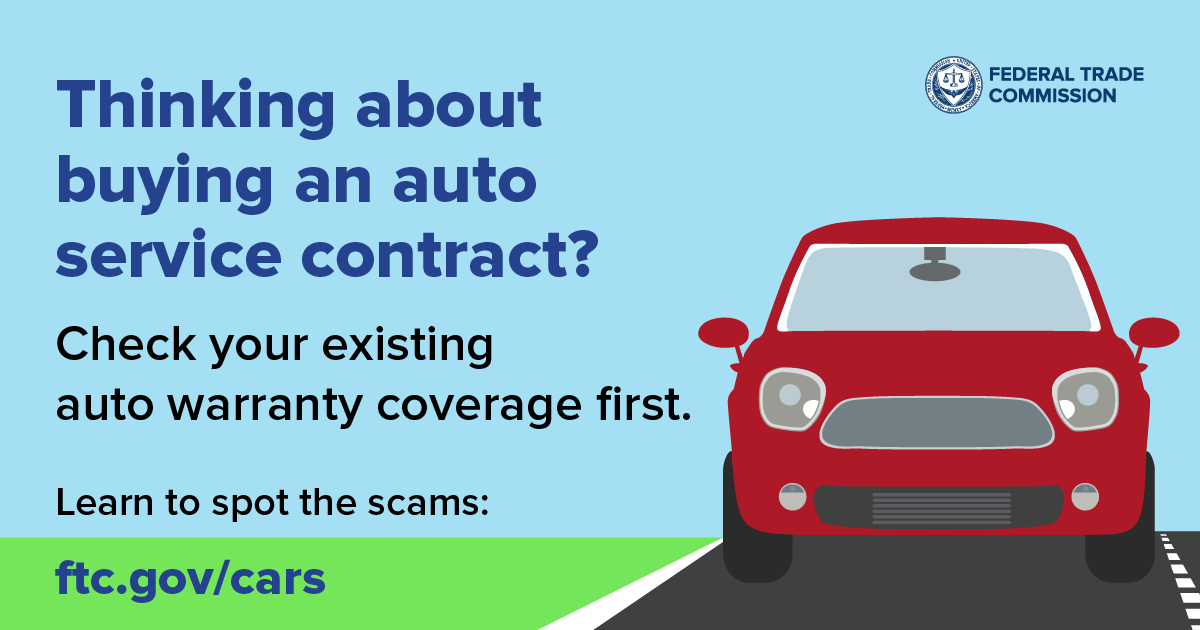
Credit: consumer.ftc.gov
What’s Not Covered: Common Exclusions
No extended warranty covers everything. Here are some things most plans will not pay for:
- Regular maintenance (oil changes, tire rotation)
- Wear-and-tear items (brakes, tires, wiper blades, batteries)
- Damage from accidents or weather
- Modifications or aftermarket parts
- Problems caused by neglect (not changing oil, ignoring warning lights)
If you use your car for business (like ride-sharing), many warranties won’t cover you unless you pay extra.
Choosing The Right Extended Warranty
Not all extended warranties are equal. Here’s what to check before you buy:
Coverage Details
Look for clear, simple language. If a plan uses too many technical words or “legalese,” be careful. Ask for a sample contract and read it. Make sure you understand:
- What’s covered and what’s not
- How to file a claim
- Where you can get repairs done (dealer only, any licensed shop, etc.)
Length Of Coverage
Some plans last just a year, others up to 8-10 years. Choose one that matches how long you plan to keep your car. If you’ll sell the car soon, a long warranty may not be worth it.
Deductibles And Costs
Deductibles can be per visit or per repair. For example, a $100 deductible per visit means you pay $100 each time you bring the car in, no matter how many issues are fixed. Per repair means you pay $100 for each separate problem.
Provider Reputation
Check online reviews and the company’s record with the Better Business Bureau. Some third-party providers have a history of denying claims or making customers wait a long time for payment.
Transferability
If you plan to sell your car before the warranty ends, a transferable warranty can make your car more attractive to buyers.
Cancellation Policy
Find out if you can cancel the warranty and get some money back if you change your mind or sell the car.
Credit: www.carpro.com
Are Extended Car Warranties Worth It?
This is the most common question. There’s no simple answer—it depends on your car, how long you keep it, and your risk comfort.
When It Makes Sense
- Your car model is known for costly repairs.
- You plan to keep your car for many years or miles.
- You want to avoid large, unexpected bills.
When It May Not
- Your car is very reliable and cheap to fix.
- You’re good at saving money for emergencies.
- You don’t plan to keep the car long.
According to a 2022 survey by Consumer Reports, 55% of people who bought extended warranties never used them. Of those who did use them, about half said the warranty paid for itself. So, it’s a gamble, but sometimes it pays off—especially if your car’s repair bills are high.
How Much Does An Extended Car Warranty Cost?
Prices vary a lot. On average, an extended warranty costs between $1,000 and $3,000 for 3-5 years of coverage. The price depends on:
- The car’s age, model, and mileage
- The level of coverage (bumper-to-bumper costs more)
- The provider (dealer or third party)
- Deductible amount
Here’s a simple comparison:
| Car Age/Mileage | Average Price | Typical Deductible |
|---|---|---|
| New (<3 years, <36k miles) | $1,000 – $1,800 | $0 – $100 |
| Used (3-7 years, 36k-100k miles) | $1,500 – $2,700 | $50 – $200 |
| Older (7+ years, 100k+ miles) | $2,000 – $3,500 | $100 – $300 |
If you’re offered a plan that costs much more, be cautious.
Manufacturer Vs. Third-party Warranty Providers
You can buy an extended warranty from your car’s manufacturer (through the dealer) or from a third-party company. Here’s how they compare:
| Provider | Pros | Cons |
|---|---|---|
| Manufacturer | Trusted, easy claims, genuine parts | Usually more expensive, limited to dealer repairs |
| Third-Party | Lower price, more repair shop options | Quality varies, some may deny claims, check reputation carefully |
If you want peace of mind, a manufacturer-backed plan is usually safer, but you may pay more.
Common Mistakes To Avoid
Even smart car owners make mistakes with extended warranties. Here are the most common errors:
- Not reading the contract: Many problems happen because buyers don’t know what is (and isn’t) covered.
- Buying from a robocall or spam email: These are often scams. Only buy from trusted sources.
- Paying too much: Some dealers mark up the price. Shop around and negotiate.
- Not checking the provider’s reputation: Read reviews and check for complaints before you buy.
- Missing the cancellation window: Some plans only let you cancel for a refund within 30 or 60 days.
One insight many people miss: if you buy a new car, you don’t have to buy the extended warranty right away. You can usually buy it any time before your factory warranty runs out. This gives you time to decide if you really need it.

Credit: www.gesnerauto.com
How To Maximize Your Warranty’s Value
If you choose to buy an extended warranty, here’s how to get the most out of it:
- Keep all maintenance records. If you don’t, the provider might deny your claim.
- Use approved repair shops only.
- File claims quickly and follow the process exactly.
- Ask about extra benefits like towing, roadside help, or trip interruption.
- Review your plan every year to see if it still fits your needs.
A practical tip: Some credit cards or insurance policies already offer roadside assistance—don’t pay twice for the same benefit.
Alternatives To Extended Warranties
Not everyone needs an extended warranty. Here are other ways to protect yourself:
- Set up a repair fund: Save money each month for future repairs.
- Buy a more reliable car: Check car reliability ratings on trusted sites before you buy.
- Consider a certified pre-owned (CPO) car: These cars often come with extra warranty coverage from the manufacturer.
- Use credit cards with repair benefits: Some cards offer protection for certain repairs if you use them to pay.
Real-life Example
Maria bought a used SUV with 40,000 miles. She paid $1,800 for a 4-year third-party extended warranty. In year three, her transmission failed. The repair cost $3,200, and her warranty company covered all but the $100 deductible. Maria felt the warranty was worth it.
But her friend John bought a similar warranty for his reliable sedan. He never used it and felt he wasted his money. This shows there’s risk either way—choose based on your car’s history, your budget, and your risk comfort.
Where To Learn More
If you want to dig deeper, the Federal Trade Commission has a helpful guide on extended warranties. You can read it here: FTC: Extended Warranties and Service Contracts.
Frequently Asked Questions
What Is The Difference Between An Extended Warranty And A Service Contract?
An extended warranty usually refers to extra coverage from your car’s manufacturer. A service contract is a similar product from a third-party company. Both cover repairs, but the terms and coverage can be different. Always read the contract to see what is included.
Is An Extended Car Warranty The Same As Car Insurance?
No, they are not the same. Car insurance covers accidents, theft, and damage from outside events. An extended warranty covers repairs if your car breaks down due to mechanical problems, not accidents.
Can I Buy An Extended Warranty For An Older Car?
Yes, but it will cost more and may have more limits. Some companies won’t cover cars over a certain age or mileage. Always ask about restrictions for older vehicles before you buy.
Does An Extended Warranty Cover Everything?
No. Most plans do not cover regular maintenance, wear-and-tear parts, cosmetic damage, or damage from accidents. Only specific mechanical failures are covered. Check the contract details.
Can I Cancel My Extended Car Warranty?
Most plans let you cancel, but you may only get a partial refund. There’s usually a time limit (30-60 days) for a full refund. After that, the refund is often based on how much time or mileage is left.
Making a smart choice about a car warranty extension can save you thousands—or just add peace of mind. The key is to know your car, your budget, and the details of any contract before you sign. With the right plan, you drive with more confidence, knowing you’re covered if the unexpected happens.