
When your Ford car won’t start, it can make your day stressful and confusing. Many drivers immediately worry about a big repair bill or feel lost about what to check first. But most starting problems have common causes, and knowing how to spot them can save you time and money. In this guide, you’ll learn why your Ford may not start, how to troubleshoot the issue, and what you can do to get back on the road. Whether you drive a Ford Focus, F-150, Escape, or Explorer, these steps will help you understand and fix the problem.
Understanding How A Ford Starts
Before diving into problems, it helps to know how starting works. When you turn the key or press the start button, the battery sends power to the starter motor and ignition system. Fuel and air mix in the engine, the spark plugs ignite it, and the engine comes to life. If any part of this process fails, the car won’t start. Fords, like other brands, use sensors, computers, and electrical systems that can sometimes make diagnosis tricky.
Common Reasons A Ford Won’t Start
Let’s look at the most frequent causes of starting problems in Ford vehicles:
1. Dead Or Weak Battery
A dead battery is the top reason most cars, including Fords, refuse to start. Batteries lose power over time or if you leave lights on by mistake. Signs include clicking noises, dim lights, or no response at all.
- If your battery is over 3–5 years old, it’s more likely to fail.
- Extreme cold or heat can weaken a battery quickly.
- Leaving accessories (radio, lights) on drains power.
Tip: Use a multimeter to check voltage. Healthy batteries show 12.6 volts or more.
2. Corroded Or Loose Battery Terminals
Even a good battery can’t work if connections are corroded or loose. White, green, or blue powder on the terminals blocks electricity.
- Wiggle the cables: If they move easily, they’re too loose.
- Clean corrosion with a mix of baking soda and water.
Tip: Always disconnect the negative (-) terminal first for safety.
3. Faulty Starter Motor
The starter motor turns the engine to begin combustion. If it fails, you might hear a single click or nothing at all.
- Starters often fail after 100,000 miles, but can last longer.
- Listen for a grinding or whirring sound—this means the starter gear isn’t engaging.
4. Bad Ignition Switch
Your Ford’s ignition switch sends power from the battery to the starter and ignition system. If it’s faulty, turning the key may do nothing or cause flickering dashboard lights.
- Try wiggling the key while turning—if it starts, the switch is likely worn.
- Some newer Fords use push-button start; a failed switch can also prevent starting.
5. Fuel System Issues
No fuel, no start. Problems include:
- Empty tank: It happens! Don’t overlook this.
- Clogged fuel filter: Starves the engine of gasoline.
- Fuel pump failure: No humming sound from the rear when you turn the key? The pump may be dead.
Tip: Listen for a brief whirring sound from the fuel tank area when you switch on the ignition—this means the pump is working.
6. Faulty Alternator
The alternator charges the battery as you drive. If it fails, the battery drains and can’t start the car.
- Warning lights (battery symbol) on the dashboard may light up.
- Dim headlights or electronics before the car dies are warning signs.
7. Bad Spark Plugs Or Ignition Coils
Spark plugs ignite the fuel-air mixture. If they’re old, dirty, or faulty, the engine won’t start.
- Rough idling or misfires before complete failure.
- Modern Fords use ignition coils instead of distributors; these can fail, too.
Tip: Spark plugs should be replaced every 30,000–100,000 miles depending on model and type.
8. Security System Or Key Fob Issues
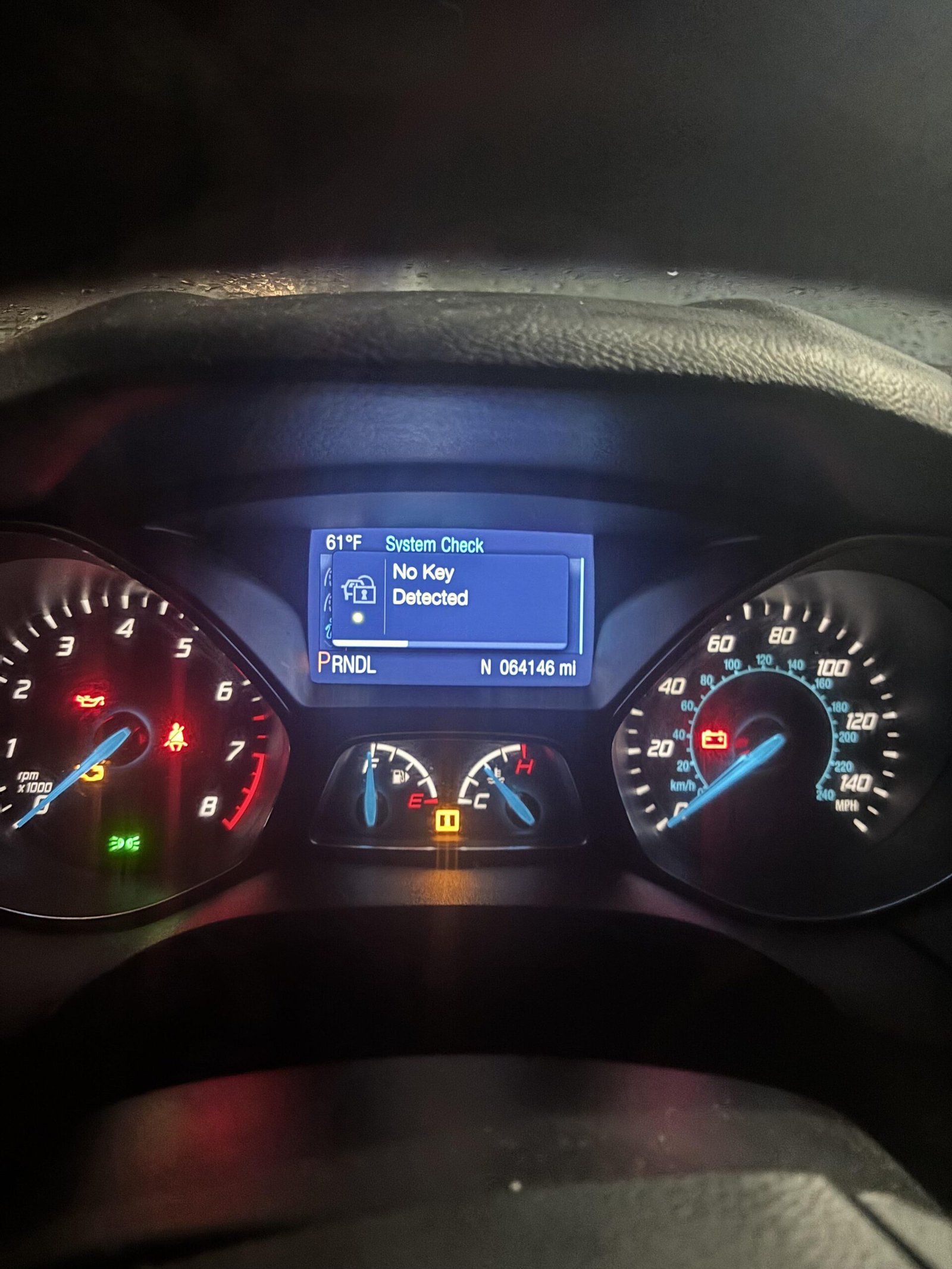
Many Fords have anti-theft systems. If your key fob battery is dead or the system malfunctions, the car may not recognize your key.
- Dashboard may show a flashing car-with-lock symbol.
- Try your spare key fob.
9. Blown Fuses Or Relays
A blown fuse or relay can interrupt the starting circuit.
- Check your owner’s manual for fuse box location and diagram.
- Replace any blown fuses with the correct amperage.
10. Transmission Not In Park Or Neutral
Automatic Fords only start in Park (P) or Neutral (N). If the gear selector sensor fails, the car thinks it’s in gear and won’t start.
- Try moving the shifter firmly into Park or Neutral and try again.
11. Faulty Sensors
Modern Fords have sensors like crankshaft position and camshaft position sensors. If these fail, the engine won’t get the right signal to start.
- Sometimes, you’ll get a check engine light.
- Diagnosis often requires a scan tool.
12. Flooded Engine (mostly Gasoline Engines)
If you try to start a Ford repeatedly without success, especially in cold weather, too much fuel can flood the engine.
- You may smell gasoline from the exhaust.
- Wait 10–15 minutes, then try again with the gas pedal pushed to the floor (clear flood mode).
13. Engine Immobilizer Problems
The immobilizer is part of the anti-theft system. If it malfunctions, the engine will not start even with the correct key.
- A flashing immobilizer light on the dashboard is a clue.
- Sometimes, disconnecting the battery for a few minutes can reset the system.
14. Problems With Push-button Start (newer Fords)
For Fords with push-button start, issues can include:
- Dead key fob battery
- Faulty brake pedal switch (car won’t detect you’re pressing the brake)
- System glitches; try holding the fob against the start button
15. Wiring Or Computer Issues
Damaged wiring or a failed ECU (engine computer) can prevent starting. These problems are rare, but possible after accidents, rodent damage, or water leaks.
- Usually require professional diagnosis.
Credit: www.youtube.com
Quick Troubleshooting Steps
Knowing the most common causes helps, but a step-by-step process saves time. Here’s a practical way to find the problem:
- Check for Lights and Sounds
- Do the dashboard lights come on? If not, suspect the battery or connections.
- Any clicking when turning the key? This often means low battery or bad starter.
- Test the Battery
- Try jump-starting. If it works, the battery is weak or dead.
- If jump-start fails, check cables and starter.
- Listen for the Fuel Pump
- Turn the key to “ON” without starting. A short hum from the back means the pump is working.
- Try Another Key
- If you have a spare, use it. If your Ford starts, the original key or fob may be bad.
- Look at the Security Light
- If it blinks or stays on, check your owner’s manual for anti-theft system info.
- Shift the Gear Selector
- Move the shifter through all gears, then back to Park or Neutral and try again.
- Scan for Error Codes
- Many auto parts stores will read codes for free. Codes can point to sensors, fuses, or other issues.
How To Jump-start Your Ford Safely
Jump-starting is a quick fix for a dead battery, but it must be done safely.
- Park a working car close, but not touching.
- Turn off both cars.
- Attach red cable to the dead battery’s positive (+) terminal.
- Attach other red cable end to the helper car’s positive (+).
- Attach black cable to the helper car’s negative (-) terminal.
- Attach final black cable to an unpainted metal part of the dead car (not the battery).
- Start the helper car and let it run for two minutes.
- Start your Ford. If it starts, let it run for at least 15 minutes to charge.
Tip: Never touch the cable clamps together while connected to a battery.
How To Read Ford Dashboard Warning Lights
Dashboard lights give clues about why a Ford won’t start. Here’s what some mean:
| Warning Light | Possible Issue |
|---|---|
| Battery Symbol | Bad battery or alternator |
| Check Engine | Sensor or engine problem |
| Car with Lock | Immobilizer or key issue |
| Oil Can | Low oil pressure (do not start!) |
If you see multiple lights, the battery may be too weak for the computer to work properly.
When To Call A Mechanic
Sometimes, DIY fixes won’t solve the problem. Call a professional if:
- Jump-starting doesn’t work and you’ve checked battery connections
- You hear grinding or metal noises (could be engine or starter damage)
- Security system problems persist after trying both keys
- You smell strong fuel or see smoke
A mechanic can test your Ford’s starter, alternator, and use advanced tools to diagnose complex issues.
Ford Starting Problems: Model Comparison
Fords share common systems, but some models have unique issues:
| Model | Common Starting Problem | Special Consideration |
|---|---|---|
| F-150 | Battery, starter, ignition switch | Heavy-duty batteries fail sooner in cold climates |
| Focus | Immobilizer, alternator | Key fob issues more common in 2012–2015 |
| Escape | Fuel pump, ignition coil | Watch for fuel pump recalls on 2013–2014 models |
| Explorer | Sensors, battery | Push-button start issues in 2017–2019 |
Preventing Future Starting Problems
You can reduce the risk of your Ford not starting by:
- Replacing the battery every 4 years or as needed
- Cleaning battery terminals twice a year
- Using the car regularly to keep the battery charged
- Fixing oil or coolant leaks that can damage electronics
- Keeping a spare key fob battery in your glove box
Non-obvious tip: If you park your Ford for weeks at a time, use a battery maintainer (trickle charger) to avoid a dead battery.
Real-world Example: Solving A Ford That Won’t Start
Sarah owns a 2016 Ford Focus. One morning, she tries to start her car, but nothing happens. The lights are dim, and she hears a rapid clicking sound. She checks the battery and finds corrosion on the terminals. After cleaning the terminals with baking soda and water, the car starts up perfectly.
Sarah’s problem was a poor connection, not a bad battery. This is a good reminder that simple fixes are often the solution.
What the Symptoms Can Tell You
No single percentage breakdown reliably identifies why a Ford will not start. Use the symptoms to narrow the next check: dim lights or rapid clicking point toward battery power or connections; a single click can involve the starter circuit; normal cranking with no start calls for checks of fuel, ignition, immobilizer status, sensor data, and stored diagnostic codes. The exact test path depends on the Ford model, model year, engine, and starting system.
Credit: us.haynes.com
Final Thoughts
A Ford that won’t start is a common but manageable problem. Most issues come down to the battery, connections, or simple electrical faults. By knowing what to check and trying practical fixes, you can often get moving without a tow. Remember, regular maintenance and quick action when you spot warning signs will keep your Ford dependable for years. If you ever feel stuck or unsure, don’t hesitate to reach out to a trusted mechanic or check reliable resources like AAA Auto Repair for more guidance.
Frequently Asked Questions
Why Does My Ford Make A Clicking Noise But Won’t Start?
A rapid clicking noise usually means the battery is weak or the connections are loose. The starter solenoid is trying to work, but there isn’t enough power. Check and clean the terminals, then try jump-starting.
What Should I Do If My Ford’s Key Fob Doesn’t Work?
If the key fob battery is dead, replace it with a new one. Many Fords let you start the car by holding the fob against the start button or using a hidden key inside the fob to unlock and start.
How Do I Know If My Ford’s Alternator Is Bad?
Signs of a bad alternator include a battery warning light, dim headlights, or the battery dying soon after a jump-start. A mechanic can test the alternator’s output to confirm.
Can A Blown Fuse Stop My Ford From Starting?
Yes, a blown fuse or relay in the starting circuit can stop your Ford from starting. Check your owner’s manual for the correct fuse location and replace any blown fuses with the same rating.
What If My Ford Only Starts Sometimes?
An intermittent starting problem often points to a failing starter, ignition switch, loose connection, or a sensor issue. Keep track of symptoms and ask a mechanic for a diagnostic test if it gets worse.
Credit: www.reddit.com