
When it comes to choosing the right pickup truck, the decision between a diesel truck and a gas truck can be challenging. Both types have their strengths and weaknesses, and the best choice depends on your needs, budget, and how you plan to use the truck. If you’re hauling heavy trailers, driving long distances, or just using your truck for weekend projects, understanding the key differences will help you invest wisely. Let’s break down the comparison step by step, so you can make an informed choice.
How Diesel And Gas Engines Work
Diesel and gasoline engines have different ways of creating power. A diesel engine uses high compression to ignite fuel, while a gas engine uses a spark plug. This simple difference leads to a range of effects, from performance to fuel economy.
Diesel trucks generally create more torque at low speeds. This is why they are popular for towing heavy loads. Gas trucks, on the other hand, usually have more horsepower, which translates to better acceleration and speed. Understanding this basic difference will help you see why one might fit your needs better than the other.
Power And Performance
Towing And Hauling
When talking about towing and heavy-duty work, diesel trucks have a clear advantage. Diesel engines produce more torque, which means they can pull heavier trailers with less effort. For example, the Ford F-250 Super Duty with a 6.7L Power Stroke diesel engine can tow up to 20,000 pounds. A similar gas-powered model may top out around 15,000 pounds.
If you regularly tow boats, horse trailers, or construction equipment, diesel is the better choice. But if you only haul a small trailer or work equipment occasionally, a gas truck can handle the job and cost less up front.
Acceleration And Speed
Gas trucks often have higher horsepower. This means they can accelerate faster, which is useful for city driving or merging onto highways. They also tend to have lighter engines, making the truck feel more agile.
A Chevrolet Silverado 1500 with a 6. 2L V8 gas engine can go from 0 to 60 mph in under 6 seconds. Diesel trucks, while strong, are usually slower in acceleration due to their design and heavier engine parts.
Fuel Economy And Cost
Fuel Efficiency
One of the strongest points for diesel trucks is better fuel economy, especially when carrying heavy loads or driving long distances. Diesel fuel contains more energy per gallon than gasoline. As a result, diesel engines can travel farther on the same amount of fuel.
For example, a Ram 2500 diesel can get up to 22 miles per gallon on the highway, while a similar gas version might only get 17 mpg. Over thousands of miles, this adds up to big savings.
Fuel Cost
However, diesel fuel is usually more expensive than gasoline. Prices can change based on location and market conditions. In the US, diesel fuel often costs $0. 20–$0. 60 more per gallon than regular gas. So, while diesel engines are more efficient, the higher price of fuel can reduce your savings.
Real-world Example
If you drive 20,000 miles per year, mostly on highways, and get 20 mpg with diesel, you’ll use about 1,000 gallons. At $4. 00/gallon, that’s $4,000 a year. If a gas truck gets 16 mpg, you’ll use 1,250 gallons. At $3.
60/gallon, that’s $4,500. In this case, diesel is cheaper, but the difference is not huge.
Purchase Price And Value
Diesel trucks generally cost more up front than gas trucks. The engine itself is more expensive to make. For example, adding a diesel engine to a Ford F-250 can raise the price by $8,000–$11,000 compared to a gas version.
But diesel trucks also hold their value better over time. If you plan to sell your truck after a few years, you may get more money back with a diesel. This is because diesel engines are known for lasting longer and are in high demand in the used market.
Credit: thundersaidenergy.com
Maintenance And Repairs
Routine Maintenance
Diesel engines require different maintenance than gas engines. Oil changes for diesel trucks are usually more expensive, and they often need more oil per change. There are also other filters, like fuel/water separators, that need regular attention.
Here’s a quick comparison:
| Maintenance Task | Diesel Truck | Gas Truck |
|---|---|---|
| Oil Change Cost | $100–$150 | $40–$70 |
| Oil Change Interval | 7,500–10,000 miles | 5,000–7,500 miles |
| Extra Filters | Yes (fuel/water separator) | No |
Repair Costs
When something goes wrong, diesel engines are usually more expensive to fix. Parts are heavier and more specialized, and fewer mechanics are trained to work on diesel trucks. If you live in a remote area, finding a qualified diesel mechanic might be difficult.
Gas engines are simpler and cheaper to repair. Most mechanics can fix them, and parts are often easier to find.
Engine Life And Reliability
Diesel engines are famous for their long lifespan. It’s not unusual for a diesel truck to reach 300,000 miles or more if well maintained. Gas engines typically last about 200,000 miles before needing major repairs.
This longer life comes from the stronger parts inside a diesel engine. They’re built to handle higher pressures, so they don’t wear out as quickly. However, maintenance is key. Neglecting oil changes or using the wrong fuel can shorten engine life quickly.
Credit: www.cornerstoneford.com
Driving Experience
Noise And Vibration
Old diesel trucks were known for being loud and shaky. Modern diesels are much quieter, but they still make more noise than gas engines. If you care about a silent, smooth ride, a gas truck is the better choice.
Cold Weather
Diesel engines can be hard to start in cold weather because the fuel can gel and the engine needs more heat to ignite. Many diesel trucks have glow plugs or block heaters to help with this, but it’s something to consider if you live in a cold climate.
Gas trucks start easily in all temperatures and don’t need extra warming devices.
Payload Capacity
Payload is the amount you can carry in the bed of your truck, not counting the trailer. Diesel engines are heavier than gas engines, which means the truck itself weighs more. This can actually reduce the payload rating for some diesel trucks.
Here’s a sample comparison:
| Truck Model | Diesel Payload (lbs) | Gas Payload (lbs) |
|---|---|---|
| Ford F-350 | 4,200 | 4,700 |
| Chevy Silverado 2500 | 3,800 | 4,050 |
So, if you need to carry the heaviest loads in your truck bed, a gas truck may actually have a slight advantage.
Environmental Impact
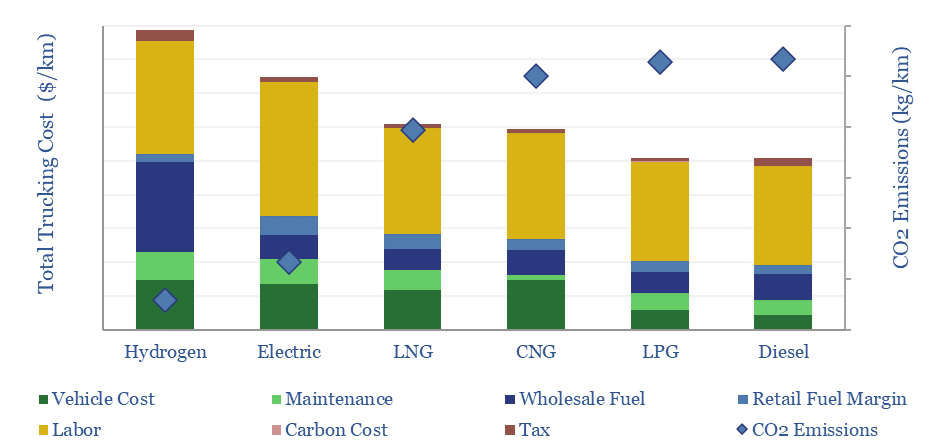
Diesel engines produce less carbon dioxide (CO2) per mile because they are more efficient. However, they create more nitrogen oxides (NOx) and particulates, which can harm air quality. New diesel trucks have advanced filters and emissions systems, but they are still watched more closely by regulators.
Gas engines produce more CO2 but fewer harmful particles. If you live in a city with strict emissions laws, it’s important to check which type of engine is allowed.
Common Misconceptions
Many people think diesel trucks are always better for work and gas trucks are only for light duty. In reality, the best truck for you depends on the job. Some gas engines, like Ford’s 7.3L V8, are now very powerful and reliable.
Another myth is that diesel trucks are always cheaper to own because of fuel economy. The higher purchase price, expensive repairs, and costly fuel can add up fast—especially if you don’t drive long distances or tow heavy loads regularly.
When To Choose A Diesel Truck
Consider a diesel truck if you:
- Tow heavy trailers often (over 10,000 lbs)
- Drive long distances, especially on the highway
- Want a truck that will last 300,000 miles or more
- Are okay with higher maintenance costs
- Plan to resell your truck for a good price
When To Choose A Gas Truck
Go with a gas truck if you:
- Use your truck mostly for city or light highway driving
- Rarely tow heavy loads
- Want lower purchase and repair costs
- Prefer a quieter, smoother ride
- Drive fewer miles each year
Real-world Comparison: Diesel Vs Gas Truck Ownership
To help you see the big picture, here’s a summary of annual ownership costs for a typical diesel and gas truck, based on 15,000 miles per year.
| Cost Category | Diesel Truck | Gas Truck |
|---|---|---|
| Fuel (at 18 mpg diesel, 15 mpg gas) | $3,333 | $3,600 |
| Oil Changes (2 per year) | $250 | $120 |
| Other Maintenance | $450 | $300 |
| Annual Depreciation | $2,800 | $3,200 |
| Total | $6,833 | $7,220 |
These numbers are averages. Your costs will change based on how and where you drive.
Two Insights Many Buyers Miss
First, many buyers overlook the real benefit of diesel—it shines only when you need to tow heavy loads often or drive very long distances. If you don’t, the extra cost may not be worth it.
Second, buyers often forget to check the resale market in their area. In some regions, diesel trucks are in higher demand and keep their value, while in others, gas trucks are easier to sell. Always research your local market before buying.
Final Thoughts
Choosing between a diesel and gas truck is not just about power or price. It’s about matching the truck to your real needs. Diesel trucks are unbeatable for heavy work and long hauls, while gas trucks are practical, affordable, and comfortable for most drivers.
Take a close look at your daily use, future plans, and budget before making your decision.
For more technical details on diesel and gas engines, you can visit Wikipedia.
Frequently Asked Questions
Why Are Diesel Trucks Better For Towing?
Diesel engines create more torque at low speeds. This helps them pull heavy trailers more easily than gas engines, especially up steep hills or over long distances.
Are Diesel Trucks More Expensive To Maintain?
Yes, diesel trucks often cost more to maintain. Oil changes, filters, and repairs are pricier. But they may need maintenance less often, and they last longer if cared for.
Do Diesel Trucks Last Longer Than Gas Trucks?
Generally, yes. Diesel engines are built stronger and can last 300,000 miles or more, while gas engines usually last 200,000 miles with good maintenance.
Is Diesel Fuel Always More Expensive?
In many areas, diesel fuel costs more than gas, but this is not always true. Prices can change based on location and market trends.
Should I Get A Diesel Or Gas Truck For Daily Driving?
For most daily driving (especially in the city or short trips), a gas truck is better. It’s quieter, cheaper, and easier to maintain unless you tow heavy loads regularly.
Credit: www.portervilleford.net