
Getting your car ready for an emissions test can feel confusing, especially when you hear terms like “drive cycle” and “readiness monitors. ” Many drivers fail their emissions check simply because they do not know what a drive cycle is or how to complete it.
If your check engine light was recently on, or your battery was disconnected, your car’s onboard computer may not be ready to pass the test—even if you fixed the main problem. Understanding the drive cycle for emissions readiness helps you save time, money, and stress at the inspection station.
What Is A Drive Cycle?
A drive cycle is a specific set of driving conditions that your car must go through so its onboard diagnostic system (OBD-II) can check if all emission systems are working well. Modern vehicles have many sensors and self-tests. These tests happen only during certain types of driving: accelerating, idling, cruising, and decelerating. If these tests are not complete, your car’s emission monitors will show “not ready,” and you may fail the test—even if your car runs fine.
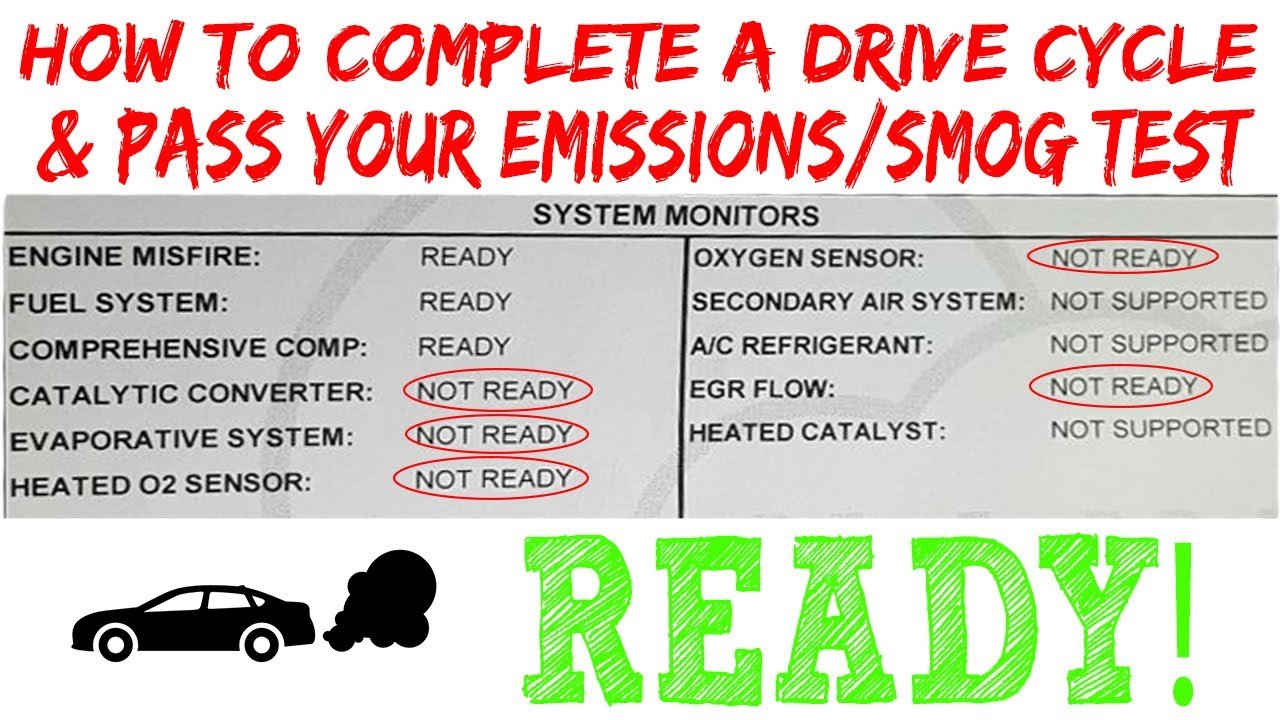
Most cars need these monitors to be “ready” for the emissions test:
- Catalyst
- Oxygen sensors
- Evaporative system
- EGR system (if equipped)
- Heated oxygen sensor
- Secondary air system (for some cars)
If your car’s computer (ECU) cannot finish these tests, it means some emissions-related checks are not done yet. This is why understanding and performing a drive cycle is so important.
Why Is A Drive Cycle Necessary For Emissions Readiness?
Cars made after 1996 use OBD-II systems, which self-check emissions controls. Before you can pass a smog or emissions test, your car must show that all (or almost all) monitors are “ready.” If you recently cleared an error code, disconnected the battery, or replaced parts, your car’s computer will reset the monitor status to “not ready.” Even if the check engine light is off, you can still fail the emissions test because of this.
A drive cycle:
- Lets your car’s computer run all self-tests
- Proves the repairs fixed any previous problem
- Helps avoid a “not ready” result at the inspection
Many people do not realize: it is not enough to simply drive around for a few minutes. The drive cycle must include specific conditions to test each emissions system. Missing any part of the cycle means some monitors stay “not ready.”
The Basic Drive Cycle: Step-by-step
While every car is a bit different, most share a similar basic drive cycle. Here’s a common example for OBD-II vehicles:
1. Cold Start
Begin with your car’s engine cold (sitting overnight or for several hours). Start the car and let it idle for 2-3 minutes with the transmission in “Park” (or “Neutral” for manual cars). Turn off all accessories (AC, radio, lights).
2. Accelerate
Drive at a steady speed of about 25 mph (40 km/h) for 3 minutes. Accelerate gently—do not floor the gas pedal.
3. Cruise
Increase your speed to 55 mph (88 km/h) and maintain this speed for 5 minutes. Use cruise control if you have it. This helps the oxygen sensors and catalyst system monitors to complete.
4. Decelerate (no Brakes)
Take your foot off the gas pedal and let the car slow down naturally from 55 mph to 20 mph. Do not use the brakes or shift gears.
5. Stop And Idle
Stop the car and let it idle for 2 minutes with the transmission in “Drive” (automatic) or “Neutral” (manual).
6. Accelerate And Repeat
Accelerate again to 60 mph (96 km/h) and keep this speed for at least 5 minutes. Then slow down gradually and stop.
7. City Driving
Drive at city speeds (with stops and starts) for 10–15 minutes.
This process usually takes about 30–40 minutes. Do not skip steps or shut off the engine during the cycle.
Example Drive Cycle Table
To make the process clearer, here’s a sample drive cycle schedule for a typical OBD-II car:
| Step | Action | Duration/Speed | Monitors Targeted |
|---|---|---|---|
| 1 | Cold Start & Idle | 2-3 min (Park) | O2 Heater, EGR |
| 2 | Accelerate | 25 mph, 3 min | O2 Sensor, Catalyst |
| 3 | Cruise | 55 mph, 5 min | Evap, Catalyst |
| 4 | Decelerate (No Brake) | 55 to 20 mph, coast | EGR, O2 Sensor |
| 5 | Idle | 2 min | Evap, O2 Sensor |
How Readiness Monitors Work
Readiness monitors are like checklists for your car’s emissions system. Each monitor tests one part of the system, such as the catalyst or EVAP. Monitors show three possible statuses:
- Ready: Test is complete, and the system works.
- Not Ready: Test has not run yet.
- Fail: Test ran, and a problem was found.
Most states allow one monitor to be “not ready” for 1996–2000 vehicles and require all to be “ready” for 2001 and newer cars (except for EVAP, which can sometimes be “not ready”). Always check your local rules.
Some monitors are “continuous” and always run, like misfire and fuel system. Others are “non-continuous” and only run under certain conditions, such as catalyst, EVAP, and oxygen sensor. The drive cycle triggers the right conditions for each test.
Common Reasons Monitors Stay “not Ready”
Beginners often miss two key points:
- Short, random trips do not help: Driving to the store and back rarely completes all monitors. Emissions tests need a full drive cycle.
- Not all repairs reset the monitors: Even after fixing a problem, your car’s computer needs to check the repair by repeating the drive cycle.
Other reasons for “not ready” status:
- Low fuel level (EVAP test requires 1/4 to 3/4 tank)
- Extreme outside temperature
- Battery recently disconnected
- Trouble codes not fully cleared
- Poor driving conditions (stop-and-go only)
If a monitor refuses to set to “ready” after several tries, there may be a hidden problem or a faulty sensor.
Credit: www.youtube.com
How To Check Emissions Readiness At Home
You do not need to guess if your car is ready. Use an OBD-II scanner (many auto parts stores will check for free). Plug it into the port under your dashboard, turn on the ignition, and read the monitor status. Look for “Ready” for all monitors. If you see “Not Ready,” you need to complete the drive cycle before your test.
Some newer cars also show readiness with dashboard lights or menu options.
Comparing Drive Cycle Requirements
Different car brands may have special requirements. Here is a comparison of what some popular brands require for a complete drive cycle:
| Brand | Unique Steps | Common Issues |
|---|---|---|
| Honda | Longer idle needed, strict fuel level for EVAP | EVAP often last to set |
| Toyota | Specific speeds and deceleration needed | Catalyst monitor stubborn if not highway driven |
| Ford | Several stops and starts required | O2 Heater monitor needs cold start |
| GM/Chevy | Multiple accelerations, steady cruise | O2 Sensor and EVAP can be slow |
Always check your car’s service manual or look up your model’s specific drive cycle if you have repeated issues.
Practical Tips For Completing The Drive Cycle
- Plan your route: Choose a road where you can drive without stopping much, like a long highway or quiet back road.
- Start with a cold engine: Many monitors only run when the engine has cooled off.
- Keep fuel between 1/4 and 3/4 full: Too much or too little fuel can block some tests.
- Avoid cruise control unless the cycle says to use it.
- Do not use AC, defrost, or other accessories during the cycle.
- Drive smoothly: Hard acceleration or braking can stop some monitors from running.
- Try more than one cycle if needed: Sometimes, one drive is not enough—repeat the process if any monitors stay “not ready.”
Common Mistakes That Lead To Failed Emissions Tests
- Clearing codes just before the test: This resets all monitors to “not ready.”
- Not checking readiness before going to the inspection: A quick OBD-II scan can save a wasted trip.
- Skipping parts of the drive cycle: Missing the steady cruise or the idle steps means some checks will not finish.
- Ignoring fuel level: The EVAP monitor will not run if the tank is too full or nearly empty.
- Assuming the check engine light being off means you will pass: “Not ready” monitors can still cause failure.
Credit: www.youtube.com
Real-world Example
A driver in California failed his emissions test even though his check engine light was off. He had disconnected his battery a few days before. After driving 20 miles to work and back for two days, his car still showed “not ready” for EVAP and catalyst.
He completed the full drive cycle as described, and all monitors switched to “ready. ” On his next visit, he passed the test. This shows how important the exact drive cycle is, not just random driving.
How Long Does It Take For Monitors To Become Ready?
Most monitors set after one or two complete drive cycles, which usually means 50–100 miles of mixed driving. However, some monitors, like EVAP, need very specific conditions and may need several tries. If your monitors do not set after 200 miles of proper driving, there may be a deeper issue.
The Role Of Weather And Driving Conditions
Cold weather, high humidity, or very hot temperatures can block some readiness checks. Try to do the drive cycle in mild, dry weather for best results. Heavy traffic or stop-and-go city driving often will not complete all the necessary steps.
Comparing Emissions Readiness Policies By State
Here is a look at how different states handle “not ready” monitors:
| State | Allowed “Not Ready” Monitors (2001+ cars) | Special Rules |
|---|---|---|
| California | 1 (EVAP only) | No MIL (check engine light) allowed |
| Texas | 2 | Heavy-duty vehicles: 1 allowed |
| New York | 1 | Diesel rules differ |
| Florida | 1 | No visual inspection |
Always check your local rules before your test to avoid surprises.

Credit: repairpal.com
When To Seek Professional Help
If you have repeated “not ready” monitors or cannot complete the drive cycle after several tries, it may be time to visit a mechanic. There could be a deeper issue, such as a faulty sensor or wiring problem, blocking the tests.
A professional with advanced diagnostic tools can quickly find the cause.
External Resource
For more technical details about OBD-II drive cycles and readiness monitors, visit the EPA OBD Information Page.
Frequently Asked Questions
What Does “not Ready” Mean On My Emissions Test?
“Not ready” means your car’s computer has not finished all the self-tests needed for the emissions system. This can happen after clearing codes, disconnecting the battery, or not driving the right drive cycle.
How Many Monitors Need To Be “ready” To Pass?
Most states require all but one (or sometimes two) monitors to be “ready” for 2001 and newer cars. For older cars, two “not ready” monitors may be allowed. Always check your state’s rules.
Can I Just Drive Normally And Pass The Readiness Check?
Normal driving sometimes works, but it is not guaranteed. Completing a full drive cycle with all steps is the best way to make sure all monitors are “ready. ”
Why Does The Evap Monitor Take So Long To Set?
The EVAP (evaporative emissions) monitor needs special conditions: the engine must be cold, the outside temperature must be right, and the fuel level must be between 1/4 and 3/4. This makes it slower than other monitors.
Do I Need To Do The Drive Cycle After Every Repair?
You only need to complete the drive cycle if your check engine light was on, codes were cleared, or the battery was disconnected. If you have not done these things, your monitors should remain “ready. ”
Getting your car ready for an emissions test is easier when you understand the drive cycle. Follow the correct steps, check your readiness monitors, and avoid simple mistakes. This knowledge helps you pass your test the first time, saving you time and money.