
Electric cars are changing the way people drive. More drivers are now switching to electric vehicles (EVs) for lower running costs, quieter rides, and a cleaner environment. But for beginners, one thing often feels confusing: electric car charging. If you’re new to EVs, you may wonder how charging works, where to find chargers, how long it takes, and if charging at home is enough. This guide will help you understand all the basics and give you the confidence to plug in and drive electric.
Types Of Electric Car Charging
Not all charging is the same. There are three main types of electric car charging, each with different speeds and uses.
Level 1 Charging: Standard Home Outlets
Level 1 charging uses a regular 120-volt wall outlet—the same type you use for toasters or lamps. Most electric cars come with a cable for this. You just plug one end into your car and the other into the wall.
- Charging speed: Adds about 3–5 miles of range per hour.
- Best for: Overnight charging or cars with small batteries.
- Example: If your daily drive is 20 miles, plugging in overnight is usually enough.
Level 1 is slow, but it works if you don’t drive far each day. However, it’s not great if your car’s battery is empty or you need a quick top-up.
Level 2 Charging: Faster Home And Public Charging
Level 2 chargers use a 240-volt outlet, like those for clothes dryers. These chargers are common at home, work, and public places like malls or parking lots.
- Charging speed: Adds 15–30 miles of range per hour.
- Best for: Daily charging for most EV owners.
- Installation: At home, you may need an electrician to install a Level 2 charging station.
- Example: Plug in after work and your car will be full by morning.
Level 2 is the most popular choice for home charging because it’s much faster than Level 1.
Dc Fast Charging: Quickest Public Charging
DC fast chargers (sometimes called Level 3 or “rapid” chargers) are the quickest way to charge an electric car. These chargers are found along highways, busy city centers, and some large shopping areas.
- Charging speed: Can add 100–200 miles of range in 30 minutes.
- Best for: Road trips or when you need to charge quickly.
- Limitations: Not all cars support DC fast charging. Frequent use can also slowly reduce battery life.
Most people use DC fast charging on long trips, not for daily charging.
Public Charging Vs. Home Charging
Choosing between public charging and home charging depends on your driving habits, where you live, and the type of electric car you own.
Home Charging
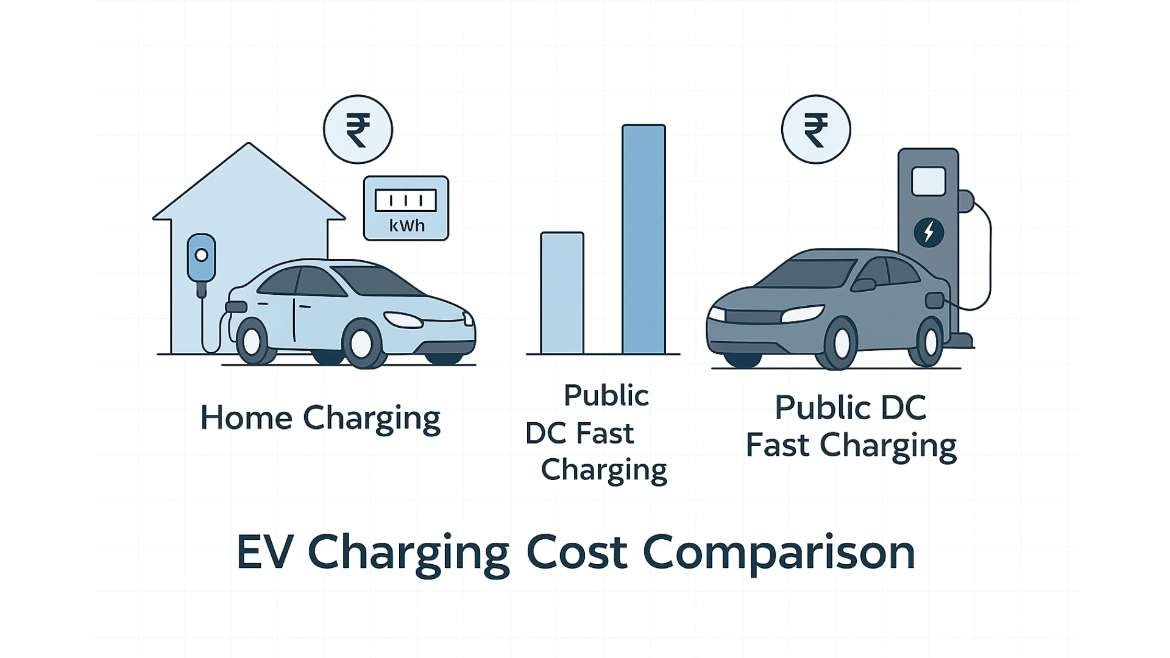
Charging at home is the most convenient and cost-effective for many people.
- Cost: Usually cheaper per kWh than public charging.
- Convenience: Plug in overnight, wake up with a “full tank.”
- Equipment: You may need to install a Level 2 charger for faster charging.
Public Charging
Public charging is essential for people without home chargers or for long journeys.
- Locations: Found at supermarkets, parking lots, hotels, and highways.
- Networks: Companies like ChargePoint, EVgo, and Electrify America operate charging networks.
- Payment: Some chargers are free, but most require payment by app, card, or subscription.
Comparing Home And Public Charging
Here’s a quick look at the main differences:
| Home Charging | Public Charging | |
|---|---|---|
| Cost | Lower | Higher |
| Convenience | Very high | Varies |
| Speed | Level 1 or 2 | Level 2 or DC Fast |
| Best For | Daily use | Road trips, no home charger |
Charging Connectors And Compatibility
Electric cars and chargers use different plugs, but most are easy to use once you know the basics.
Common Plug Types
- J1772: Most common for Level 1 and Level 2 charging in North America.
- CCS (Combined Charging System): Used for DC fast charging by most car brands.
- CHAdeMO: Used by some Nissan and Mitsubishi cars for DC fast charging.
- Tesla Connector: Tesla cars use a unique plug, but adapters are available for other chargers.
Checking Compatibility
Before charging, check your car’s manual to know which plugs work with your car. Public charging stations often show which connector they have.
Adapters
Some cars come with adapters so you can use different charging stations. For example, Tesla drivers often use an adapter for public J1772 chargers.
How Long Does Charging Take?
Charging time depends on three main factors:
- Charger speed (Level 1, Level 2, DC Fast)
- Car’s battery size (measured in kWh)
- Current battery level
Here’s a table to help you estimate charging times for a typical electric car with a 60 kWh battery:
| Charging Type | Miles Added per Hour | 0% to 100% Full Charge Time |
|---|---|---|
| Level 1 (120V) | 3–5 miles | ~24–36 hours |
| Level 2 (240V) | 15–30 miles | ~8–12 hours |
| DC Fast Charging | 100–200 miles in 30 minutes | ~1 hour (0–80%) |
Note: Most people rarely charge from 0% to 100%. Charging from 20% to 80% is quicker and better for battery health.
Costs Of Charging An Electric Car
Many new EV owners wonder if charging is really cheaper than buying gas. The answer is almost always yes—especially at home.
Home Charging Costs
To find out how much home charging costs, multiply your local electricity rate (per kWh) by your car’s battery size.
Example:
If your electricity rate is $0. 15/kWh and your battery is 60 kWh, a full charge costs $9 (0. 15 x 60).
If your car gets 250 miles on a charge, that’s less than 4 cents per mile.
Public Charging Costs
Public stations can be more expensive. Some charge by the kWh, others by the minute.
- Level 2 public chargers: Usually $0.20–$0.30 per kWh.
- DC fast chargers: Often $0.35–$0.60 per kWh.
Some networks offer monthly subscriptions, which can lower the cost if you charge often.
Comparing Charging And Gasoline
A gasoline car that gets 25 miles per gallon at $4/gallon costs about 16 cents per mile. Home charging is usually 3–4 times cheaper.
Non-obvious insight: Some public fast chargers can cost as much as gasoline per mile—so check prices before you plug in.
Where To Find Charging Stations
Finding a charger is easier than ever. There are thousands of public charging stations in North America, Europe, and Asia.
Mobile Apps
Many free apps help you find nearby charging stations, check if they’re available, and see prices.
Popular apps include:
- PlugShare
- ChargePoint
- Electrify America
- EVgo
Most apps let you filter by plug type, charging speed, and network.
In-car Navigation
Many electric cars have built-in navigation systems that show nearby chargers. Some even plan your route with charging stops.
Charging At Work
Some employers offer free or low-cost charging at the workplace. Ask your company if chargers are available.
Charging At Shopping Centers
Many malls, grocery stores, and hotels now have chargers. Some are free for customers.
Non-obvious insight: Chargers at busy locations can be occupied during peak hours. Try to visit during off-peak times for a better chance of finding an open plug.
Step-by-step: How To Charge Your Electric Car
For first-time EV owners, the charging process can feel new. Here’s how it usually works:
- Locate a charging station using your car’s navigation or a mobile app.
- Park and turn off your car. Most cars need to be in “Park” to charge.
- Open the charging port. This is usually on the front or side of the car.
- Plug in the charger. Match the connector to your car’s port.
- Start charging. Some stations start automatically; others require you to swipe a card or use an app.
- Monitor charging. Most cars and apps show charging speed and time remaining.
- Unplug and go when finished. Always return the cable to its holder.
Some stations have emergency stop buttons or help lines if you have problems.
Charging Etiquette And Best Practices
Charging is a shared resource. Good etiquette helps everyone enjoy the benefits of electric cars.
- Don’t occupy a charger longer than needed. Move your car when done.
- Don’t unplug other cars. Unless the station’s rules allow it.
- Report broken chargers. Use the app or call the support number.
- Keep cables tidy. Coil the cable back when finished.
Tip: If you need to charge for a long time, look for “long-term” chargers in less busy locations.
Credit: pulseenergy.io
Battery Health And Charging Tips
How you charge affects your car’s battery life and performance.
- Avoid charging to 100% every day. Most batteries last longer when kept between 20% and 80%.
- Use DC fast charging occasionally. Frequent fast charging can slowly reduce battery health.
- Precondition your car in cold weather. Some cars let you heat the battery before charging, improving speed and battery life.
- Don’t let the battery sit empty. Try to keep at least 10% charge when parked for long periods.
Following these tips will help your battery last for many years.
Myths And Common Mistakes
Many people believe myths about electric car charging. Here are the facts:
- Myth: Charging is slow and inconvenient.
- Fact: Level 2 and DC fast chargers are widely available, and home charging is as easy as plugging in your phone.
- Myth: You need special wiring for every EV.
- Fact: Level 1 charging works with regular outlets; Level 2 may need a new outlet, but not always full rewiring.
- Mistake: Only using fast chargers.
- Reality: This can shorten battery life. Use Level 2 for daily charging.
- Mistake: Ignoring charger compatibility.
- Reality: Always check your car’s plug type before heading to a station.

Credit: recharged.com
Planning For Road Trips
Yes, you can take long trips in an electric car! It takes a little planning, but apps and in-car navigation make it easier.
- Plan your route with charging stops every 100–150 miles.
- Check station availability before your trip.
- Allow extra time for charging, especially if stations are busy.
Most modern EVs can drive 200–300 miles on a charge, and high-speed networks make long trips possible.
Incentives And Charging At Home
Installing a home charger can seem expensive, but incentives often help.
- Federal tax credits may cover part of the cost.
- Local utility rebates can reduce installation prices.
- Home value increase: Homes with chargers may be worth more.
Check your area for incentives or see the latest at the U.S. Department of Energy’s Alternative Fuels Data Center.
Credit: www.kai-waehner.de
Frequently Asked Questions
How Much Does It Cost To Install A Home Charger?
Costs vary by location, but a basic Level 2 charger and installation usually range from $700 to $1,500. Utility rebates or tax credits can lower this cost.
Is It Safe To Charge An Electric Car In The Rain?
Yes, charging stations and cables are designed for all weather. Safety systems prevent shocks or fires, even in heavy rain.
Can I Use Any Charging Station With My Electric Car?
Most cars can use Level 2 stations, but DC fast chargers may need a specific connector. Some cars require adapters. Check your car’s manual or ask your dealer.
How Long Do Electric Car Batteries Last?
Most batteries last 8–10 years or 100,000–150,000 miles. Modern batteries often last longer with proper care.
What Happens If I Run Out Of Charge On The Road?
Your car will stop, just like a gas car without fuel. Roadside assistance can often tow you to the nearest charging station. Plan trips to avoid running too low.
Switching to electric driving is a smart choice for your wallet and the planet. With the right information, charging your car becomes simple and stress-free. As charging networks grow and technology improves, driving electric will only get easier. Enjoy the ride!