
Electric vehicles (EVs) are everywhere in today’s news. Car companies advertise them as clean and green, while governments promise a future without gasoline cars. But how much better are EVs for the environment? Do they really have a lower carbon footprint compared to traditional gas cars? This question is more complex than it sounds. Many people only consider the exhaust pipe emissions. However, the full carbon footprint includes manufacturing, energy production, and even battery recycling. Let’s look deeper into the numbers, facts, and hidden details behind EV carbon footprint vs gas car. By the end, you’ll understand what matters most when choosing a car for the planet.
What Is Carbon Footprint?
The carbon footprint is the total amount of greenhouse gases (mainly carbon dioxide or CO2) produced by a product or activity. For cars, this includes:
- Making the car (factories, materials, batteries)
- Driving the car (fuel or electricity used)
- Ending the car’s life (recycling, scrapping)
All these stages add up to the car’s lifetime carbon footprint. This is often measured in grams of CO2 per kilometer (g CO2/km) or tons of CO2 over the car’s life.
How Gas Cars Create Emissions
Gasoline cars are powered by burning fossil fuels. This process releases CO2, but there’s more to the story.
Manufacturing Emissions
Building a gas car creates emissions from:
- Mining and processing metals
- Making plastic parts
- Assembling the car in factories
A typical small gas car creates about 6 to 7 tons of CO2 before it even leaves the factory.
Tailpipe Emissions
When you drive a gas car, the engine burns gasoline and produces:
- CO2
- Nitrogen oxides (NOx)
- Particulate matter
For every liter of gasoline burned, about 2.3 kg of CO2 is released. Over 150,000 km, a mid-size gas car can emit 30 to 40 tons of CO2 just from driving.
Fuel Production
Extracting, transporting, and refining oil also creates emissions. This adds another 15–20% to the car’s total carbon footprint, often forgotten by car buyers.
How Electric Cars Create Emissions
Many people think EVs are “zero emission,” but this is only true at the tailpipe. The real story is more complicated.
Manufacturing And Battery Production
Making an EV is similar to making a gas car, but batteries add a twist. EV batteries are heavy and require metals like lithium, cobalt, and nickel. Mining and processing these materials use a lot of energy, sometimes from coal.
- Producing an average EV battery (around 60 kWh) can add 5 to 10 tons of CO2 to the car’s footprint.
So, EVs often start with a bigger manufacturing footprint than gas cars.
Using The Car: Electricity Emissions
EVs do not produce tailpipe emissions, but the electricity they use may come from fossil fuels.
- Charging an EV in a region with clean energy (like Norway’s hydropower) means almost zero emissions.
- Charging in areas with coal-based power (like some US states or China) can produce significant emissions.
On average, an EV in the US emits about 100–150 g CO2/km, while a gas car emits 200–300 g CO2/km.
Battery Recycling And End Of Life
EV batteries can be recycled, but the process is still developing. Recycling reduces the need for new mining and lowers the overall carbon footprint. However, not all batteries are recycled yet, and some end up in landfills.
Comparing Ev And Gas Car Emissions Over Time
It’s important to look at the whole life of the car, not just one stage.
| Stage | Gas Car (tons CO2) | EV (tons CO2) |
|---|---|---|
| Manufacturing | 6–7 | 10–15 |
| Driving (150,000 km) | 30–40 | 10–20 (depends on electricity source) |
| End of Life | 1–2 | 1–2 |
| Total | 37–49 | 21–37 |
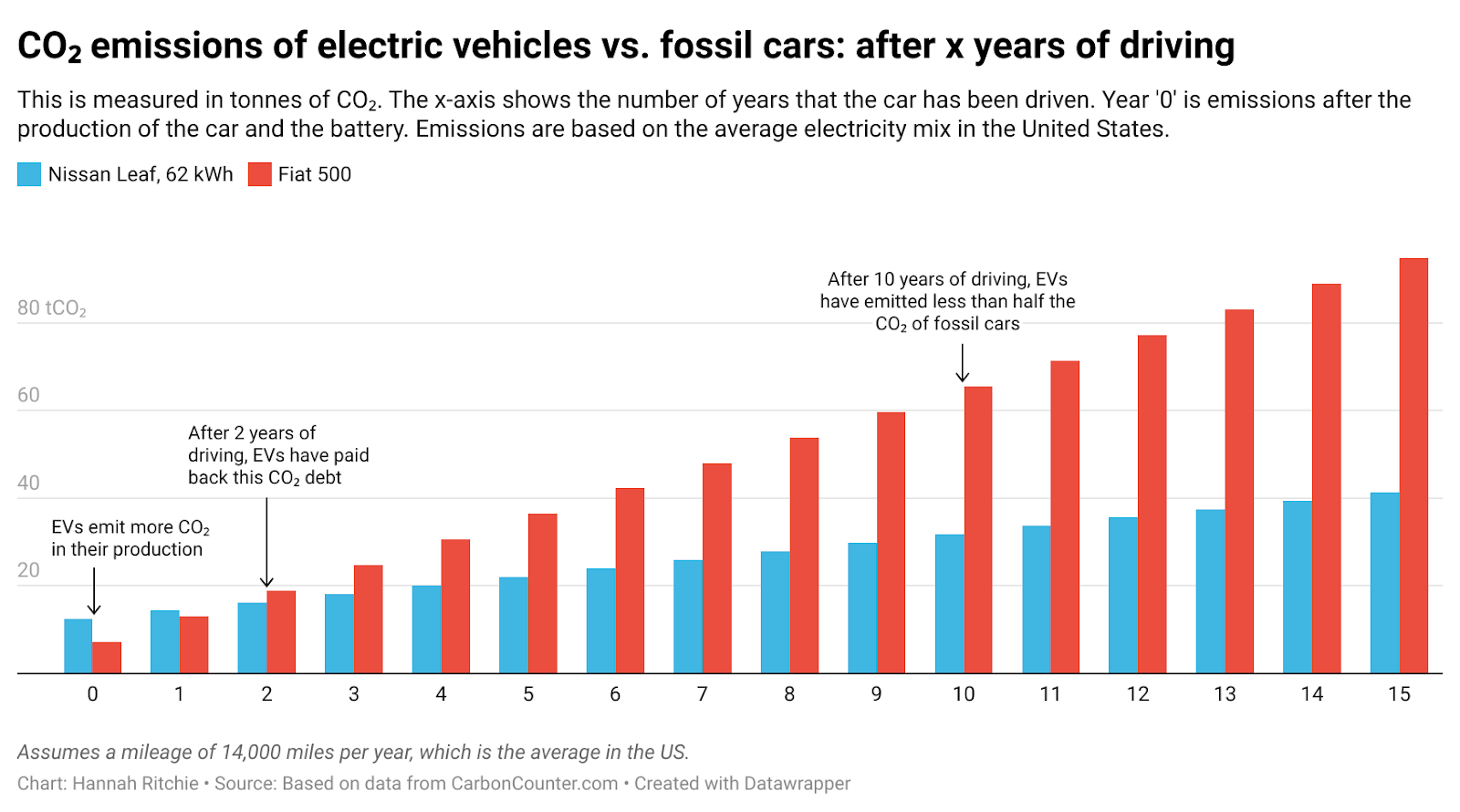
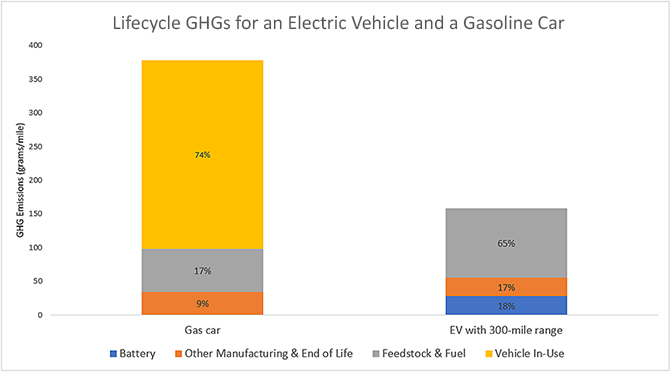
This table shows that EVs usually have a lower lifetime carbon footprint, especially as electricity gets cleaner.
Credit: www.recurrentauto.com
The Electricity Grid: The Hidden Factor
Where you live matters a lot. The “greenness” of your electricity changes everything.
| Region | Average Grid CO2 (g/kWh) | EV Driving Emissions (g CO2/km) |
|---|---|---|
| Norway | ~30 | ~10 |
| France | ~50 | ~15 |
| USA (average) | ~400 | ~100–150 |
| China (coal-heavy) | ~700 | ~200 |
| India (coal-heavy) | ~800 | ~220 |
EVs are much cleaner in countries with renewable or nuclear energy. In coal-heavy areas, the advantage shrinks, but EVs still often win, especially as grids improve.
Non-obvious Insights: What Most People Miss
Many people forget these points when comparing EVs and gas cars:
- Upfront emissions vs. payback time: EVs start with a higher footprint due to batteries, but they “pay back” this extra carbon after a few years of clean driving. In places with clean grids, this payback can be less than two years.
- Grid is getting cleaner: As countries add more wind, solar, and hydro, the carbon footprint of EVs drops every year—even for cars already on the road.
There’s another angle: vehicle size and efficiency. A huge electric SUV may have a bigger footprint than a small gas car, especially in coal-heavy regions. Always compare similar-sized vehicles.
Credit: www.factcheck.org
Real-world Example: Tesla Model 3 Vs Toyota Corolla
Let’s compare two popular cars:
- Tesla Model 3 (EV, 60 kWh battery)
- Toyota Corolla (Gasoline, 1.8L engine)
Assume 150,000 km lifetime, average US grid.
Manufacturing
- Model 3: ~12 tons CO2 (car + battery)
- Corolla: ~7 tons CO2
Operation
- Model 3: ~15 tons CO2 (based on 150 g CO2/km x 150,000 km)
- Corolla: ~34 tons CO2 (based on 228 g CO2/km x 150,000 km)
Total
- Model 3: ~27 tons CO2
- Corolla: ~41 tons CO2
The EV is clearly ahead over its lifetime.
The Issue Of Battery Replacement
EV batteries do not last forever. Most last 8–15 years or 150,000–300,000 km. If you replace the battery once, you add 5–10 more tons of CO2. Even so, most EVs still have a smaller footprint than gas cars over their total life, especially if the grid is clean.
Beyond Carbon: Other Environmental Impacts
Carbon is not the only thing to consider. Both types of cars have other impacts:
- EVs: Mining for lithium, cobalt, and nickel can harm land and water if not managed well.
- Gas cars: Oil extraction can cause spills and pollution; tailpipe emissions harm air quality.
While EVs are better for cities (no tailpipe pollution), their batteries need responsible recycling and ethical mining. These issues are improving as technology and regulations advance.
What About Plug-in Hybrids And Hydrogen Cars?
Plug-in hybrids (PHEVs) use both gas and electricity. Their footprint is between gas and electric cars, depending on how often they drive on electricity.
Hydrogen cars (fuel cell vehicles) can be very clean if the hydrogen is made from renewable energy. Today, most hydrogen is made from natural gas, which has a high carbon footprint.
Credit: www.epa.gov
Myths And Misunderstandings
Some common myths:
- “EVs are dirtier because of coal power.” In most places, even with coal, EVs pollute less than gas cars. The gap grows as electricity gets cleaner.
- “EV batteries can’t be recycled.” Recycling is growing. Used batteries are now reused in other industries or broken down for materials.
- “EVs don’t save CO2 because of manufacturing.” Manufacturing is higher, but driving emissions are much lower. The total footprint is usually much less.
Ways To Lower Your Car’s Carbon Footprint
You can reduce your carbon footprint, whichever car you drive:
- Drive less: Walking, cycling, or using public transport is best for the planet.
- Choose a smaller, more efficient vehicle: Lighter cars use less energy, whether gas or electric.
- Charge with clean energy: If you own an EV, charging from solar panels or renewable energy makes a big difference.
- Maintain your car: Well-maintained engines and tires improve efficiency.
- Recycle responsibly: Dispose of old batteries and cars at certified centers.
How Future Technology Can Change The Picture
Technology is moving fast. Here are key trends to watch:
- Battery improvements: New batteries (like solid-state or sodium-ion) may reduce manufacturing emissions and use less rare metals.
- Cleaner grids: More wind, solar, and nuclear power will keep lowering the emissions of EVs.
- Better recycling: Car companies are investing in recycling programs for batteries and car parts.
If these trends continue, the carbon footprint of EVs will keep shrinking, making them an even better choice for the environment.
A Quick Side-by-side Comparison
Here is a simple summary for fast decision-making:
| Factor | Gas Car | EV |
|---|---|---|
| Manufacturing Emissions | Lower | Higher (mainly battery) |
| Driving Emissions | High (burns fuel) | Low to zero (depends on grid) |
| End-of-life Emissions | Similar | Similar |
| Air Pollution | High (tailpipe gases) | Low (none while driving) |
| Improves as Grid Gets Cleaner? | No | Yes |
Frequently Asked Questions
Are Electric Cars Always Better For The Environment Than Gas Cars?
In most cases, electric cars have a lower carbon footprint over their lifetime, especially if the electricity is from clean energy. However, in areas with very dirty grids, the advantage is smaller. EVs always improve as the grid gets cleaner.
How Long Does It Take For An Ev To “pay Back” Its Higher Manufacturing Emissions?
This “payback” period depends on the local electricity grid. In countries with green energy, it can be as short as 1–2 years. In regions with coal power, it may take 4–6 years, but the EV still usually wins over the car’s total life.
What Happens To Ev Batteries At The End Of Their Life?
Used EV batteries are now recycled or reused in second-life applications, like energy storage. Recycling technology is improving each year, reducing environmental impact. It’s important to use certified recycling centers.
Is It Better To Keep An Old Gas Car Or Buy A New Ev?
If your old gas car works well and you drive it only a little, keeping it may be greener than building a new car. But if you drive often, switching to an EV reduces your footprint in the long run—especially if you use clean electricity.
Do Plug-in Hybrids Have A Lower Carbon Footprint?
Plug-in hybrids usually have a smaller footprint than gas cars, especially for short trips on electricity. For long trips, they use more gas, so the benefit depends on how you drive.
Choosing between an EV and a gas car is not only about today’s emissions. It’s about future energy, technology, and smart decisions. As the world moves toward cleaner power, electric cars are set to become the clear winner for the planet. For more details and up-to-date research, check out this Wikipedia page on life-cycle emissions.