
Electric vehicles (EVs) are changing how we travel and think about energy. Charging an EV at home or at public stations should be simple, but sometimes the EV charger not working can leave you confused and frustrated. You might plug in your car and see no response, blinking lights, or even error messages. These problems can stop your plans and create doubts about EV reliability.
The good news is most EV charger issues are not difficult to fix. Many drivers, especially first-time owners, miss small details that can solve the problem quickly. By understanding how chargers work and knowing the right steps, you can often avoid expensive service calls.
This article will guide you through common causes, practical fixes, and what to do if your EV charger refuses to cooperate. Whether you charge at home or use public stations, these solutions will help you get back on the road with confidence.
Understanding How Ev Chargers Work
Before jumping into solutions, it’s helpful to know the basics. EV chargers come in different types:
- Level 1 chargers use a standard wall outlet (120V in the US).
- Level 2 chargers need a special 240V outlet, charging much faster.
- DC Fast Chargers are found at stations and fill your battery quickly.
Each charger has safety features and communication between the car and the charger. If something is wrong, charging will stop to protect you and your vehicle. Problems can be as simple as a loose plug or as complex as a faulty circuit.
Quick Checks: The First Steps
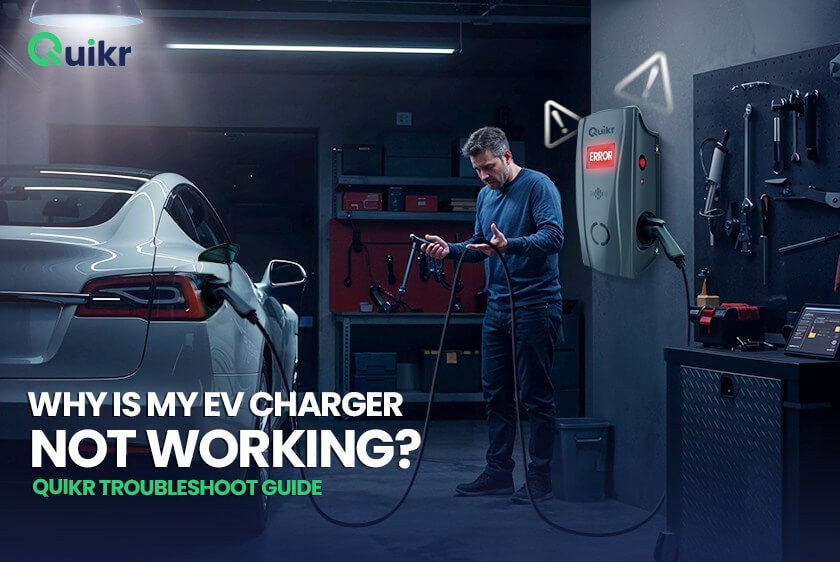
When your EV charger is not working, start with these simple checks. Many drivers skip them, but they often solve the issue in minutes.
- Is the charger plugged in? Sometimes the plug is loose or not fully inserted. Unplug, then plug back in firmly.
- Is the power outlet working? Test the outlet with another device (like a lamp) to see if it has power.
- Are all lights on the charger normal? Check for flashing or red lights. Most chargers have a label explaining what the lights mean.
- Is the charging cable damaged? Look for cuts, frays, or bent pins.
- Is your EV’s port clean? Dirt or water can block the connection. Wipe gently with a dry cloth.
These steps fix many basic problems. If charging still fails, continue with deeper troubleshooting.
Common Causes Of Ev Charger Failure
Understanding why your EV charger is not working helps you solve the problem faster. Below are the most common reasons, with clear explanations and examples.
1. Power Supply Issues
If your charger gets no power, it cannot charge your EV. This happens due to:
- Tripped circuit breaker: High power use can trip breakers. Check your home’s fuse box.
- Blown fuse: Older wiring may blow fuses, stopping power flow.
- Loose connections: Wires can loosen over time or after storms.
Example: A homeowner installed a Level 2 charger, but it stopped working after plugging in a heater in the same garage. The circuit was overloaded, and the breaker tripped.
2. Faulty Charging Cable Or Connector
The cable and plug are exposed to weather, bending, and dirt. Over time, this can cause:
- Bent or broken pins
- Frayed insulation
- Connector won’t fit snugly
Non-obvious insight: Even a slightly bent pin can stop charging, but it may not be visible unless you look closely.
3. Vehicle Communication Error
Modern EVs and chargers “talk” to each other before charging. If there’s a problem, charging stops.
- Software mismatch: Some cars need a software update to work with new chargers.
- Loose or dirty connection: The metal pins must touch correctly.
Example: Some 2023 EV models had a bug that made them reject certain public chargers until a software update fixed it.
4. Environmental Factors
Weather and surroundings can cause trouble.
- Rain or moisture: Water in the port or plug can block power or cause safety shutdowns.
- Extreme temperatures: Very cold or hot conditions may cause the charger to pause charging.
Practical tip: If charging outdoors, check for water in the connectors, especially after rain.
5. Charger Hardware Failure
Chargers, like any device, can break.
- Burned-out components: Older chargers may fail after years of use.
- Internal wiring damage: Sometimes, animals chew on wires, especially in garages.
6. User Error
It’s easy to overlook simple mistakes.
- Wrong charging settings in the car: Some cars let you set charging limits, schedules, or delays.
- Not starting the charging session: At some public stations, you must use an app or card to start.
Non-obvious insight: A scheduled charging time set accidentally in your car’s app can prevent immediate charging, making you think the charger is broken.
Step-by-step Troubleshooting Guide
If your charger still does not work, follow these steps to find the problem. Each step gets more detailed.
Step 1: Check The Charger And Outlet
- Unplug the charger and plug in a different device to the same outlet.
- Try the charger in another outlet if possible.
- Reset any tripped breakers or replace blown fuses.
Step 2: Inspect The Cable And Connectors
- Examine the cable for cuts or damage.
- Check for bent or dirty pins in the plug and the car’s charging port.
- Clean pins gently with a dry cloth—never use water or sprays.
Step 3: Restart Everything
- Unplug the charger from both the wall and your car.
- Wait 30 seconds, then plug in again.
- Restart your car’s infotainment or charging system if possible.
Step 4: Check For Software Issues
- See if your car or charger needs a software update.
- Visit your EV’s settings and look for “software update” or “firmware update” options.
- Some chargers have apps for updates—check your manual.
Step 5: Test A Different Charger Or Vehicle
- Try charging at a different location or with a different charger.
- If possible, use another EV with your charger to see if the problem is with the car or the charger.
Step 6: Review Charging Settings
- Check your car’s app or dashboard for scheduled charging times or limits.
- Turn off any delays or restrictions and try again.
Step 7: Contact Support
If all else fails, call your EV or charger manufacturer’s support line. Have these details ready:
- Charger model and serial number
- Exact error lights or messages
- Steps you have already tried
Credit: quikrev.com
Comparing Home And Public Ev Charger Problems
The problems with EV chargers can look similar, but home and public stations have different challenges. Here is a comparison for clarity:
| Problem Type | Home Chargers | Public Chargers |
|---|---|---|
| Power Supply Issues | Common (breaker, wiring, fuses) | Rare (managed by station) |
| Hardware Failure | Charger or outlet damage | Station hardware, damaged cable |
| User Error | Settings, timer, plug not inserted fully | App login, payment not complete |
| Software Issues | Needs updates, car-compatibility | Firmware, car-compatibility |
When To Call A Professional
You can solve many problems yourself, but call an electrician or service professional if:
- The charger smells burnt or makes strange noises
- You see sparks or smoke
- The circuit breaker trips repeatedly
- You find exposed wires
Warning: Trying to repair charger hardware without training is dangerous. Always turn off power before touching electrical connections.
Credit: www.youtube.com
Preventing Ev Charger Issues
A little care can prevent most charging problems and keep your EV running smoothly.
- Regularly check cables and plugs for damage or wear.
- Clean the charging port and plug gently every few weeks.
- Update software for both your car and charger when available.
- Don’t overload circuits by plugging in other high-power devices in the same outlet.
- Store portable chargers in a dry, safe place.
Maintenance Checklist Example
Here’s a sample schedule for home chargers:
| Task | How Often | What to Do |
|---|---|---|
| Check Cable Condition | Monthly | Look for cuts, frays, or bent pins |
| Clean Connectors | Every 2 months | Wipe with dry cloth |
| Check Software Updates | Quarterly | Update car and charger firmware |
| Test Different Outlet | Yearly | Ensure outlet is not worn or loose |
Advanced Tips For Troubleshooting
Sometimes, even after basic checks, your EV charger still doesn’t work. Here are some advanced steps that experienced EV owners use:
- Check charging station network status: For public chargers, visit the operator’s website or app to see if the station is down for maintenance.
- Try a different charging speed: Some cars let you select the charging rate. Lowering it can help if the circuit is weak.
- Test with a different cable: If you have a portable charger, try swapping the cable to rule out cable problems.
- Use a surge protector: Sudden power spikes can damage chargers. Install a surge protector for home units.
Non-obvious insight: In rare cases, local utility companies change voltage during peak hours, which can confuse some chargers. If you notice charging stops at certain times, ask your utility provider.
Credit: content.govdelivery.com
What To Do If Nothing Works
If you have tried all steps and your charger is still not working, document everything. Take photos of error lights, messages, and the charger itself. This record helps professionals diagnose the problem faster. Contact the charger’s manufacturer or your car dealer and provide all details.
For public charging problems, report the issue through the station’s app or phone number. This helps them fix the station for others and may lead to compensation if you paid but did not receive charging.
For more information about EV charging standards and troubleshooting, you can visit the official Alternative Fuels Data Center.
Frequently Asked Questions
Why Does My Ev Charger Show A Red Light?
A red light usually means a fault, such as a power problem, cable issue, or overheating. Check your charger’s manual for the exact meaning. Try unplugging and plugging back in. If the light stays red, contact support.
Can I Repair A Damaged Ev Charging Cable?
Repairing cables is not recommended due to safety risks. Damaged insulation or connectors can cause shocks or fires. Always replace the cable with an official part from your charger’s manufacturer.
Why Does My Ev Only Charge At Some Stations?
Some public chargers are not compatible with all EVs, especially older models. Also, software bugs or station errors can block charging. Try updating your car’s software and check for network issues at the station.
What Does It Mean If Charging Starts, Then Stops Suddenly?
Intermittent charging often means a loose connection, overheating, or a circuit breaker tripping. Check all plugs, make sure the outlet is good, and let the charger cool down before trying again.
Is It Safe To Use An Extension Cord With My Ev Charger?
Extension cords are not recommended for EV charging. They may overheat, cause power drops, or create a fire risk. Always plug chargers directly into a proper outlet.
If you follow these steps and tips, you’ll solve most EV charger not working problems quickly and safely. This keeps your electric vehicle reliable and your charging routine smooth.