
When people talk about trucks in America, two names always come up: Ford and Chevy. These brands have battled for decades to win the trust, loyalty, and dollars of truck buyers. For many, choosing between them is not just about horsepower or price—it’s about family tradition, work needs, and even regional pride. But if you’re looking for your next pickup, it pays to look past the rivalry and focus on what really matters to you.
This guide dives deep into the Ford vs Chevy truck comparison. We’ll look at important factors like performance, reliability, towing, comfort, technology, cost, and more. Whether you’re a first-time buyer or a long-time truck user, you’ll get a clear picture of how these two brands stack up in 2024.
Brand Legacy And Reputation
The Ford F-Series, especially the F-150, has been America’s best-selling truck for over 40 years. It’s often seen as the “default” truck, trusted by everyone from farmers to construction crews to suburban families. Ford’s reputation is built on innovation, like the introduction of the aluminum body in 2015, and constant updates to engines and technology.
Chevy, with its Silverado line, is not far behind. Chevy trucks have a legacy of dependability and ruggedness. Many Chevy owners say their trucks run strong even after 200,000 miles. The rivalry is so close that brand loyalty can be as strong as sports team loyalty.
But legacy alone doesn’t help you haul a trailer or handle a muddy job site. Let’s compare the details.
Engine Power And Performance
Both brands offer a range of engines to suit different needs. From efficient V6s to powerful V8s and even diesel options, there’s a lot to consider.
| Model | Base Engine | Top Engine | Max Horsepower | Max Torque (lb-ft) |
|---|---|---|---|---|
| Ford F-150 | 3.3L V6 | 3.5L EcoBoost V6 | 450 | 570 |
| Chevy Silverado 1500 | 2.7L Turbo I4 | 6.2L V8 | 420 | 460 |
Ford offers more engine choices, including a hybrid powertrain that combines strong towing with better fuel economy. The 3.5L EcoBoost V6 is known for its quick acceleration and high towing capacity. The hybrid can tow up to 12,700 lbs while offering up to 24 mpg combined.
Chevy’s top 6. 2L V8 delivers a classic muscle feel, with great sound and smooth power. Their 3. 0L Duramax diesel is a hidden gem, providing excellent torque and up to 33 mpg highway (2WD models).
Non-obvious insight: Ford’s 10-speed automatic transmission (shared with GM but tuned differently) generally shifts quicker and smoother, especially in city driving.
Credit: www.eagfordnavasota.com
Towing And Payload Capabilities
If you plan to tow boats, trailers, or work equipment, these numbers matter.
| Model | Max Towing Capacity (lbs) | Max Payload (lbs) |
|---|---|---|
| Ford F-150 | 14,000 | 3,325 |
| Chevy Silverado 1500 | 13,300 | 2,280 |
Ford leads in both towing and payload, especially with its heavy-duty packages. This is important for those who haul heavy trailers or need to carry lots of materials in the bed. Chevy, while not far behind, focuses more on a balanced approach between comfort and capability.
Common mistake: Many buyers focus only on towing numbers and forget that the truck’s configuration (cab size, bed length, 2WD vs 4WD) can lower the actual capacity. Always check the exact model you plan to buy.
Ride Comfort And Interior Quality
Modern trucks are more comfortable than ever. Both Ford and Chevy have worked hard to make their interiors inviting for long drives, family trips, or daily commutes.
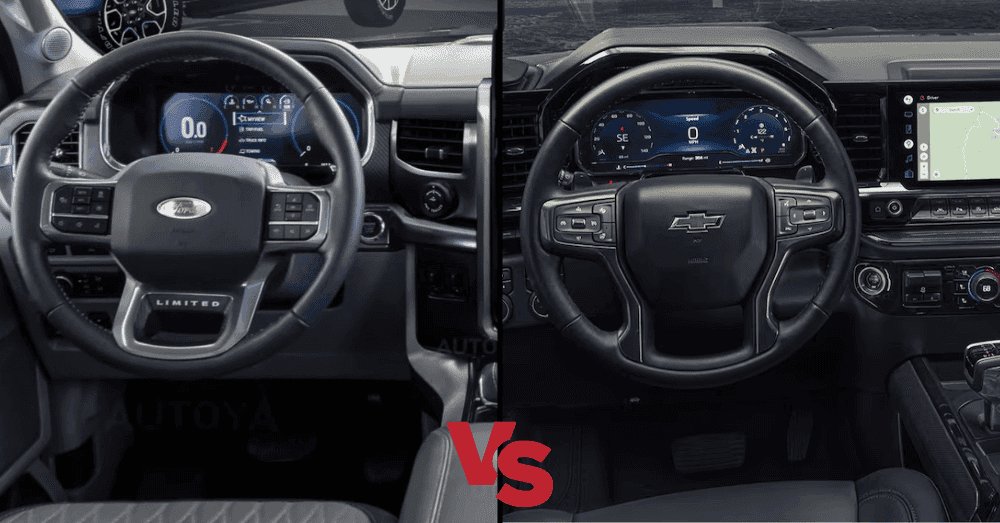
Ford’s F-150 is known for its spacious cab, especially in crew-cab models. The seats are supportive, and higher trims offer massage features, ventilated leather, and a panoramic sunroof. The ride is smooth, and road noise is kept low.
Chevy’s Silverado has improved a lot in recent years. The latest models offer larger touchscreens (13.4 inches in some trims), more soft-touch materials, and clever storage options. The ride is a bit firmer, which some people like for a sportier feel, but it can be less forgiving on bumpy roads.
Non-obvious insight: Ford offers the unique fold-flat front seats—these can lay almost totally flat for naps or overnight breaks, which is a plus for road trippers and workers.
Technology And Infotainment
Truck buyers now expect the same technology as luxury cars. Let’s see how Ford and Chevy deliver.
- Ford’s SYNC 4 system comes with a 12-inch or optional 15.5-inch touchscreen, wireless Apple CarPlay and Android Auto, and over-the-air updates.
- Chevy’s Infotainment 3 system offers a 13.4-inch touchscreen in higher trims, Google Built-In, and a head-up display.
- Both brands include Wi-Fi hotspots, multiple USB ports, and premium audio options.
Ford’s system feels a bit more responsive and is easier to use while driving. Chevy’s voice assistant and Google integration are strong points.
Common mistake: Buyers sometimes skip testing the infotainment system during a test drive. Try pairing your phone and using navigation or music apps to see what works best for you.
Safety Features And Ratings
Safety is a big selling point, especially for families. Modern trucks offer advanced driver aids, but there are differences.
- Ford includes Pre-Collision Assist, lane-keeping, adaptive cruise control, and available BlueCruise (hands-free driving on certain highways).
- Chevy offers Forward Collision Alert, lane departure warning, and Super Cruise (hands-free driving on mapped roads, available on higher trims).
Both trucks earn strong crash-test ratings from the NHTSA and IIHS. However, Ford usually has more safety features as standard, especially on lower trims. Chevy sometimes requires you to pay extra or move to a higher trim for advanced features.
Fuel Economy
Fuel costs are a major part of truck ownership. Here’s how the main engines compare for 2024 (EPA estimates, 2WD):
- Ford F-150 3.5L Hybrid: 25 mpg city / 26 mpg highway
- Chevy Silverado 3.0L Diesel: 24 mpg city / 29 mpg highway
- Ford F-150 2.7L EcoBoost: 20 mpg city / 26 mpg highway
- Chevy Silverado 2.7L Turbo: 19 mpg city / 22 mpg highway
Ford’s hybrid leads for gas engines, but Chevy’s diesel gives the best highway mileage. These numbers drop with 4WD or heavy towing.
Non-obvious insight: Real-world fuel economy can be 10–20% lower if you carry a lot of weight, use 4WD, or idle often. Test drive for a week if you can, or ask owners in your area.
Long-term Reliability And Cost Of Ownership
Trucks are a big investment, so long-term reliability is key.
- Ford F-150 is generally reliable, but early EcoBoost engines had issues with timing chains and condensation. These are mostly fixed in newer models.
- Chevy Silverado trucks have strong V8s, but some owners report issues with the 8-speed automatic transmission (rough shifts), especially in 2016–2019 models.
- Both brands have improved their warranties: 3 years/36,000 miles bumper-to-bumper, 5 years/60,000 miles powertrain.
Maintenance and repair costs are similar, though Ford parts can sometimes be a bit pricier. Chevy’s simple V8s are easy to service for independent shops.
Extra tip: Check the local dealer network. In rural areas, Ford dealers might outnumber Chevy, or vice versa, making service easier.
Credit: www.parksrichmond.com
Price, Value, And Resale
Prices can be confusing due to so many trims and options. Here’s a basic comparison for 2024 crew-cab, 4WD, mid-level trims:
| Model | Starting Price (USD) | Top Trim Price (USD) | Estimated 5-Year Resale Value (%) |
|---|---|---|---|
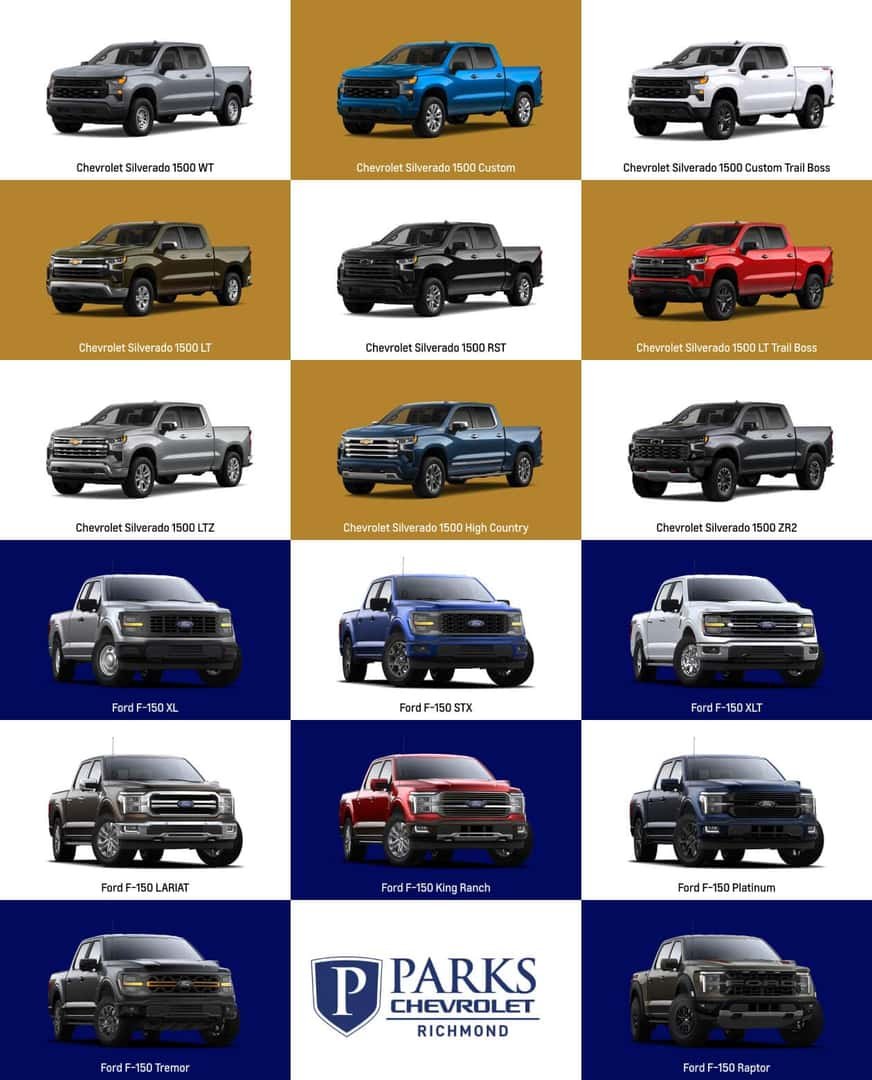
| Ford F-150 | ~$46,000 | ~$78,000 | ~60 |
| Chevy Silverado 1500 | ~$45,000 | ~$75,000 | ~56 |
Ford tends to hold value slightly better, especially in popular trims like XLT and Lariat. Chevy offers more frequent discounts and incentives, which can lower the initial cost.
Common buyer mistake: Comparing only the sticker price. Look at total cost, including insurance, maintenance, and resale. Some features that seem expensive (like advanced safety or hybrid engines) can save money over time.
Off-road And Special Models
Both Ford and Chevy have special trucks for off-roading.
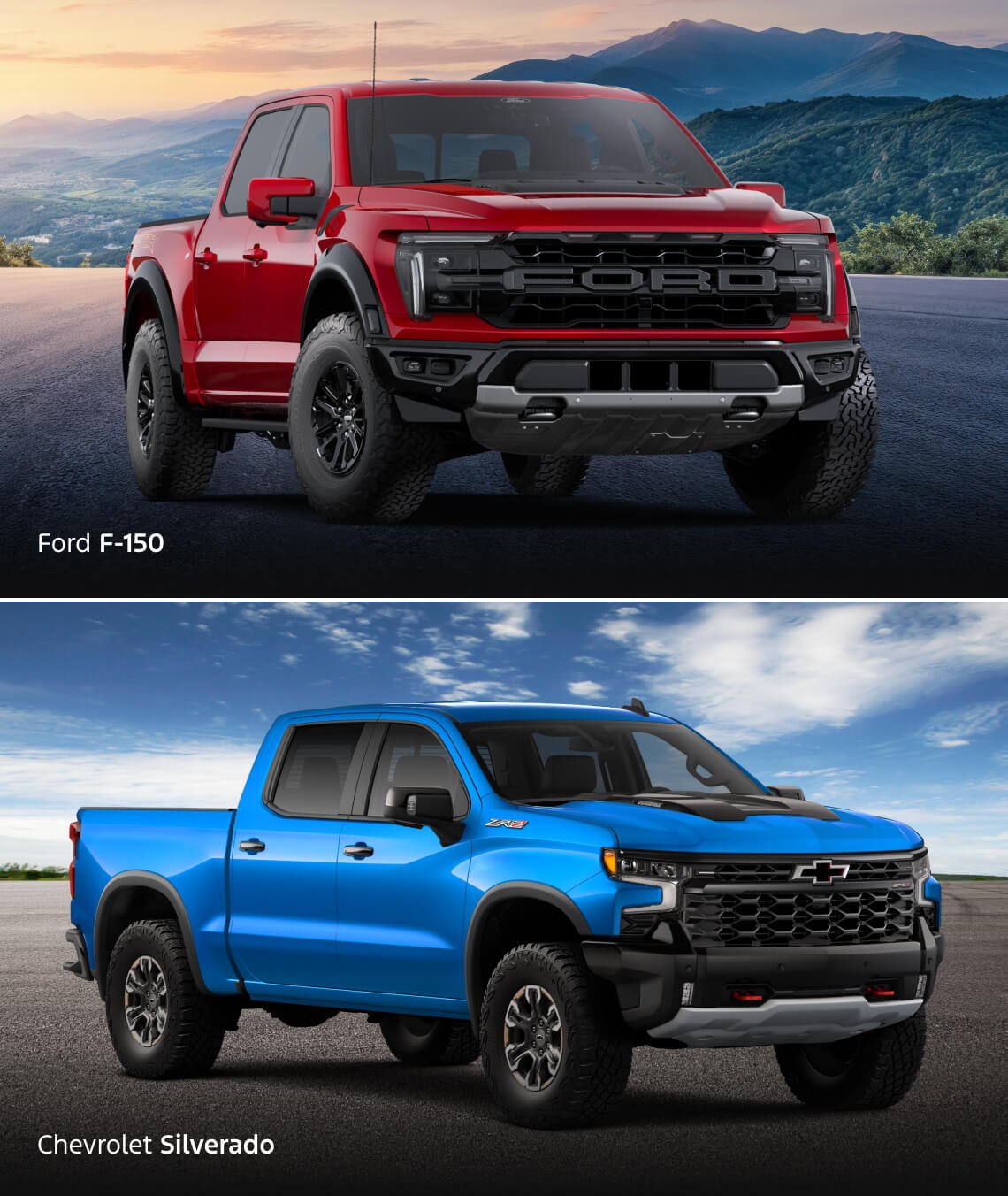
- Ford F-150 Raptor: Wide stance, 450 hp, Fox shocks, and off-road tires make it a beast in the desert.
- Chevy Silverado ZR2: Locking front/rear differentials, Multimatic shocks, and underbody protection for rocky trails.
Ford’s Raptor is more extreme, but the ZR2 is better for crawling over rocks and narrow trails. Both can tow and carry loads, but their off-road gear lowers payload and towing compared to standard trucks.
If you want a factory-built off-roader, both brands deliver—just know you’ll pay more, and the ride is stiffer.
Credit: www.wallacefordofkingsport.com
Customization And Aftermarket Support
Truck owners love to modify. Both Ford and Chevy offer lots of factory accessories: bed liners, step bars, toolboxes, lighting, and more. The aftermarket world is huge—lift kits, exhaust systems, performance chips, you name it.
Ford’s F-150 has a slight edge in aftermarket parts just because it sells more units. This means more choices and sometimes lower prices for things like wheels or bumpers.
Practical tip: If you plan to customize heavily, ask about warranty impacts. Some dealers are strict if you lift the truck or add non-factory electronics.
Which Is Right For You?
Ford and Chevy trucks are both great, but each has strengths:
- Choose Ford if you want more engine options, higher towing and payload, a smoother ride, or the best hybrid.
- Choose Chevy if you want a classic V8, great diesel fuel economy, or prefer a firmer, sportier feel.
Your best bet is to test drive both with your family or coworkers, load up the bed, and see which one feels right. The perfect truck is the one that fits your needs, not just the one with the biggest badge.
For more details on specifications and history, check out the Ford F-Series Wikipedia page.
Frequently Asked Questions
Which Truck Lasts Longer, Ford Or Chevy?
Both Ford and Chevy trucks can last over 200,000 miles with good maintenance. Some studies show Ford has a slight edge in long-term durability, but the difference is small. How you maintain and drive the truck matters most.
Is The Ford F-150 Hybrid Worth It?
The F-150 hybrid offers strong towing, better fuel economy, and a built-in generator for work sites or camping. If you need these features or drive a lot of miles, it’s a smart choice. If you mostly drive short trips, the extra cost may not pay off.
Which Is Better For Towing: Ford Or Chevy?
Ford F-150 has the highest towing capacity in its class, up to 14,000 lbs. Chevy Silverado is close, at 13,300 lbs. For most uses, both are more than enough. Always check your specific truck’s rating, as options and trims affect capacity.
Are Ford Or Chevy Trucks Cheaper To Insure?
Insurance costs depend on your location, driving history, and coverage. In general, Ford and Chevy have similar insurance rates, but Ford’s advanced safety features may help lower costs for some drivers.
Do Ford Or Chevy Trucks Have More Problems?
Both brands have some reported issues—older Ford EcoBoost engines and Chevy’s 8-speed transmissions, for example. Newer models are much improved. Reliability is similar overall, so regular maintenance is your best defense.
Choosing between Ford and Chevy trucks is not easy, but knowing the facts helps. Take your time, compare real-world performance, and pick the truck that fits your work and lifestyle. The right choice will serve you well for years to come.