
Many car owners want their engines to last longer and run smoothly. One simple but important way to do this is by changing the engine oil regularly. But how often should you change full synthetic oil? There are many opinions, and even some myths, about the right oil change interval. Some say every 3,000 miles, while others claim you can wait much longer. This article will help you understand what really matters for full synthetic oil change intervals, explain the key factors, and clear up confusion so you can protect your car and save money.
What Is Full Synthetic Oil?
Full synthetic oil is a type of engine lubricant made from chemically engineered base oils. Unlike conventional oil, which comes from refined crude oil, synthetic oil is made in a lab. This makes it more pure and consistent. Additives are also mixed in to help the oil last longer, reduce friction, and clean the engine.
The main benefits are:
- Better engine protection at high and low temperatures
- Longer lifespan compared to regular oil
- Improved fuel efficiency
- Cleaner engine parts
Because of these advantages, full synthetic oil is often used in newer cars, high-performance vehicles, and those that drive in tough conditions.
Recommended Full Synthetic Oil Change Intervals
There is no single answer for all cars. However, most experts and car makers give a general range for full synthetic oil change intervals:
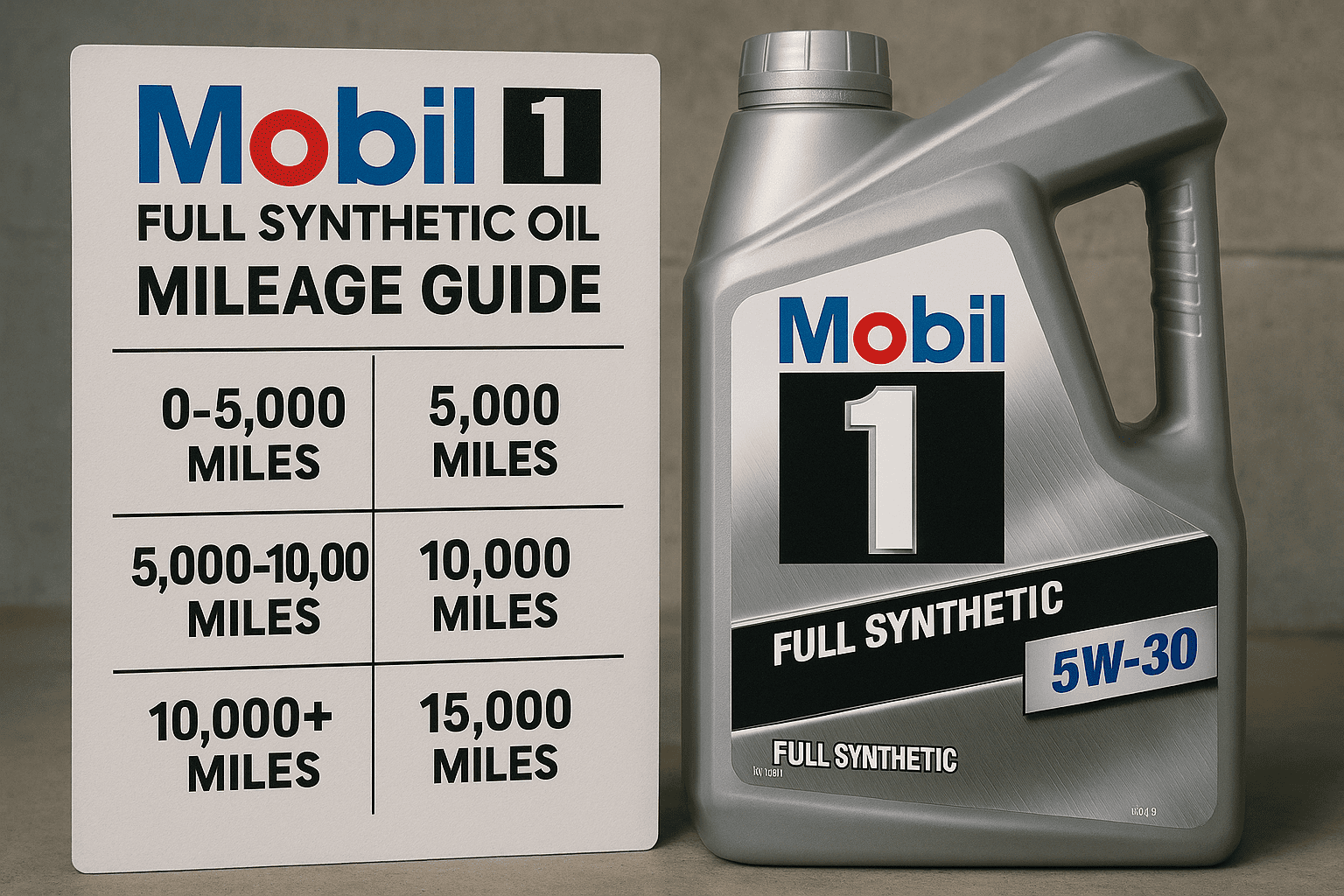
- Every 7,500 to 10,000 miles (12,000 to 16,000 kilometers)
- Every 6 to 12 months, even if you drive less
Some newer cars can go even longer, up to 15,000 miles, but only if you use the right oil and follow the owner’s manual. Changing oil too late can cause engine wear, while changing too often is a waste of money.
Below is a comparison between full synthetic, synthetic blend, and conventional oil intervals.
| Oil Type | Typical Change Interval (Miles) | Interval (Months) |
|---|---|---|
| Full Synthetic | 7,500–10,000 | 6–12 |
| Synthetic Blend | 5,000–7,500 | 6 |
| Conventional | 3,000–5,000 | 3–6 |
Why Does Synthetic Oil Last Longer?
Synthetic oil is engineered to resist breakdown from heat, moisture, and contaminants. It keeps its protective qualities much longer than standard oil. Some reasons for this longer lifespan include:
- Uniform molecules: Fewer impurities and a more stable structure
- Better additives: Extra chemicals protect against rust, sludge, and wear
- High-temperature stability: Stays effective even when the engine is hot
Because of these features, synthetic oil can keep working well for thousands more miles compared to regular oil.
Factors That Affect Oil Change Intervals
Not all cars and drivers are the same. Here are some key factors that can change how often you should change full synthetic oil:
1. Manufacturer’s Recommendations
Always check your car’s owner’s manual. Car makers test their engines and know the best interval. Some brands, like BMW and Toyota, allow longer intervals with synthetic oil, while others are more conservative.
2. Driving Habits
How and where you drive matters. Short trips, stop-and-go traffic, or frequent towing put more stress on oil. This is called severe driving and may require more frequent oil changes. Highway driving is easier on oil, so you can often go the full interval.
3. Engine Age And Condition
Older engines may burn or leak oil, or have more sludge. Synthetic oil helps, but older engines may still need oil changes more often.
4. Oil Quality
Not all synthetic oils are the same. Look for oils that meet API (American Petroleum Institute) or ACEA (European Automobile Manufacturers’ Association) standards. Higher-quality oils can last longer.
5. Climate
Extreme heat or cold can break down oil faster. If you live in a very hot or cold region, consider changing oil a bit sooner.
6. Oil Filter Quality
A poor oil filter can let dirt and particles circulate, reducing oil life. Always change the oil filter with the oil.
7. Vehicle Type
High-performance cars, trucks, and those that tow heavy loads may need more frequent oil changes, even with synthetic oil.
Credit: heavyvehicleinspection.com
Signs You Need An Oil Change Sooner
Sometimes, you should change oil before the recommended interval. Watch for these signs:
- Check Engine or Oil Light: Modern cars have sensors that warn you when oil is low or dirty.
- Strange Engine Noises: Knocking or ticking sounds can mean oil is not protecting parts.
- Dark, Dirty Oil: Check the dipstick. Clean oil is amber; dirty oil is dark.
- Poor Engine Performance: If the car feels sluggish or uses more gas, oil might be old.
- Excess Exhaust Smoke: Blue or gray smoke can mean oil problems.
Common Myths About Synthetic Oil Change Intervals
Many car owners believe outdated or incorrect ideas. Here are some common myths:
Myth 1: Synthetic Oil Must Be Changed Every 3,000 Miles
This was true for old oils, but not today. Most synthetic oils last much longer.
Myth 2: Switching To Synthetic Oil Causes Leaks
Modern synthetic oils are safe for old and new engines. They clean better, which might expose leaks, but they do not cause them.
Myth 3: All Synthetic Oils Are The Same
There are big differences in quality and price. Always choose oil that meets your car’s specifications.
Myth 4: Once A Year Is Always Enough
If you drive very little, oil can still break down from moisture and age. Even low-mileage cars need oil changes at least once a year.

Credit: heavyvehicleinspection.com
How To Check Oil Life
Many new cars have oil life monitors. These systems use sensors and algorithms to estimate when oil needs changing. If your car has this feature, follow its alerts, but still check the oil level and color monthly.
For cars without monitors, use the dipstick:
- Park on a level surface and let the engine cool.
- Pull out the dipstick, wipe it, reinsert, then pull out again.
- Check oil level and color—amber is good, dark and gritty means change it.
Cost Comparison: Synthetic Vs. Conventional Oil Changes
Synthetic oil changes cost more upfront, but may save money over time due to less frequent changes.
| Oil Type | Typical Change Interval | Average Cost per Change (USD) | Annual Cost (2 oil changes/year) |
|---|---|---|---|
| Full Synthetic | 7,500 miles | $70 | $140 |
| Conventional | 3,000 miles | $40 | $240 |
Non-obvious insight: Even though synthetic oil changes are more expensive each time, you need fewer per year, which often results in similar or lower annual costs.
Mistakes To Avoid With Synthetic Oil Changes
Many drivers make mistakes when switching to or maintaining full synthetic oil. Here are some to watch out for:
- Ignoring the owner’s manual: Always use the interval and oil type recommended for your car.
- Forgetting the oil filter: A dirty filter can ruin clean oil.
- Mixing oil types: Do not mix synthetic with conventional oil unless it’s an emergency.
- Relying only on mileage: Consider driving habits and conditions, not just the odometer.
- Delaying oil changes: Old oil can cause costly engine damage, even if you use synthetic.
Synthetic Oil And Engine Warranty
Many car makers now require or recommend full synthetic oil, especially for turbocharged or high-performance engines. If you do not follow the recommended oil type and change interval, you may void your engine warranty. Always keep records of oil changes, including receipts, as proof.

Credit: www.aaa.com
Environmental Benefits Of Extended Oil Change Intervals
Longer intervals mean less oil is used and less waste is created. According to the American Petroleum Institute, used motor oil from just one oil change can contaminate a million gallons of fresh water. By extending oil change intervals safely, you help protect the environment.
Is Synthetic Oil Always Worth It?
Synthetic oil is often the best choice for most modern cars. However, for very old vehicles or classic cars, conventional oil may be fine. Always check the owner’s manual and consider your driving needs.
For more technical details, you can explore the Wikipedia page on synthetic oil.
Practical Tips For Extending Oil Life
- Warm up your engine in cold weather before driving hard.
- Fix leaks quickly to keep oil clean and at the right level.
- Check oil level monthly, even between changes.
- Use high-quality filters and oil brands recommended by your car maker.
- Drive smoothly—hard driving creates more engine stress and oil breakdown.
Frequently Asked Questions
How Often Should I Change Full Synthetic Oil If I Drive Very Little?
Even if you drive less than 5,000 miles per year, change full synthetic oil at least once a year. Oil ages due to moisture, heat cycles, and time, not just distance.
Can I Switch From Conventional To Full Synthetic Oil Anytime?
Yes, you can switch to full synthetic oil during your next oil change. No special steps are needed. Synthetic oil is compatible with most engines.
Does Full Synthetic Oil Improve Fuel Economy?
Yes, full synthetic oil can improve fuel economy by reducing friction and keeping the engine cleaner, but the difference is usually small—often around 2%.
Will Using Synthetic Oil Void My Car’s Warranty?
No, as long as you use oil that meets your manufacturer’s specifications and change it at the recommended interval, your warranty stays valid.
What’s The Best Way To Know When To Change Synthetic Oil?
Follow your owner’s manual, use your car’s oil life monitor if available, and check your oil level and color monthly. When in doubt, it’s safer to change a bit early.
Keeping your engine healthy is simple if you understand the real facts about full synthetic oil change intervals. Use the right oil, follow your car maker’s advice, and pay attention to how and where you drive. This small effort will help your car run smoothly for years and save you money in the long run.