
- Every engine needs four basics to start: battery power, fuel, air, and ignition spark.
- Begin with the battery and terminals — weak power or corrosion is the most common no-start cause.
- A flashing security or key symbol can mean the anti-theft system is preventing the car from starting.
- Check the air filter and intake hoses for blockages, especially on cars parked for a long time.
- Using a methodical step-by-step check saves time, money, and often avoids a tow.
When your car won’t start, it can ruin your whole day. You turn the key or push the button, but nothing happens—maybe there’s a clicking sound, or maybe it’s completely silent. This situation can make you feel frustrated, especially if you don’t know much about cars.
But most “no start” problems can be tracked down with some simple steps. You don’t need to be a mechanic to figure out what’s wrong. With a methodical approach, you can save time, money, and maybe even avoid a costly tow.
Below, I’ll guide you through how to diagnose why your car won’t start. You’ll learn what to look for, how to check common systems, and when to ask for help. Let’s break down the process so you can get your car running again—or at least know what to tell the repair shop.
Understanding The Basics: Why Cars Won’t Start
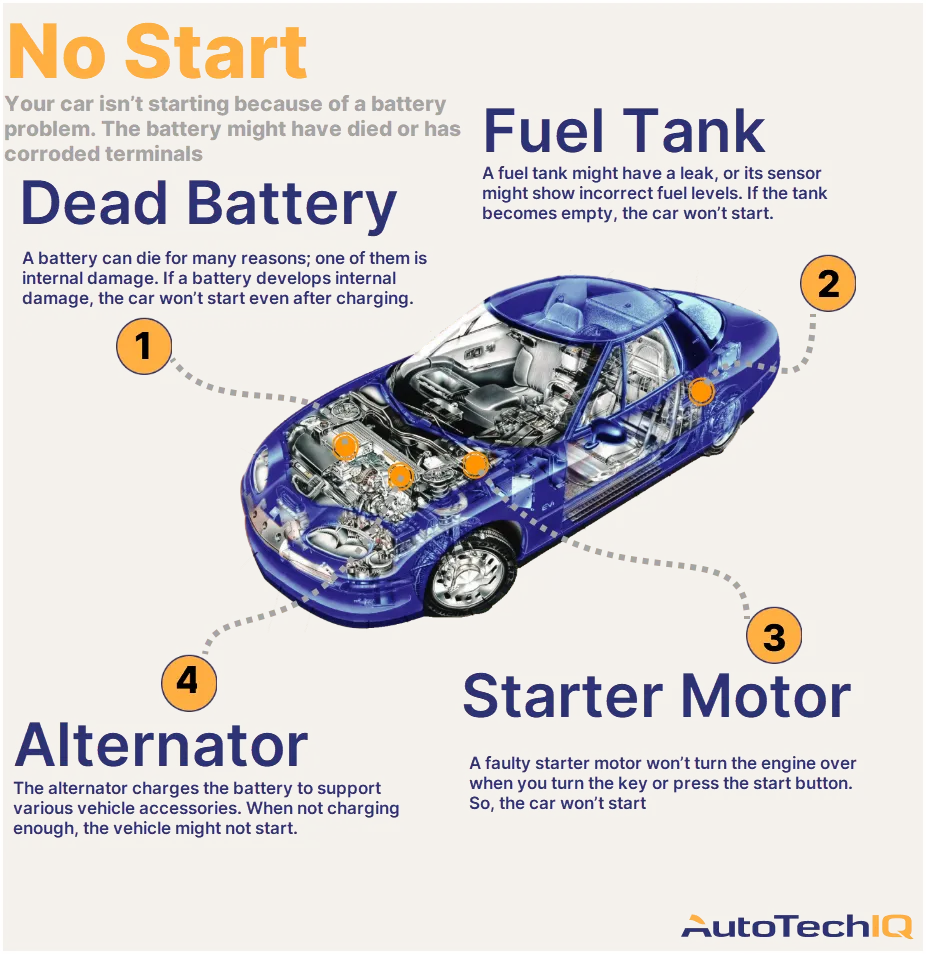
Every car needs four basic things to start:
- Battery power
- Fuel
- Air
- Ignition (spark)
If one of these is missing or fails, your car likely won’t start. Sometimes, it’s something simple like a dead battery. Other times, it could be more complex, like a failed fuel pump. Knowing where to begin helps you narrow down the cause.
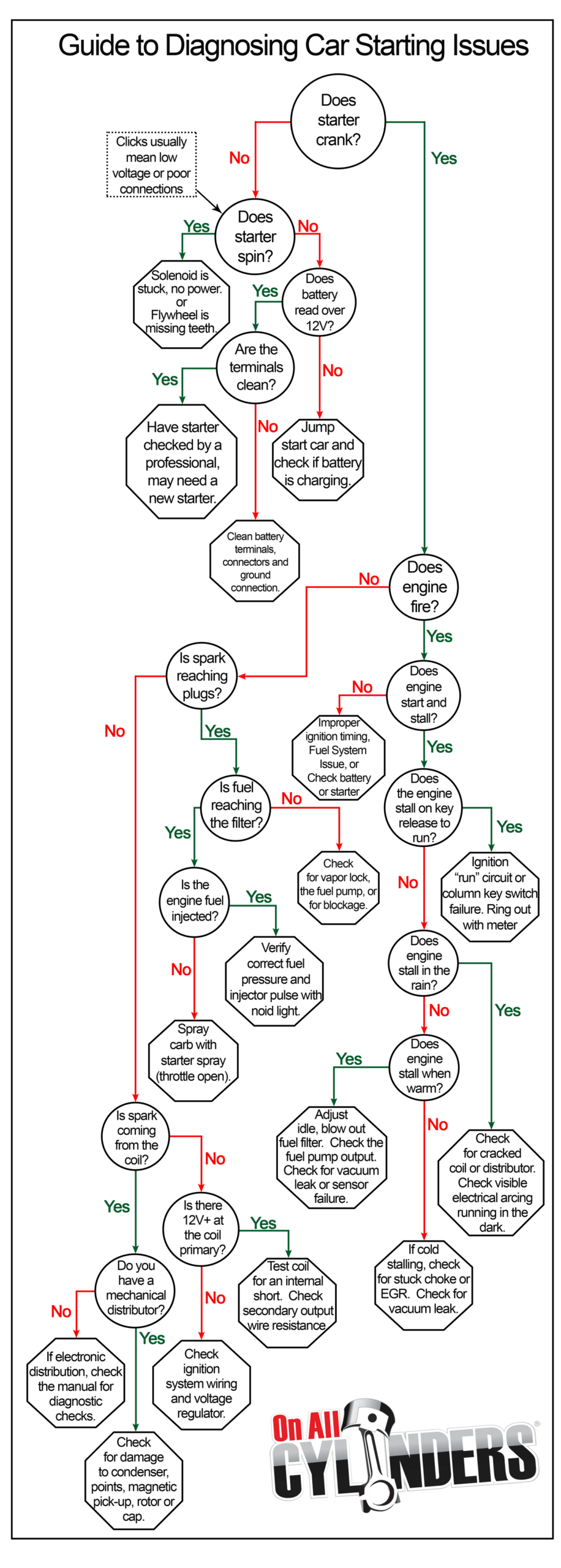
Step 1: Observe What Happens When You Try To Start
Before grabbing any tools, pay attention to what you hear and see:
- Does the engine crank (turn over) or is it silent?
- Do you hear a single click, rapid clicks, or nothing at all?
- Are dashboard lights dim or flickering?
- Is there a “check engine” or security light flashing?
These clues point to different problems. For example, a silent car with no lights probably has a battery issue, while a car that cranks but doesn’t start may have a fuel or ignition problem.
Step 2: Check The Battery And Electrical System
The most common reason a car won’t start is a dead or weak battery. Batteries usually last 3-5 years, but extreme temperatures, leaving lights on, or a faulty alternator can drain them sooner.
How To Check The Battery
- Turn on headlights or interior lights. If they’re dim or don’t work, the battery is likely dead.
- Listen for a clicking sound. A rapid clicking noise means the starter is not getting enough power.
- Use a multimeter. A healthy battery should show about 12.6 volts when the car is off.
- Check battery terminals. Corrosion or loose connections can stop power from flowing.
Jump-starting The Car
If you suspect a dead battery, try jump-starting. Use jumper cables and another car or a portable jump starter. If your car starts, the battery was the issue—but don’t ignore it. It could mean your battery or alternator needs replacing.
Table: Common Battery Readings
| Voltage | Battery Condition | Action Needed |
|---|---|---|
| 12.6V or higher | Fully charged | No action |
| 12.4V – 12.5V | Partially charged | Recharge soon |
| 12.0V – 12.3V | Low charge | Recharge/Check for issues |
| Below 12.0V | Discharged | Jump-start or replace |
Non-obvious tip: Sometimes, battery connections look clean but are loose. Wiggle the cables gently to ensure they’re tight.
Step 3: Test The Starter Motor
If the battery is good but you only hear a single click, the starter motor may be the problem.
Signs Of A Bad Starter
- Loud single click when turning the key
- Lights and radio work, but engine doesn’t turn over
- Sometimes, tapping the starter with a tool can get it working (only as a temporary fix)
Starters usually last over 100,000 miles, but they can fail earlier. If you suspect the starter, you’ll likely need a mechanic’s help to replace it.
Credit: www.onallcylinders.com
Step 4: Inspect The Fuel System
If your car cranks (turns over) but doesn’t start, fuel delivery may be the culprit.
What To Check
- Is there gas in the tank? It sounds simple, but it’s easy to forget, especially with a faulty fuel gauge.
- Listen for the fuel pump. When you turn the key to “ON” (not start), you should hear a faint humming sound from the fuel tank for a few seconds.
- Check for fuel leaks or a strong gasoline smell. Leaks can cause pressure loss.
- Try starter fluid. Spraying a small amount into the air intake and then cranking the engine can help determine if fuel delivery is the issue (engine may briefly run, then stall).
Table: Common Fuel Delivery Symptoms
| Symptom | Possible Cause | Quick Test |
|---|---|---|
| No pump sound | Failed fuel pump | Listen at fuel filler cap |
| Strong fuel smell | Leaking lines or injectors | Check under car for puddles |
| Engine runs with starter fluid | Fuel delivery problem | Spray starter fluid, crank engine |
Non-obvious insight: Modern cars have fuel pump relays or fuses that can fail. Check your owner’s manual for their location and inspect for blown fuses.
Step 5: Check For Ignition Or Spark Problems
If the engine is getting fuel but still won’t start, the problem may be with the ignition system (spark plugs, ignition coils, or related wiring).
How To Check
- Remove a spark plug wire and insert an old spark plug, then ground it to the engine block. Have someone crank the engine—you should see a bright blue spark.
- No spark? The problem may be a failed ignition coil, a bad crankshaft position sensor, or a blown fuse.
If you’re not comfortable checking for spark, a mechanic can test this quickly. Modern engines use coil-on-plug ignition, and these parts can fail with age.
Step 6: Examine The Air Intake System
Engines need air to run. Blocked air filters or intake paths can choke your engine.
- Remove the air filter and inspect for dirt or obstructions.
- Check intake hoses for cracks, disconnections, or blockages (such as a rodent nest in cars parked for a long time).
A clogged air filter is rare but can happen, especially if you drive in dusty areas.
Step 7: Look For Security System Or Immobilizer Issues
Many cars have anti-theft systems that prevent starting without the correct key. If you see a flashing security light or “key” symbol on the dashboard, the system might be blocking your car from starting.
- Try using a spare key.
- Remove other electronic devices (key fobs, cards) from your keyring.
- Disconnect the battery for a few minutes to reset the system.
If the problem persists, you may need to visit the dealer, as reprogramming may be necessary.
Credit: ronsautorv.com
Step 8: Scan For Trouble Codes
Modern cars store error codes in their computers. Even if the check engine light is not on, a code may be stored. You can buy a simple OBD-II scanner or visit an auto parts store (many offer free code scans). According to AAA’s Approved Auto Repair program, shops that employ ASE-certified or factory-trained technicians must meet strict standards for training, equipment, and customer service.
- Plug the scanner into the port (usually under the dashboard).
- Read any codes and look them up online or in a manual.
- Codes like P0335 (crankshaft position sensor) or P0230 (fuel pump relay) can point to the exact problem.
Step 9: Inspect For Mechanical Failures
If everything else checks out, a mechanical issue could be the cause.
- Timing belt/chain failure: If the engine sounds different when cranking (like it’s spinning faster with no resistance), the timing belt may have broken. This can cause serious engine damage in some cars.
- Engine seizure: If the engine won’t turn at all, even with a good battery, the internal parts may be seized. This usually happens due to lack of oil or overheating.
These are less common, but if you suspect a major mechanical failure, don’t try to force the engine to start. Get professional help.
Credit: www.autotechiq.com
Step 10: When To Call A Mechanic
Some problems are best left to experts:
- If you’ve checked the battery, fuel, and ignition but the car still won’t start
- If you hear unusual noises (clanking, grinding)
- If the engine cranks but starts and dies immediately
- If you’re uncomfortable with any of the above steps
A good mechanic can diagnose complex issues faster, sometimes saving you money in the long run.
Quick Comparison: Most Common “no Start” Causes
Here’s a summary of the most frequent reasons cars won’t start and how to spot them.
| Problem | Symptoms | DIY Possible? |
|---|---|---|
| Dead Battery | No lights, clicks, won’t crank | Yes |
| Bad Starter | Single click, lights work | Sometimes |
| No Fuel | Cranks, no start, no pump sound | Yes |
| No Spark | Cranks, no start, no spark | Rarely |
| Security/Immobilizer | Flashing security light, no crank | Sometimes |
Two Beginner Mistakes To Avoid
- Ignoring simple fixes: Many people overlook things like an empty gas tank, a loose battery cable, or a blown fuse. Always check these first—they’re fast and cheap to fix.
- Cranking the engine too long: Repeatedly turning the key can overheat the starter or flood the engine, making the problem worse. Limit cranking to 5 seconds, then wait a minute before trying again.
Learning From The Experience
Even if you can’t fix the problem yourself, understanding what’s wrong helps you communicate with the tow truck driver or mechanic. It can also prevent you from being overcharged for unnecessary repairs. Over time, you’ll become more confident handling car troubles.
If you want a deeper dive into car starting systems, check out this helpful resource from the Automobile Engine Starting System Wikipedia page.
Frequently Asked Questions
What Should I Check First If My Car Won’t Start?
Start with the battery. Check if the lights and accessories work. If not, the battery is likely dead. If the battery is fine, move on to the starter, fuel, and ignition systems.
Can A Bad Alternator Cause My Car Not To Start?
Yes. A bad alternator won’t recharge the battery as you drive. If the battery is weak after driving, the alternator may be at fault. Replace or repair the alternator to fix the root cause.
What Does It Mean If My Car Makes A Clicking Noise But Won’t Start?
A rapid clicking noise usually means not enough power is reaching the starter. This is often due to a weak battery or poor cable connections. Try jump-starting and check the battery terminals.
Will A Blown Fuse Stop My Car From Starting?
Yes, sometimes. A blown fuse for the ignition or fuel system can prevent the engine from starting. Check your owner’s manual for the location and inspect the relevant fuses.
Is It Safe To Keep Trying To Start My Car If It Won’t Start?
No. Repeated attempts can damage the starter or flood the engine with fuel. Limit each try to 5 seconds and wait at least a minute before trying again. If it doesn’t start after a few tries, stop and diagnose the problem.
Getting your car running again can feel like a big challenge, but with these steps, you’ll have a clear path to follow. By staying calm and systematic, you can often pinpoint the cause and get help when you need it.
Whether it’s a simple battery jump or a visit to the mechanic, you’re now better prepared for the next time your car won’t start.
