
Testing car fuses with a multimeter may seem like a small task, but it can save you a lot of time, money, and hassle. Car fuses protect your vehicle’s electrical system by breaking the circuit if there’s an overload or short. When a fuse blows, things like headlights, radios, or wipers can stop working. The good news? You don’t always need a mechanic to diagnose a bad fuse. With a simple multimeter and a bit of guidance, you can test car fuses quickly and confidently—even if you’re not an expert.
Why Testing Car Fuses Matters
A car’s electrical system is like a web connecting many parts. If a fuse blows, it can stop a single feature or even strand you on the road. Sometimes, a fuse looks fine but is faulty inside. Relying only on visual checks isn’t enough.
A multimeter gives a clear answer, helping you avoid replacing the wrong part or paying for unnecessary repairs.
Tools And Safety Precautions
Before you start, gather these essential items:
- Digital multimeter (or analog, but digital is easier for beginners)
- Owner’s manual (for fuse box location and fuse ratings)
- Needle-nose pliers or a fuse puller
- Protective gloves (if you’re cautious)
- Pen and paper (for notes)
- Flashlight (if the fuse box is in a dark area)
Safety tips:
- Turn off your car and remove the key before working with fuses.
- Disconnect the battery if you want extra safety, especially for modern cars.
- Never use metal tools near battery terminals or open wires.
Understanding Car Fuses And Multimeters
A bit of background helps you test fuses with confidence.
Types Of Car Fuses
Cars use several kinds of fuses. Here’s a quick guide:
| Fuse Type | Shape | Common Use |
|---|---|---|
| Blade fuses | Flat, two prongs | Most modern cars |
| Glass tube fuses | Cylindrical, metal ends | Older vehicles |
| Ceramic fuses | Round, ceramic body | Classic European cars |
Blade fuses are the most common today. Each fuse is rated for a certain amperage (like 10A or 15A), which you can see printed on the top or side.
What A Multimeter Does
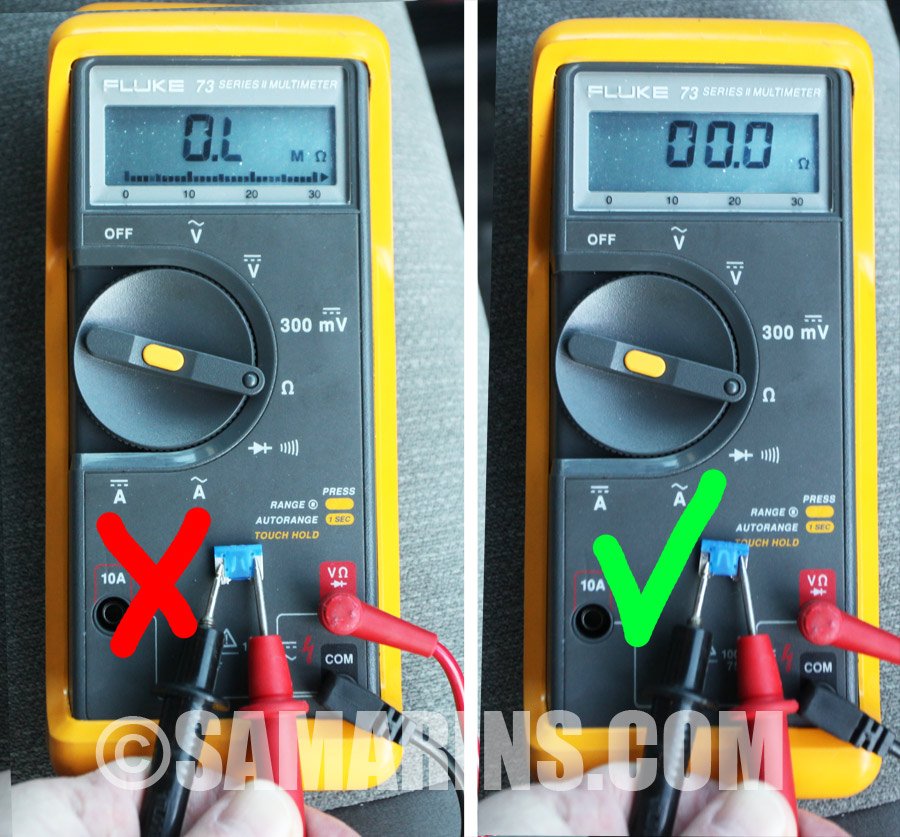
A multimeter measures voltage, resistance, and current. For testing fuses, you use the continuity or resistance (ohms) setting. If a fuse is good, current flows through it, showing low resistance. A blown fuse will have no continuity (infinite resistance).
Here’s a quick look at multimeter modes:
| Mode | Symbol | Purpose |
|---|---|---|
| Voltage | V | Measuring electrical potential |
| Resistance | Ω | Testing circuit/fuse continuity |
| Continuity | Sound wave/diode symbol | Audible beep if circuit is complete |
Step-by-step: How To Test Car Fuses With A Multimeter
Testing fuses doesn’t take long if you follow these steps:
1. Locate The Fuse Box
Most cars have at least one fuse box under the dashboard or near the engine. Your owner’s manual will have a map. Sometimes, there’s a diagram on the fuse box cover itself.
2. Identify The Fuse To Test
Find out which fuse controls the part that’s not working (for example, the radio or headlights). The fuse diagram will show the circuit and the fuse’s amperage rating.
3. Remove The Fuse
Use a fuse puller or needle-nose pliers to gently pull the fuse straight out. Don’t wiggle too much—this can damage the socket.
4. Set Up Your Multimeter
Turn your multimeter to the continuity setting (often a sound wave symbol) or the ohms (Ω) setting. If using resistance mode, set it to the lowest range.
5. Test The Fuse
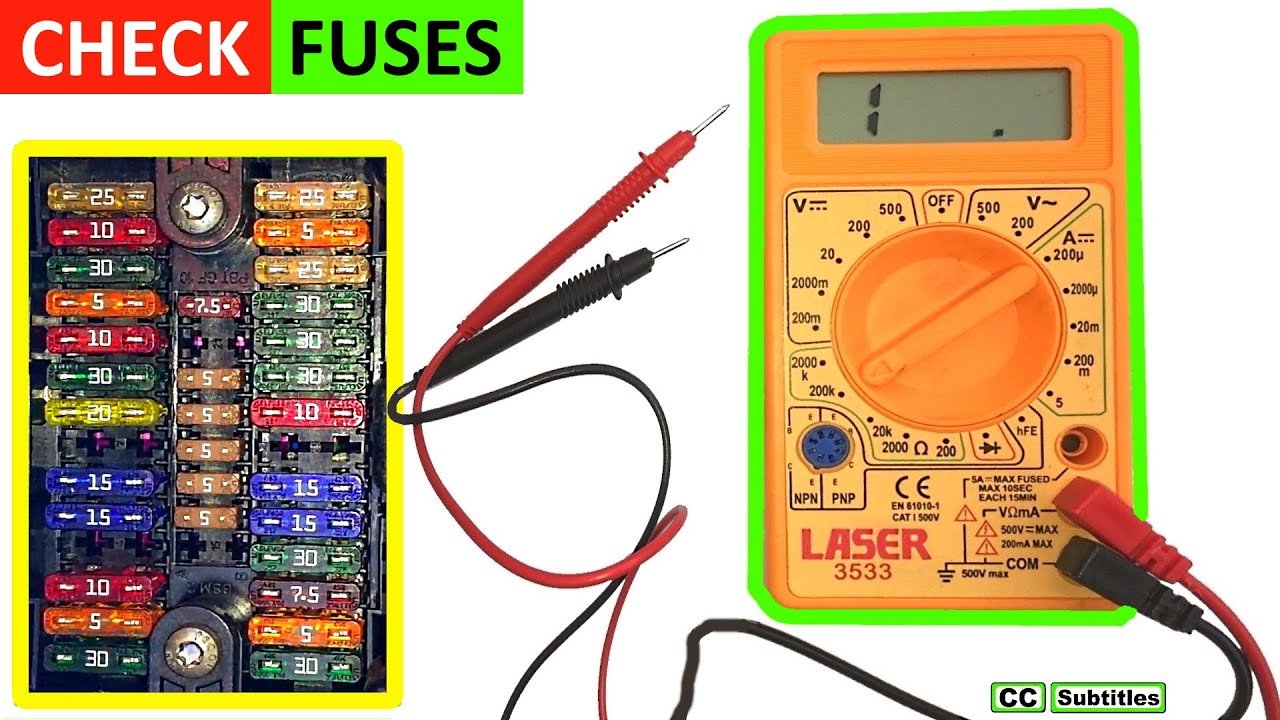
Touch one probe to each metal prong on the fuse.
- If you hear a beep (continuity mode) or see a reading close to 0 ohms (resistance mode), the fuse is good.
- If there’s no beep or the display shows OL (open line/infinite resistance), the fuse is blown.
6. Reinstall Or Replace
If the fuse is good, push it back into its slot. If blown, replace it with a new fuse of the exact same amperage. Never use a higher-rated fuse.
7. Check The Circuit
Turn your car on and see if the part now works. If the new fuse blows immediately, you may have a deeper electrical problem—consult a professional.
Credit: www.samarins.com
Common Mistakes When Testing Car Fuses
Many beginners run into the same issues. Avoid these common mistakes:
- Not turning off the car: Working on live circuits increases risk of shocks or shorts.
- Using wrong multimeter setting: Testing for voltage instead of continuity can give confusing results.
- Not matching fuse ratings: Always use a replacement with the same amperage. A higher rating can cause serious damage.
- Ignoring hidden fuse boxes: Some cars have multiple fuse boxes—don’t miss the one you need.
- Testing fuses in place: Some sockets can give false readings due to corrosion or wiring issues. Remove the fuse for accurate results.
Non-obvious Insights For Better Results
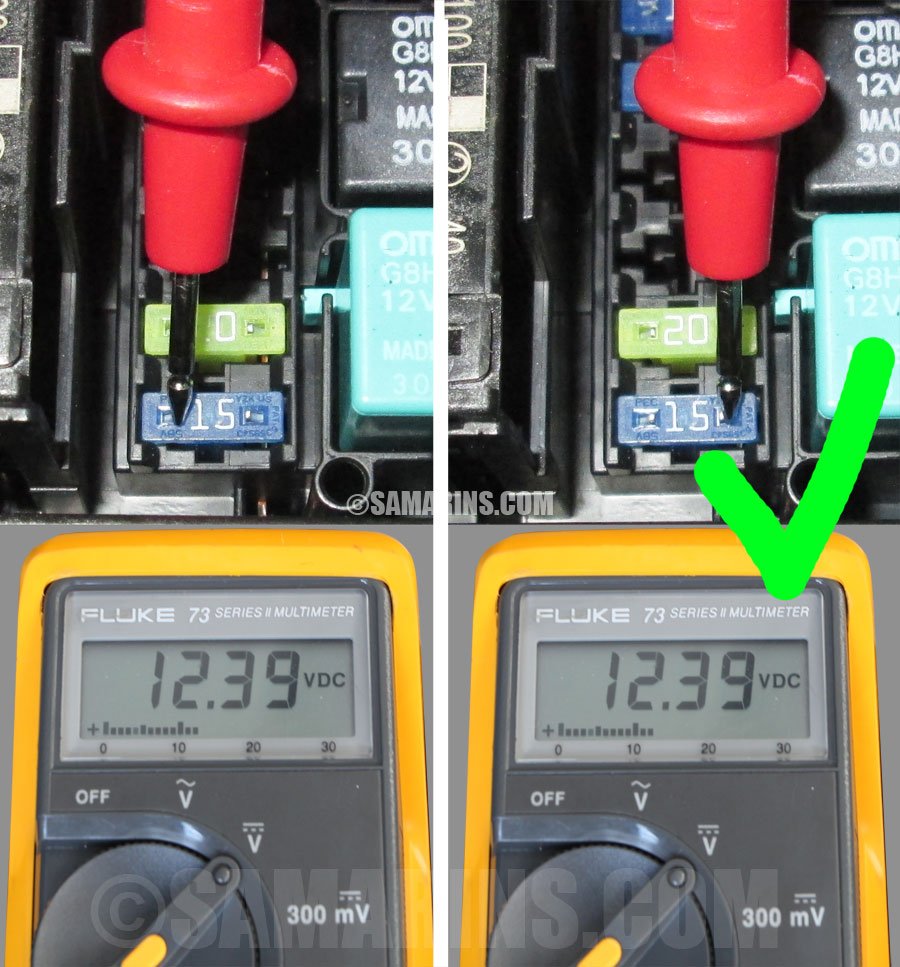
- Check both sides of a fuse socket for power: Sometimes, the fuse is fine but the socket is corroded or loose. Place the multimeter probes in the socket and check for voltage with the car on (be careful—avoid shorts).
- Label blown fuses for future reference: If you have repeated failures, keep the old fuses in a bag with notes. Patterns can help diagnose bigger electrical issues.
- Invest in a quality multimeter: Cheaper models may not beep for continuity or might show unclear readings, leading to mistakes.
When Should You Test Car Fuses?
Testing fuses is smart if you notice any of these:
- A single feature (like power windows) stops working suddenly
- Multiple features on the same circuit fail
- Fuses look okay but things still don’t work
- You smell burning plastic or see melted fuses
Remember, some problems look like blown fuses but are actually wiring faults or failed components. If you’re unsure, get professional advice.
Real-world Example
Imagine your car’s radio suddenly dies. First, check the radio fuse using your multimeter. If the fuse is fine, you’ve saved time—you don’t need to replace it. If it’s blown, swap it with a new one of the same rating.
If the new fuse blows again, this points to a short in the radio wiring, not the fuse itself.
Credit: www.samarins.com
Comparing Visual Inspection Vs Multimeter Testing
Visual checks are quick but not always reliable. Here’s a quick comparison:
| Method | Speed | Accuracy | Best Use |
|---|---|---|---|
| Visual Inspection | Very fast | Low (hidden faults possible) | Quick checks |
| Multimeter Test | Fast | High | Confirming fuse health |
Multimeter testing gives you confidence, especially for micro fuses or hard-to-see breaks.
Extra Tips For Accurate Fuse Testing
- Clean the fuse prongs before testing for better contact.
- Store spare fuses in your glove box for emergencies.
- If your car uses mini or micro fuses, buy a compatible fuse puller.
- Record fuse changes in your maintenance log.
- If a fuse blows repeatedly, suspect a short circuit, not just a bad fuse.
Credit: www.youtube.com
Learning More
Car electrical systems can be complex, but testing fuses is a skill anyone can learn. For more about multimeters and fuse types, the Wikipedia page on automotive fuses is a helpful resource.
Frequently Asked Questions
How Do I Know If My Multimeter Is Set Correctly For Fuse Testing?
Set your multimeter to the continuity mode or the lowest ohms range. If using continuity, the meter will beep when the circuit is complete. If using resistance, a good fuse will read close to zero ohms.
Can I Test A Car Fuse Without Removing It?
Yes, for blade-type fuses, you can touch the multimeter probes to the exposed metal contacts on top. However, for the most accurate results, especially if there’s corrosion, remove the fuse first.
What Happens If I Use A Higher-amp Fuse As A Replacement?
Never use a higher-rated fuse. This can allow too much current, potentially damaging wires or causing a fire. Always replace with the same amperage as recommended by your vehicle’s manufacturer.
Why Does My New Fuse Blow Immediately?
If a new fuse blows right away, there’s likely a short circuit or a faulty component drawing too much current. Stop replacing fuses and have the system checked by a qualified technician.
What If My Multimeter Shows A Reading But No Beep?
Some multimeters don’t beep in continuity mode unless resistance is extremely low. If you see a reading under 2 ohms, your fuse is most likely good. Check your multimeter’s manual for details.
Car fuse testing with a multimeter is a practical skill that can help you solve small electrical problems and avoid bigger headaches. With a few tools and careful steps, you can keep your vehicle’s electronics running smoothly and safely.