
When your car’s dashboard suddenly lights up with the code P0101, it can leave you feeling confused and worried. You might notice your engine running rough, the performance dropping, or even the check engine light turning on. The P0101 code relates to the Mass Air Flow (MAF) Circuit Range/Performance Problem, a common issue that many drivers face. Understanding what this code means, why it appears, and how to fix it can save you time, money, and stress.
This guide will explain everything you need to know about the P0101 Mass Air Flow Circuit Range code. We’ll break down what it really means, the main causes, how to diagnose the problem, and the best ways to fix it. You’ll also find practical tips and answers to common questions. If you’re new to car maintenance or just want to understand your vehicle better, this article is for you.
What Is The P0101 Mass Air Flow Circuit Range Code?
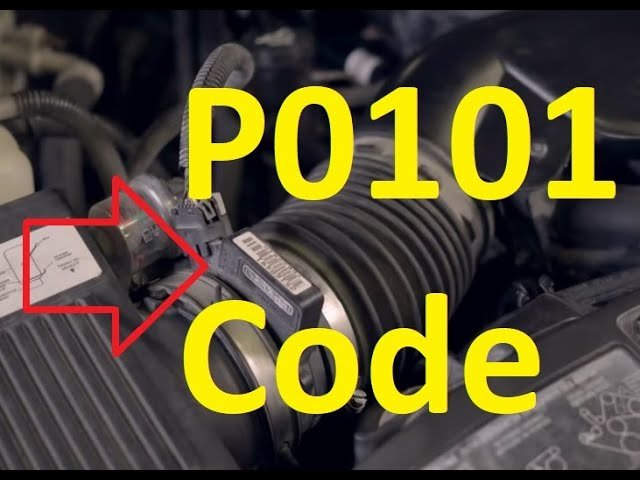
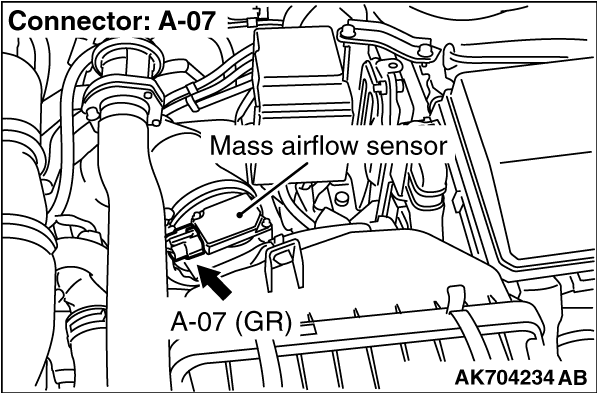
The P0101 code is a diagnostic trouble code (DTC) that your car’s computer uses to tell you there is a problem with the mass air flow sensor. This sensor measures the amount of air entering your engine and sends this information to the engine control module (ECM). The ECM uses this data to balance the air-fuel mixture, which is critical for proper engine performance.
When the signal from the MAF sensor is outside the expected range, the ECM cannot accurately control the air-fuel ratio. This triggers the P0101 code and may cause your car to run poorly.
Why Does The P0101 Code Appear?
Several factors can trigger the P0101 code. Understanding these causes is the first step to solving the problem.
- Dirty or Contaminated MAF Sensor: Over time, dirt, oil, and debris can coat the sensor, affecting its accuracy.
- Faulty MAF Sensor: The sensor may fail due to age, electrical faults, or internal damage.
- Vacuum Leaks: Cracks or leaks in the air intake system can change the amount of air entering the engine.
- Damaged Wiring or Connectors: Broken wires or loose connectors can interrupt the signal between the sensor and the ECM.
- Aftermarket Air Filters: Some non-standard filters allow oil or debris to reach the sensor.
- Blocked or Dirty Air Filter: A clogged air filter restricts airflow, leading to abnormal readings.
- Exhaust Leaks: Leaks before the oxygen sensor can confuse the ECM.
- ECM Software Issues: Sometimes, the car’s computer needs an update or reset.
- Incorrectly Installed Sensor: If the sensor is not installed properly, it cannot measure air flow correctly.
Common Symptoms Of P0101
When your car has a P0101 code, you may notice several warning signs. Here are the most common symptoms:
- Check Engine Light: The most obvious sign is the illuminated check engine light.
- Engine Hesitation or Stalling: The engine may hesitate when you accelerate or even stall at idle.
- Poor Fuel Economy: The air-fuel mixture may become too rich or too lean, causing your car to burn more fuel.
- Rough Idle: The engine may run unevenly or shake at idle.
- Reduced Power: You might notice a lack of power, especially when accelerating.
- Black Smoke from Exhaust: If the mixture is too rich, you may see dark smoke from the tailpipe.
These symptoms can also appear in other engine problems, so a proper diagnosis is essential.
How To Diagnose The P0101 Code
Finding the root cause of a P0101 code involves several steps. Here’s a clear approach:
1. Scan For Codes
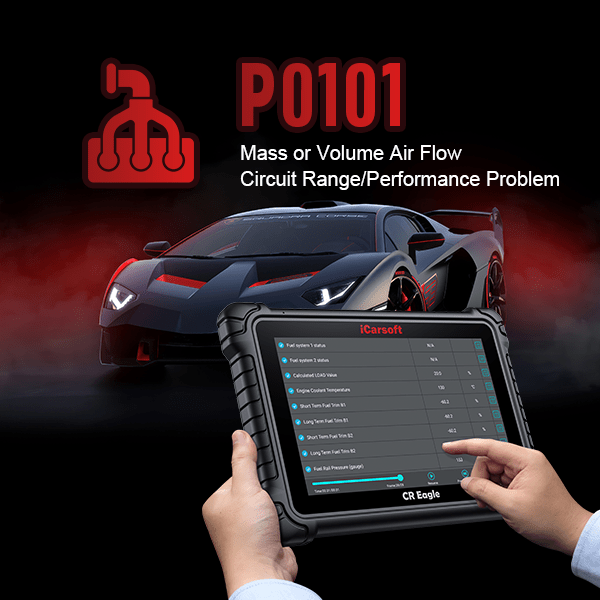
Use an OBD-II scanner to confirm the P0101 code. Check for any additional codes that may point to related problems.
2. Inspect The Maf Sensor
Carefully remove and examine the MAF sensor. Look for dirt, oil, or physical damage.
3. Check The Air Intake System
Inspect the air filter, intake hoses, and connections for cracks, leaks, or blockages.
4. Examine Wiring And Connectors
Look for damaged wires or loose connectors around the MAF sensor.
5. Test The Sensor
Use a multimeter to check the sensor’s voltage and resistance. Compare the readings to your vehicle’s specifications.
6. Monitor Live Data
With your scanner, check the MAF sensor readings at idle and while revving the engine. Abnormal values can point to the problem.
7. Check For Vacuum Leaks
Listen for hissing sounds or use a smoke machine to find leaks in the intake system.
8. Inspect The Exhaust System
Check for leaks before the oxygen sensor, as these can affect the air-fuel ratio readings.
9. Review Ecm Updates
Check with your car’s dealer or service manual for any software updates or recalls related to the P0101 code.
How To Fix The P0101 Code
Fixing the P0101 Mass Air Flow Circuit Range code depends on the cause. Here are the most effective solutions:
Cleaning The Maf Sensor
- Remove the sensor carefully.
- Spray with MAF sensor cleaner (do not use other cleaners).
- Allow to dry completely before reinstalling.
Cleaning is often enough if the sensor is simply dirty.
Replacing The Maf Sensor
If cleaning doesn’t work, replace the sensor with a high-quality part. Avoid cheap or used sensors, as they may not last.
Repairing Wiring Or Connectors
Fix any broken wires or loose connectors. Make sure all connections are tight and corrosion-free.
Replacing The Air Filter
Install a new, clean air filter to improve airflow and protect the sensor.
Fixing Vacuum Or Intake Leaks
Repair or replace any cracked hoses or intake parts to ensure the correct amount of air enters the engine.
Updating The Ecm
In some cases, a software update is required. Visit your dealer or a qualified technician for this service.
Inspecting Related Components
Check the intake manifold, throttle body, and oxygen sensors for problems that could affect air flow.
Practical Tips For Preventing P0101
You can avoid many MAF sensor problems with simple maintenance:
- Replace the air filter regularly (every 12,000–15,000 miles).
- Use only recommended air filters and avoid over-oiled aftermarket types.
- Clean the MAF sensor every 30,000 miles if you drive in dusty conditions.
- Fix air leaks and repair intake hoses as soon as you notice them.
- Avoid using engine degreasers or harsh chemicals near the sensor.
Regular checks can help you spot early signs of trouble and prevent a P0101 code.
Comparison: Maf Sensor Vs. Map Sensor
Understanding the difference between a MAF sensor and a MAP sensor can help when diagnosing engine issues.
| Feature | MAF Sensor | MAP Sensor |
|---|---|---|
| Function | Measures air entering engine | Measures air pressure in intake manifold |
| Location | Between air filter and throttle body | On intake manifold |
| Common Problems | Contamination, wiring faults | Vacuum leaks, sensor failure |
| Related Codes | P0100–P0104 | P0105–P0109 |
Cost To Fix P0101: What To Expect
Fixing a P0101 code can vary in cost. Here’s a general comparison:
| Repair | Estimated Cost (USD) | Notes |
|---|---|---|
| Cleaning MAF sensor | 10–30 | DIY-friendly |
| Replacing MAF sensor | 100–300 | Part quality matters |
| Fixing wiring/connectors | 50–150 | Labor cost varies |
| Replacing air filter | 15–50 | Simple maintenance |
| ECM update | 80–200 | Dealer/tech required |
Tip: Cleaning or replacing the air filter is the cheapest and easiest starting point. Always rule out simple fixes before buying expensive parts. According to the U.S. Environmental Protection Agency, vehicle emissions standards and onboard diagnostic systems are designed to identify problems that can increase pollution.
Real-world Example: Diagnosing P0101 On A Nissan Altima
Let’s look at how a P0101 code might appear in practice. A 2015 Nissan Altima owner notices the check engine light and poor acceleration. They scan the car and find code P0101. On inspection, the air filter is dirty and the MAF sensor is coated with dust. After cleaning the sensor and installing a new air filter, the car runs smoothly and the code disappears.
This example shows that sometimes, a simple fix can solve the problem. However, if cleaning doesn’t help, further diagnosis is needed.
Advanced Insights: What Most Beginners Miss
Many beginners believe that replacing the MAF sensor is always the answer. In reality, cleaning the sensor often restores full function. Over-oiled aftermarket filters are another hidden cause—oil can coat the sensor wire and cause false readings. Also, a small vacuum leak, which is hard to spot, can trigger the code even if the sensor is working well.
Another detail: Sometimes, the P0101 code appears together with codes for oxygen sensors or fuel trim. This means the problem may not be the sensor itself, but the air-fuel balance in general. Always check for other codes before replacing any parts.
Credit: www.youtube.com
When To See A Mechanic
If you have tried cleaning and checking the basics but the code returns, it’s time to see a professional. Some problems, like wiring faults inside the harness or ECM issues, require special tools and experience. Continuing to drive with the P0101 code can damage your catalytic converter or worsen fuel economy.
Latest Technology: Smart Maf Sensors
Modern cars use “smart” MAF sensors that can detect small problems and adjust themselves. However, they are more sensitive to contamination and require careful handling. If your car has a smart sensor, always use the recommended cleaning method and parts.
Credit: mitsubishitechinfo.com
Additional Resource
For more technical details, see this helpful Wikipedia page on mass air flow sensors.
Frequently Asked Questions
What Happens If I Ignore The P0101 Code?
Ignoring the P0101 code can lead to worse engine performance, higher fuel use, and possible damage to the catalytic converter. It’s best to diagnose and fix the problem quickly.
Can I Drive With A P0101 Code?
You can usually drive short distances, but the car may run poorly. Avoid long trips or heavy loads until the issue is fixed to prevent further damage.
How Often Should I Clean The Maf Sensor?
Clean the MAF sensor every 30,000 miles, or sooner if you drive in dusty or dirty environments. Always use a proper cleaner made for MAF sensors.
Will Disconnecting The Battery Reset The P0101 Code?
Disconnecting the battery may clear the code temporarily, but it won’t fix the underlying problem. The code will return if the issue is not solved.
Does The P0101 Code Always Mean The Maf Sensor Is Bad?
No. The code can also be caused by air leaks, wiring faults, a dirty air filter, or even ECM software issues. Always diagnose the real cause before replacing parts.
Keeping your car running smoothly is easier when you understand the meaning behind codes like P0101 Mass Air Flow Circuit Range. With the right knowledge and regular maintenance, you can keep small issues from turning into big problems.
Credit: www.icarsoft-us.com