
Taking a road trip can be one of the best ways to discover new places, enjoy freedom, and bond with friends or family. But a successful journey depends on one thing: preparation. Imagine getting stuck on the highway with a flat tire and no spare, or realizing you forgot important documents just as you reach the border. Many travelers underestimate how much a road trip car checklist can save time, money, and stress. This guide will walk you through everything you need before you turn the key—covering safety, comfort, legal needs, and smart extras.
Essential Car Checks Before The Road Trip
Your car is your travel partner on the road. Giving it a proper check-up can prevent most breakdowns. Here’s what you should focus on:
Fluids And Oil
Check your engine oil level and quality. Top up or change if it’s dirty or low. Also check coolant, brake fluid, transmission fluid, and windshield washer fluid. Neglecting these can cause overheating, poor braking, or reduced visibility—none of which you want hundreds of miles from home.
Tire Condition And Pressure
Examine all four tires for wear, cracks, or embedded objects. Check tire pressure with a gauge. Proper inflation improves fuel efficiency and keeps handling safe. Don’t forget the spare tire—it should be inflated and in good condition.
Battery Health
A weak battery can ruin your trip before it starts. Inspect for corrosion on terminals and check the charge if the battery is over two years old. If you often leave lights on by mistake, bring a portable jump starter as backup.
Lights And Signals
Test all headlights, brake lights, turn signals, and hazard lights. Clean dirty lenses and replace burnt-out bulbs. Proper lighting is required by law and vital for night driving or bad weather.
Brakes
Listen for squeaking or grinding noises when braking—these mean it’s time for new brake pads. Test brakes for firmness and quick response. If stopping feels slow or spongy, get them inspected.
Wipers And Windows
Working windshield wipers are essential for rain or dust. Replace worn blades and refill washer fluid. Check windows and mirrors for chips and cracks.
Emergency Tools
Carry a jack, lug wrench, and instructions for changing a tire. These simple tools turn a major problem into a quick fix.
Must-have Documents And Legal Items
Paperwork can be easy to forget but is absolutely necessary. Missing documents can mean fines or delays—especially if you cross borders.
- Driver’s License – Never drive without your valid license.
- Car Registration – Needed at checkpoints or if stopped by police.
- Proof of Insurance – Required for most accidents or traffic stops.
- Roadside Assistance Card – Have your membership details ready.
- Passport and Visa – Essential for international trips.
- Emergency Contact List – Not just on your phone—print a copy too.
Put these in a waterproof folder you keep in the glove compartment.
Emergency And Safety Gear
Even with a perfect car, things can go wrong. Packing these items protects you and your passengers.
- First aid kit – Include bandages, antiseptic, painkillers, and any personal medications.
- Reflective triangles – Make your car visible if you stop on the roadside.
- Flashlight and extra batteries – For night emergencies or repairs.
- Multi-tool or Swiss army knife – Useful for small fixes.
- Jumper cables – In case of a dead battery.
- Fire extinguisher – Choose one suitable for car fires.
- Blanket – For warmth if you get stranded.
- Rain poncho – Repairs sometimes need to happen in bad weather.
- Duct tape – Handy for quick fixes on hoses or windows.
Don’t forget a spare phone charger for your car, especially if you use your phone for navigation.
Comfort And Convenience Items
Long drives can get uncomfortable or boring. Small extras make a big difference in how you feel during the trip.
Snacks And Drinks
Pack non-perishable snacks like nuts, trail mix, granola bars, and dried fruit. Bring a cooler with water or juice. Staying hydrated helps you stay alert.
Entertainment
Prepare playlists, audiobooks, or podcasts. Road games and trivia can keep everyone engaged, especially if you travel with kids.
Navigation Tools
While GPS and smartphone maps are common, always keep a paper road atlas as backup. Remote areas may have poor signal.
Travel Pillows And Blankets
For longer trips, pack travel pillows and small blankets. Passengers can nap comfortably, and you’ll be glad for them if you camp or sleep in the car.
Sunglasses And Sun Protection
Driving into the sun is tiring. Sunglasses and sunscreen prevent headaches and sunburn.
Cleaning And Hygiene Supplies
A clean car is a comfortable car. Mess builds up fast on the road, so plan ahead.
- Wet wipes – For sticky hands or cleaning up spills.
- Hand sanitizer – Especially useful at roadside stops.
- Paper towels and garbage bags – Collect trash and keep the car tidy.
- Tissues – For sneezes or spills.
- Toilet paper – Many rest stops run out, so bring your own.
- Travel-size toiletries – Toothbrush, toothpaste, and deodorant for feeling fresh.
If you’re camping or traveling with kids, these are even more important.
Packing And Organization Tips
How you pack can affect fuel economy, safety, and how quickly you find things.
Use Storage Containers
Stackable bins or organizers keep gear from rolling around. Clear bins make it easy to spot what you need.
Roof Racks And Cargo Carriers
For extra luggage, use a roof box or rack. Secure loads tightly—loose items are dangerous.
Keep Essentials Within Reach
Store snacks, chargers, sunglasses, and documents in the front seat area. Tools and emergency gear go in the trunk but must be accessible.
Balance The Load
Evenly distribute heavy items to avoid poor handling or tire wear. Too much weight in the back can reduce steering control.
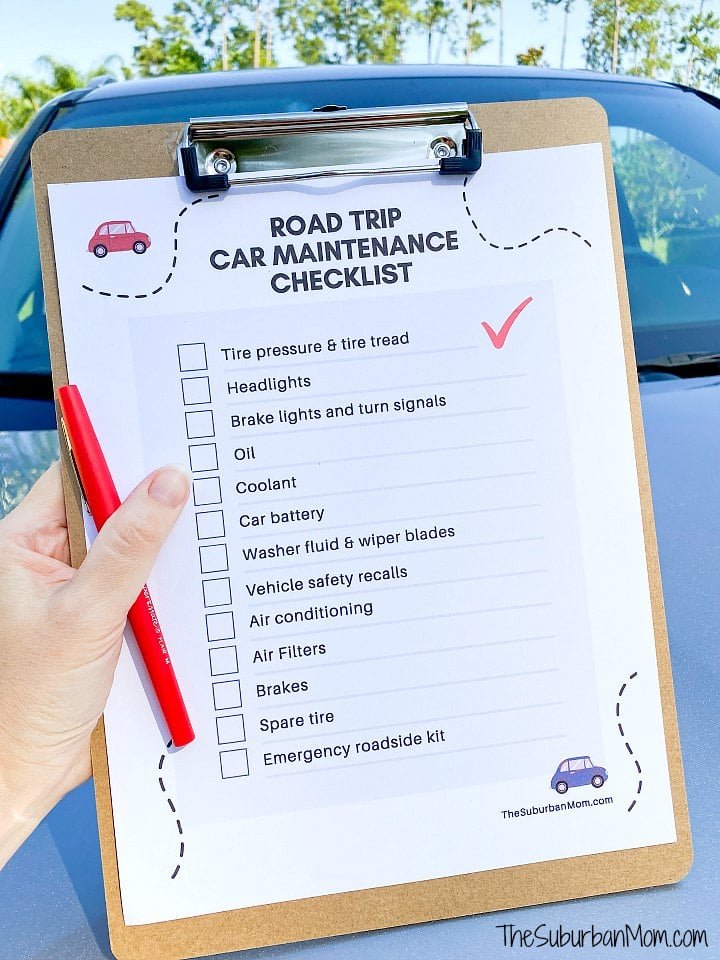
Credit: www.thesuburbanmom.com
Fuel And Money Preparation
Running out of gas or cash can ruin your plans. Here’s how to stay ahead:
Plan Fuel Stops
Check your route for long stretches without gas stations. Fill up before entering remote areas. Carry a fuel can if traveling off the beaten path, but only if it’s safe and legal.
Payment Methods
Bring both cash and cards. Some rural stations or toll roads don’t accept credit cards.
Budget For Extras
Set aside money for unexpected expenses—tolls, parking, entry fees, or repairs.
Weather And Seasonal Prep
Weather can change fast, especially in mountains or open country. Prepare for conditions you might face.
For Hot Weather
- Extra water to prevent dehydration.
- Sunshade for windshields at stops.
- Cool packs for food.
For Cold Weather
- Ice scraper and snow brush.
- Tire chains if traveling in snowy areas.
- Heavier blankets and hand warmers.
For Rainy Or Wet Conditions
- Rain gear for all passengers.
- Floor mats to protect from mud.
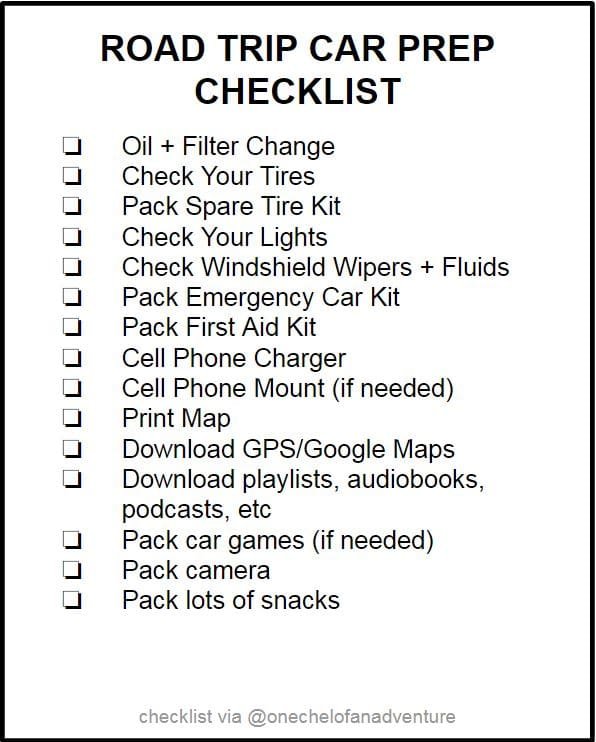
Credit: onechelofanadventure.com
Smart Tech And Gadgets
A few modern gadgets can increase safety and comfort.
- Phone mount for hands-free navigation.
- Portable power bank to charge devices away from the car.
- Dash cam for recording your trip or accidents.
- OBD2 scanner to check engine codes if warning lights appear.
- Portable tire inflator for quick fixes.
Most of these are small investments that pay off if things go wrong.
Road Trip Car Checklist: Quick Reference
Here’s a reference checklist you can print before your trip.
| Category | Essential Items |
|---|---|
| Car Prep | Fluids, tires (incl. spare), battery, lights, brakes, wipers, tools |
| Documents | License, registration, insurance, roadside card, passport/visa, emergency contacts |
| Safety | First aid kit, triangles, flashlight, multi-tool, jumper cables, extinguisher, blanket, charger |
| Comfort | Snacks, water, entertainment, pillows, sunglasses |
| Hygiene | Wipes, sanitizer, paper towels, garbage bags, tissues, toilet paper, toiletries |
| Seasonal | Ice scraper, sunshade, rain gear, tire chains |
| Tech | Phone mount, power bank, dash cam, tire inflator, OBD2 scanner |
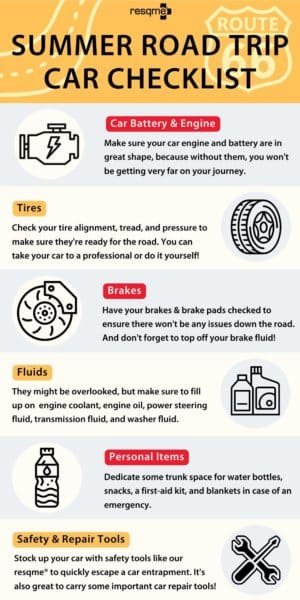
Credit: resqme.com
Common Road Trip Problems And Solutions
Being ready for the most frequent issues helps you stay calm when things happen.
| Problem | How to Handle |
|---|---|
| Flat tire | Use spare, tools, and follow instructions. Call roadside help if needed. |
| Dead battery | Jump with cables or portable starter. Replace battery if old. |
| Low oil or coolant | Top up with spare fluids. Visit mechanic if leaks continue. |
| Lost signal/GPS | Use a paper map. Ask for directions at gas stations. |
| Feeling tired | Switch drivers, take frequent breaks, drink water. |
Non-obvious Road Trip Tips
Many travelers miss these details, but they can make your trip smoother:
- Check local laws for every state or country you visit. Some places require extra safety gear (like vests or breathalyzers).
- Photocopy your documents and keep them separate from the originals. If you lose your wallet, you have backups.
- Check your car’s load limit (in the manual or driver’s door sticker). Overloading strains brakes and suspension.
- Pre-download maps and playlists. Many remote areas have poor or no mobile signal.
- Inspect your car’s spare key. Keep it in a safe, separate place.
Frequently Asked Questions
What Should I Check In My Car Before A Road Trip?
Check your oil, coolant, brake fluid, tire pressure (including the spare), battery, lights, brakes, and wipers. Bring emergency tools and make sure your car is up to date with maintenance.
How Many Emergency Supplies Do I Need?
Bring enough for all passengers: first aid kit, blankets, reflective triangles, flashlight, and water. At minimum, pack supplies to last 24 hours in case you get stranded.
Do I Need Paper Maps If I Have Gps?
Yes. Paper maps are a good backup. GPS and smartphones sometimes lose signal in rural or mountain areas.
Is It Safe To Sleep In My Car During A Road Trip?
It can be safe if you park in legal, well-lit, and safe areas like rest stops or campgrounds. Lock doors and keep windows slightly open for ventilation.
What If I Need Help On The Road?
Sign up for a roadside assistance service before you travel. Carry their contact info and details. For emergencies, call local authorities. For more info, see AAA Roadside Assistance.
Planning well means your road trip will be about adventure, not about avoidable problems. With this checklist, you’ll be ready for almost anything the road brings—so you can focus on making memories and enjoying the ride. Safe travels!
