
Charging an electric vehicle (EV) with solar panels is one of the smartest ways to reduce your carbon footprint and save money on energy. As more people switch to EVs, the idea of powering them with solar energy is growing fast. But what does it really take to charge your car with the sun? How do you set up a system that works, and what should you know before starting? Let’s look at how solar panels can power your EV, the benefits, the steps to get started, and common mistakes that many beginners make.
Why Use Solar Panels For Ev Charging?
When you use solar panels to charge your EV, you combine two green technologies for even greater benefits. The main reasons people choose solar charging include:
- Energy independence: You’re less affected by rising electricity costs and power outages.
- Lower emissions: Solar energy is clean, so you reduce your personal carbon footprint.
- Long-term savings: While the upfront cost is higher, solar power means free fuel for years.
- Future-proofing: As more homes and cars go electric, solar charging will become the norm.
However, some people miss that charging with solar at home is not automatic. It takes careful planning—especially if you want your EV to charge mostly during the day when the sun shines.
How Solar Ev Charging Works
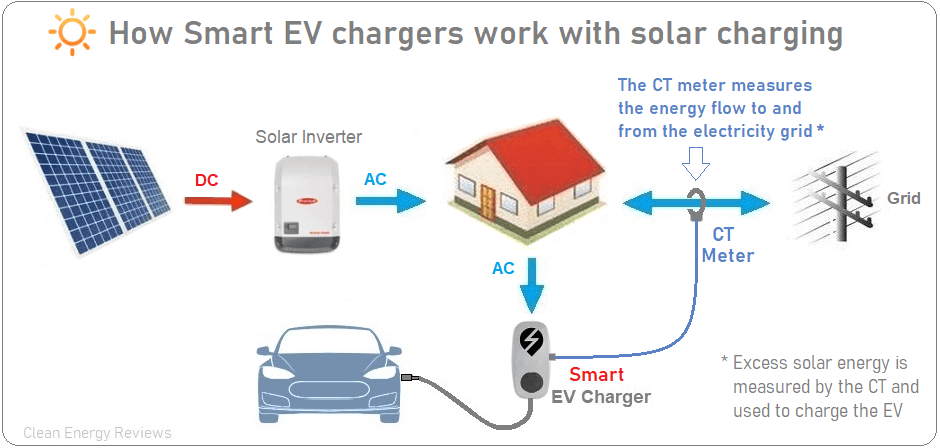
Solar EV charging starts with photovoltaic (PV) panels on your roof. These panels convert sunlight into electricity. Here’s a simple breakdown:
- Sunlight hits the panels.
- The panels produce direct current (DC) electricity.
- An inverter changes the DC power into alternating current (AC) that your home and car can use.
- The AC power flows to your home’s electrical system and your EV charger.
- Extra power (if any) can go into the grid or a battery for later use.
Some systems include a solar battery so you can store energy and charge your EV at night, but this adds cost and complexity.
How Many Solar Panels Do You Need For Ev Charging?
This is a question many people get wrong. The number of panels depends on:
- Your EV’s energy use (kWh per 100 miles or per km)
- Your driving habits (how far you drive per day)
- Local sunlight hours (solar insolation)
- Panel efficiency
Step-by-step Calculation
- Find your EV’s efficiency. For example, many EVs use about 27 kWh per 100 miles (62 kWh/100 km).
- Estimate your weekly driving. Suppose you drive 200 miles (320 km) per week.
- Total energy needed per week: 54 kWh (27 kWh/100 miles x 200 miles ÷ 100).
- Daily energy: About 7.7 kWh per day.
- Average sun hours per day: If you get 5 hours of good sun, divide 7.7 kWh by 5 = 1.54 kW needed.
- Panel size: If you use 350W panels, you need about 5 panels (1.54 kW ÷ 0.35 kW ≈ 4.4 panels).
Many homes use 4 to 8 panels just for EV charging. If you want to power your whole house too, you’ll need more.
Example: Tesla Model 3 Charging
- Model 3 uses 24 kWh/100 miles.
- Drive 300 miles per week = 72 kWh/week.
- Daily need: 10.3 kWh.
- With 5 sunlight hours: 10.3 kWh ÷ 5 = 2.06 kW.
- With 400W panels: 2.06 kW ÷ 0.4 kW = 5.15 panels (round up to 6).
Types Of Solar Ev Charging Setups
There are a few ways to connect your solar panels to an EV charger. Each has pros and cons.
1. Grid-tied Solar System
Most homes use a grid-tied system. The panels are connected to your home and the public grid. If you need more power than your panels make, you use grid electricity. If you make extra, you can send it to the grid (net metering).
Pros:
- Simple setup
- Reliable power any time
Cons:
- You still use grid power at night or on cloudy days
2. Solar + Battery Storage
Adding a battery (like a Tesla Powerwall) lets you store extra solar energy to charge your EV at night.
Pros:
- More energy independence
- Can use solar power even after sunset
Cons:
- Higher upfront cost
- Batteries need space and maintenance
3. Off-grid Solar Ev Charging
For remote places, you can set up an off-grid system with solar, batteries, and an EV charger. This is rare for homes but common for cabins or rural areas.
Pros:
- Full independence from the grid
Cons:
- Expensive and complex
- Needs careful design
Ev Charging Levels And Solar Compatibility
Electric vehicles charge at different speeds, called charging levels:
- Level 1: Standard wall outlet (slow, 2-5 miles of range per hour)
- Level 2: 240V outlet, common for home chargers (fast, 10-30 miles per hour)
- Level 3/DC Fast Charging: Public stations, not for homes
Most people use Level 2 chargers at home. A solar system sized for your daily driving can easily handle Level 2 charging, but fast charging needs much more power.
Comparing Charging Levels
| Charging Level | Power (kW) | Miles of Range per Hour | Solar Panel Need |
|---|---|---|---|
| Level 1 | 1.2 – 1.4 | 2 – 5 | 2-3 panels |
| Level 2 | 6.6 – 9.6 | 10 – 30 | 4-8 panels |
| DC Fast | 50+ | 60 – 100+ | Not practical for home |
Key Components Of A Solar Ev Charging System
To set up solar charging, you need more than just panels. Here’s what’s required:
- Solar panels: Capture sunlight.
- Inverter: Turns DC to AC power.
- EV charger: Level 2 is most common.
- Electrical panel upgrades: Some homes need this for safety.
- Battery (optional): For energy storage.
Typical Home Solar Ev Setup
| Component | Purpose | Estimated Cost |
|---|---|---|
| Solar Panels (5-8) | Generate power | $3,000 – $6,000 |
| Inverter | Convert DC to AC | $1,000 – $2,500 |
| Level 2 EV Charger | Charge car fast | $500 – $1,500 |
| Battery (optional) | Store energy | $7,000 – $15,000 |
| Install & Permits | Labor & approvals | $2,000 – $5,000 |
Note: Costs vary by location and system size.
Installation Process: Step By Step
Setting up solar EV charging is a big project. Here’s how it usually goes:
- Site assessment: Check your roof’s size, angle, and shading. Not all roofs are equal; too much shade can cut your solar output by half.
- System design: A solar installer calculates how many panels you need, where to place them, and how to connect your EV charger.
- Permits and paperwork: You’ll need local permits and possibly approval from your utility. This can take a few weeks.
- Installation: Pros install the panels, inverter, and wiring.
- Inspection and activation: The system is checked for safety, then switched on.
- EV charger installation: The charger is connected to your home’s electric panel.
- Monitoring setup: Most systems include an app to track your solar production and EV charging.
Real-world Performance And What To Expect
Solar output changes by season, weather, and how clean your panels are. In summer, you may make more power than you need; in winter, less.
Non-obvious insight: Many people forget about “vampire drain”—even when your EV is parked, it uses a small amount of power for systems like the battery heater or electronics. Always size your solar system with a little extra capacity.
Another tip: If you work during the day and your car is not at home, most of your solar energy will power your house—not your car. In this case, a battery or smart charging system helps you match solar production to charging.
Credit: www.solar.com
Financial Savings And Incentives
Charging your EV with solar energy is usually cheaper than using grid power. Here’s how the costs compare:
- Average U.S. residential electricity cost: $0.16/kWh
- Solar energy cost (after system paid off): $0.05/kWh or less
Charging a typical EV (30 kWh/100 miles) for 10,000 miles per year:
- Grid power: 3,000 kWh x $0.16 = $480/year
- Solar: 3,000 kWh x $0.05 = $150/year
Over 10 years, that’s $3,300 in savings—plus, you may get tax credits, rebates, or other incentives for both solar and EVs. Check your local programs for details.
For more details on incentives and payback, visit the U.S. Department of Energy.
Common Mistakes To Avoid
Solar EV charging is not always as simple as people think. Watch out for these beginner errors:
- Underestimating your needs: Many people install too few panels and run out of solar power.
- Ignoring time-of-use rates: Some utilities charge more for electricity at certain hours. If you charge your EV at peak times, you may pay more.
- Not planning for future EVs: If you might buy a second EV, size your system with growth in mind.
- Skipping maintenance: Dirty panels can lose 10-20% output. Clean them regularly.
- Overlooking shade: Even small shadows can cut solar output a lot.
Credit: www.cleanenergyreviews.info
Smart Charging And Solar Integration
Some advanced systems use smart EV chargers that sync your car charging with peak solar production. These systems can:
- Delay charging until midday when the sun is strongest
- Charge your car only when you have enough solar power
- Work with home batteries to optimize energy use
This makes your system more efficient and saves more money.
Environmental Impact
Charging your EV with solar power is much greener than using the grid, especially if your local grid is powered by coal or gas. Over a year, charging 10,000 miles with solar can save over 2 tons of CO2 emissions compared to gasoline.
Credit: ev.aaa.com
Is Solar Ev Charging Right For You?
Solar EV charging makes sense if:
- You own your home and have a good roof
- You drive your EV regularly
- You want to lower your energy bills and carbon footprint
But it’s not for everyone. Renters, people with shady roofs, or those who don’t drive much may not get the full benefit.
Frequently Asked Questions
How Many Solar Panels Do I Need To Charge My Ev?
The number depends on your car’s efficiency, how far you drive, and your local sun hours. For most people, 4 to 8 panels are enough for daily charging.
Can I Charge My Ev At Night With Solar Panels?
Solar panels don’t make power at night, but if you have a battery system, you can store solar energy during the day and use it to charge your EV after dark.
Is It Cheaper To Charge An Ev With Solar Panels Or Grid Electricity?
Over time, solar charging is usually cheaper, especially after your system is paid off. You avoid rising electricity prices and get free energy from the sun.
What Happens If It’s Cloudy Or Rainy?
On cloudy days, your panels make less power. Your EV charger will use grid electricity if there’s not enough solar energy. Many systems are designed to blend both sources.
Do I Need A Special Ev Charger For Solar Panels?
Most standard Level 2 chargers work well with solar panels. For the best results, choose a charger with smart features to match charging with solar production.
Switching to solar EV charging is a powerful step toward a cleaner, more independent lifestyle. With careful planning, you can enjoy years of savings and drive on sunshine every day.