
Tire wear patterns are diagnostic signs that reveal the health of your vehicle’s tires, suspension, and alignment. Center wear typically indicates overinflation, while wear on both outer edges suggests underinflation. Uneven patterns like one-sided wear, feathering, or cupping often point to mechanical issues such as improper wheel alignment, worn suspension parts, or unbalanced wheels. Regularly inspecting these patterns can help you address problems early, improving safety and extending tire life.
Why Reading Your Tire Treads is Non-Negotiable for Safety and Savings
Your tires are the only part of your vehicle that makes direct contact with the road. Their condition is paramount to your safety, influencing everything from braking distance to handling in adverse weather. Ignoring abnormal tire wear is not just a mistake; it’s a risk. Unevenly worn tires can lead to a sudden loss of traction, hydroplaning on wet roads, or even a dangerous blowout.
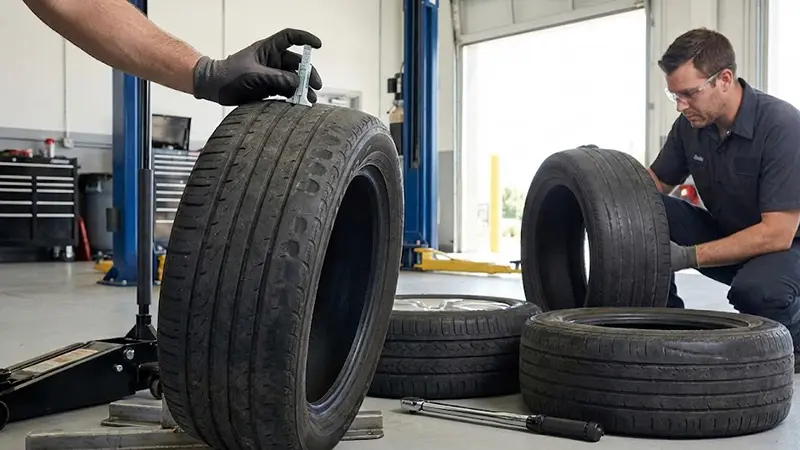
Beyond the critical safety aspect, paying attention to tire wear patterns can save you a significant amount of money. Prematurely worn tires require more frequent replacement. Furthermore, the underlying issues causing the wear—such as poor alignment or improper inflation—also negatively impact your vehicle’s fuel efficiency. By identifying and correcting these problems, you not only preserve your tires but also reduce your fuel consumption.
The 7 Common Tire Wear Patterns Explained
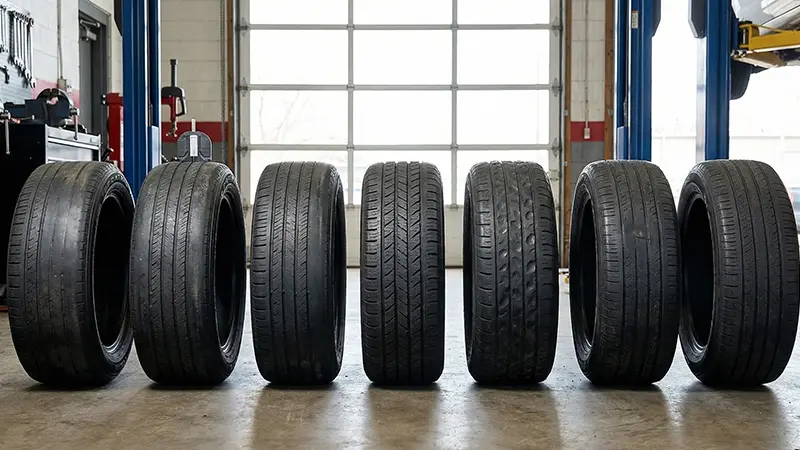
Understanding what different wear patterns mean is like learning to read your car’s vital signs. Each pattern points to a specific issue that needs attention. Here are the seven most common types of tire wear and what they indicate.
1. Center Wear
What it looks like: The tread in the center of the tire is worn down significantly more than the outer edges. The tire may look like it’s bulging in the middle.
What it means: This is the classic sign of overinflation. When a tire has too much air, the center of the tread bows out and makes the most contact with the road. This focused pressure causes the central portion to wear out much faster than the shoulders. While proper inflation is key, too much is just as bad as too little.
2. Edge Wear (Both Edges)
What it looks like: Both the inner and outer shoulders (edges) of the tire are worn down more than the center.
What it means: This pattern is a tell-tale sign of underinflation. When a tire doesn’t have enough air pressure, the center of the tread collapses inward, forcing the outer edges to bear the majority of the vehicle’s weight and contact with the road. This also leads to excessive heat buildup, which can increase the risk of a blowout.
3. One-Sided Wear (Camber Wear)
What it looks like: Only the inner or the outer shoulder of the tire is worn down. The wear is smooth but noticeably concentrated on one side.
What it means: One-sided wear is almost always caused by a wheel alignment issue, specifically incorrect camber. Camber is the vertical tilt of the wheel. If the top of the wheel tilts too far inward (negative camber), the inner edge of the tire wears down. If it tilts too far outward (positive camber), the outer edge wears down. Worn ball joints, bearings, or other suspension components can also contribute to this problem.
4. Feathering (Toe Wear)
What it looks like: The tread blocks are worn down in a way that makes them feel like saw teeth when you run your hand across them. One side of each block is sharp, while the other is rounded.
What it means: Feathering is a direct result of an incorrect toe setting in your wheel alignment. Toe refers to the direction the tires are pointing relative to each other, as viewed from above. If the fronts of the tires point inward (‘toe-in’) or outward (‘toe-out’), they are essentially being dragged sideways as they roll forward, scrubbing the tread blocks into a feathered pattern.
5. Cupping or Scalloping
What it looks like: This pattern appears as random, diagonal patches of wear across the tire’s tread, creating a ‘cupped’ or scooped-out look. It often creates a rumbling or humming noise while driving.
What it means: Cupping is a strong indicator that the tire is bouncing as it travels down the road instead of rolling smoothly. The most common culprits are worn-out shock absorbers or struts. Unbalanced wheels can also cause this, as the heavy spots on the tire cause it to hop. It’s a serious issue that affects both ride quality and safety.
6. Patchy or Flat Spot Wear
What it looks like: A single area or multiple random patches on the tire are worn down significantly, sometimes down to the cords. This is different from the more uniform pattern of cupping.
What it means: Patchy wear can be caused by wheel imbalance, where a heavy spot on the tire and wheel assembly causes it to wobble and slap against the pavement. It can also result from panic braking in a vehicle without anti-lock brakes (ABS), which can lock up the wheels and create a flat spot. Regular tire rotation can help mitigate some forms of patchy wear before they become severe.
7. Normal Wear
What it looks like: The tread is worn down evenly across the entire width of the tire. The wear on the front tires might be slightly more pronounced on the edges due to cornering forces, but it should be uniform from side to side.
What it means: Congratulations! Even wear is the goal. It indicates that your tires are properly inflated, your wheels are aligned and balanced, your suspension is in good shape, and you are rotating your tires on schedule. This is the sign of a well-maintained vehicle.
How to Perform a DIY Tire Wear Inspection
You don’t need to be a mechanic to check your tires. A few minutes every month can help you spot trouble early. Follow these simple steps for a thorough inspection.
- Park on a Level Surface: Ensure your car is on flat ground with the parking brake engaged for safety.
- Visual Check: Walk around the car and look at all four tires. Do any of them look lower than the others? Can you see any obvious signs of the wear patterns described above?
- Feel the Tread: Carefully run your hand across the tread of each tire (be cautious of any embedded sharp objects). Feel for the sharp edges of feathering or the up-and-down pattern of cupping.
- Check Tire Pressure: Use a quality tire pressure gauge to check the pressure in all four tires when they are cold (before driving). Compare the reading to the recommended PSI listed on the sticker inside your driver’s side doorjamb.
- Measure Tread Depth: Use the ‘penny test.’ Insert a penny into the tread grooves with Lincoln’s head upside down. If you can see all of his head, your tread depth is below the legal minimum of 2/32 of an inch, and it’s time for new tires.
- Inspect the Sidewalls: While you’re down there, check the inner and outer sidewalls for any cracks, cuts, or bulges. A bulge indicates internal damage and means the tire must be replaced immediately.
A Proactive Guide to Preventing Abnormal Tire Wear
Prevention is always better than cure. By adopting a few simple maintenance habits, you can ensure your tires wear evenly and last as long as possible.
- Maintain Correct Tire Pressure: This is the single most important factor. Check your tire pressure at least once a month and before any long trips.
- Rotate Your Tires Regularly: Follow your vehicle manufacturer’s recommendation for tire rotation, which is typically every 5,000 to 7,500 miles. This helps even out wear between the front and rear tires.
- Get Regular Wheel Alignments: Have your alignment checked once a year or anytime you hit a major pothole, curb, or notice your steering wheel is off-center.
- Balance Your Wheels: Have your tires balanced whenever you get new tires or if you feel a vibration in the steering wheel at highway speeds.
- Inspect Suspension Components: During regular service, ask your mechanic to check your shocks, struts, and other suspension parts for wear and tear.
The Critical Link Between Alignment, Balancing, and Tire Longevity
Many drivers confuse wheel alignment and balancing, but they are distinct services that are both vital for tire health. Understanding the difference helps you know what to ask for at the auto shop.
Wheel Alignment, also known as tire alignment, doesn’t adjust the tires themselves but rather the suspension angles that dictate how the tires make contact with the road. The three main angles are:
- Camber: The inward or outward tilt of the tire when viewed from the front.
- Toe: The direction the tires point relative to each other, like being pigeon-toed or duck-footed.
- Caster: The angle of the steering axis, which affects steering stability.
A proper alignment ensures the tires are rolling straight and flat, maximizing their contact patch and minimizing wear.
Wheel Balancing, on the other hand, corrects for weight imbalances within the tire and wheel assembly. A technician uses a machine to spin the wheel and identify heavy spots. Small counterweights are then attached to the rim to ensure the weight is distributed evenly. An unbalanced wheel will vibrate at certain speeds and cause the tire to bounce, leading to cupping and patchy wear.
Knowing When It’s Time for a New Set of Tires
Even with perfect maintenance, tires eventually wear out. Recognizing the end of a tire’s service life is crucial for safety.
- Tread Depth: The 2/32-inch mark is the legal limit in most states. You can check this with a penny or by looking for the built-in tread wear indicator bars—small rubber bridges that appear flush with the tread when it’s worn down.
- Tire Age: Rubber degrades over time, regardless of tread depth. Most manufacturers recommend replacing tires that are 6-10 years old. You can find the manufacturing date on the tire’s sidewall as a four-digit DOT code (e.g., ‘3223’ means the 32nd week of 2023).
- Visible Damage: Any visible cracks in the sidewall, bulges, or punctures that are too large or too close to the sidewall to be repaired are clear signs that the tire needs to be replaced immediately.
Frequently Asked Questions About Tire Wear
What is the most common cause of uneven tire wear patterns?
The most common cause of uneven tire wear is improper inflation pressure. Overinflation leads to center wear, and underinflation causes edge wear. After inflation issues, incorrect wheel alignment is the next most frequent culprit, causing one-sided and feathered wear patterns.
Can bad shocks cause cupping tire wear?
Yes, absolutely. Worn-out shock absorbers or struts are the primary cause of cupping or scalloping on tires. When shocks are bad, they can no longer keep the tire in firm, constant contact with the road, allowing it to bounce and create the distinctive cupped wear pattern.
How can I tell if my tire wear is from overinflation or underinflation?
To distinguish between the two, look at where the wear is concentrated. If the wear is primarily in the very center of the tread, the tire is overinflated. If the wear is concentrated on both the inner and outer edges or shoulders of the tire, it is underinflated.
Does not rotating tires cause a specific wear pattern?
Failing to rotate tires doesn’t create a unique pattern itself, but it accelerates the wear patterns specific to a wheel position. For example, front tires on a front-wheel-drive car wear faster and differently than rear tires. Not rotating them will result in the front tires wearing out much quicker and potentially developing edge wear from cornering forces.
After having these tire wear patterns explained, what should I do first?
The very first step is to check your tire pressure with a reliable gauge and adjust it to the manufacturer’s recommendation found on the doorjamb sticker. This is a simple, immediate fix for the most common wear issues. If the wear is uneven (one-sided, cupped, feathered), your next step should be to schedule an appointment with a trusted mechanic for an alignment and suspension inspection.
Is some amount of tire wear considered normal?
Yes, gradual and even wear across the tread surface is completely normal and expected over the life of a tire. The goal of proper maintenance is not to prevent wear entirely, but to ensure it happens as slowly and evenly as possible, maximizing the tire’s lifespan and performance.
Conclusion
Your tires are constantly communicating the condition of your vehicle through their wear patterns. By learning to read these signs, you can diagnose issues with inflation, alignment, and suspension before they become major safety hazards or lead to costly repairs. Performing regular visual inspections and maintaining correct tire pressure are the most effective steps any car owner can take. When you spot an uneven wear pattern, don’t hesitate to consult a professional mechanic to address the root cause and keep your vehicle driving safely and efficiently. {“@context”:”https://schema.org”,”@type”:”Article”,”headline”:”Tire Wear Patterns Explained: A Complete Guide to What Your Tires Are Telling You”,”mainEntityOfPage”:”https://autofixnotes.com/?p=1112″,”datePublished”:”2025-12-13T05:11:09+00:00″,”dateModified”:”2025-12-13T05:11:09+00:00″}