
Tires do more than keep your car moving. They tell a story about how your vehicle is driven, aligned, loaded, and maintained. When tire wear starts to look uneven, that story can save you money, improve safety, and prevent bigger repairs.
Tire Wear Patterns Explained is not just about noticing bald spots. It is about understanding what the wear looks like, why it happens, and what you should do next. Some patterns point to alignment problems. Others suggest bad inflation, worn suspension parts, or driving habits that put extra stress on one area of the tire.
If you learn how to read these signs early, you can fix the root cause before all four tires wear out too soon. You can also avoid shaky steering, longer braking distances, and poor fuel economy. Let’s break it down in a simple way.
What tire wear patterns are telling you
Every tire wears over time. That is normal. But normal wear should look fairly even across the tread. When one side, one edge, or one spot wears faster, the tire is giving you a warning.
The tread is the rubber part that touches the road. It is designed to grip, channel water, and keep the car stable. When wear is uneven, the tire cannot do those jobs well. In many cases, the pattern itself can point you to the cause.
Here is the key idea: do not only ask, “How much tread is left?” Ask, “Where is the tread disappearing?” That location matters more than most drivers realize.
Why the pattern matters more than the total wear
A tire with 5/32 inch of tread left might still look safe at first glance. But if that tread is worn mostly on the inside edge, the tire may already be close to failure in wet weather or during hard cornering. The shape of the wear often reveals a problem long before the tire is fully worn out.
This is one of the biggest things beginners miss. A tire can look “okay” from a distance and still be unsafe. Uneven wear often starts small, then gets worse fast.
Common tire wear patterns and what they mean
Different wear patterns usually come from different problems. The table below can help you match what you see on the tire with a likely cause.
| Wear pattern | What it looks like | Common cause | What to check first |
|---|---|---|---|
| Center wear | Middle of tread wears faster than edges | Overinflation | Tire pressure |
| Edge wear | Both outer edges wear faster than center | Underinflation | Tire pressure and leaks |
| Inner or outer edge wear | One side of one or more tires wears faster | Alignment issue | Camber, toe, suspension parts |
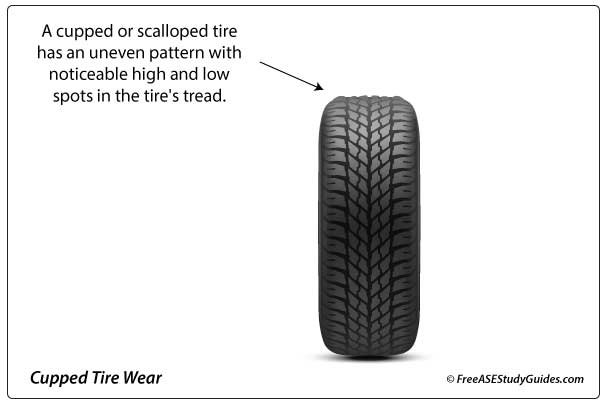
| Cupping or scalloping | High and low spots around the tread | Worn shocks or struts, imbalance | Suspension and wheel balance |
| Feathering | Tread blocks feel smooth on one side and sharp on the other | Toe misalignment | Wheel alignment |
| Patchy wear | Random worn areas across the tire | Imbalance, bent wheel, or tire defect | Balance, wheel condition, tire inspection |
1. Center wear
If the center of the tire is more worn than the edges, the tire may be overinflated. Too much air makes the middle of the tread carry more of the load. That reduces contact with the road and shortens tire life.
This pattern can also happen if the tire size or load rating is wrong for the vehicle, but pressure is the first thing to check. Many drivers add air and never recheck it later. Tire pressure should be measured when the tires are cold for the most accurate reading.
2. Edge wear on both sides
When both outer edges wear faster than the center, the tire may be underinflated. Low pressure lets the sides flex too much and heat up. That extra flex eats away the shoulders of the tire.
This pattern is dangerous because a low tire can overheat. In hot weather or on the highway, that raises the risk of tire damage. If you see this wear, check for slow leaks, valve stem problems, and pressure loss over time.
3. Inner edge wear or outer edge wear
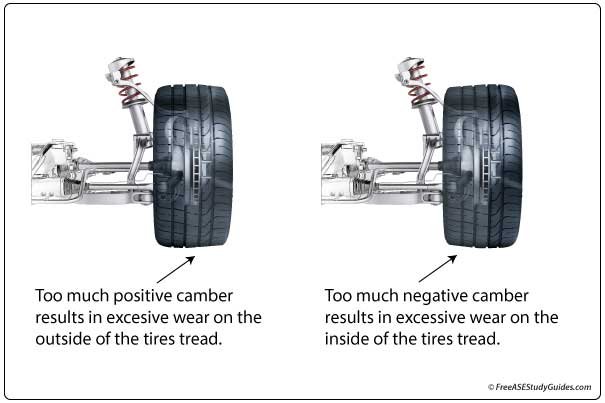
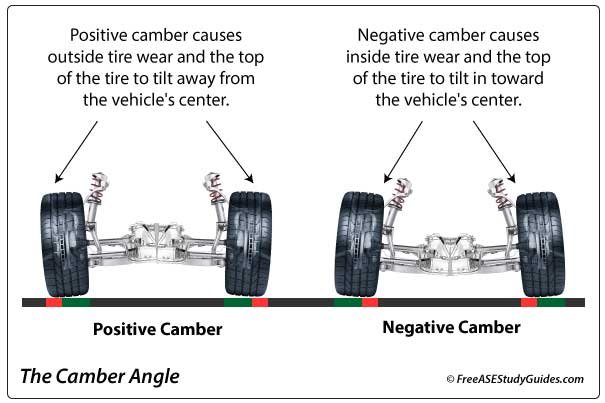
When one side of the tire wears faster than the other, alignment is often the main issue. This is especially common with camber problems, where the wheel tilts inward or outward. Too much toe angle can also cause rapid edge wear.
Drivers often miss this because the car may still feel normal. But the tire is not rolling flat on the road. It is dragging slightly, and that drags rubber away much faster than usual.
A helpful detail many people overlook: edge wear on just one tire can also point to a worn suspension part on that corner, not only a full alignment issue. Ball joints, control arm bushings, and tie rod ends can all change wheel position.
4. Cupping or scalloping
Cupping looks like a series of dips or chopped spots around the tread. If you run your hand over the tire, it may feel uneven or wavy. This is often linked to worn shocks or struts, because the tire is bouncing instead of staying planted on the road.
Wheel imbalance can add to the problem. So can loose suspension parts. If the car vibrates, bounces too long after hitting a bump, or feels unsettled at speed, do not ignore it.
5. Feathering
Feathering means the tread blocks feel smooth on one side and sharp on the other. This is usually caused by incorrect toe settings. The tire is being dragged slightly sideways as it rolls.
Feathering is easy to miss if you only look at the tire from one angle. Run your hand lightly across the tread. If it feels like the edge of a saw blade, alignment should be checked.
6. Patchy or random wear
Random worn spots may point to a tire balance issue, a bent wheel, or even a tire defect. Sometimes the problem starts after hitting a pothole or curb. In other cases, it comes from a tire that was not manufactured perfectly.
This is where a simple visual check may not be enough. A tire shop can inspect the wheel for runout, check the balance, and confirm whether the issue is coming from the tire or the rim.
Main causes of uneven tire wear
Uneven wear does not happen by chance. It usually comes from a few common problems, and many of them work together.
Credit: freeasestudyguides.com
Incorrect tire pressure
Low or high pressure is one of the fastest ways to damage tire life. Low pressure wears the edges. High pressure wears the center. Even a small pressure error can change how the tire sits on the road.
Check pressure at least once a month. Also check it before long trips and during big temperature changes. Cold weather can lower pressure. Heat can raise it.
Wheel alignment problems
Alignment controls how the wheels point and sit on the road. If the angles are off, the tire scrubs against the pavement instead of rolling cleanly. That leads to inner edge wear, outer edge wear, and feathering.
Alignment issues are often caused by potholes, curbs, speed bumps taken too hard, or normal wear in steering and suspension parts. A car can be out of alignment even if the steering wheel still looks straight.
Worn suspension parts
Shocks, struts, bushings, ball joints, and tie rods help keep the tire stable. When they wear out, the wheel can move in ways it should not. That movement creates cupping, uneven edges, and vibration.
This is a common hidden cause. People often replace tires without fixing the worn part that ruined them in the first place.
Wheel imbalance
If a wheel is not balanced, it can shake at certain speeds. That vibration can create uneven contact and lead to patchy wear or cupping over time. Balancing is especially important after tire replacement, repairs, or hitting a hard object.
Driving habits
Fast cornering, hard braking, aggressive acceleration, and repeated curb impacts all increase tire wear. So does carrying heavy loads often. Even if your car is mechanically fine, rough driving can shorten tire life.
One non-obvious point: short city trips can also cause wear problems because the tires may never fully warm up, but the suspension still takes repeated hits from potholes, bumps, and tight turns. Over time, this adds up.
How to inspect your tires at home
You do not need special tools to catch many tire wear problems early. A quick inspection once a month can make a big difference.
- Park on a flat surface and turn the steering wheel if needed to see the front tires clearly.
- Look at each tire from the front and side.
- Check whether the tread is worn evenly across the width.
- Run your hand gently across the tread to feel for sharp and smooth edges.
- Look for dips, bald patches, cracks, cuts, or bulges.
- Compare all four tires. One tire wearing faster than the others is an important clue.
You should also check the spare tire if your vehicle has one. A bad spare is useless in an emergency.
Credit: freeasestudyguides.com
Simple tools that help
A tire tread depth gauge is inexpensive and easy to use. A good air pressure gauge is even more important. If you want to understand how tire maintenance affects safety and wear, the U.S. National Highway Traffic Safety Administration has a helpful tire safety guide at nhtsa.gov.
How to fix uneven tire wear
The right fix depends on the cause. Replacing the tire alone is not enough if the real problem is still there.
Step 1: Correct the tire pressure
Start with the easiest and most common issue. Set all tires to the pressure listed on the vehicle door sticker or owner’s manual. Do not use the number molded on the tire sidewall. That number is the tire’s maximum pressure, not the correct vehicle setting.
If one tire keeps losing pressure, look for a nail, slow puncture, damaged valve stem, or leak at the bead. Fixing the leak early can save the tire.
Step 2: Get a wheel alignment
If the wear pattern points to edge wear or feathering, schedule an alignment soon. A proper alignment restores the wheel angles so the tire rolls straight and shares the load evenly.
Do not wait until the tires are badly damaged. Alignment should happen before the wear gets severe, because deep uneven wear usually cannot be reversed.
Step 3: Replace worn suspension parts
If shocks, struts, or steering parts are worn, alignment alone may not solve the problem for long. A mechanic should inspect the suspension for play, leaks, and looseness.
This step matters because new tires on a weak suspension can wear badly again in a short time. That is a costly mistake many drivers make.
Step 4: Balance the wheels
If the tires shake, feel rough at speed, or show cupping, have them balanced. Balance helps the wheel spin evenly and reduces vibration. It is a small job, but it can protect expensive tires.
Step 5: Rotate tires on schedule
Tire rotation helps spread wear across all four tires. Front tires often wear faster on front-wheel-drive cars because they handle steering and most of the braking load. Rotation can slow that down.
A common rule is every 5,000 to 8,000 miles, but follow your vehicle maker’s advice. The exact pattern depends on the drivetrain and tire type.
Step 6: Replace tires when damage is too far gone
Some wear cannot be fixed. If the tire has cords showing, deep bald areas, bulges, or severe uneven wear, replacement is the safest choice. Tires with heavy cupping or a badly worn inner edge may also need to be replaced even if some tread remains.
How to prevent uneven tire wear in the future
Prevention is cheaper than repair. A few habits can make your tires last much longer.
- Check tire pressure every month.
- Rotate tires on time.
- Get alignments after pothole hits or suspension work.
- Avoid hard curb strikes.
- Do not overload the vehicle.
- Replace worn shocks, struts, and steering parts quickly.
- Inspect tires after long trips or rough roads.
One detail that often gets ignored is load. A tire can wear unevenly even when pressure is correct if the vehicle is constantly overloaded. Extra weight changes how the tire flexes and heats. That leads to faster shoulder wear and more stress on suspension parts.
Do not mix old problems with new tires
If you buy new tires but keep the old alignment problem, the new set may wear out the same way. Before installing fresh tires, it is smart to check alignment, suspension, and balance. That gives the new tires a fair chance to last.
When uneven wear is a warning of a bigger problem
Sometimes tire wear is not the main issue. It is a symptom. If the car pulls to one side, shakes at speed, or the steering wheel is off-center, the problem may be deeper than the tires.
Listen for noise too. A wheel bearing problem, bent rim, or suspension fault can create wear and also make the car feel different on the road. If you notice several signs together, have the vehicle inspected sooner rather than later.
Also, never ignore a tire that wears out much faster than the others. That often means the problem is not random. It is usually tied to one wheel, one axle, or one part that needs attention.
Credit: freeasestudyguides.com
Final thoughts
Tire Wear Patterns Explained is really about learning to read the road history written on your tires. Center wear, edge wear, feathering, cupping, and patchy spots each point to a likely cause. Once you know what to look for, the fix becomes much clearer.
The best approach is simple: check pressure, inspect tread, rotate on time, and act early when something looks wrong. Small repairs are much cheaper than new tires and major suspension work. More importantly, they help keep your car safer and smoother to drive.
FAQs
1. What is the most common tire wear pattern?
Uneven edge wear is one of the most common patterns. It usually comes from low pressure or alignment problems. Many drivers notice it first on the front tires.
2. Can uneven tire wear be fixed?
Sometimes yes, but not always. Pressure problems, alignment issues, and worn suspension parts can be corrected. However, badly worn tires usually need replacement because the lost tread cannot grow back.
3. How often should I check tire wear?
Check your tires about once a month and before long trips. Also inspect them after hitting a pothole, curb, or road debris. A quick monthly check can catch problems early.
4. Is it safe to drive with uneven tire wear?
It depends on how bad the wear is. Mild uneven wear may still be drivable for a short time, but severe wear can reduce grip and increase the risk of a blowout. If cords are visible or the tire is badly damaged, replace it right away.
5. Why do new tires sometimes wear unevenly so fast?
New tires wear fast when the root problem was never fixed. Bad alignment, worn shocks, incorrect pressure, or unbalanced wheels can damage a new set quickly. That is why inspection before and after installation matters.