
The Volkswagen Jetta has been a favorite among compact sedan buyers for decades. Many people love its solid German engineering, smooth handling, and stylish design. But like all vehicles, the Jetta has experienced some reliability issues and recurring problems in certain model years. If you are thinking about buying a used Jetta, or you already own one, it is important to know what issues to expect based on the year.
This guide breaks down the most common problems for each Jetta generation, year by year. You will see how the challenges have changed over time, which years are more reliable, and what you should look out for to avoid surprises down the road.
Along the way, you’ll also find data, owner insights, and practical advice that can help you make a smarter decision.
Volkswagen Jetta Generations Overview
Before diving into year-specific issues, it helps to understand the main Jetta generations in North America:
- Mk3 (1993–1999)
- Mk4 (1999–2005)
- Mk5 (2005–2010)
- Mk6 (2011–2018)
- Mk7 (2019–Present)
Each generation brought new technology and design changes, but also introduced unique reliability challenges.
Mk3 Jetta (1993–1999): Early Electrical And Rust Concerns
The third-generation Jetta, popular in the 1990s, is now mostly seen as a budget used car. While simple in design, these models had their share of problems:
- Electrical gremlins: Owners often report issues with power windows, door locks, and dashboard lights failing.
- Rust: Many Mk3 Jettas suffer from rust on the fenders and underbody. In areas with heavy road salt, this problem is worse.
- Cooling system leaks: The plastic parts in the cooling system, especially the radiator and water pump, can fail unexpectedly.
One thing beginners overlook is that Mk3 Jetta parts can be hard to find today, making repairs tricky.
Mk4 Jetta (1999–2005): Window Regulators And Coil Pack Failures
The Mk4 Jetta offered more modern features, but brought new problems:
- Window regulator failures: Power windows often stop working due to cheap plastic clips inside the doors.
- Coil pack and ignition issues: For 1.8T engines, ignition coil packs are a weak point. Misfires and engine stalling are frequent complaints.
- Automatic transmission slipping: Many 2001–2003 Jettas developed transmission issues, with rough shifting or failure.
Not all years were equal. Early 2000s (2001–2003) are most affected by transmission problems. The 2004–2005 models improved, but window issues remained common.
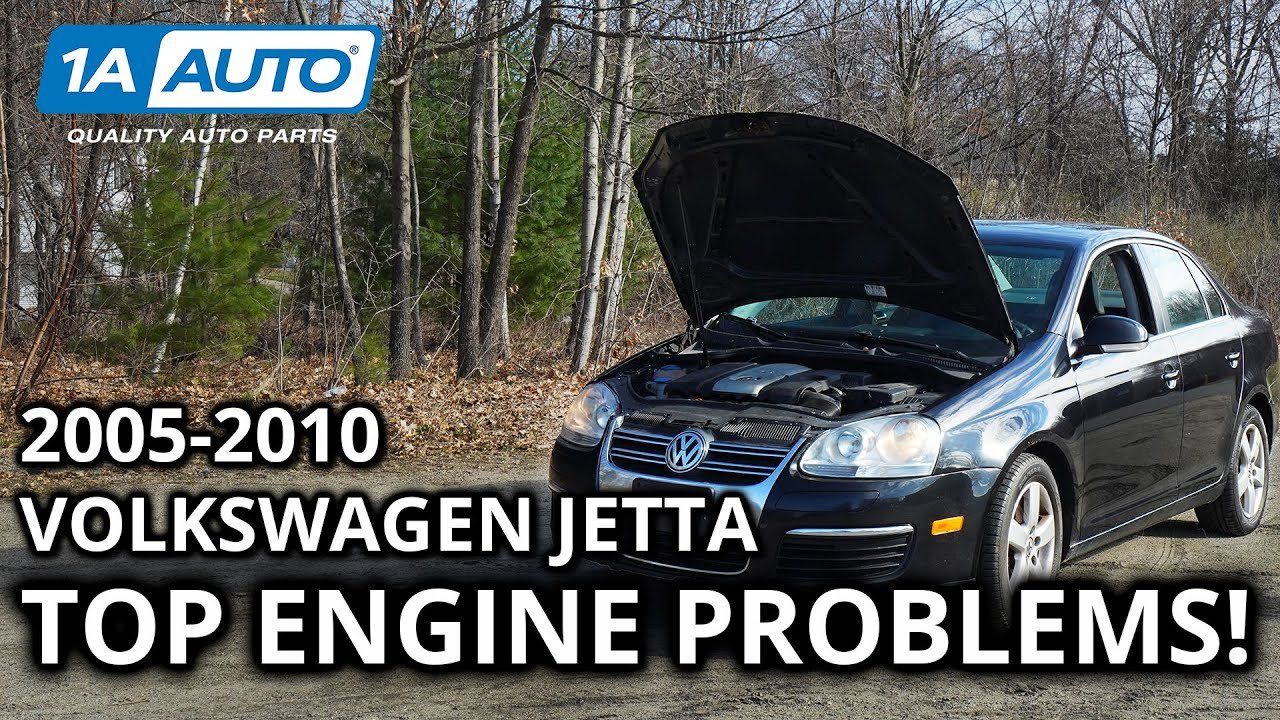
Mk5 Jetta (2005–2010): Transmission And Fuel System Problems
With the Mk5, Volkswagen added more safety and comfort features. But some years suffered from serious issues:
- DSG transmission failure: Models with the dual-clutch automatic (especially 2007–2009) sometimes experience harsh shifting or fail completely.
- Fuel pump and cam follower wear: The FSI engines (2006–2008) are known for high-pressure fuel pump failures, often due to worn cam followers.
- Check engine light: Many owners complain about the check engine light coming on for minor sensor failures, especially the intake manifold runner.
A non-obvious insight: If a used Mk5 Jetta has skipped regular oil changes, it’s much more likely to have engine and turbo problems.
Mk6 Jetta (2011–2018): Electrical, Suspension, And Turbo Issues
Volkswagen made the Mk6 Jetta more affordable, but cost-cutting led to new reliability concerns:
- Electrical glitches: The infotainment system and backup camera can freeze or fail. 2011–2013 models are especially affected.
- Suspension noises: Owners of 2011–2014 Jettas often hear clunks from the front suspension, usually from worn bushings or sway bar links.
- Turbo failure (1.8T/2.0T): Some turbocharged engines in 2013–2016 models have early turbocharger failures, often due to oil starvation or defective parts.
- Door lock actuator problems: Keyless entry and door locks can stop working, requiring expensive replacements.
A common mistake is ignoring recall notices on 2015–2016 TDI diesels, which can lead to emissions and engine issues later.
Mk7 Jetta (2019–present): Infotainment And Minor Build Quality Issues
The current Jetta generation is more reliable overall, but not perfect:
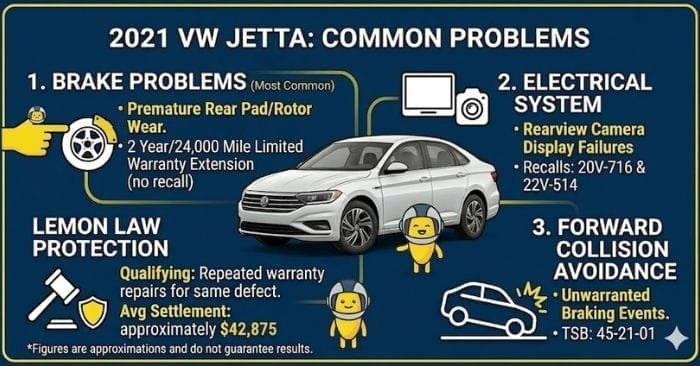
- Infotainment system bugs: Many 2019–2022 owners report the touchscreen freezing, Bluetooth dropping connections, or backup camera glitches.
- Rattles and trim issues: Some owners notice rattles from the dashboard or doors, especially in early 2019 models.
- AC system problems: There are reports of weak air conditioning in hot weather, sometimes due to faulty compressors.
- Electronic parking brake: A few 2020–2021 Jettas had the electronic parking brake fail to release, sometimes requiring dealer intervention.
While the mechanical systems are more robust, it’s wise to check for software updates if you buy a newer Jetta.

Credit: www.carid.com
Year-by-year Breakdown Of Common Problems
To help you compare at a glance, here is a summary of the most reported issues for each model year since 2000:
| Year | Main Problems | Severity |
|---|---|---|
| 2000–2002 | Window regulators, coil pack, auto transmission | Medium–High |
| 2003–2005 | Window regulators, electrical faults | Medium |
| 2006–2008 | DSG transmission, fuel pump, cam follower | High |
| 2009–2010 | DSG mechatronics, sensors | Medium |
| 2011–2013 | Electrical, suspension, infotainment | Medium |
| 2014–2016 | Turbo, door lock, emissions recall | Medium |
| 2017–2018 | Minor electronics, rattles | Low |
| 2019–2022 | Infotainment, AC, trim | Low |
Key Problem Areas Explained
Dsg Transmission Issues
The DSG automatic transmission (found in 2006–2013 models) is loved for fast shifting. But when problems appear, repairs can be expensive. Common signs include:
- Jerky starts
- Sudden loss of power
- Warning lights on the dash
Regular fluid changes every 40,000 miles can help prevent failure. Many skip this, leading to high repair bills.
Electrical And Sensor Failures
Electrical issues are a theme across Jetta generations. These range from simple window switches to more complex infotainment failures. Even small sensor problems can trigger the check engine light and cause failed emissions tests.
A tip for buyers: Always check every electronic feature during a test drive, not just the engine and transmission.
Turbocharger And Fuel System
Turbocharged Jettas (especially 2013–2016) can develop turbo failure if oil changes are missed or if the wrong oil is used. Fuel pump and cam follower wear are unique to the 2. 0T FSI engines (2006–2008). Missing these issues can lead to full engine failure, which is very costly.
Most Reliable And Least Reliable Jetta Years
Some model years stand out as particularly good or bad for reliability. Here’s a quick comparison:
| Most Reliable Years | Least Reliable Years |
|---|---|
| 2017–2018 | 2001–2003 |
| 2015 (post-recall) | 2006–2008 |
| 2019–2022 | 2011–2013 |
The 2017–2018 Jetta is widely seen as dependable, with only minor electronic faults. In contrast, 2001–2003 and 2006–2008 models are known for more serious and expensive problems.
Tips For Buying A Used Volkswagen Jetta
- Check service history: Look for regular oil changes, especially for turbo and DSG models.
- Test all electronics: Make sure windows, door locks, and infotainment work.
- Ask about recalls: Ensure all recalls (especially for TDI diesels) have been completed.
- Inspect for rust: Older models are prone to rust, especially around fenders and underbody.
- Listen for noises: Pay attention to suspension clunks or engine ticks during your test drive.
Many buyers forget to check for DSG service records. Skipping this step is a common mistake that can lead to big repair costs later.
Cost Of Fixing Common Jetta Problems
Repair costs vary widely depending on the year and issue:
| Problem | Typical Repair Cost (USD) |
|---|---|
| Window regulator replacement | $200–$400 |
| DSG transmission repair | $1,500–$5,000 |
| Turbocharger replacement | $1,200–$2,500 |
| Door lock actuator | $300–$600 |
| Infotainment system fix | $250–$1,000 |
| Fuel pump/cam follower | $600–$1,200 |
Older Jettas can be repaired for less if you use aftermarket parts, but newer models often require dealer-only components.
Real-world Example: 2014 Jetta Owner
Samantha bought a 2014 Jetta SE with 80,000 miles. She loved the car, but within a year, she faced these problems:
- Check engine light: Caused by a faulty intake manifold sensor. Cost: $400.
- Suspension noise: Worn sway bar link. Cost: $180.
- Infotainment freeze: Repaired under warranty.
Her advice: “Get a full inspection before buying, and budget for surprise repairs, especially if you want the turbo model.”
Credit: www.youtube.com
Preventing Problems: Maintenance Matters
Many Jetta issues can be reduced or avoided with proper care:
- Use high-quality synthetic oil and change it regularly.
- Replace DSG transmission fluid as recommended.
- Keep up with recall and software updates.
- Fix minor problems early, before they become bigger.
A detail many overlook: Even “reliable” Jetta years need careful maintenance. Skipping small repairs can lead to major issues over time.
When To Avoid A Used Jetta
You should be cautious about buying a used Jetta if:
- The seller cannot show maintenance records.
- There are warning lights on the dash.
- The DSG transmission is not smooth.
- There is visible rust or water damage.
- Electronics (especially windows and locks) do not work.
Waiting for a better example or paying a bit more for a well-cared-for car often saves money in the long run.
Credit: lemonlawexperts.com
Frequently Asked Questions
What Is The Most Reliable Volkswagen Jetta Year?
The 2017–2018 Jetta is considered the most reliable by owners and mechanics. These years have fewer major engine or transmission problems and mostly minor electronic faults.
Are Jetta Dsg Transmissions Really That Bad?
DSG transmissions are advanced and smooth when maintained. Problems are common if fluid changes are skipped or if the car is driven hard. Repairs can be expensive, so check service history before buying.
Do All Jettas Have Electrical Problems?
Not all, but electrical issues are more common in Mk4 and Mk6 generations. Problems range from window switches to infotainment bugs. Later models (2019+) have fewer electrical complaints.
How Long Do Volkswagen Jettas Last?
With good maintenance, a Jetta can last 150,000 to 200,000 miles. Regular oil changes, transmission service, and fixing problems early are key for a long life.
Where Can I Find More Detailed Jetta Reliability Data?
Reliable sources like Consumer Reports give in-depth reliability rankings, owner surveys, and repair histories for every Jetta year.
The Volkswagen Jetta is a solid choice if you pick the right year and take care of it. By knowing the common problems for each generation, you can avoid surprises and enjoy a smoother ownership experience.
