
The most common causes of uneven tire wear are improper wheel alignment, incorrect tire pressure, and worn suspension components. Failing to rotate tires regularly and out-of-balance wheels are also major contributors that can significantly shorten the life of your tires.
Why Even Tire Wear is Crucial for Your Safety and Wallet
Your tires are the only part of your vehicle that touches the road, making their condition essential for safe operation. Even tire wear ensures that the maximum amount of tread, known as the contact patch, is always on the pavement. This directly impacts your car’s handling, braking distance, and stability, especially in wet or slippery conditions.
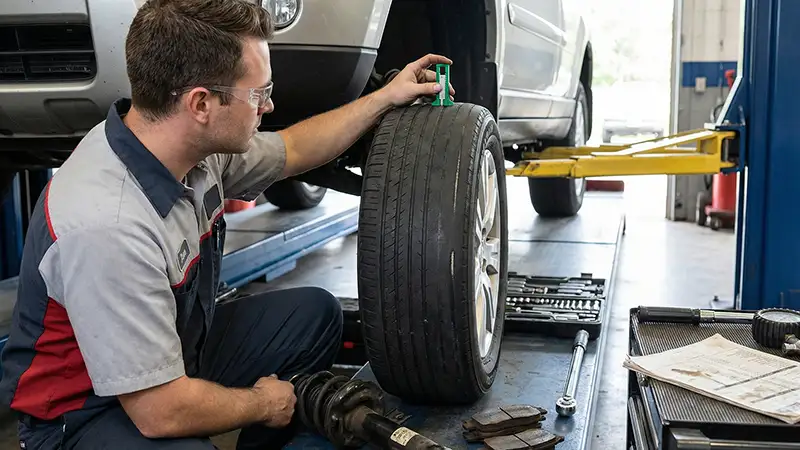
When tires wear unevenly, it compromises this contact patch. This can lead to a loss of traction, unpredictable steering, and an increased risk of hydroplaning. In severe cases, excessive wear on one part of the tire can weaken its structure, raising the risk of a sudden and dangerous blowout.
Beyond the critical safety implications, maintaining even tire wear is also economically smart. Tires that wear down uniformly last significantly longer, delaying the need for a costly replacement set. Furthermore, properly maintained tires reduce rolling resistance, which can lead to better fuel efficiency and save you money at the gas pump over time.
What Causes Uneven Tire Wear? The 7 Most Common Reasons
Understanding the root cause of your tire wear problem is the first step toward fixing it. While it may seem complex, the issue usually traces back to one of a few common culprits related to alignment, inflation, or mechanical components.
1. Improper Wheel Alignment
Wheel alignment refers to the adjustment of your vehicle’s suspension—the system that connects the vehicle to its wheels. It isn’t an adjustment of the tires themselves. Proper alignment ensures that your tires are angled correctly relative to the road and each other. When these angles are off, tires wear down rapidly and unevenly.
- Camber: This is the inward or outward tilt of the top of the tire when viewed from the front. Too much negative camber (tilting in) causes wear on the inside edge, while too much positive camber (tilting out) causes wear on the outside edge.
- Toe: This refers to the direction your tires are pointing relative to each other, like looking down at your feet. ‘Toe-in’ means the fronts of the tires are closer together than the rears, causing wear on the outer edges. ‘Toe-out’ is the opposite, causing inner edge wear. This often results in a ‘feathered’ wear pattern.
- Caster: This angle helps balance steering, stability, and cornering. While an incorrect caster angle is less likely to cause significant tire wear, it can affect steering stability and may contribute to wear in combination with other alignment issues.
2. Incorrect Tire Pressure
Maintaining the correct tire pressure is one of the easiest and most effective ways to prevent uneven wear. The manufacturer’s recommended pressure (found on a sticker in the driver’s side door jamb) is designed to ensure the tire’s tread makes full, even contact with the road.
- Under-inflation: When a tire is under-inflated, the center of the tread bows upward, forcing the outer edges to carry the vehicle’s weight. This results in excessive wear on both the inside and outside shoulders of the tire, leaving the center relatively untouched.
- Over-inflation: Conversely, an over-inflated tire bulges in the middle. This lifts the outer edges off the road, concentrating all the vehicle’s weight on a narrow strip in the center of the tread. This leads to rapid wear down the middle of the tire.
3. Worn or Damaged Suspension Components
Your car’s suspension system, including shocks, struts, and bushings, is designed to absorb bumps and keep the tires firmly on the road. When these parts wear out, they can no longer control the wheel and tire assembly effectively. A worn shock or strut allows the tire to bounce excessively as it travels, causing a distinctive ‘cupping’ or ‘scalloping’ wear pattern. This looks like a series of high and low spots, often creating a rumbling noise as you drive.
4. Unbalanced Wheels
A wheel and tire are never perfectly balanced on their own. Tiny imperfections in weight distribution can cause significant vibrations at high speeds. To counteract this, small weights are attached to the wheel rim during a balancing procedure. If a weight falls off or the balance is incorrect, the tire will hop or wobble as it rotates. This repeated motion causes irregular, patchy wear on the tread.
5. Failure to Rotate Tires
Tires on a vehicle do not wear at the same rate. On a front-wheel-drive car, for example, the front tires handle the forces of steering, acceleration, and most of the braking. This causes them to wear down much faster than the rear tires. Regularly rotating the tires—moving them to different positions on the vehicle—allows them to wear evenly over their lifespan. Without rotation, the front tires will wear out long before the rears, forcing a premature replacement.
6. Bent or Damaged Wheels
Hitting a deep pothole or a curb can do more than just jolt you; it can bend or damage the wheel itself. A bent wheel will not roll smoothly, creating a wobble or shake that translates directly into uneven and rapid tire wear. This type of wear is often localized to one spot and may be accompanied by a persistent vibration that changes with speed.
7. Driving Habits and Conditions
Your personal driving style can also play a role. Aggressive driving, such as taking corners at high speeds, rapid acceleration, and hard braking, puts extra stress on the tire treads, particularly the shoulder blocks. Similarly, frequently driving on poorly maintained or unpaved roads can accelerate wear and increase the risk of damage that leads to uneven wear patterns.
How to ‘Read’ Your Tires: A Guide to Different Wear Patterns
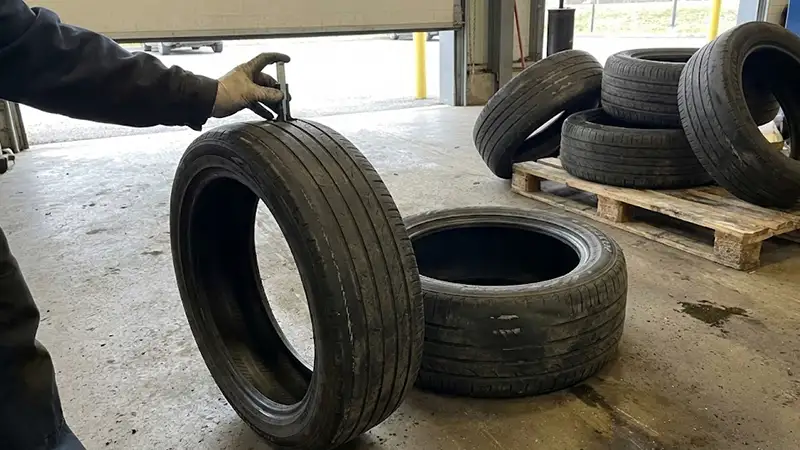
Your tires can tell you a story about your vehicle’s health. By learning to identify common wear patterns, you can diagnose potential problems before they become severe.
Center Wear
A strip of heavy wear down the exact center of the tread is a classic sign of over-inflation. The excessive pressure causes the tire to bulge, lifting the shoulders off the ground and forcing the center to do all the work.
Edge Wear (Both Edges)
When both the inner and outer shoulders of the tire are worn down more than the center, the cause is almost always under-inflation. The low pressure causes the tread to sag in the middle, putting the load on the outer edges.
Inner or Outer Edge Wear
Wear concentrated on just one edge of the tire points directly to a wheel alignment problem. Wear on the inside edge indicates too much negative camber, while wear on the outside edge is caused by too much positive camber.
Feathering or Saw-Toothed Wear
If you run your hand across the tread and the blocks feel smooth in one direction but sharp in the other (like the edge of a saw blade), this is called feathering. It’s a telltale sign of an incorrect toe alignment setting.
Cupping or Scalloping
Cupping appears as random, patterned high and low spots or ‘scoops’ around the tire’s edge. This pattern is a strong indicator that the wheel is bouncing as it travels down the road, usually due to worn shocks or struts or a severe wheel imbalance.
Patchy Wear
Random patches of wear, often appearing as bald spots, are typically caused by an out-of-balance wheel. The tire is hopping and vibrating as it spins, causing it to wear inconsistently. This can also occur if a vehicle has been parked for a long period, creating flat spots.
Your Proactive Checklist for Preventing Uneven Tire Wear
Preventing uneven tire wear is far easier and less expensive than dealing with its consequences. Incorporate these simple checks into your regular vehicle maintenance routine.
- Check Tire Pressure Monthly: Use a quality pressure gauge to check your tires when they are cold. Inflate them to the PSI listed on the sticker inside your driver’s door jamb, not the maximum pressure listed on the tire sidewall.
- Schedule Regular Alignments: Have your wheel alignment checked annually or any time you install new tires, have suspension work done, or notice your vehicle pulling to one side.
- Rotate Tires on Schedule: Follow the rotation interval in your owner’s manual, which is typically every 5,000 to 7,500 miles. This is a critical step for promoting long, even tread life.
- Balance Your Wheels: Ensure your wheels are balanced whenever you get new tires. If you feel a vibration in the steering wheel or seat that gets worse with speed, have the balance checked immediately.
- Inspect Suspension Regularly: When your car is in for service, ask the mechanic to perform a visual inspection of your shocks, struts, and other suspension components for signs of leaks or damage.
- Drive Mindfully: Avoid aggressive cornering, hard braking, and hitting potholes or curbs whenever possible to reduce unnecessary stress on your tires.
When to See a Professional Mechanic About Your Tires
While some tasks like checking tire pressure are simple DIY jobs, many causes of uneven tire wear require specialized equipment and expertise. It’s important to know when to seek professional help.
You should schedule an appointment with a qualified mechanic if you notice any of the following:
- Persistent vibrations in the steering wheel, seat, or floorboards.
- The vehicle consistently pulls to the left or right when you are driving straight.
- Visible wear patterns like cupping, feathering, or severe one-sided edge wear.
- A steering wheel that is off-center when driving straight.
- Unusual noises, such as clunking or squeaking, when going over bumps.
Wheel alignment, wheel balancing, and suspension repair are not DIY tasks. These jobs require precision machinery and a deep understanding of vehicle dynamics to be performed correctly and safely. Ignoring these symptoms can not only ruin a set of tires but also compromise your vehicle’s safety.
Frequently Asked Questions About Uneven Tire Wear
Here are answers to some of the most common questions about tire wear issues.
Can bad alignment cause uneven tire wear?
Absolutely. Improper wheel alignment is one of the most common and significant causes of uneven tire wear. Incorrect camber or toe angles force the tire to scrub against the pavement at an improper angle, rapidly wearing down the inner or outer edges of the tread.
What does uneven tire wear on the inside of the tire mean?
Wear on the inside shoulder of a tire is typically caused by a ‘negative camber’ alignment issue, where the top of the tire is tilted inward toward the vehicle. It can also be a symptom of worn suspension components, such as control arm bushings, that are allowing the wheel’s alignment to shift.
How often should I rotate my tires to prevent uneven wear?
A general guideline is to rotate your tires every 5,000 to 7,500 miles. However, it’s always best to consult your vehicle’s owner’s manual for the manufacturer’s specific recommendation. Regular rotation is key to ensuring all four tires wear down at an even rate.
Is it safe to drive with unevenly worn tires?
Driving with unevenly worn tires is not recommended as it can be unsafe. It reduces traction, can negatively affect steering and braking, and increases the risk of a blowout. If you notice significant uneven wear, you should have the tires and the underlying cause inspected by a professional as soon as possible.
Can I fix the cause of uneven tire wear myself?
Some causes are simple to address. For example, any driver can check and correct their tire pressure at home or a gas station. However, issues like wheel alignment, wheel balancing, and suspension repair require specialized tools and knowledge and should be left to a professional mechanic.
How much does it cost to fix what causes uneven tire wear?
The investment required to correct uneven tire wear depends entirely on the root cause. Addressing tire pressure is a simple, no-cost check you can do yourself. Professional services like wheel alignment or suspension component replacement address more complex mechanical issues and are a vital investment in your vehicle’s long-term health and safety.
Conclusion
Uneven tire wear is more than just a cosmetic issue; it’s a critical signal from your vehicle that something needs attention. The primary causes are almost always related to improper wheel alignment, incorrect tire pressure, or worn suspension parts. By regularly inspecting your tires for unusual wear patterns and adhering to a routine of proper maintenance—including pressure checks, rotations, and alignments—you can ensure your tires last longer and, most importantly, keep you safe on the road. If you spot a problem, don’t hesitate to consult a trusted mechanic for a professional diagnosis.
{“@context”:”https://schema.org”,”@type”:”Article”,”headline”:”What Causes Uneven Tire Wear? 7 Common Culprits & Fixes”,”mainEntityOfPage”:”https://autofixnotes.com/?p=1115″,”datePublished”:”2025-12-13T13:12:31+00:00″,”dateModified”:”2025-12-13T13:12:31+00:00″}