
Finding The Obd2 Port In Your Car: A Complete Guide
If you’ve ever seen your car’s “Check Engine” light turn on, you might have heard about something called an OBD2 port. This small connector is the key to reading your car’s computer data, diagnosing problems, and even doing basic repairs. But many car owners have one big question: Where is the OBD2 port in my car? Locating this port can seem tricky, especially if you’ve never tried before. With today’s vehicles becoming smarter, knowing how to find and use your OBD2 port is more important than ever.
This article will walk you through everything you need to know about the OBD2 port location. We’ll explain what it is, why it matters, how to find it in different cars, and what to do if you still can’t spot it.
You’ll also learn some helpful tips and facts most beginners miss. By the end, you’ll be ready to connect a scan tool confidently and understand more about your car’s health.
What Is An Obd2 Port?
The OBD2 port (On-Board Diagnostics, version 2) is a 16-pin connector found in most cars made after 1996. It gives access to your vehicle’s computer, which tracks data like engine performance, emissions, and error codes. Mechanics and car owners use this port to plug in OBD2 scanners or code readers. These tools help find out why warning lights are on and can even clear some trouble codes.
OBD2 isn’t just for mechanics. Many insurance companies, car trackers, and even DIY apps use the OBD2 port for different reasons. The port has become a standard in the auto industry, and every car sold in the US since 1996 must have one.
Why Do You Need To Find The Obd2 Port?
Knowing where your OBD2 port is can save you time and money. Here’s why it matters:
- Quick Diagnostics: If your check engine light is on, you can plug in an OBD2 scanner and get the error code within minutes.
- Save on Repairs: By reading codes yourself, you avoid unnecessary trips to the mechanic for minor issues.
- Emissions Testing: Many states require emissions checks, which use the OBD2 port to read your car’s pollution controls.
- Monitor Performance: Some devices can connect to your OBD2 port and give you real-time data about fuel use, speed, and more.
- Vehicle Tracking: Fleet managers and parents sometimes use OBD2 trackers to monitor driving behavior.
Most car owners don’t realize just how useful the OBD2 port can be. For example, you can use it to check if a used car has hidden problems before you buy.
Credit: www.autopi.io
Common Places To Find The Obd2 Port
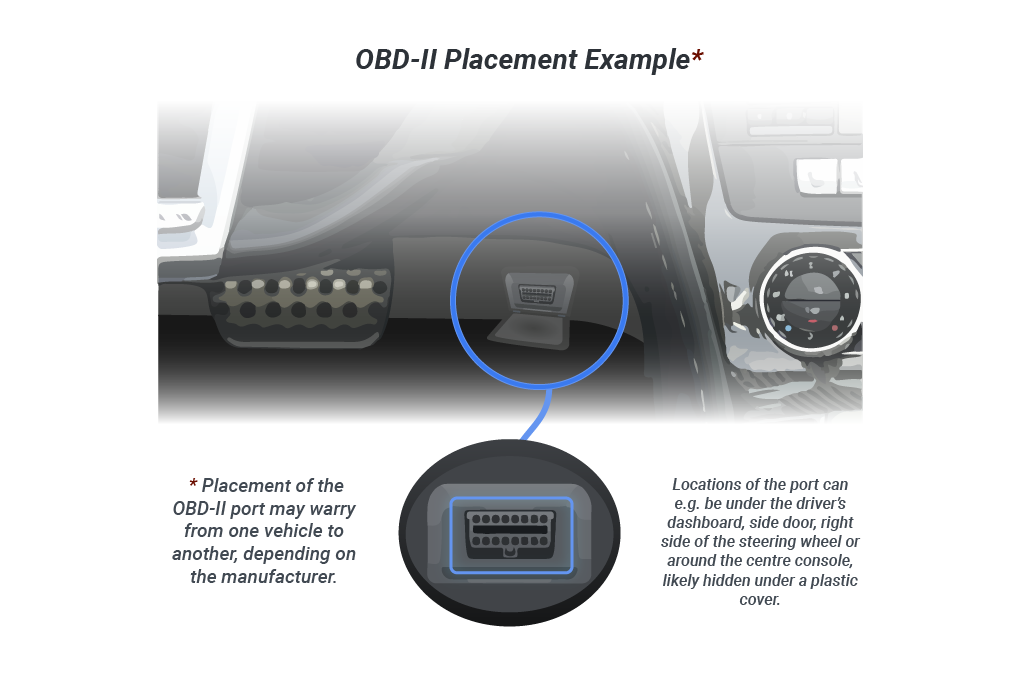
The exact location of the OBD2 port depends on your car’s make, model, and year. However, automakers must place it within 3 feet (about 1 meter) of the driver’s seat. Here are the most common spots:
Under The Dashboard (driver’s Side)
The majority of OBD2 ports are found under the dashboard, close to the steering column. This is usually just above where your knees would be when sitting in the driver’s seat. Sometimes, it’s hidden by a small cover or flap.
Near The Center Console
On some vehicles, especially European models, the port might be near the center console, either below the climate controls or next to the gear shifter.
Under Or Next To The Glove Box
A few manufacturers place the OBD2 port under the glove box or on the passenger side of the dashboard. This is less common but worth checking if you can’t find it near the steering wheel.
Inside A Storage Compartment
Certain cars hide the OBD2 port inside small storage spaces, like the coin tray, ashtray, or under a removable panel. Always check for these little covers in the lower dash area.
Left Kick Panel Or Fuse Box
Some vehicles, especially trucks and SUVs, might have the port near the left kick panel (by the driver’s left foot) or inside the fuse box cover.
How To Find The Obd2 Port Step-by-step
If you’re not sure where to look, follow these steps:
- Sit in the Driver’s Seat: Start from the main driving position, as the port must be nearby.
- Look Under the Dashboard: Use a flashlight if needed. Check above your knees and feel for a 16-pin trapezoid-shaped connector.
- Check Left and Right of the Steering Wheel: Move your head under the steering column and look both ways. Sometimes, the port is just out of direct sight.
- Inspect the Center Console: Search around the gear shifter, below the radio, or near the handbrake.
- Look for Small Covers: Some ports are behind plastic covers marked “OBD,” “Diagnostics,” or with a symbol of an engine.
- Check Passenger Side: If you don’t find it on the driver’s side, look under the glove box or in the passenger footwell.
- Review Your Owner’s Manual: The manual often shows the exact position, sometimes with a diagram.
Examples: Obd2 Port Locations By Popular Car Brands
To make things easier, here’s a quick comparison of where you’ll typically find the OBD2 port in popular car makes:
| Brand | Typical Location | Special Notes |
|---|---|---|
| Toyota | Under dashboard, left side | Usually above brake pedal |
| Honda | Under dashboard, left or center | Sometimes near hood release |
| Ford | Below steering wheel | Often near fuse box access |
| Volkswagen | Near center console or below fuse box | Behind a cover |
| BMW | Inside driver’s footwell | May be covered, sometimes left side |
| Hyundai | Below dashboard, left side | Easy to spot, no cover |
It’s important to note that even within the same brand, the location can change from model to model and year to year.
Obd2 Port Location: Us, European, And Asian Cars
Let’s look at differences between cars from different regions.
| Region | Common Location | Notes |
|---|---|---|
| US (Chevy, Ford, Dodge) | Under dash, left side | Usually easy access |
| European (BMW, VW, Audi) | Center console or under dash | Sometimes hidden by a cover |
| Asian (Toyota, Honda, Kia) | Left lower dash | Near hood release or fuse box |
Non-obvious tip: Some high-end European cars have a plastic flap or door you must open before the port is visible. Always check for covers that blend in with the interior.

Credit: install.verizonconnect.com
What Does The Obd2 Port Look Like?
The OBD2 port always has a trapezoid shape with 16 small holes for the pins. It’s usually black or dark grey and about 2 cm wide. The connector is not round or square—so if you see a round plug, that is not the OBD2 port.
Here are some hints to help you recognize it:
- Trapezoid shape, wider at the top
- 16 pin slots arranged in two rows
- Usually labeled “OBD,” “DLC” (Data Link Connector), or has a small engine symbol nearby
If you want to see how it looks, you can find real examples on trusted sites like Wikipedia.
Unusual Obd2 Port Locations
While most cars follow the standard placement, a few have unique setups:
- Mazda MX-5 Miata (older models): Near the fuse box under the dashboard, but sometimes above the pedals where it’s hard to spot.
- Chevrolet Corvette (late 1990s): Behind a small cover on the passenger side of the center console.
- Porsche (some models): Under a removable panel in the driver’s footwell.
- Mini Cooper: Sometimes inside a panel near the driver’s right knee.
If you’ve checked the usual spots and still can’t find it, look for removable panels or ask a dealership.
What If You Can’t Find The Obd2 Port?
Sometimes, the port seems to be missing. Here’s what to do:
- Double-Check the Year: Only cars made for the US market from 1996 onward must have OBD2. Older models might use OBD1, which is different.
- Check for Aftermarket Changes: In some used cars, the port may be blocked or moved due to modifications, alarms, or sound systems.
- Look for Extra Covers: Some mechanics or previous owners install covers to prevent tampering.
- Contact the Dealer: If you can’t find it after a good search, the dealer can show you the exact location.
Advanced tip: Some rare cars have the OBD2 port in the trunk or under the rear seat, but this is extremely uncommon.
Safety Tips When Using The Obd2 Port
Working with your car’s electronics is usually safe, but keep these tips in mind:
- Turn off the engine before plugging or unplugging a scanner.
- Avoid forcing the connector—it should slide in easily.
- Don’t use metal tools near the port to avoid short circuits.
- Never leave devices plugged in for long periods unless they’re made for it (like trackers).
Credit: www.autopi.io
How To Use The Obd2 Port
Once you’ve found the port, here’s how to use it:
- Get an OBD2 scanner or code reader—these are available online or at auto parts stores.
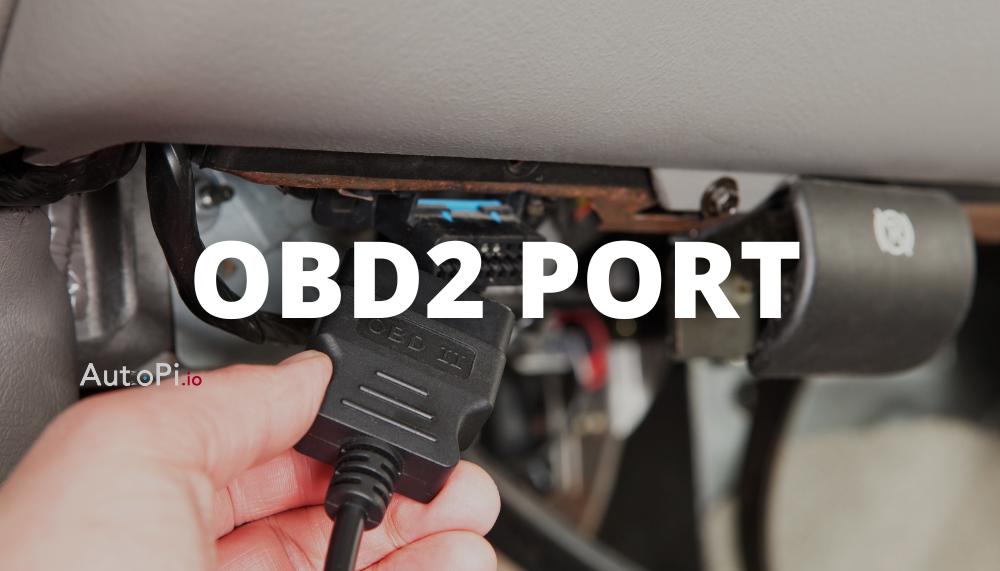
- Plug the scanner into the port (it only fits one way).
- Turn the ignition to “On” (but don’t start the engine).
- Follow the scanner’s instructions—it will read codes and show them on its display.
- Look up the codes in your manual or online to understand the problem.
Some scanners connect to your phone or laptop using Bluetooth or Wi-Fi, making it easy to save data or read it on a bigger screen.
Common Mistakes To Avoid
- Assuming all ports are in the same place: Even cars of the same model but different years can have the port in a new spot.
- Mistaking other connectors for OBD2: Don’t try to force your scanner into a non-OBD2 socket.
- Forgetting to check the manual: Your owner’s manual often has a diagram.
- Not checking for covers: Many ports are behind small, easy-to-miss covers.
Obd2 Port In Electric And Hybrid Cars
Most electric and hybrid cars, like the Toyota Prius or Tesla Model S, also have an OBD2 port. The location is usually the same—under the dashboard or near the driver’s left foot. However, some electric vehicles may hide the port behind a more secure cover for safety reasons.
Table: Obd2 Port Location By Car Type
Here’s a helpful summary of common locations by car type:
| Car Type | Typical OBD2 Location |
|---|---|
| Sedan | Under dashboard, near steering column |
| SUV | Left kick panel, under dash |
| Truck | Near fuse box, driver’s side |
| Sports Car | Hidden in center console or behind a panel |
| Electric/Hybrid | Under dash, sometimes with extra cover |
Frequently Asked Questions
Where Exactly Is The Obd2 Port In My Car?
In most cars, the OBD2 port is under the dashboard on the driver’s side, just above your knees. If you can’t find it there, check the center console or look for small covers near the fuse box.
Can All Obd2 Scanners Fit Every Car?
Yes, if your car is from 1996 or newer (US market), the OBD2 port is standardized. Any OBD2 scanner should fit. Older or imported cars may use different systems.
What Does The Obd2 Port Look Like?
The OBD2 port is a small trapezoid-shaped connector with 16 pin slots, usually black or gray. It’s not round or square.
Is It Safe To Use The Obd2 Port Myself?
Yes, using the OBD2 port is safe if you follow instructions. Make sure the car is off before plugging or unplugging a device, and never use excessive force.
What If I Still Can’t Find The Obd2 Port?
If you’ve checked all common locations and can’t find the port, check your owner’s manual or ask your dealership. Some rare cars have unusual locations, but the port must be present in all cars made after 1996 (US).
Finding your car’s OBD2 port might seem confusing at first, but with careful searching and the tips above, you’ll be able to locate it quickly. Remember, this simple connector can help you take control of your car’s health and even save money on repairs. If you want to dive deeper, check out resources like Wikipedia for technical details and more images. With a little practice, using your OBD2 port will become second nature.