
When your car suddenly refuses to start or the battery dies much faster than usual, it can leave you frustrated and confused. Many drivers quickly blame a bad battery, but often the real problem is the alternator not charging the battery. The alternator is a key part of your car’s electrical system, keeping the battery charged and running all electronics while the engine is on. If the alternator fails, your car’s battery will drain, and you could end up stranded. Knowing the symptoms of an alternator not charging the battery can help you spot the issue early and avoid bigger problems.
Let’s dive deep into the most common and not-so-obvious signs, why they happen, and what you should do if you notice them.
What Does The Alternator Do?
The alternator is a generator attached to your car’s engine. Its main job is to:
- Charge the battery while the engine runs
- Power electrical items (lights, radio, AC, etc.)
- Supply energy for engine controls and sensors
When the alternator works properly, your battery stays full and all electronics run smoothly. But if it stops charging, the battery must supply all power, and it will quickly run out.
Clear Symptoms Your Alternator Is Not Charging The Battery
Spotting a charging problem early can save you money and trouble. Here are the most reliable signs:
1. Battery Warning Light Is On
Most cars have a battery-shaped warning light on the dashboard. When the alternator is not charging, this light often comes on. It might show up as “ALT,” “GEN,” or just a battery symbol. Sometimes, it lights up only when using many electrical devices at once. It’s important not to ignore this light—even if your car still seems fine.
2. Dim Or Flickering Headlights
If your headlights get dimmer at night or start to flicker, this is a major clue. Headlights need stable power, so when the alternator isn’t charging, they use battery power. The battery alone cannot keep the lights bright for long. You may notice:
- Lights get dimmer when you stop at a red light
- Flickering when you turn on the heater or AC
3. Weak Or Dead Battery
A battery that keeps dying, even after a jump-start, often points to a charging issue. If you replace the battery and it still drains quickly, the alternator is likely at fault. The battery is not designed to power the car alone for extended periods.
4. Trouble Starting The Car
A car that cranks slowly or won’t start could mean the battery has little charge. If the alternator is not working, each time you start the car, the battery gets weaker. Eventually, it won’t have enough power to turn the engine.
5. Electrical Accessories Not Working Properly
Alternator problems can cause all sorts of electrical oddities. You might notice:
- Power windows move slowly or stop working
- Radio turns off by itself
- Dashboard lights are dim or flicker
- Heated seats or AC fans run weakly
6. Strange Noises From The Engine
A failing alternator can make unusual sounds, such as:
- Grinding: Worn bearings inside the alternator
- Whining: The alternator’s belt slipping or failing
While other engine parts can cause noise, these sounds together with electrical trouble are a warning sign.
7. Burning Smell
If the alternator is overworked or the belt is slipping, you might smell burning rubber or hot wires. This happens because the alternator is getting too hot or the belt is wearing out.
8. Frequent Need To Jump-start
If you regularly need to jump-start your car, the battery isn’t being recharged while you drive. Even a new battery will drain if the alternator isn’t working.
9. Stalling Engine
Without enough power, the car’s engine and fuel systems can suddenly stall. You may notice the engine cuts out after driving for a short time. This is dangerous, especially at high speeds.
10. Unusual Gauge Readings
On some cars, the voltmeter or battery gauge will show lower than normal voltage (below 13.5 volts) when the alternator is failing. The needle may move up and down, or stay in the “red” zone.
11. Warning Messages On The Dashboard
Modern cars sometimes show a “Check Charging System” or “Charging System Fault” message. These alerts mean the car’s computer has detected a charging problem.
12. Swollen Or Leaking Battery
A battery that is swollen or has leaking acid may be overcharged or undercharged, both of which can happen if the alternator is not working right.
13. Rapid Battery Discharge Even When Driving
If your battery drains quickly even while you’re driving, the alternator is not sending power to keep it full. This is an advanced sign the problem needs urgent attention.
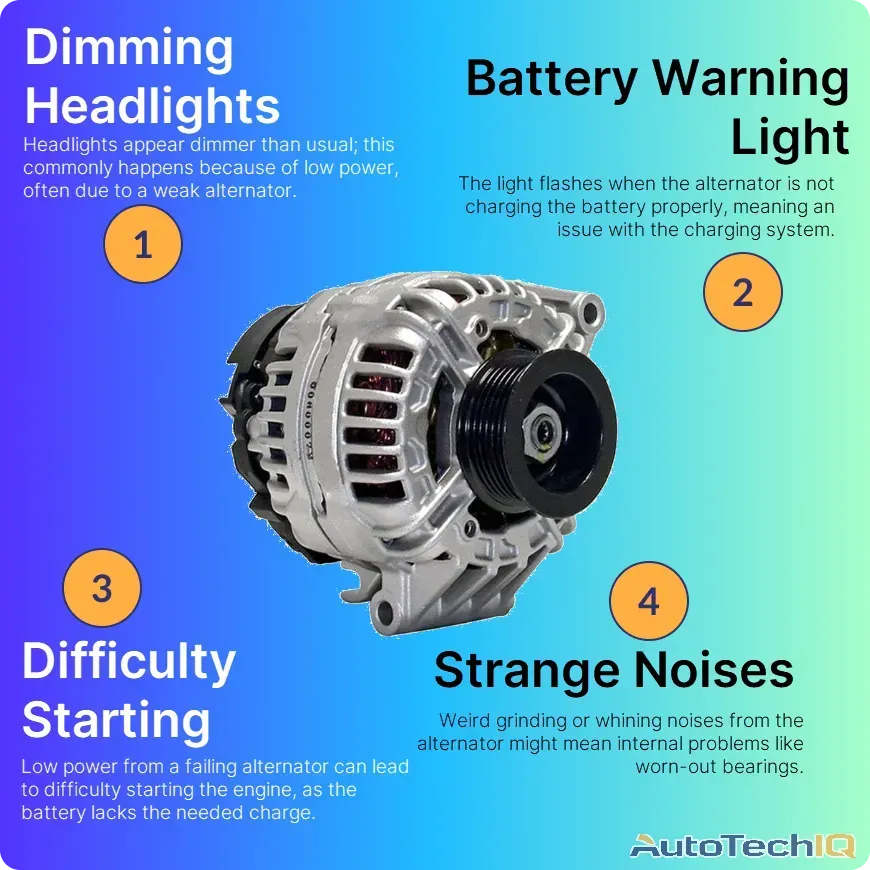
Credit: www.autotechiq.com
Data: How Long Can You Drive With A Bad Alternator?
It’s risky to drive with an alternator that isn’t charging. But how far can you really go? The answer depends on your battery’s health and the electrical load.
| Situation | Estimated Distance | Risk Level |
|---|---|---|
| Fully charged battery, daytime, no AC/radio | 30-60 miles (48-96 km) | Medium |
| Old battery, night driving, headlights on | 10-20 miles (16-32 km) | High |
| Multiple accessories on (AC, radio, charging devices) | 5-15 miles (8-24 km) | Very High |
Even if the car still runs, the risk of total loss of power is high. It’s best to stop and fix the issue as soon as possible.
Alternator Vs. Battery Failure: How To Tell The Difference
It’s easy to confuse a bad battery with a bad alternator. Here’s how to spot the difference:
| Symptom | Alternator Problem | Battery Problem |
|---|---|---|
| Car cranks but won’t start | Sometimes | Often |
| Battery dies quickly after jump-start | Yes | No |
| Electrical issues while driving | Yes | Rare |
| Warning light on dashboard | Yes | No |
A simple test: Jump-start the car and remove the cables. If the car stops right away, the alternator is likely the problem.
What Causes An Alternator To Stop Charging?
Understanding the causes can help prevent future breakdowns:
- Worn out alternator: Most alternators last 80,000 to 150,000 miles.
- Broken or loose belt: The serpentine belt drives the alternator. If it slips, charging stops.
- Bad wiring or connections: Corroded or loose wires break the power flow.
- Faulty voltage regulator: Controls how much voltage the alternator sends.
- Blown fuse: Protects the charging circuit. If blown, charging stops.
- Engine oil or coolant leak: Can damage the alternator over time.
Simple Ways To Check If Your Alternator Is Failing
You don’t always need a mechanic right away. Try these safe checks:
- Listen for strange sounds under the hood.
- Look for the battery warning light when you start the car.
- Use a multimeter to test the battery voltage. With the engine running, it should read between 13.5 and 14.5 volts.
- Smell for burning rubber near the engine.
If you notice several symptoms at once, get your car checked soon.
What To Do If You Think Your Alternator Isn’t Charging
Act quickly to avoid getting stranded. Here’s what to do:
- Turn off extra electronics (radio, AC, phone chargers) to save battery.
- Drive to a repair shop as soon as possible.
- Do not turn off the engine until you reach your destination.
- Call for roadside help if the car stalls or won’t start.
Never ignore the warning signs. A dead battery or loss of power while driving can be very dangerous, especially on highways.
How Mechanics Diagnose Alternator Problems
A professional will:
- Check battery and alternator voltage with special tools
- Inspect the alternator belt and wiring for damage
- Test the voltage regulator
- Look for error codes in the car’s computer
If the alternator is bad, they will usually replace it. Sometimes, just fixing a loose belt or connection solves the problem.

Credit: www.smartautotraining.com
Real-world Example: Case Study
Imagine you drive a 2015 Honda Civic and start to notice the battery warning light coming on. Soon, you see your headlights flickering at night and your radio cutting out. One morning, the car cranks slowly and won’t start. A mechanic tests the voltage and finds only 12 volts with the engine running (should be 14 volts). Replacing the alternator solves all the issues.
This example shows how multiple symptoms often point to the alternator, not just the battery.
The Cost Of Ignoring Alternator Problems
Delaying repairs can lead to:
- Stranded vehicle: Complete loss of power
- Damaged battery: Over-drained batteries often cannot be recharged
- Electrical system damage: Can affect expensive engine controls
- Safety risks: Losing lights or power steering while driving is dangerous
It’s cheaper and safer to fix alternator problems early.

Credit: www.youtube.com
Quick Comparison: Symptoms Of Alternator Vs. Starter Failure
Many confuse alternator problems with starter issues. Here’s a quick look:
| Problem | Alternator Failure | Starter Failure |
|---|---|---|
| Car stalls while driving | Yes | No |
| Clicking noise when starting | Rare | Common |
| Warning lights on dashboard | Yes | No |
| Battery keeps dying | Yes | No |
If your car starts with a jump but soon dies, it’s almost always the alternator.
Two Non-obvious Insights Most Beginners Miss
- Alternator problems can damage a new battery. Many people replace the battery when the real problem is the alternator. This leads to wasted money and more breakdowns.
- Modern cars with smart alternators may not show classic symptoms. Some vehicles use “smart” charging systems that only charge at certain times. This can hide the problem until the battery is almost empty. Regular testing is important, especially before long trips.
Where To Learn More
Understanding your car’s charging system can save you time and money. For more technical details, check the Alternator (Automotive) page on Wikipedia.
Frequently Asked Questions
What Is The Main Job Of An Alternator?
The alternator charges the battery and powers all electrical systems while the engine runs. Without it, the battery drains quickly.
Can A Car Run With A Bad Alternator?
A car can run for a short time on battery power alone, but will eventually lose all power and stop, especially if you use headlights or AC.
How Much Does It Cost To Replace An Alternator?
The price depends on your car model, but most alternator replacements cost between $300 and $700, including labor.
What Happens If I Ignore Alternator Symptoms?
Ignoring the signs can leave you stranded, damage your battery, and even cause electrical fires or safety issues.
How Can I Test My Alternator At Home?
Use a multimeter to check the battery voltage with the engine running. It should read 13.5–14.5 volts. If it’s lower, the alternator may not be charging.
Spotting alternator trouble early keeps your car running smoothly and saves you from costly repairs. Always pay attention to the warning signs and act quickly.