
Every driver knows the small moment of worry when a dashboard warning light comes on. These lights are more than just symbols—they are the car’s way of telling you something is wrong or needs your attention. Ignoring them can lead to expensive repairs, breakdowns, or even unsafe situations.
Yet, many people don’t know what each light means, or how to react when one appears. Understanding these warning signals can save you money, stress, and even prevent accidents.
Modern cars come with complex systems, and their dashboards can show dozens of different icons. Some lights are simple reminders, like a low fuel warning. Others point to serious problems, like engine or brake system failures. This article will help you decode the most common car dashboard warning lights, explain what actions to take, and give you some practical tips.
When you’re done reading, you’ll feel more confident behind the wheel—and ready to respond wisely when a new light appears.
Why Dashboard Warning Lights Matter
Dashboard warning lights are not just decorations. They are designed to keep you safe and protect your vehicle. These lights are connected to sensors throughout your car. When something is wrong, the sensor sends a message to the car’s computer, which then turns on the correct symbol.
Some problems need immediate attention, while others are just reminders.
Ignoring a warning light can lead to bigger issues. For example, driving with an engine oil light on might damage your engine, costing thousands to fix. In some cases, ignoring a brake warning light could be dangerous. Fixing a small problem early is usually much cheaper and safer than waiting.
Common Dashboard Warning Lights And Their Meanings
Let’s look at the most important dashboard warning lights. Each light is usually a different color and shape. Knowing these colors will help you decide how quickly you need to act.
| Light Color | Meaning | Action Needed |
|---|---|---|
| Red | Serious problem or safety issue | Stop and check immediately |
| Yellow/Orange | Problem needs attention soon | Check soon or schedule repair |
| Green/Blue | System is working (status light) | No action required |
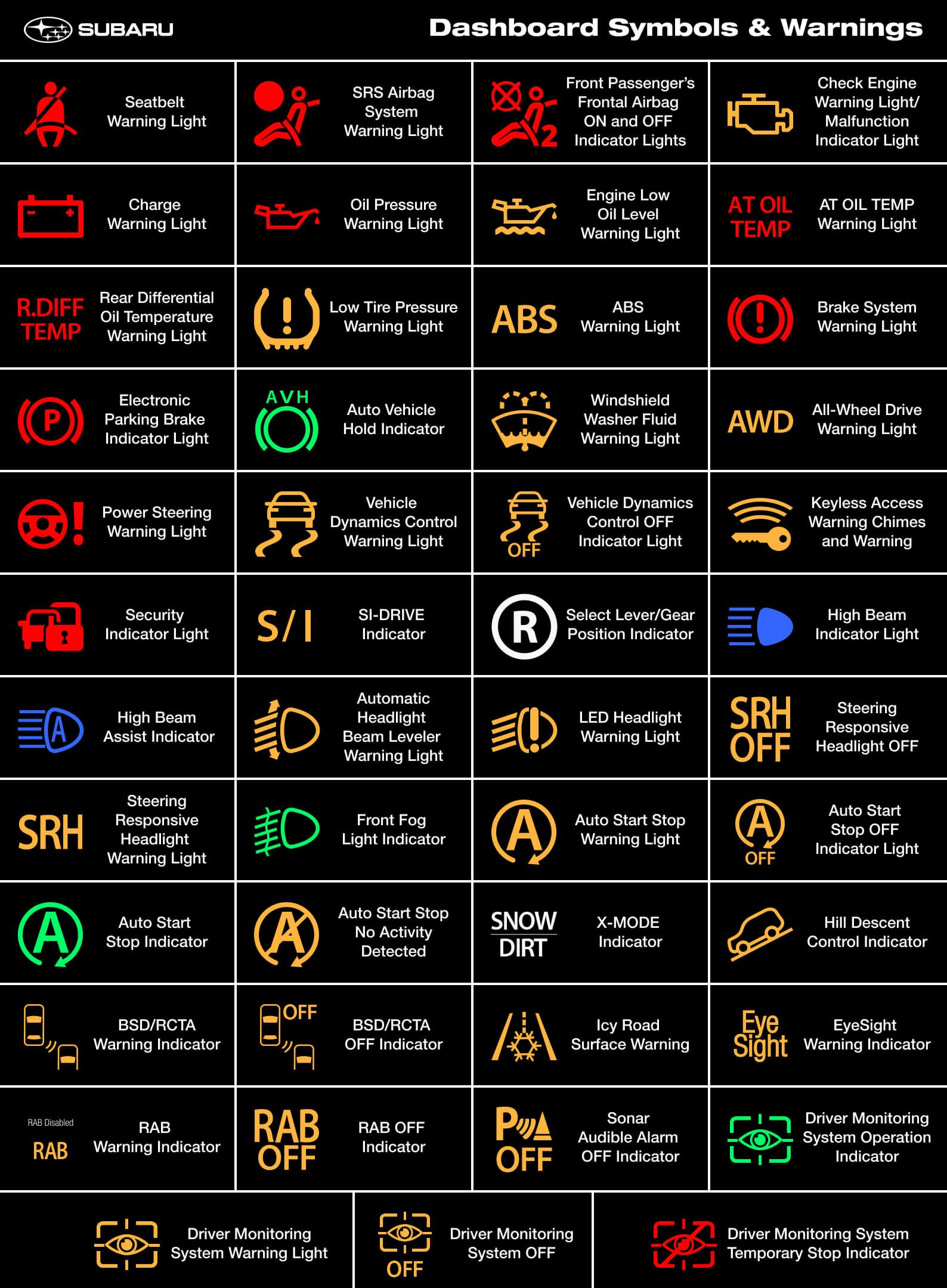
1. Check Engine Light
This is usually a yellow or orange symbol that looks like an engine. It means the engine or emission system found a problem. Sometimes it’s a small issue, like a loose gas cap. Other times, it’s more serious.
- If the light is steady: You can usually keep driving, but get it checked soon.
- If the light is flashing: This means a severe problem, like a misfire. Stop driving and get help.
Tip: Many auto parts stores will read this code for free.
2. Oil Pressure Warning Light
This red oil can symbol means your car’s oil pressure is low. Oil keeps your engine parts moving smoothly.
- Stop the engine immediately.
- Check your oil level. Add oil if needed.
- If the light stays on, do not drive—call for help.
Insight: Driving without oil pressure can destroy the engine in minutes.
3. Battery/charging System Warning Light
This symbol shows a battery. It means your battery isn’t charging as it should.
- Turn off unnecessary electronics (AC, radio).
- Drive to a safe place and turn off the car.
- The problem could be the battery, alternator, or wiring.
Example: If you notice your headlights dimming, it’s likely a charging problem.
4. Brake System Warning Light
A red exclamation mark inside a circle or the word “BRAKE.” It could mean:
- The handbrake is on.
- Brake fluid is low.
- There’s a problem with the braking system.
If the light stays on after releasing the handbrake, stop and check your brakes.
5. Abs Warning Light
ABS stands for Anti-lock Braking System. This yellow light means the ABS is not working, but your regular brakes still work.
- Drive carefully and get your ABS checked soon.
- In slippery conditions, your car may not stop as safely.
6. Coolant Temperature Warning Light
This red thermometer symbol means your engine is overheating.
- Pull over and turn off the engine.
- Wait for the car to cool down before opening the hood.
- Check coolant level, but never open a hot radiator.
Non-obvious insight: Overheating can warp engine parts, leading to costly repairs.
7. Tire Pressure Monitoring System (tpms) Light
A yellow symbol that looks like a flat tire with an exclamation mark. It means one or more tires are low on air.
- Check tire pressures.
- Fill tires to the correct pressure.
Tip: Cold weather can cause this light to come on, even if you don’t have a flat.
8. Airbag Warning Light
A red symbol showing a person with a circle. This means a problem with your airbag system.
- Airbags may not work in a crash.
- Get the system checked as soon as possible.
9. Traction Control/esp Light
A car with squiggly lines or the letters ESP. When this flashes, the car is controlling wheel slip.
- If it stays on, the system has a fault. Drive carefully and get it checked.
10. Engine Temperature Light
Sometimes shown as a thermometer in liquid. Like the coolant light, it signals overheating.
- Stop the car and let it cool.
- Check coolant levels.
11. Transmission Temperature Light
Some cars have a warning for the transmission. A red gear or thermometer means the transmission is overheating.
- Stop and let the car cool down.
- Transmission repairs are expensive, so don’t drive until it’s checked.
12. Service Vehicle Soon Light
This light means your car needs scheduled maintenance. It’s not an emergency, but don’t ignore it.
- Check your owner’s manual for what service is due.
13. Door Ajar Warning Light
A car with open doors symbol. One or more doors are not fully closed.
- Stop and check all doors before driving.
14. Seat Belt Reminder Light
A red person with a seatbelt symbol. Someone doesn’t have their seat belt on.
- Buckle up. It’s the law in most countries.
15. Fuel Warning Light
A yellow gas pump symbol. You’re low on fuel.
- Fill up soon to avoid running out.
16. Washer Fluid Warning Light
A symbol that looks like a windshield with a spray. Your washer fluid is low.
- Fill the fluid tank. Dirty windows are dangerous.
17. Power Steering Warning Light
A steering wheel with an exclamation mark. There’s a problem with your power steering.
- Steering may feel heavy.
- Get it checked as soon as possible.
18. Glow Plug Indicator (diesel Engines)
A yellow coil symbol. Wait for the light to go out before starting the engine.
- If it stays on, there’s a fault with the glow plugs.
19. Security/immobilizer Warning Light
A car with a key symbol. There may be a problem with your anti-theft system.
- Car may not start or may stop running.
- Try another key or check the battery in your key fob.
20. High Beam Indicator
A blue headlight symbol. This is just to tell you your high beams are on.
- No action needed.
Credit: www.devoesubaruofnaples.com
How To React When A Warning Light Appears
Not all warning lights mean you have to stop right away. But knowing how to react can keep you safe and avoid damage.
- Red Lights: Stop as soon as it’s safe. Check the owner’s manual. Call for help if you’re unsure.
- Yellow/Orange Lights: You can usually keep driving, but get your car checked soon.
- Green/Blue Lights: These are mostly informational. No action is needed.
If you’re ever unsure, it’s safer to pull over and check. Modern cars also store error codes that mechanics can read to diagnose the problem.
Less Common (but Important) Dashboard Lights
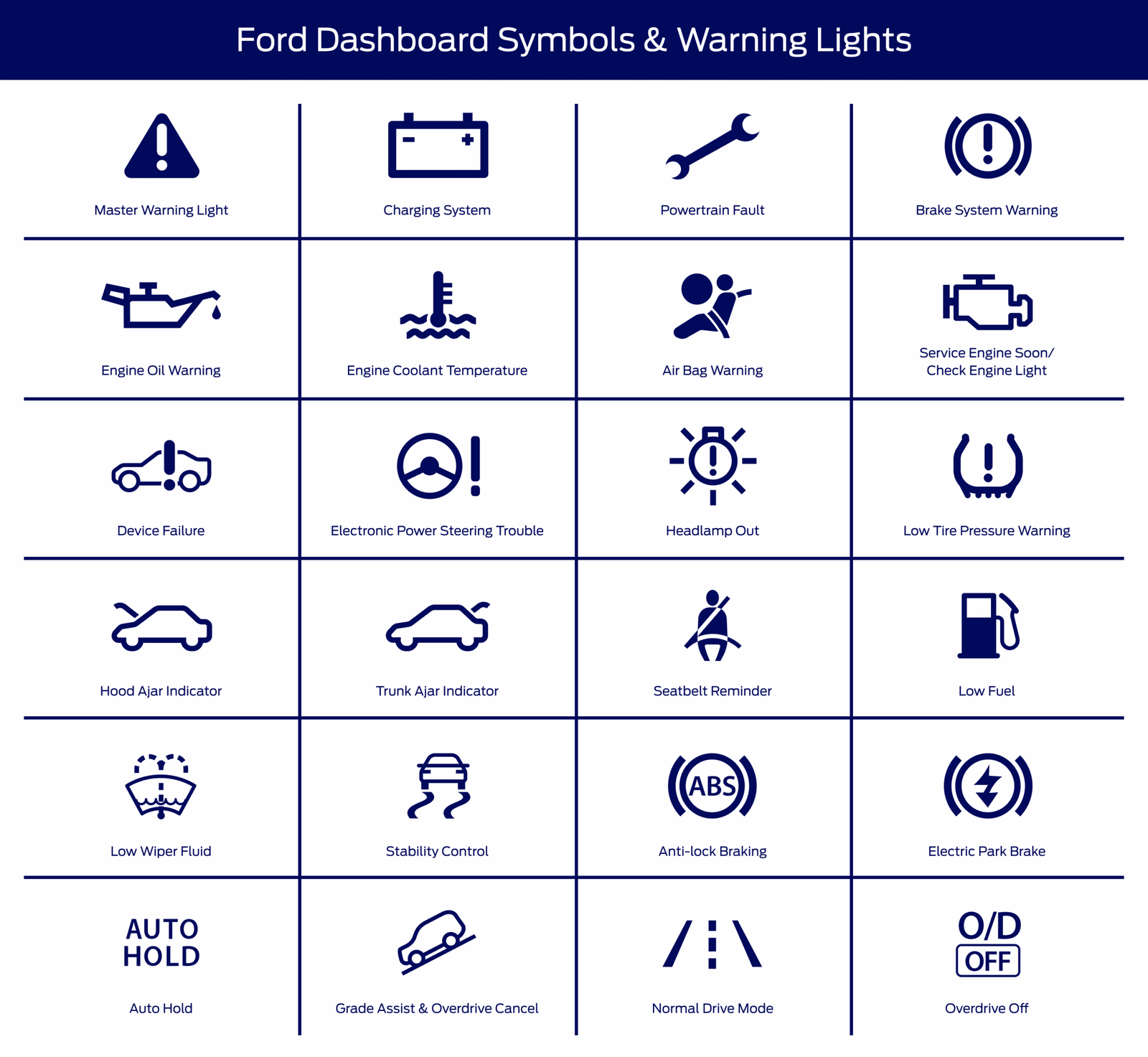
Some cars have special warning lights for advanced systems. These may include:
- Lane Departure Warning: Alerts if you drift out of your lane.
- Adaptive Cruise Control: Warns of a problem with the cruise system.
- Automatic Emergency Braking: Signals an issue with collision prevention.
These features make modern cars safer, but they also add new symbols. Always check your manual if you see a light you don’t recognize.
Credit: veteransfordtampa.com
Example Dashboard Light Comparison
Here’s a quick comparison of three common warning lights:
| Warning Light | Color | Urgency | Action |
|---|---|---|---|
| Engine Oil Pressure | Red | Immediate | Stop engine, check oil |
| Check Engine | Yellow | Soon | Check or repair soon |
| Seat Belt Reminder | Red | Immediate | Buckle seat belt |
Why Some Warning Lights Flash
A flashing light usually means the problem is urgent. For example, a flashing check engine light means a misfire that can damage your car’s catalytic converter. Stop driving and get help. A steady light is less urgent, but still needs attention.
Non-obvious insight: Not all warning systems are perfect. Sometimes, a sensor may fail and give a false alarm. If a light comes on but your car feels normal, it’s still best to have it checked.
How To Learn Your Car’s Warning Lights
Every car is a little different. The best way to learn is:
- Read your owner’s manual. It explains every symbol for your car.
- Watch for lights during the “bulb test” (when you turn the key before starting).
- If you see a new light, take a photo to show your mechanic.
Experience-based tip: Some warning lights only appear briefly, so pay attention when you start your car.
The Cost Of Ignoring Dashboard Lights
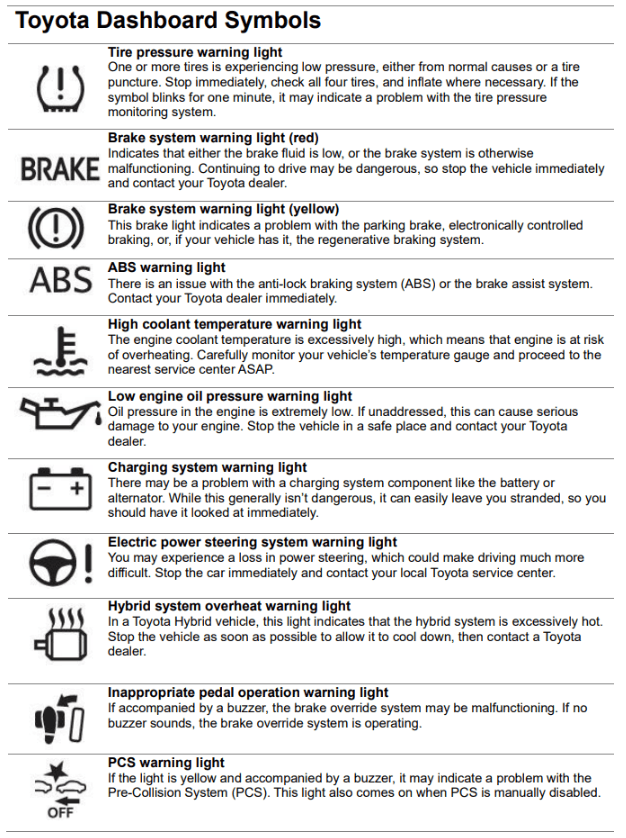
Many drivers hope warning lights will go away. This is risky. For example, ignoring a low oil pressure light can quickly ruin an engine. Delaying brake repairs can double your repair bill and put you in danger.
According to the AAA, the average repair cost for ignoring a warning light can be 40% higher than fixing it early. Prevention is always cheaper.
Credit: www.romeovilletoyota.com
Dashboard Warning Lights And Modern Technology
New cars have more sensors and warning lights. Some even send warnings to your smartphone. This technology helps you fix problems faster, but it also means learning more symbols. Electric and hybrid cars have special lights for batteries and charging systems.
As vehicles get smarter, learning these lights will be even more important.
Practical Tips For Managing Dashboard Warning Lights
- Keep a small notebook in your car. Write down when a light comes on and any other problems you notice.
- Don’t ignore red lights. They mean something is wrong right now.
- Check basics first. For example, make sure the gas cap is tight if the check engine light comes on.
- Get a code reader. These small tools are inexpensive and can tell you what the car’s computer sees.
- Ask for help. If you’re not sure, call a mechanic. Many problems are easy to fix if caught early.
If you want to see a full list of dashboard symbols, you can visit the Wikipedia page on dashboard symbols.
Frequently Asked Questions
What Should I Do If A Red Warning Light Appears While Driving?
Pull over as soon as it’s safe. Red lights mean a serious problem or safety issue. Check your owner’s manual and call for help if you’re not sure what to do.
Can I Drive With The Check Engine Light On?
If the light is steady, you can usually drive for a short time. But schedule a repair soon. If it’s flashing, stop immediately and get help.
Why Did My Tire Pressure Light Turn On In Cold Weather?
Cold air makes tire pressure drop. This can cause the TPMS light to come on, even if you don’t have a flat. Check your tires and fill them to the correct pressure.
How Can I Reset A Dashboard Warning Light?
Some lights reset themselves after fixing the problem. Others need a mechanic or a code reader to reset. Never just clear a light without fixing the cause.
Are Dashboard Lights The Same In All Cars?
No. Most symbols are similar, but some cars use different icons or add extra lights for special features. Always check your owner’s manual for your car’s symbols.
Recognizing car dashboard warning lights is one of the simplest ways to protect your vehicle and yourself. By learning what these signals mean and how to react, you can avoid costly repairs and drive with more confidence. The next time a new light appears, you’ll know exactly what to do.
