
Reading your car’s dipstick may seem simple, but it’s one of the most important habits for keeping your engine healthy. Many car owners skip this check, trusting sensors or waiting for warning lights. However, learning how to use the car dipstick correctly can prevent expensive repairs, improve performance, and extend your engine’s life. This guide will walk you through everything you need to know—step by step. Even if you are new to cars or not confident with English, you will find this easy to follow.
What Is A Car Dipstick?
A car dipstick is a thin metal rod found inside your engine’s oil compartment. It helps you check the oil level and sometimes the oil’s condition. This simple tool gives you quick information about your engine’s health without needing special devices.
- Oil dipstick: Measures engine oil level and quality.
- Transmission dipstick: Some cars have a second dipstick for transmission fluid.
Most drivers use the oil dipstick, so this guide focuses on that.
Why Regular Dipstick Checks Matter
Many people ignore the dipstick, thinking modern cars don’t need manual checks. This is a mistake. Here’s why:
- Oil sensors can fail. Not all cars warn you when oil is low.
- Oil degrades over time. Old or dirty oil loses its ability to protect the engine.
- Leaks are common. Small leaks can lead to big engine problems if not noticed early.
- Oil level affects performance. Too little or too much oil can both harm your engine.
A quick dipstick check takes only two minutes and can save you hundreds or even thousands in repairs.
Credit: www.machinerylubrication.com
Where To Find The Dipstick
Open your car’s hood when the engine is off and cool. Look for a small handle or ring, often yellow or orange. It’s usually near the front of the engine. Some cars have two dipsticks—one for oil, one for transmission. Make sure you’re using the oil dipstick.
If you’re not sure, check your owner’s manual. The dipstick’s location can be different for each car model. For example:
| Car Type | Dipstick Location | Handle Color |
|---|---|---|
| Honda Civic | Front left of engine | Yellow |
| Toyota Corolla | Front center | Orange |
| Ford Focus | Right side | Yellow |
When To Check Your Oil
Checking at the right time gives you the most accurate reading. Follow these tips:
- Wait until the engine is cool. Hot oil can burn you and gives inaccurate levels.
- Park on a level surface. If your car is on a slope, the oil will collect in one area and give a wrong reading.
- After the car sits for a few minutes. This allows oil to settle in the pan.
Checking after a long drive or right after turning the engine off can lead to mistakes. Always give the oil time to settle.
Step-by-step: How To Read A Car Dipstick
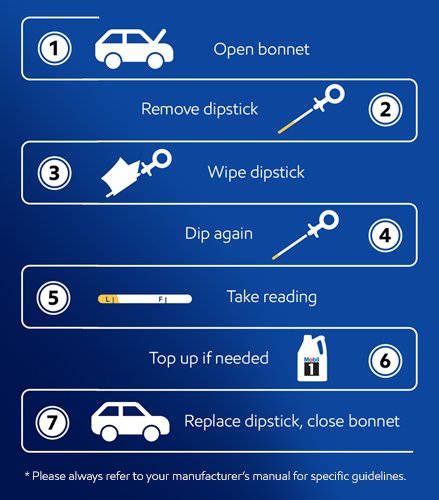
Many beginners worry about making a mistake. Here’s a clear guide:
- Open the hood and find the dipstick.
- Pull the dipstick out slowly. Have a clean rag or paper towel ready.
- Wipe the dipstick clean with the rag. Oil splashes during driving and covers the dipstick, making the first reading unreliable.
- Insert the dipstick back fully into its tube. Wait two seconds.
- Pull the dipstick out again and hold it horizontally.
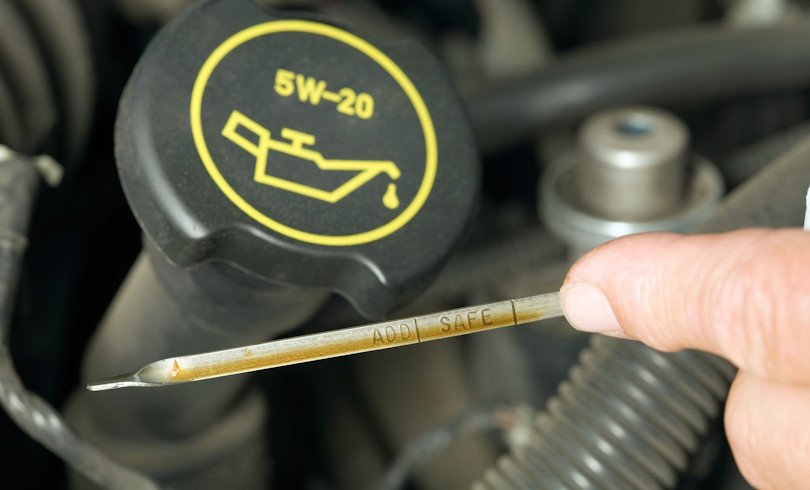
- Read the oil level. Look for the marks at the end of the dipstick. They may say “MIN” and “MAX,” or have two dots/lines.
- Check oil quality. The oil should be brown and smooth, not black, gritty, or milky.
It’s easy to rush and read the dipstick the first time, but always wipe and re-insert for accuracy.
Understanding Dipstick Markings
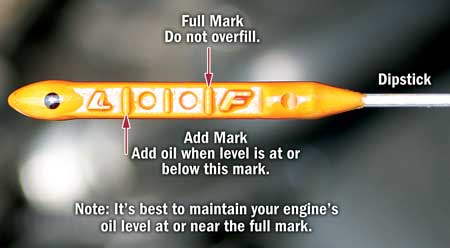
The dipstick will have two main marks:
- Lower mark (MIN/Low): The minimum safe oil level.
- Upper mark (MAX/Full): The maximum safe oil level.
Your oil should be between these marks—not below, and not over.
| Oil Level | What It Means | Action Needed |
|---|---|---|
| Below MIN | Too little oil, engine at risk | Add oil immediately |
| Between MIN and MAX | Correct level | No action needed |
| At MAX | Full, but don’t overfill | OK, but check again soon |
| Above MAX | Too much oil | Drain excess oil |
Tip: If the oil is slightly above or below the marks, always adjust. Small differences matter.
What Your Oil’s Appearance Tells You
Oil color and texture can warn you of hidden problems. Here’s what to look for:
- Clear brown/yellow: Oil is healthy.
- Dark brown or black: Oil is old; time for a change.
- Milky or cloudy: Coolant may be leaking into the oil—a serious issue.
- Gritty or metal bits: Engine may have internal damage.
- Foamy: Usually caused by overfilling or coolant leak.
If you see anything unusual, get your car checked by a mechanic. Ignoring strange oil can lead to engine failure.
How To Top Up Or Change Your Oil
If your oil is low, topping up is simple:
- Buy the correct oil type for your car (check your manual).
- Remove the oil filler cap on the engine.
- Pour oil slowly, a little at a time.
- Wait a minute and check the dipstick again.
- Repeat until the oil is in the safe zone.
Never overfill. Too much oil can damage seals and cause leaks.
For a full oil change, you’ll need to drain the old oil and replace the oil filter. This is best done every 5,000 to 10,000 km (or as your car manual says). If unsure, a mechanic can do it for you.
Credit: www.mobil.co.uk
Common Mistakes When Reading The Dipstick
Beginners often make these errors:
- Not wiping the dipstick before reading. This leads to a false high reading.
- Checking on a slope. The oil shifts, giving an inaccurate level.
- Not pushing the dipstick all the way in. Incomplete insertion means a wrong reading.
- Confusing oil dipstick with transmission dipstick. Always double-check.
- Ignoring oil color and texture. Only checking the level misses important clues.
Even experienced drivers can slip up. Make this check a habit and do it with care.
How Often Should You Check Your Oil?
A good rule is to check your oil every month. But if your car is older or you drive long distances, check every two weeks. After any long trip, it’s wise to check again.
Some modern cars use oil faster than older ones. Turbocharged engines, for example, can burn oil quickly. Always follow your car’s manual, but more frequent checks are safer.
Dipstick Reading: Real-world Examples
Let’s look at some real scenarios:
- Example 1: Sarah checks her dipstick and sees the oil just above the MIN mark. She adds half a liter, waits, and rechecks. The oil is now at the safe level. She avoids engine wear.
- Example 2: Mark notices his oil is dark and gritty. He changes the oil and filter. His engine runs smoother and lasts longer.
- Example 3: Anna sees milky oil on the dipstick. She visits a mechanic, who finds a coolant leak. Fixing it early saves her from a blown engine.
These examples show why regular dipstick reading is so valuable.
Comparing Oil Types For Topping Up
When topping up, the oil type matters. Here’s a quick comparison:
| Oil Type | Best For | Change Interval (km) | Cost (per liter) |
|---|---|---|---|
| Conventional | Older cars, simple engines | 5,000–7,000 | $5–$8 |
| Synthetic Blend | Modern engines, moderate use | 7,000–10,000 | $8–$12 |
| Full Synthetic | High-performance, new cars | 10,000–15,000 | $12–$20 |
Tip: Mixing oil types is usually safe in an emergency, but always match the viscosity (for example, 5W-30).
Two Non-obvious Insights Most Beginners Miss
- Temperature affects readings. Checking oil when the engine is hot or cold can change the result. Always be consistent—preferably check when the engine is cool and the car is level.
- Oil level can drop faster than you think. Even new cars can use up oil quickly in hot weather, long trips, or when driving aggressively. Don’t assume “it was fine last month” means it’s fine today.
What If You Overfill Or Underfill?
- Overfilling: Too much oil creates pressure, which can damage seals and gaskets. If you overfill, drain some oil as soon as possible.
- Underfilling: Not enough oil leads to friction and overheating. Always add oil if the level is low.
If you’re unsure, it’s better to be slightly under the MAX than above it.
Tips For Better Dipstick Reading
- Use a bright light if it’s hard to see the oil.
- Wear gloves to keep your hands clean.
- Keep a funnel in your car for easy topping up.
- Record your checks in a small notebook or phone app. This helps you notice trends or sudden changes.
These habits make the process fast and reliable.
When To See A Mechanic
Some dipstick readings mean you need professional help:
- Milky or foamy oil
- Metal particles in oil
- Oil always low, even after topping up
- Burning smell or smoke from engine
Don’t ignore these warning signs. Quick action can save your engine.
Credit: www.paulsautorepair.com
Trusted Resources For Car Maintenance
If you want to learn more about dipsticks, oil changes, or car care, check the WikiHow Oil Check Guide for step-by-step photos and extra tips.
Frequently Asked Questions
How Often Should I Check My Car’s Dipstick?
It’s best to check your oil every month, or every two weeks for older cars or after long trips. More frequent checks are better for high-mileage or hard-driven cars.
Can I Use Any Oil To Top Up My Engine?
No, always use the type and viscosity recommended in your car’s manual. In emergencies, use the closest match, but switch back as soon as possible.
What Does It Mean If My Oil Looks Milky?
Milky or cloudy oil usually means coolant is leaking into the engine. This is a serious problem—see a mechanic right away.
Is It Bad If I Overfill My Oil?
Yes, overfilling can damage engine seals and cause leaks. If you add too much, drain the excess oil as soon as possible.
Why Does My Car Use Oil Quickly?
Some engines burn oil faster, especially turbocharged or high-performance models. Old engines and certain driving styles (like fast driving or towing) also increase oil use. Regular checks help prevent running too low.
Keeping an eye on your car’s dipstick is a small task with big rewards. It keeps your engine running smoothly, helps spot problems early, and saves you money. With a bit of practice, reading the dipstick becomes easy and quick—a smart habit for every driver.