
Every car relies on a series of fluids to work smoothly and safely. You might not think about these liquids often, but they are the lifeblood of your vehicle—helping it run, cool down, stop, and even steer. One of the easiest ways to catch car problems early is by paying attention to the color of these fluids. Spotting a strange puddle under your car or noticing a new color on the dipstick can save you from expensive repairs later. But with so many fluids and colors, how do you know which is which? This guide breaks down each major car fluid by its typical color and what those colors mean. You’ll learn how to use a car fluid color identification chart to spot leaks, prevent breakdowns, and keep your vehicle in top shape.
Why Fluid Color Matters In Your Car
Every fluid in your car has a job, and its color often tells you if it’s healthy or if there’s a problem. When you recognize the normal colors, you can quickly spot leaks or issues before they get worse. For example, dark oil might mean it’s time for a change, while a red puddle could signal a transmission leak.
Here’s why knowing fluid colors is important:
- Early warning: Unusual colors signal leaks or contamination.
- Safety: Some leaks, like brake fluid, can make your car dangerous to drive.
- Save money: Fixing fluid problems early prevents big repairs later.
- DIY checks: You can spot issues without a mechanic.
Many beginners miss one key point: colors can change as fluids age. For example, new engine oil is amber, but it darkens as it gets older. Also, mixing of fluids or contamination can create unexpected colors, which is why checking regularly is smart.
The Main Car Fluids And Their Colors
Let’s look at the most important fluids found in almost every car, what colors to expect, and what color changes mean.
1. Engine Oil
Normal color: Amber to light brown (new), dark brown to black (used).
What it does: Lubricates engine parts, reduces friction, and carries away heat.
Warning signs:
- Milky oil: Coolant might be mixing with oil—often a head gasket problem.
- Gritty or sludgy oil: Oil is dirty, and needs changing.
Example: If you check your dipstick and see black, thick oil, it’s time for a change. If the oil looks creamy or foamy, get your engine checked immediately.
2. Transmission Fluid
Normal color: Bright red or pink (new), dark red or brown (used).
What it does: Lubricates and cools the transmission, helping gears shift smoothly.
Warning signs:
- Brown or burnt smell: Fluid is old or overheated. Needs changing.
- Milky color: Water contamination—can ruin the transmission quickly.
Example: A red puddle under your car near the middle could be a transmission fluid leak.
3. Coolant / Antifreeze
Normal color: Bright green, orange, pink, blue, or yellow (depends on type and brand).
What it does: Absorbs engine heat and prevents freezing.
Warning signs:
- Rusty or cloudy coolant: Corrosion or contamination.
- Oily film: Oil may be leaking into the cooling system.
Example: If you see bright green or orange fluid under the front of your car, it’s likely coolant.
4. Brake Fluid
Normal color: Clear to light yellow (new), darker yellow or brown (used).
What it does: Transfers force from the brake pedal to the wheels.
Warning signs:
- Very dark fluid: Fluid has absorbed water or become dirty—replace it.
- Leaking: Even a small leak is a serious safety risk.
Example: A small puddle near a wheel or under the brake pedal can mean a dangerous brake fluid leak.
5. Power Steering Fluid
Normal color: Clear, amber, or pink (varies by type and brand).
What it does: Makes steering easy by creating hydraulic pressure.
Warning signs:
- Foamy or dark fluid: Air or contamination in the system.
- Leaking: Can lead to stiff or noisy steering.
Example: If your steering feels heavy and you see pinkish fluid under the front of your car, check your power steering fluid.
6. Windshield Washer Fluid
Normal color: Blue, but sometimes green, orange, or pink.
What it does: Cleans your windshield.
Warning signs:
- Cloudy or strange-colored fluid: Sometimes means contamination, but usually not serious.
Example: Blue puddles under the front of your car are often harmless washer fluid leaks.
7. Differential Fluid (gear Oil)
Normal color: Honey-colored to dark brown.
What it does: Lubricates the gears in your car’s differential.
Warning signs:
- Burnt smell: Fluid is old or overheated.
- Very dark color: Needs changing.
Example: Gear oil often smells strong and sulfur-like. If you see thick, brown fluid near your car’s axles, it could be from the differential.
8. Air Conditioning Refrigerant (not Usually Visible)
Normal color: Invisible gas or sometimes a faint oily residue (clear or lightly colored).
What it does: Helps cool the air inside your car.
Warning signs:
- Oily spots near AC hoses: Could be refrigerant leaking.
Example: If your air conditioning stops cooling and you see oily marks around the AC lines, have the system checked.
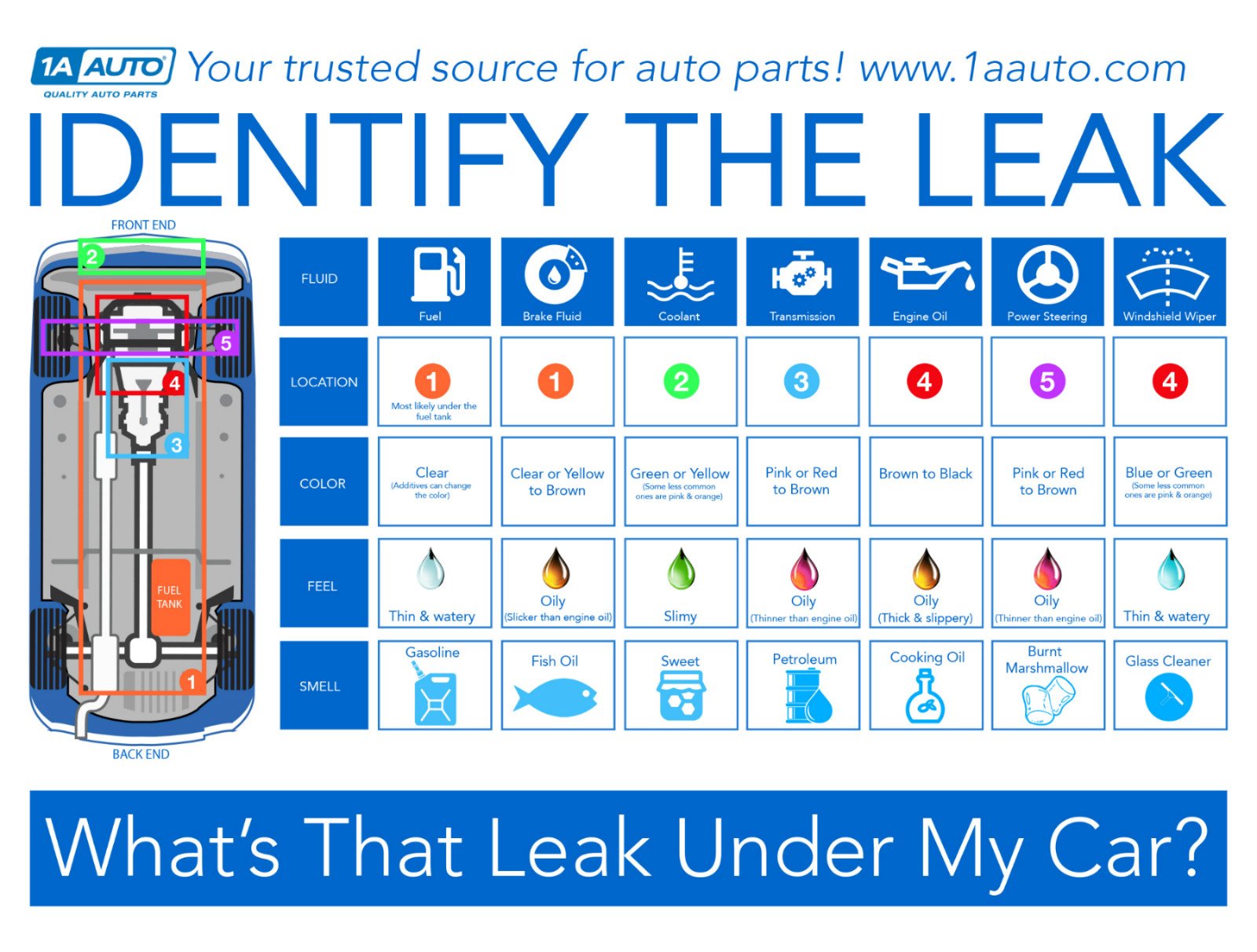
Credit: www.1aauto.com
Car Fluid Color Identification Chart
To help you spot and identify car fluids easily, here’s a simple chart:
| Fluid | Normal Color | Old/Contaminated Color | Leak Location |
|---|---|---|---|
| Engine Oil | Amber to light brown | Dark brown/black, milky | Under engine |
| Transmission Fluid | Bright red/pink | Brown, milky | Middle/front undercarriage |
| Coolant / Antifreeze | Green, orange, pink, blue, yellow | Rusty, cloudy, oily | Front undercarriage, radiator area |
| Brake Fluid | Clear to light yellow | Brown, black | Near wheels, brake pedal area |
| Power Steering Fluid | Clear, amber, pink | Dark, foamy | Front undercarriage, steering rack |
| Washer Fluid | Blue (usually) | Cloudy, dirty | Front undercarriage |
| Differential Fluid | Honey, light brown | Dark brown, burnt | Near axles, rear undercarriage |
| AC Refrigerant | Invisible/clear | Oily residue | AC lines, engine bay |
How To Check And Identify Car Fluids
Many car owners never check fluids until something goes wrong. But you don’t have to be a mechanic to spot trouble early. Here’s how you can check common fluids at home.
Checking Engine Oil
- Park on level ground and let the engine cool.
- Pull out the dipstick, wipe it clean, then reinsert and pull it out again.
- Look for color (amber is good, black is old) and check for milky or gritty texture.
Checking Transmission Fluid
- Some cars have a dipstick (others require a mechanic).
- Check color (red is good, brown is bad) and smell (burnt = trouble).
Checking Coolant
- Look at the coolant reservoir (do not open when hot! ).
- Color should be bright and clear, not rusty or cloudy.
Checking Brake Fluid
- Locate the brake fluid reservoir.
- Fluid should be clear to light yellow, not dark or dirty.
Checking Power Steering Fluid
- Find the reservoir under the hood.
- Fluid should be clear or amber, not dark or foamy.
Checking Washer Fluid
- Check the reservoir—color is usually blue or green.
- If low, refill with fresh washer fluid.
Checking Differential Fluid
- Usually checked during maintenance—look for leaks or drips near axles.
Checking Ac Refrigerant
- Visual check for oily residue on AC lines.
- If AC stops cooling, get a professional check.
Credit: www.autoselectonline.com
What To Do If You Find A Leak
Finding a leak can be stressful, but knowing the fluid’s color helps you take the right action. Here’s what you should do if you spot a puddle or drip:
- Engine oil or transmission fluid: Get checked soon. These leaks can cause engine or transmission damage.
- Coolant: Small leaks can cause overheating. Have it repaired quickly.
- Brake fluid: Don’t drive! This is a safety emergency.
- Power steering fluid: Loss of power steering can be dangerous at high speeds. Have it fixed.
- Washer fluid: Usually not urgent, but refill for safe driving.
- Differential fluid: Can damage gears if not fixed; get it checked.
- AC refrigerant: Not an emergency, but needed for comfort—see a specialist.
Common Mistakes When Identifying Car Fluid Colors
Many drivers make simple errors when checking fluids. Here are a few to avoid:
- Relying only on color: Some fluids look similar. Always check location and smell.
- Ignoring unusual smells: Burnt or sweet smells often mean contamination.
- Not cleaning first: Dirt on the dipstick or reservoir can change the color you see.
- Assuming all cars use the same color: Manufacturers may use different dyes, especially for coolants and power steering fluids.
- Waiting too long: Small leaks can become big problems if ignored.
Real-world Examples Of Fluid Leaks
Let’s look at two common situations to bring these points home.
Example 1: Pink Fluid Under The Car
A driver notices a pink puddle under the middle of their sedan after parking overnight. The car shifts gears slowly. Since transmission fluid is usually pink or red, and the leak is in the middle, it’s likely a transmission leak. Ignoring this could mean expensive repairs, so the driver heads to the mechanic immediately.
Example 2: Green Fluid And Engine Overheating
Another car owner finds a green puddle near the front of the car, and the temperature gauge climbs quickly when driving. Green is a classic color for coolant. They check the coolant reservoir and see the level is low. By topping up the coolant and getting the leak fixed, they avoid engine damage.
Another Quick-reference Fluid Color Table
For fast checks, here’s a side-by-side comparison:
| Fluid | New Color | Old Color |
|---|---|---|
| Engine Oil | Amber | Black/milky |
| Transmission Fluid | Red/pink | Brown/milky |
| Coolant | Green/orange/pink | Cloudy/rusty |
| Brake Fluid | Clear/yellow | Brown/black |
| Power Steering | Amber/pink | Dark/foamy |
| Washer Fluid | Blue/green | Cloudy |
| Differential | Honey | Burnt brown |
| AC Refrigerant | Clear/invisible | Oily residue |
Key Insights Most Beginners Overlook
- Fluid color can change with additives or manufacturer choices. For example, Honda uses a specific blue coolant, while others use green or orange. Always check your car’s manual.
- Multiple leaks can mix colors. If you see a strange color under your car, it may be two fluids mixing—like oil and coolant. Look for other clues like smell or location.
When To Get Professional Help
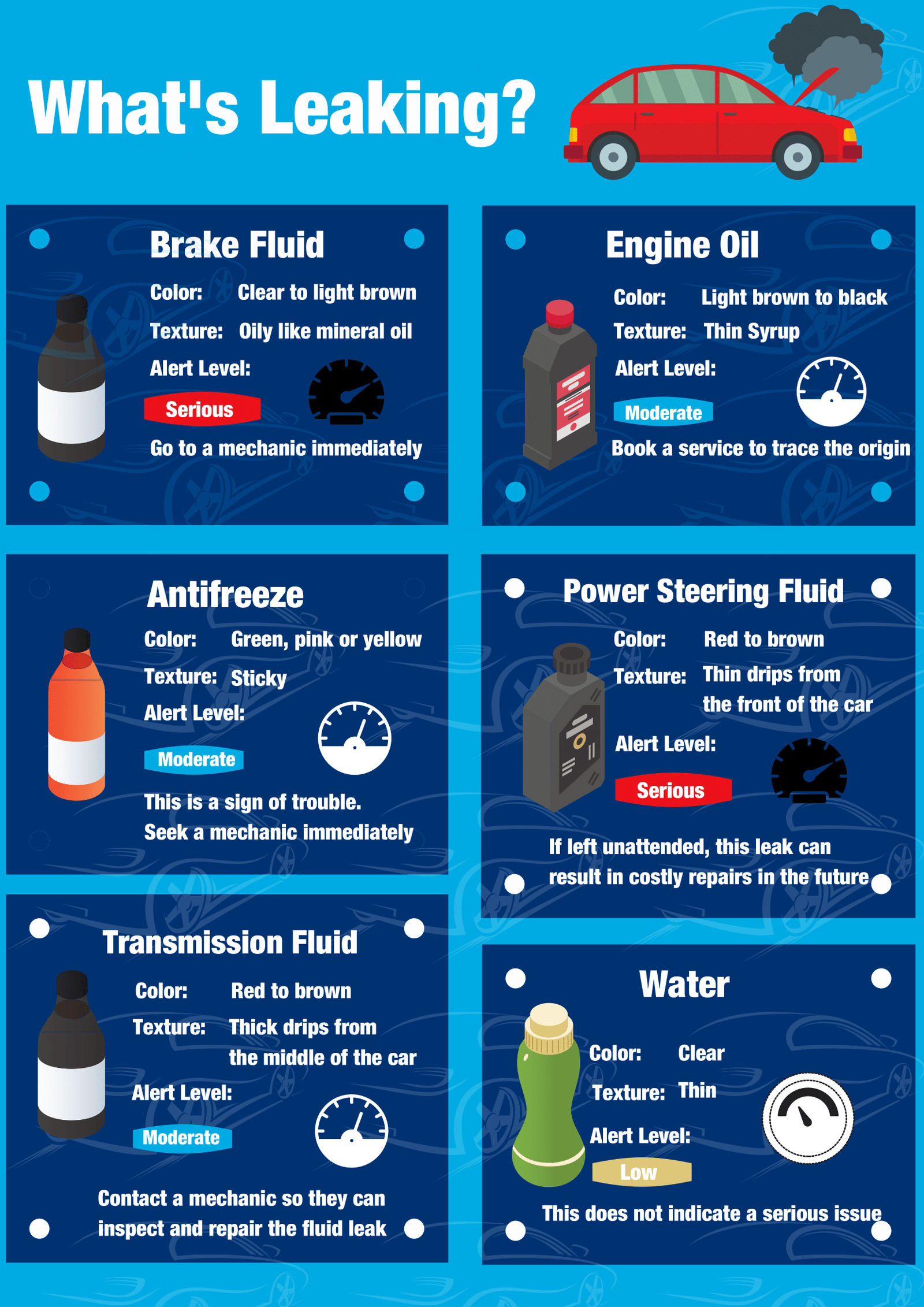
Some fluid leaks can be fixed at home, but others require a mechanic. If you’re unsure, or if the leak is brake fluid, transmission fluid, or coolant, don’t risk it. A trusted mechanic can test and identify the fluid for you.
Some shops use UV dyes to trace leaks more easily, a trick beginners rarely know about.
If you want to learn more about car fluids and maintenance, the Wikipedia page on automobile fluids is a trusted source.
Credit: www.myqualitytuneup.com
Frequently Asked Questions
What Does It Mean If My Engine Oil Looks Milky?
Milky engine oil usually means coolant is leaking into the engine oil, often from a head gasket failure. This is serious and needs immediate attention to avoid engine damage.
Is It Safe To Drive With A Small Coolant Leak?
Driving with even a small coolant leak can be risky, as your engine may overheat. Always fix leaks quickly and keep coolant topped up in emergencies.
Why Is My Power Steering Fluid Foamy?
Foamy power steering fluid often means air is trapped in the system, or there’s a leak. This can make steering difficult and damage the pump if not fixed.
How Often Should I Check My Car Fluids?
For most cars, check oil, coolant, and brake fluid at least once a month. Transmission and differential fluids can be checked every few months or during oil changes.
Can I Use Any Color Coolant In My Car?
No, always use the type and color of coolant recommended in your car’s manual. Mixing different types can cause chemical reactions and damage your cooling system.
A little time spent learning about car fluid colors can help you avoid major headaches. Knowing what to look for—both in color and leak location—gives you the power to spot problems before they become expensive or dangerous. Keep this guide handy, and you’ll be ready to keep your vehicle running safely and smoothly for years to come.